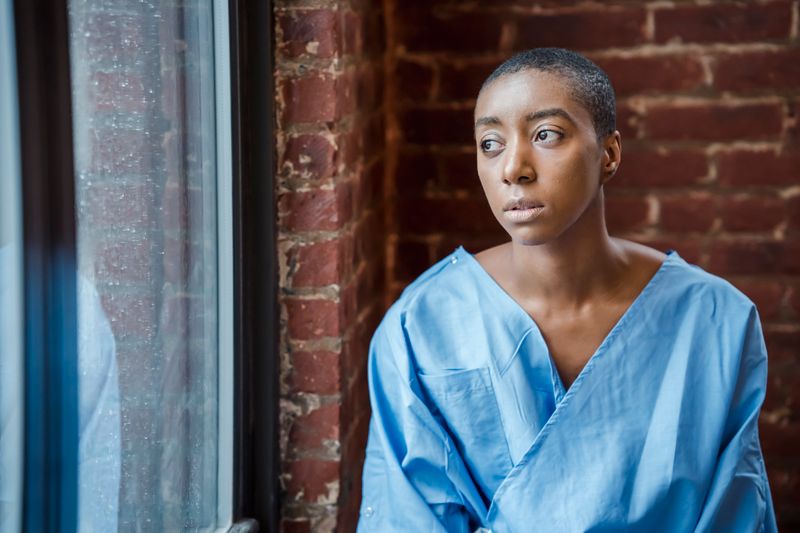
Systemic lupus erythematosus is an autoimmune disease in which the immune system attacks the body's own tissues: joints, skin, kidneys, blood, and brain. It lands hardest on Black women. The national prevalence is 230.9 per 100,000 in Black women versus 84.7 in white women, and in the population-based Georgia Lupus Registry, Black women had an incidence nearly three times higher than white women, with the gap widest between ages 30 and 59. Lupus also strikes during the working, parenting, childbearing years: about 80% of new cases begin between ages 15 and 44.
The early symptoms, and why they get missed
Lupus rarely announces itself. The early signs are common, nonspecific, and easy to attribute to stress, overwork, or another diagnosis. The ones to track:
- Fatigue that rest does not fix, reported by most people with lupus.
- Joint pain and swelling, often in the hands, wrists, and knees, frequently worse in the morning.
- The malar or butterfly rash across the cheeks and bridge of the nose.
- Photosensitivity: rashes, fatigue, or full flares triggered by sun exposure. Between 50% and 80% of people with lupus are photosensitive.
- Hair loss, mouth or nose ulcers (often painless), and unexplained low-grade fevers.
- Raynaud's phenomenon: fingers or toes that turn white, blue, or purple in cold or stress, then flush as blood returns.
Persistent, unexplained exhaustion is one of the most common reasons people first seek care, and it is one of the most commonly dismissed. If you are tracking down the cause of long-running tiredness, our guide to the causes of chronic fatigue in Black women walks through what to rule out, including autoimmune disease.
The butterfly rash looks different on dark skin
Most medical training depicts the malar rash as bright red. On brown and black skin, the same inflammation often does not read as red at all. It shows as violaceous (purple), dusky, or hyperpigmented (darker than the surrounding skin) patches across the cheeks and nose. Discoid lesions can appear as thick, scaly plaques that are darker than nearby skin and may leave behind both lighter and darker patches as they heal. Clinicians trained mainly on light-skin images can miss these signs or misread them as eczema or ordinary hyperpigmentation, feeding the diagnostic delay.
Bring photos of the rash at its worst to your appointment, and note whether sun exposure sets it off. If a rash on your face or scalp is being treated as a cosmetic or pigment problem and is not improving, ask directly whether cutaneous lupus has been considered.
Why diagnosis takes years
Time from first symptom to a lupus diagnosis has been reported as long as six years. Three forces stack up. First, symptom overlap: fatigue, joint pain, and rashes point at a dozen common conditions before they point at lupus. Second, bias: Black women's symptom reports are more likely to be discounted, and rashes are harder to read on dark skin. Third, the test itself is misunderstood.
What a positive ANA actually means
The antinuclear antibody (ANA) test is the standard screen. Roughly 98% of people with lupus test ANA-positive, so a negative result makes lupus unlikely. But a positive ANA is not a diagnosis: many healthy people, especially women, carry a positive ANA and never develop lupus. A positive result is a reason to look further (more specific antibodies like anti-dsDNA and anti-Smith, plus clinical signs), not a verdict. If a clinician dismisses lupus on a single positive or negative ANA without the rest of the picture, that is worth questioning.
Lupus nephritis: why your kidneys get watched
Lupus nephritis, kidney inflammation driven by lupus, is one of the most serious complications, and it hits Black women disproportionately. Population data show lupus nephritis prevalence around 75.6 per 100,000 in Black women versus 20.1 per 100,000 in white women. Early kidney involvement is often silent: no pain, no obvious symptom, just protein and blood showing up in urine and creatinine creeping up in bloodwork. That is why routine urinalysis and kidney bloodwork are standard in lupus care. Catching nephritis early protects kidney function and lowers the risk of progressing to kidney failure.
The mortality gap is stark. In Fulton and DeKalb counties, Georgia, Black lupus patients died at a mean age near 52, against about 64 to 65 for white patients, and the cumulative death rate white patients reached in 10 years, Black patients reached in 2. Racism is part of this picture as a measured exposure: in the Black Women's Experiences Living with Lupus (BeWELL) study of 427 Black women in Atlanta, more frequent experiences of racial discrimination tracked with greater disease activity and organ damage, even after accounting for income and access to care.
Discoid lupus, the scalp, and scarring hair loss
Discoid lupus erythematosus (DLE) is a chronic skin form of lupus that favors the face, ears, and scalp. Black women carry the highest incidence: in the Georgia registry, age-adjusted DLE incidence reached 7.9 per 100,000 person-years in Black women, and Black patients have a roughly threefold to fivefold higher rate of chronic cutaneous lupus overall. On the scalp, untreated discoid lesions destroy hair follicles and cause scarring (permanent) hair loss, sometimes with depigmented bald patches. Once the follicle scars, hair does not grow back, so early dermatology care is the difference between reversible and permanent.
Scarring hair loss has more than one cause in Black women, and the patterns can be confused. If you are sorting out scalp scarring and hair loss, our explainer on central centrifugal cicatricial alopecia and other causes of hair loss in Black women covers how these conditions are told apart and why a scalp biopsy sometimes settles it.
How lupus is treated now
Hydroxychloroquine is the backbone. Nearly everyone with lupus is kept on it long term: it lowers flare frequency, protects organs including the kidneys, and improves survival, with routine eye exams to monitor for a rare retinal side effect. Short courses of corticosteroids calm acute flares, and current guidance pushes to keep steroid use as low and brief as possible because long-term steroids carry their own harms. When disease stays active, immunosuppressants and newer biologics are added.
Two newer targeted drugs matter here. Belimumab, FDA-approved for lupus in 2011 and extended to lupus nephritis in 2020, blocks a signal that drives overactive antibody-producing cells. Anifrolumab, approved in 2021, blocks type 1 interferon signaling and is used for moderate-to-severe disease. Both are add-ons to hydroxychloroquine, not replacements. For Black patients, historically underrepresented in lupus drug trials, the point is that there are now real options beyond steroids worth asking a rheumatologist about by name.
How to get diagnosed and treated
Lupus is managed by a rheumatologist, often with a dermatologist for skin and scalp disease and a nephrologist if the kidneys are involved. If your symptoms have been brushed off, a second opinion is reasonable, and so is asking specifically for an ANA panel and a urinalysis. You can find a Black rheumatologist or dermatologist in our directory; a clinician who takes your reports seriously and knows how lupus presents on dark skin shortens the road to a diagnosis. Bring a written symptom timeline, rash photos, and a list of flare triggers to your first visit.
Frequently asked questions
Why is lupus more common and more severe in Black women? ▼
The exact causes are not fully settled, but the disparity is well documented. Black women have a higher prevalence and incidence, more lupus nephritis, and higher mortality at younger ages. Genetic, immune, and social factors all contribute, and measured experiences of racial discrimination are independently linked to worse disease activity and organ damage.
What does the lupus butterfly rash look like on dark skin? ▼
Instead of the bright red shown in most textbooks, the malar rash on brown and black skin often appears violaceous (purple), dusky, or as patches darker than the surrounding skin across the cheeks and nose. It may be mistaken for eczema or hyperpigmentation, so photograph it at its worst and note any link to sun exposure.
Does a positive ANA test mean I have lupus? ▼
No. About 98% of people with lupus test ANA-positive, but many healthy people are ANA-positive and never develop lupus. A positive result is a reason for further testing (more specific antibodies and a clinical evaluation), not a diagnosis on its own.
Can lupus damage my kidneys without symptoms? ▼
Yes. Early lupus nephritis is often silent and shows up only as protein or blood in the urine and rising creatinine in bloodwork. That is why routine urinalysis and kidney labs are part of standard lupus monitoring, and why Black women, who develop nephritis more often, should not skip them.
Is the hair loss from lupus permanent? ▼
It depends on the cause. General lupus flares can cause temporary shedding that regrows once disease is controlled. Discoid lupus on the scalp can scar hair follicles and cause permanent loss if untreated, which is why early dermatology care matters.
What is the main treatment for lupus? ▼
Hydroxychloroquine is the long-term backbone for nearly everyone with lupus. Flares are treated with short courses of steroids, kept as low and brief as possible, and persistent or severe disease is treated with immunosuppressants or newer biologics such as belimumab or anifrolumab added on top of hydroxychloroquine.
What this gets mistaken for
Malar rash on Black skin is often dismissed as hyperpigmentation, melasma, rosacea, or seborrheic dermatitis. Discoid lupus alopecia is frequently misdiagnosed as traction alopecia or CCCA, which delays immunomodulatory treatment, meanwhile the follicles scar and recovery becomes impossible.