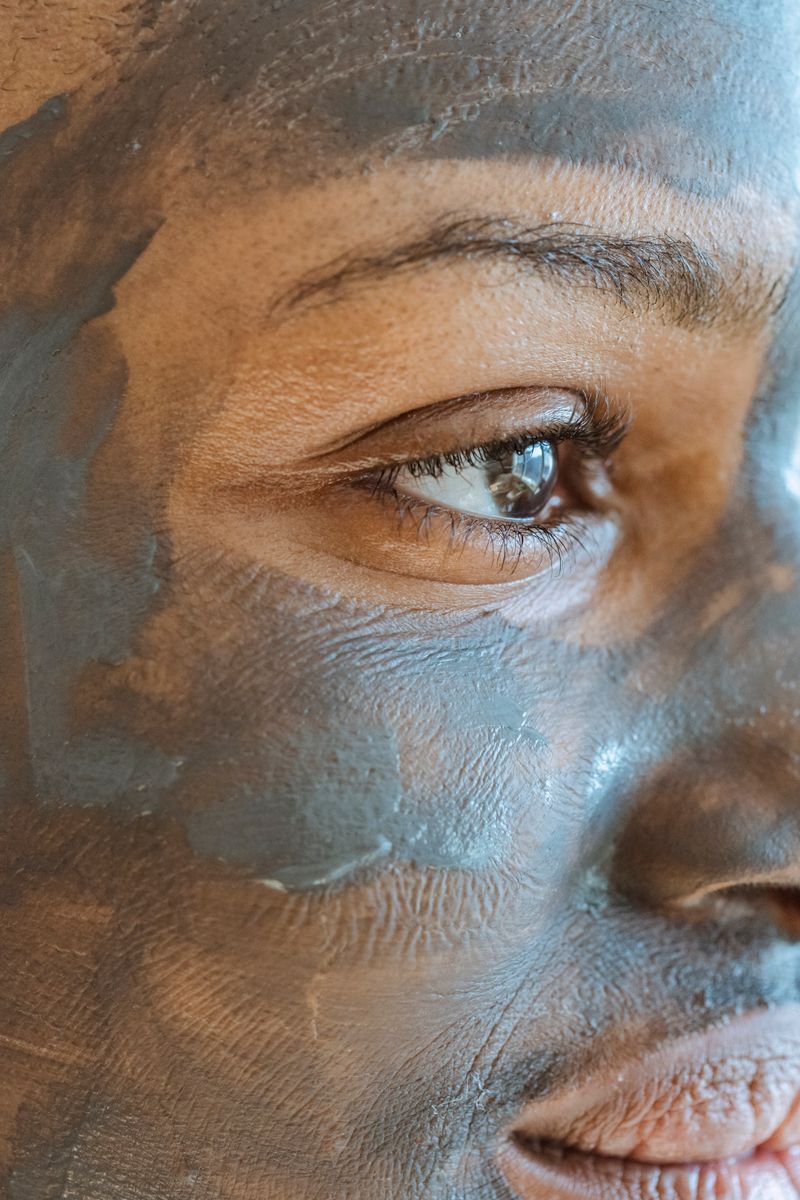
If a clinician has told you that rosacea "only happens in fair-skinned people," that information is wrong, and it is part of why the condition goes undiagnosed in Black patients for years. Rosacea is a chronic inflammatory disease of the facial skin. It is not acne, it is not an allergy, and it has nothing to do with hygiene. On lighter skin it shows up as obvious redness across the cheeks and nose. On Black and brown skin that redness is muted or invisible, so the disease hides until it is advanced.
What rosacea actually is
Rosacea is a long-term inflammatory condition centered on the central face: the cheeks, nose, chin, and forehead. It tends to flare and settle. The common features are persistent flushing, visible blood vessels, and acne-like bumps and pus-filled spots, often with a burning or stinging quality and sensitive, easily irritated skin. It can also affect the eyes, and in some people the skin of the nose thickens over time. The cause is not fully known, but it involves the immune system, blood vessels, and the skin's response to triggers. It is not contagious and it is not caused by poor washing.
Most published research on rosacea was done in white European populations, which is the root of the "fair-skin" stereotype. Diagnosis rates reflect that bias more than they reflect biology. In a 2025 cross-sectional study of a diverse primary-care cohort, rosacea was diagnosed in 0.9 percent of patients with skin of color versus 1.7 percent of white patients, yet the skin-of-color patients who were diagnosed had more papules, pustules, flushing, and sensory symptoms like burning and dryness, and were more likely to need oral therapy. That pattern, fewer diagnoses but more severe disease at diagnosis, is the signature of a condition being caught late.
How rosacea looks on Black and brown skin
The textbook image of rosacea, a bright red flush across pale cheeks, is the version you will almost never see on darker skin. On Black skin the same inflammation reads differently:
- Warmth or swelling rather than obvious redness. The skin may feel hot or look puffy without looking red.
- Dusky-brown or violaceous (purple-toned) discoloration instead of pink or scarlet erythema.
- Persistent papules and pustules, the small bumps and pus-filled spots, which are visible on any skin tone and are often the clearest clue.
- Burning, stinging, and sensitivity. Many patients with darker skin report these sensations as their main symptom, even when there is little to see.
- Dry, rough patches and skin that reacts to most products.
- Post-inflammatory hyperpigmentation, dark marks left where the inflammation was, which can both signal rosacea and mask the underlying redness.
One variant matters especially for Black patients. Granulomatous rosacea is seen more often in skin of color. It shows up as firm, monomorphic papules or nodules, often skin-colored, brown, or violet, clustered around the mouth, eyes, and cheeks, frequently without the flushing or visible redness of classic rosacea. It can closely resemble sarcoidosis, which makes a biopsy and a careful evaluation important. Dark marks from old rosacea can be confused with the discoloration our article on dark spots and hyperpigmentation on Black skin addresses, but the underlying inflammation needs its own treatment.
Don't forget the eyes
Rosacea is not only a skin problem. Roughly half of people with rosacea develop ocular rosacea, where the eyes feel gritty, dry, itchy, or burning, look bloodshot, water, or become sensitive to light. The eyelids can swell and form styes. Eye symptoms can appear even when the skin disease looks mild, and one report found a high rate of ocular involvement in darker-skinned women with rosacea. Left untreated, ocular rosacea can damage the surface of the eye, so it is worth raising with both a dermatologist and an eye doctor.
Why it gets missed
Several things stack up against an accurate diagnosis. The first is the fair-skin stereotype: many clinicians were trained to think of rosacea as a condition of light-skinned people of Northern European descent, so they do not look for it in Black patients. The second is visibility: persistent redness and the fine broken blood vessels that define rosacea are genuinely harder to see against richly pigmented skin, and existing hyperpigmentation can hide them further. The third is misdiagnosis. On Black skin, rosacea is regularly mistaken for acne, for the facial rash of lupus, or for seborrheic dermatitis, all of which call for different treatment. The result is delayed care and, too often, a diagnosis that only lands once the disease has progressed to thickened skin or facial disfigurement.
If your bumps have been treated as acne for months without improving, or a facial rash keeps being blamed on dryness or dandruff, those are reasons to ask specifically about rosacea. The conditions overlap: our explainers on seborrheic dermatitis on Black skin can help you tell the patterns apart and bring a sharper question to your appointment.
Triggers worth identifying
Rosacea flares in response to specific triggers, and they vary from person to person. In the National Rosacea Society's survey of more than 1,000 patients, the leaders were sun exposure (81 percent), emotional stress (79 percent), and hot weather (75 percent), with more than half also flaring from wind, exercise, alcohol, and hot baths. Other common ones are spicy food, hot drinks, and some skincare and cosmetic ingredients. Keeping a short diary of what preceded a flare is the most reliable way to find your own list, and then to avoid what you can.
How rosacea is treated
Rosacea cannot be cured, but it is controllable, and earlier treatment lowers the risk of lasting marks and thickened skin. Treatment is built in layers:
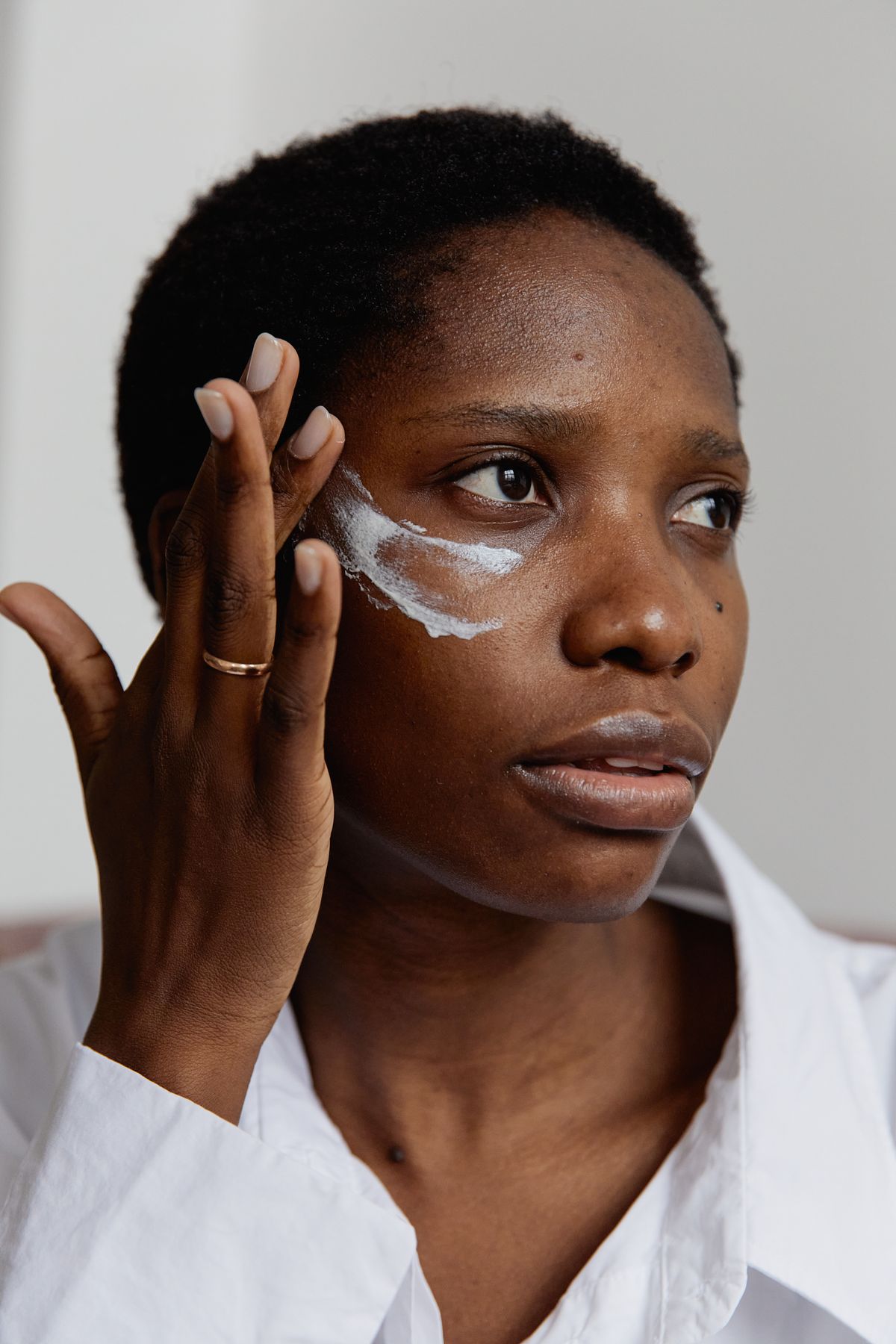
- Gentle skincare and daily sun protection. A mild, non-stripping cleanser, a fragrance-free moisturizer with ingredients like ceramides or niacinamide, and broad-spectrum SPF 30 or higher every day. Harsh or alkaline soaps make rosacea worse, and sun is the most common trigger, so sunscreen matters even on deeply pigmented skin.
- Topical prescriptions. Metronidazole, azelaic acid, and ivermectin all reduce the bumps and inflammation and are first-line for the acne-like form. Azelaic acid has the added benefit of fading the dark marks that rosacea leaves on brown skin.
- Oral medication. For more inflammatory or stubborn disease, low-dose doxycycline works as an anti-inflammatory rather than a true antibiotic; the skin-of-color patients in the 2025 study were more likely to need oral therapy.
- Ocular rosacea care. Warm compresses, lid hygiene, artificial tears, and sometimes oral medication or a referral to an eye doctor.
- Laser and light therapy can address visible vessels and redness, but on Black and brown skin it carries a real risk of burns and hyperpigmentation. It should be done only by a provider experienced in treating skin of color, with conservative settings.
How to get care
A dermatologist diagnoses rosacea by examining your skin and taking a history, sometimes with a biopsy to rule out look-alikes. Bring the trigger diary, photos of your skin during a flare, and a clear account of any burning, stinging, or eye symptoms, since those sensory clues carry extra weight when the redness is hard to see. A clinician who knows how rosacea presents on Black skin will not dismiss it because your face is not obviously red. You can find a Black dermatologist or a dermatologist experienced with skin of color through our directory, which lets you screen for clinicians who treat darker skin tones.
Frequently asked questions
Can Black people get rosacea? ▼
Yes. Rosacea affects people of every skin tone. It is diagnosed less often in Black patients, but that reflects the difficulty of seeing redness on dark skin and a long-standing fair-skin stereotype, not a true absence of the disease. When it is diagnosed in skin of color, it is often more advanced.
How can I tell rosacea from acne on dark skin? ▼
They overlap, which is why rosacea is so often mistaken for acne. Rosacea bumps come with persistent facial warmth, flushing, burning or stinging, and sensitivity, and there are no blackheads. Acne that does not improve with acne treatment, especially with these other signs, is a reason to ask a dermatologist specifically about rosacea.
What does rosacea look like on Black skin? ▼
Instead of obvious redness, look for warmth or swelling, dusky-brown or purple-toned discoloration, persistent papules and pustules, dry rough patches, and burning or stinging. Firm brown or violet bumps around the mouth and eyes can indicate granulomatous rosacea, which is more common in skin of color.
Does rosacea go away on its own? ▼
No. Rosacea is chronic and tends to flare and settle rather than resolve. It cannot be cured, but it is well controlled with trigger avoidance, gentle skincare, daily sunscreen, and prescription treatment. Treating it early lowers the risk of dark marks, thickened skin, and eye damage.
Is laser treatment safe for rosacea on Black skin? ▼
It can be, but with caution. Laser and light therapy on Black and brown skin carry a real risk of burns and hyperpigmentation. If you pursue it, choose a provider experienced in treating skin of color who uses conservative settings, and start with topical and oral options first.
What this gets mistaken for
Rosacea in Black patients is most often misdiagnosed as acne, seborrheic dermatitis, lupus, or contact dermatitis. The discriminators: absence of comedones, triggers (heat, alcohol, spicy food), and the symptom of stinging/burning without significant visible erythema.