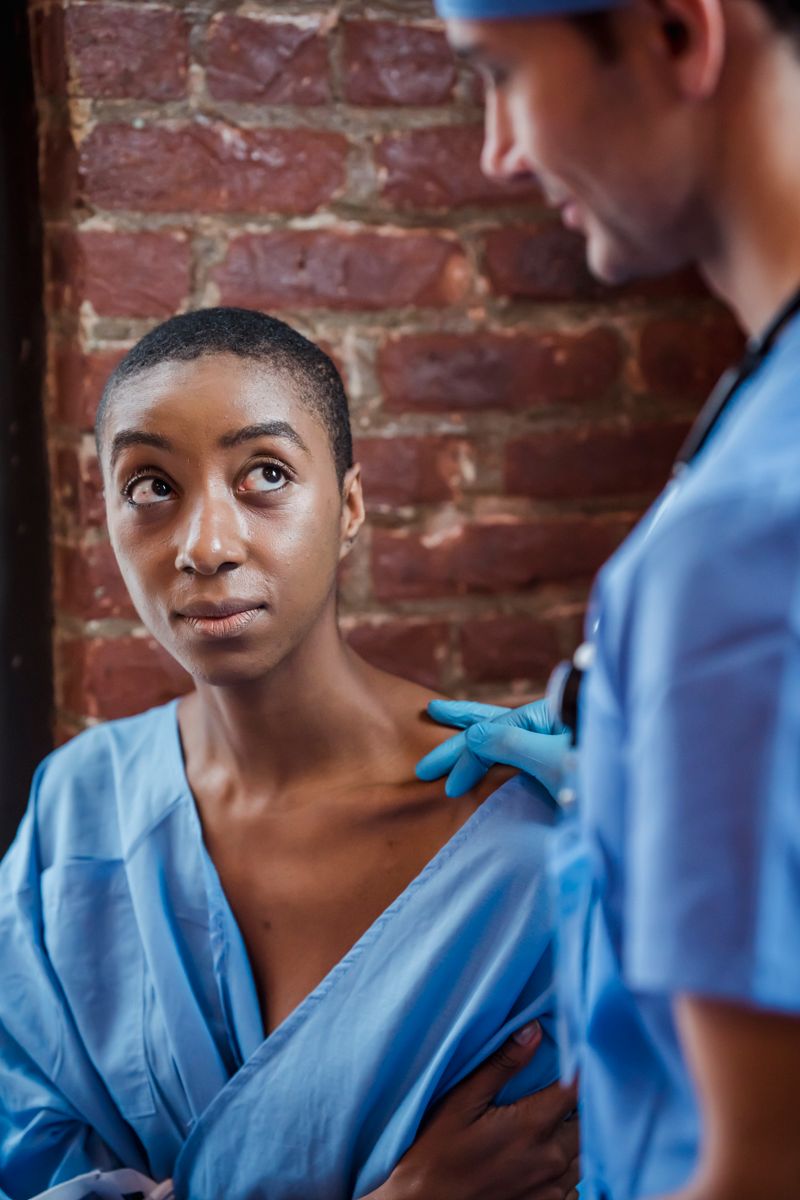
A doula is a trained, non-clinical companion who provides continuous physical, emotional, and informational support before, during, and after birth. Doulas do not deliver babies, order tests, or prescribe medication. They stay with the birthing person through labor, explain what clinicians are doing, advocate when the patient wants a pause or a second opinion, and provide postpartum follow-up on feeding, sleep, and recovery. That role sits outside the hospital hierarchy, which is why the evidence on labor companions is so consistent across settings.
In 2022, the Black maternal mortality rate in the United States was 49.5 deaths per 100,000 live births, compared to 19.0 for non-Hispanic white women, a 2.6-fold gap the CDC has now documented for three consecutive annual reports. Black infants die at roughly three times the rate of white infants. Those numbers are the context every Black family is negotiating when they walk into a delivery unit, and they are the reason the question of who stands next to the bed is not a luxury question.
Continuous labor support cuts cesarean risk by 25 percent, Cochrane review finds
The strongest evidence on doulas comes from a 2017 Cochrane systematic review by Bohren and colleagues, pooling 26 randomized trials and 15,858 women across high and low-income settings. Women randomly assigned to continuous labor support were less likely to have a cesarean birth (relative risk 0.75, 95 percent CI 0.64 to 0.88), less likely to use any intrapartum pain medication (RR 0.90, 95 percent CI 0.84 to 0.96), and less likely to report negative feelings about their childbirth experience (RR 0.69, 95 percent CI 0.59 to 0.79). They were also more likely to have a spontaneous vaginal birth (RR 1.08, 95 percent CI 1.04 to 1.12) and less likely to need an instrumental delivery (RR 0.90, 95 percent CI 0.85 to 0.96).
Two details in the Cochrane analysis matter for how Black families should read it. First, the effect on cesarean rate was larger when the support person was neither a staff member of the hospital nor a member of the woman's social network, which is the profile of a community doula. Second, the review's samples were international, so the protective effect is not a US-only artifact of a specific health system.
Physician racial concordance reduces Black newborn mortality, PNAS analysis of 1.8 million births shows
A separate line of evidence comes from Greenwood and colleagues in PNAS (2020), who analyzed 1.8 million hospital births in Florida from 1992 to 2015. They reported that newborn-physician racial concordance was associated with significant improvements in mortality for Black infants, with the benefit largest in more medically complex births and in hospitals that deliver more Black babies. The authors did not find the same effect on maternal mortality.
Read the Cochrane review and the Greenwood paper together and a pattern sits there. Trial-level evidence says continuous non-clinical support shifts mode-of-delivery outcomes. Observational evidence on 1.8 million births says the race of the clinician who actually makes the calls on a laboring Black patient affects whether her baby lives. Neither paper studied doulas paired with Black clinicians, and the question of whether those effects compound is open. But a Black doula in the room is one of the few levers a family can pull before the shift starts.
Whatever brought you to this page, community health centers see patients regardless of insurance and charge on a sliding scale that is often $0. Our directory of free and charitable clinics lists centers by state. A same-day telehealth visit is self-pay and is not billed to Medicaid, so if you have Medicaid the clinic route will usually cost less. If you would rather see a clinician online today:

See a doctor online today.
- Same-day video visits from $34
- Price shown before you book
- No insurance needed
 with Sesame Care
Affiliate link, we may earn a commission at no extra cost to you.
A growing set of state Medicaid programs now reimburses doula care
Access is the next question. Private doula fees in most US metros run $800 to $2,500 per birth, which prices out most Medicaid enrollees. Since 2022, a growing number of state Medicaid programs have started reimbursing doula services, with implementation approaches that vary on reimbursement rate, credentialing, and whether the benefit covers prenatal, labor, and postpartum visits or only attendance at birth. The National Health Law Program runs the Doula Medicaid Project, a live tracker of which states have proposed, passed, and implemented coverage. Before committing to a birth plan that assumes doula coverage, check that tracker for your state's current status and the specific rules on who qualifies as a reimbursable doula.
Rates matter. A state that reimburses at $400 per birth will not sustain a workforce of trained Black doulas in a market where private clients pay five times that. Several of the first-wave Medicaid states have since raised rates after initial implementation data showed low provider participation. When you ask a Medicaid managed care plan whether doulas are covered, also ask at what rate and whether prenatal and postpartum visits are included.
How Black families find a doula whose training and practice fit
Four practical questions close the gap between the evidence and a family hiring the right person. Ask about training lineage: DONA International, Childbirth International, and community-based programs like Ancient Song Doula Services and Mamatoto Village each certify differently, and a doula should be able to name who trained her and produce a certificate. Ask about hospital relationships: a doula who has attended births at your delivery hospital knows which nurses welcome advocacy and which do not. Ask about postpartum coverage: the first six weeks are when Black maternal deaths disproportionately occur, and a birth-only package leaves that window uncovered. Ask about fee structure and sliding scale: most community doulas offer reduced-cost or free slots, and a doula working through a Medicaid contract should not be asking for cash at the door.
If cost is the binding constraint, three places are worth calling before private search. Your state Medicaid managed care plan's member services line can confirm whether doulas are a covered benefit and provide a roster of credentialed doulas in-network. Local hospital-based doula programs, often run out of academic medical centers with Title X or Maternal Mortality Review Committee funding, place doulas at no cost for eligible patients. And community organizations rooted in Black birth work, including Ancient Song, Mamatoto Village, SisterSong, and the Black Mamas Matter Alliance's partner network, either provide doulas or maintain referral lists of doulas they have trained.
Three steps for a reader with a due date on the calendar. Open the NHeLP Doula Medicaid Project tracker and read your state's current status. Call your Medicaid managed care plan's member services line this week and ask whether a doula is a covered benefit under your plan, at what reimbursement rate, and whether postpartum visits are included. Ask your OB or midwife which doulas they have worked with at your delivery hospital and request two names you can interview before you hire.