What Acne Keloidalis Nuchae Actually Is
Acne keloidalis nuchae (AKN) is a chronic inflammatory folliculitis at the back of the scalp and the nape of the neck. It starts as small, firm, itchy or tender bumps around the hair follicles at the nuchal hairline and can progress to raised, hairless, keloid-like plaques if it goes untreated for years. Dermatologists classify it as a primary scarring (cicatricial) alopecia: once a follicle is destroyed by the inflammation, the hair does not grow back there. AKN overwhelmingly affects men of African descent, typically starting after puberty and becoming uncommon after age 55, though isolated cases in women exist (Ogunbiyi, Clinical, Cosmetic and Investigational Dermatology, 2016). A 15-year retrospective study at a Jamaican dermatology clinic found AKN in 4.2 percent of 1,031 new patients, at a male-to-female ratio of 7 to 1, which gives a sense of how common the condition is in a population where clinicians are actually looking for it (East-Innis et al., International Journal of Dermatology, 2017).
What It Is Not
The name is misleading on two counts. AKN is not the acne vulgaris that shows up on the face and chest in the teenage years: there are no comedones, and the driving process is follicular trauma and inflammation, not sebum and P. acnes bacteria. It is also not pseudofolliculitis barbae, the classic razor bumps that ingrown facial and neck hair cause; that condition is usually more transient and does not scar the same way (our guide to razor bumps on Black skin covers it in full). The two are related and frequently coexist: in the East-Innis cohort, pseudofolliculitis barbae was strongly associated with keloidal plaques on the scalp. AKN is also not contagious; you cannot catch it from a barber's clippers or pass it to someone else. What you can pass along in a shared-clippers setting is a bloodborne infection risk, because active AKN lesions bleed easily during a haircut (Ogunbiyi, 2016).
Why It Progresses From Bumps to Scarring
The mechanism starts with trauma at the nuchal hairline. Cutting tightly coiled hair very short, with a razor or a clipper set close to the skin, leaves a sharp-edged stub that can curl back and reenter the follicle or the surrounding skin. The body treats that reentry as a foreign object and mounts an inflammatory response. One cycle produces a tender papule or pustule. Repeated cycles, month after month, drive fibrosis: papules and pustules coalesce into firm, hairless, keloid-like plaques that represent permanent follicle destruction. Time matters more than most patients realize. In the East-Innis cohort, disease duration beyond five years was significantly correlated with keloidal plaque development, so the difference between an early, treatable case and a permanent plaque is often just how long it went unaddressed. The same study found AKN strongly correlated with components of metabolic syndrome (odds ratio 14) and with hypertension specifically where lesions extended beyond the nape (odds ratio 6.75). A stubborn AKN flare is a grooming problem and a reasonable prompt to check blood pressure and metabolic health.
What Triggers Flares
The most consistent trigger is mechanical: close shaves, tight clipper lineups, and edge-ups performed directly on the nuchal hairline. Friction adds to it, from tight collared shirts, du-rags, and athletic or protective headgear that rub the same spot repeatedly. Picking or squeezing the bumps, a natural response to an itchy area, reintroduces trauma and prolongs the inflammation (Maranda et al., Dermatology and Therapy, 2016). Genetics, androgens, and a tendency toward ingrown hairs likely play a role in who develops AKN, though the exact combination is not fully mapped (Ogunbiyi, 2016). One warning is worth repeating on its own: Ogunbiyi documented patients using corrosives, acids, and even car engine oil on their bumps at home, which enlarged the lesions or caused worse scarring instead. Bumps that will not resolve deserve a dermatologist, not a home remedy.
The Treatment Ladder That Works
No single therapy is first-line for every patient. Treatment follows the stage of disease (Maranda et al., 2016).
Stop the trigger first. An actual stop to short haircuts, close shaving, and tight-fitting collars, du-rags, or headgear at the nuchal line, plus not picking at the bumps, is described in the literature as vital to preventing progression. This step alone, done early, keeps a lot of cases from ever reaching the plaque stage.
Calm the inflammation. For active papules and pustules, topical or intralesional corticosteroids combined with topical or oral antibiotics reduce inflammation and secondary infection. The honest caveat: this typically takes months to work, results are often incomplete, and recurrence is common once treatment stops (Maranda et al., 2016).
Laser hair removal for papulopustular and early plaque disease. This has the best recent evidence. The 1064-nm Nd:YAG laser, the 810-nm diode laser, and the CO2 laser produce 82 to 95 percent improvement in one to five sessions with minimal side effects (Maranda et al., 2016). A trial of the long-pulsed alexandrite laser in 17 men, six sessions each, found a significant drop in papule and pustule counts and in plaque size and pliability, with early lesions responding significantly better than established plaques. The main side effect was temporary hair loss, and no lesion recurred at three months (Tawfik et al., Dermatologic Surgery, 2018). The lesson is blunt: laser works, and works much better before a bump becomes a plaque.
Surgical excision for late, fibrotic plaques. Once a plaque has fully formed and has not responded to medical or laser therapy, surgical excision is the remaining option. It is invasive, sometimes requires general anesthesia, and carries a longer recovery than the earlier steps (Maranda et al., 2016). It is also the step every earlier one in this ladder is meant to help a reader avoid.
What to Tell Your Barber
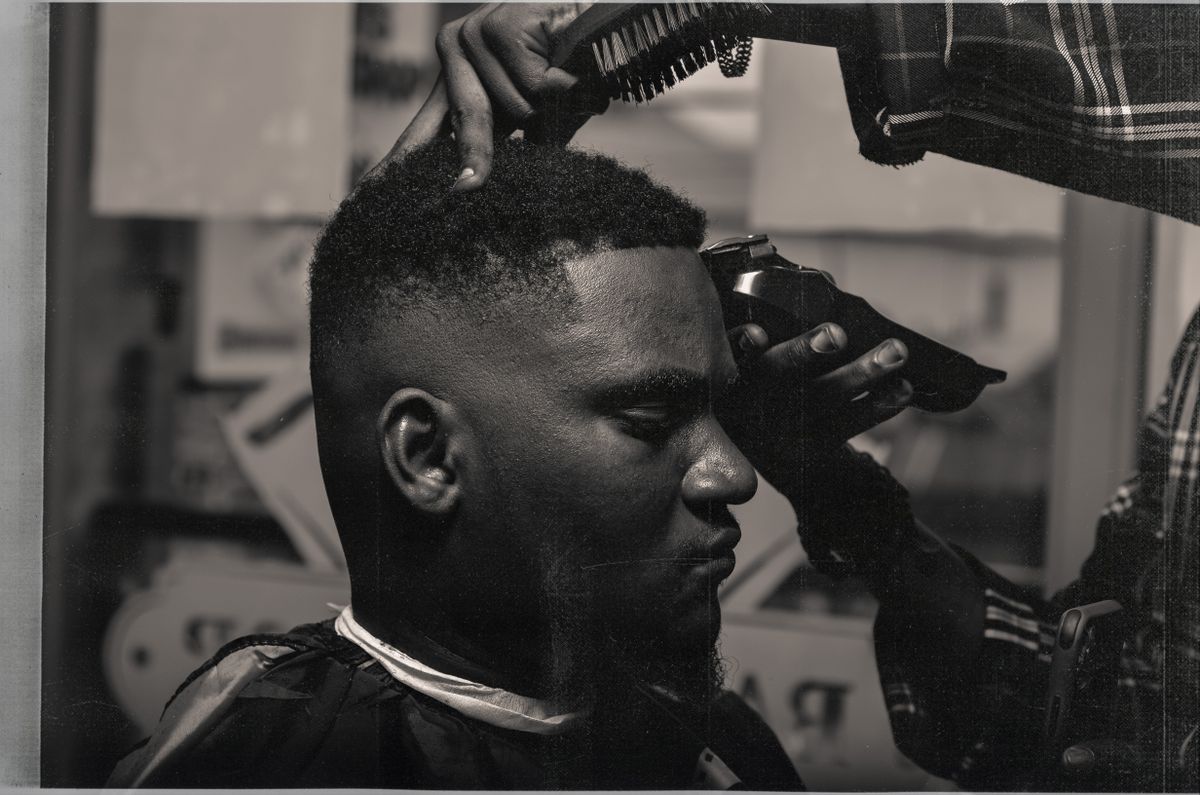
Your barber is a partner in preventing AKN, not an obstacle. If you notice tender bumps or ingrown hairs at your hairline, say so before the clippers come out. Ask for a little more length left at the very back of the neck instead of a bald, skin-level edge-up there; a lineup can still look sharp higher on the head without the blade going to skin at the nape. Ask your barber to switch to scissors-over-comb at that specific spot instead of clippers-to-skin, and to skip the straight razor along the nuchal line during a flare. If the area is bleeding or crusted, it is fair to ask to skip that section for one visit, and do not share clippers or razors that touch the area with anyone else. Active AKN lesions bleed easily during a haircut, and that is a real bloodborne infection risk in a shared-tool setting (Ogunbiyi, 2016).
What this gets mistaken for
AKN is often initially misdiagnosed as simple folliculitis or 'ingrown hairs', delaying effective treatment. PIH is sometimes mislabelled as scarring, leading patients to believe it is permanent when most of it will fade over 6-12 months.
When to See a Dermatologist
See a dermatologist at the first bumps that do not resolve in a couple of weeks, not after years of shaving around them. The evidence lines up behind acting early: laser treatment works significantly better on fresh papules and pustules than on established plaques, and disease duration past five years is linked to permanent keloidal plaque formation. A dermatologist can also confirm the diagnosis against pseudofolliculitis barbae, ordinary folliculitis, or a true keloid, since the treatment for each differs. You can find a dermatologist in our provider directory; filter by the dermatology specialty to find clinicians who treat scarring alopecia and skin of color.
Frequently asked questions
How do I get rid of bumps on the back of my neck? ▼
Start by stopping whatever is causing the mechanical trauma: close shaves, clipper lineups, and tight collars or headgear right at the nuchal hairline. For bumps that persist past a couple of weeks, see a dermatologist. Topical or intralesional steroids and antibiotics calm active inflammation, and laser hair removal (Nd:YAG, diode, or CO2) produces 82 to 95 percent improvement in one to five sessions when started early, before the bumps thicken into plaques.
Does acne keloidalis nuchae go away on its own? ▼
Rarely, and it tends to move in the wrong direction without treatment. Left alone, papules and pustules from repeated follicular trauma can coalesce into firm, hairless, keloid-like plaques that represent permanent hair-follicle destruction. Disease duration past five years is linked to that progression in the clinical literature, which is why early treatment, not waiting it out, is the evidence-based move.
Is acne keloidalis nuchae the same as razor bumps? ▼
No, though the two are related and can occur together. Razor bumps, or pseudofolliculitis barbae, are ingrown hairs from shaving that are usually more transient and do not typically scar. AKN is a chronic scarring folliculitis specific to the nape and occipital scalp that can permanently destroy hair follicles if untreated. One study found pseudofolliculitis barbae strongly associated with keloidal scalp plaques, so the two conditions are worth asking a dermatologist about together.
Is acne keloidalis nuchae contagious? ▼
No. It is not an infection you can catch from someone else or pass along through normal contact. The one real transmission risk is bloodborne: active AKN lesions bleed easily during a haircut, so sharing clippers or razors that touch the area carries an infection risk in a barbershop or household setting. Using your own tools on that area removes that risk.
Can laser hair removal cure acne keloidalis nuchae? ▼
It is the best-evidenced non-surgical treatment, especially for early disease. Nd:YAG, diode, and CO2 lasers produce 82 to 95 percent improvement in one to five sessions, and a trial of the long-pulsed alexandrite laser found no lesion recurrence at three months. Response is significantly better on fresh papules and pustules than on established keloidal plaques, so treating early matters more than which specific laser is used.