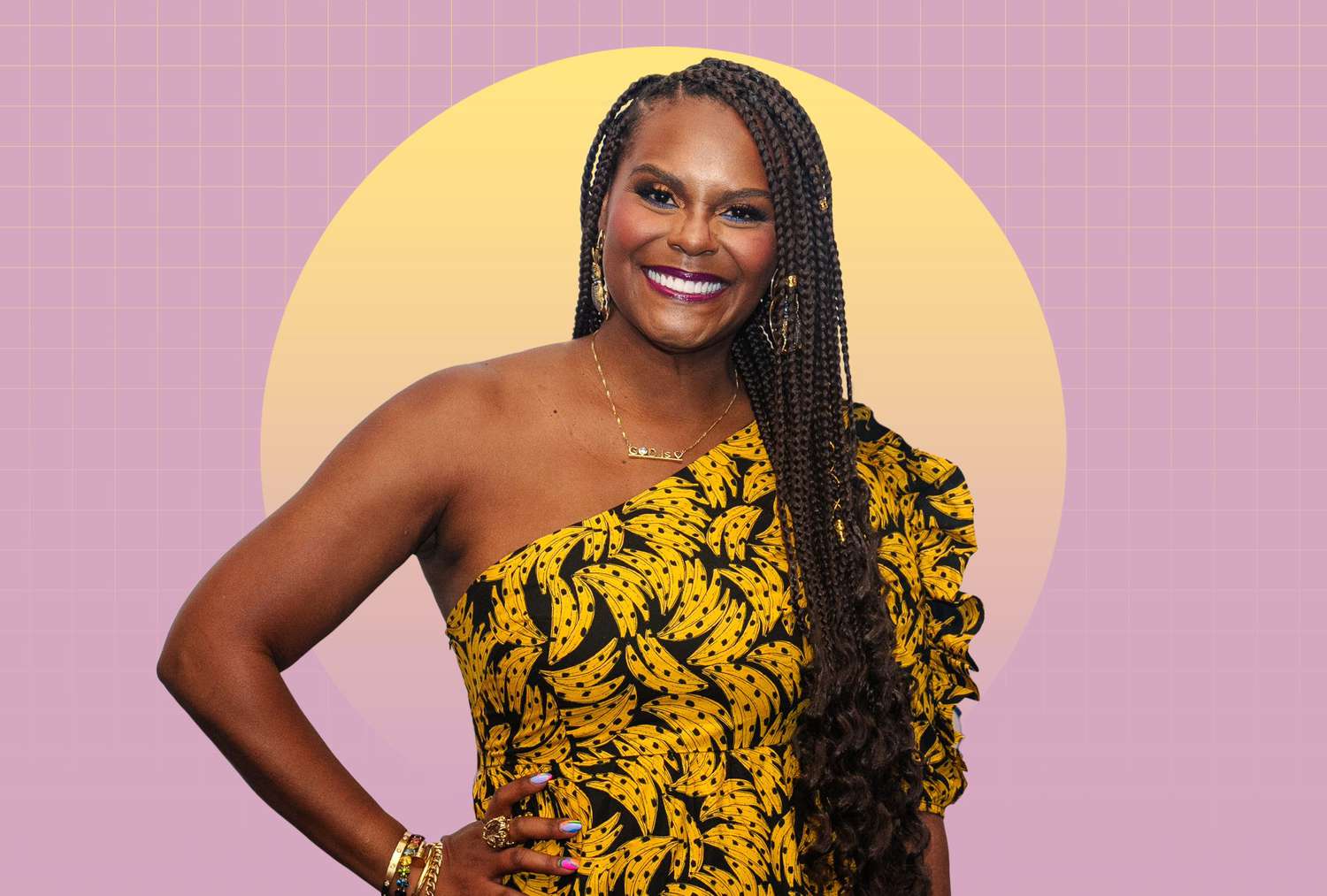
Tabitha Brown lost a year of her career to chronic pain and fatigue she could not get a clear diagnosis for. By her own published account, the symptoms got bad enough that she stopped working as an actor; her daughter suggested veganism as a recovery framework; and within months her symptoms began to ease. The story made her a wellness-and-vegan-cooking platform with a multi-million-follower audience and a Penguin Random House book deal. The frame for it sits inside a real evidence pattern in US medicine: Black women's chronic-illness symptoms get dismissed and undiagnosed at rates the peer-reviewed literature documents.
You may have come to Brown for the cooking videos. The reason her health story resonates with so many Black women is that, in clinics across the country, the same script plays out: pain that is not fully heard, fatigue described as stress, a year or more spent looking for a name for the thing.
What she has said publicly about being sick
Brown's health story, as she has shared it on her podcast and in interviews and as her Wikipedia entry documents, is that chronic pain and chronic fatigue developed and worsened over months, eventually keeping her out of acting work for a year. She has not used a single diagnostic label for the condition publicly. Her recovery account, the part that became her platform, centers on a switch to a plant-based diet on her daughter's suggestion, alongside lifestyle changes she describes in her cookbook and her book Feeding the Soul.
The diagnostic ambiguity is the part this piece pulls on. A Black woman experiencing a year of pain and fatigue without a clear name for the condition is, statistically, common. The reasons sit on both the clinical-recognition side and the disease-prevalence side, and both are documented.
What the research says about how Black women's symptoms get heard
One of the most-cited papers in this space comes from a 2016 study in the Proceedings of the National Academy of Sciences. Hoffman and colleagues at the University of Virginia surveyed medical trainees and found that around half of them endorsed at least one false belief about biological differences between Black and white patients (for example, that Black patients have "thicker skin" or "less sensitive nerve endings"). The trainees who held these beliefs systematically rated Black patients' pain as less severe than white patients' and recommended less aggressive treatment for it (Hoffman et al., PNAS 2016; PMID 27044069). The pain-bias finding is one of the most-replicated results in the racial-disparity literature, and it shows up in clinical settings whether the symptom is acute (a fracture in the ER) or chronic (the kind of pain Brown describes).
The downstream effect is the diagnostic delay we hear from Black women in our reader mail and in published surveys. A symptom that does not get taken seriously does not get worked up. A workup that is not pursued does not produce a diagnosis. A condition that does not get a diagnosis does not get treated.
Autoimmune disease as the backdrop
Brown has not specified her diagnosis publicly. We are not naming one for her. What is true at the population level is that autoimmune diseases disproportionately affect Black women and were historically under-studied in this group.
Whatever brought you to this page, community health centers see patients regardless of insurance and charge on a sliding scale that is often $0. Our directory of free and charitable clinics lists centers by state. A same-day telehealth visit is self-pay and is not billed to Medicaid, so if you have Medicaid the clinic route will usually cost less. If you would rather see a clinician online today:

See a doctor online today.
- Same-day video visits from $34
- Price shown before you book
- No insurance needed
 with Sesame Care
Affiliate link, we may earn a commission at no extra cost to you.
Multiple sclerosis is the case study that overturned a textbook claim. For decades the standard teaching was that MS was rare in Black populations. A 2013 paper in Neurology looked at the incidence of MS across racial and ethnic groups in a Kaiser Permanente Southern California cohort and found that Black women had an MS incidence of about 10.2 per 100,000 person-years, compared with 6.9 in white women, roughly 50 percent higher (Langer-Gould et al., Neurology 2013; PMID 23650231). The authors said directly that the data "do not support the widely accepted assertion that blacks have a lower risk of MS than whites." The textbook was wrong.
Lupus follows a similar pattern: Black women have roughly three to four times the incidence of systemic lupus erythematosus compared with white women, with earlier onset and worse outcomes. Sarcoidosis disproportionately affects Black adults, with a notable Black-women predominance. Rheumatoid arthritis tends to present earlier and progress faster in Black patients than in white. Across the autoimmune category, the pattern is consistent: Black women are over-represented in incidence, under-represented in trial cohorts, and at higher risk of going years between symptom onset and diagnosis.
Why Brown's story lands the way it does
You do not need a specific diagnosis to recognize a year of pain and fatigue as a real experience. The reason her account moves so many Black women is that it names a real pattern: feeling sick for a long time, not getting answers, finding a way to feel better that is not the medical pathway.
What we want to add to that is the clinical-evidence layer. The pathway-not-pursued may have been a real diagnosis missed. A medical workup pursued on the second or third try is often what closes the gap. Black women who have been dismissed in one clinic walk in to a second one, with a written symptom log and the right framing, and get a diagnosis that the first clinic should have found.
What you can do this week
Three concrete moves if you have been carrying chronic symptoms without an answer.
First, write the symptom log before the next appointment. Date of onset, what triggers symptoms, what makes them worse, how often, how severe on a 1-to-10 scale, what you have already tried. Bring it. The Hoffman pain-bias finding is, in part, about how Black patients' verbal reports get discounted. A written record on paper changes the conversation.
Second, if your symptoms have been dismissed once, the answer is rarely "stop looking." It is "find a different clinician." The Black Health provider directory lists self-identified Black clinicians, with licenses checked against the NPI Registry or a state license board where applicable, and our piece on why finding a Black doctor is harder than it should be covers the search workflow. A second opinion is not an indulgence; for a Black woman with a year of unresolved symptoms, it is the standard pathway.
Third, if your symptoms suggest an autoimmune condition (joint pain that is worse in the morning, persistent fatigue, unexplained rashes, fevers), ask specifically about referral to a rheumatologist or a neurologist. Primary care can rule out the obvious things; the autoimmune workup typically belongs with a specialist. Our piece on finding a Black therapist uses the same three-question framework you can adapt for any specialty: ask about training in culturally adapted care for Black patients, ask about caseload, ask how the clinician would treat a Black patient who has been dismissed elsewhere.
Citations
Hoffman KM, Trawalter S, Axt JR, Oliver MN. Racial bias in pain assessment and treatment recommendations, and false beliefs about biological differences between blacks and whites. Proc Natl Acad Sci USA. 2016;113(16):4296-4301. PMID 27044069.
Langer-Gould A, Brara SM, Beaber BE, Zhang JL. Incidence of multiple sclerosis in multiple racial and ethnic groups. Neurology. 2013;80(19):1734-1739. PMID 23650231.
Tabitha Brown, Wikipedia article. en.wikipedia.org.