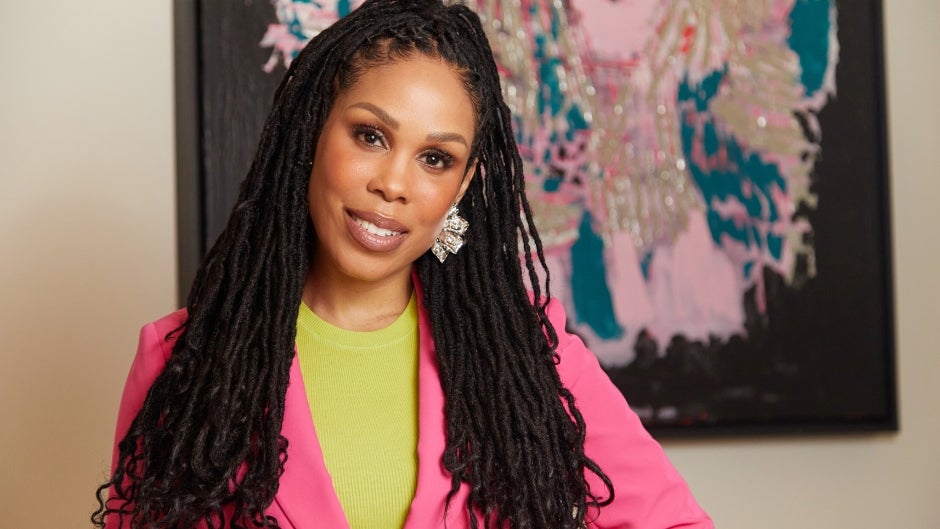
Dr. Uche Blackstock spent more than a decade working in emergency rooms in Brooklyn and Manhattan. In 2019 she walked away from academic medicine and started Advancing Health Equity, a consulting firm that trains hospitals and health systems on what she calls structural racism in clinical care. Her 2024 memoir LEGACY: A Black Physician Reckons with Racism in Medicine (Penguin Random House Viking) lays out what she saw across three decades inside US medicine, what her mother saw before her, and what the data documents about how Black patients are treated by the system that is supposed to care for them.
It is one of the most direct accounts of structural racism in US medicine published this decade by a working physician, and the editorial reason to know her name is simple: she is one of the few Black women in US medicine speaking publicly, on the record, about how the field's everyday norms produce the disparity numbers we cite all the time on this site.
Who she is
Blackstock is an emergency physician trained at Harvard College and Harvard Medical School. Her mother, the late Dr. Dale Gloria Blackstock, was the first Black woman to graduate from Harvard Medical School (1976). Her twin sister, Dr. Oni Blackstock, is also a physician and a public-health researcher. The family pattern, three Black women physicians spanning two generations, is itself a counterfactual to the demographic shape of US medicine: 2.7 percent of US physicians identify as Black women, per the AAMC's most recent workforce snapshot.
She testified before the US House Select Subcommittee on the Coronavirus Crisis on June 4, 2020, in a hearing titled "An Unequal Burden: Addressing Racial Health Disparities In The Coronavirus Pandemic." That testimony was one of the data points she cites as the moment her work moved fully outside the hospital and into the policy and public-conversation layer.
What LEGACY argues
The book's core claim is that racism in US medicine is not a series of bad-actor incidents. It is structural: built into who gets admitted to medical school, who gets believed in the exam room, what gets taught in clinical training, and how research gets designed. She walks through her own career as a working example. Why she left a tenured-track academic post (not because medicine wasn't fixable; because the institution she was inside was not interested in fixing it). Why she started a firm that consults on equity-grounded clinical practice rather than a nonprofit advocacy group (because hospitals respond to consulting contracts in ways they do not respond to op-eds).
The data she leans on across the book lines up with what we cite in our own reporting. The Black-white maternal mortality gap. The contested race-concordance evidence. The Hoffman 2016 PNAS pain-bias finding (PMID 27044069) that medical trainees endorse false beliefs about Black-versus-white biological differences at rates correlated with under-treatment of Black patient pain. LEGACY is not new evidence; it is the case that this evidence is the system, not its outliers.
What her firm actually does
Advancing Health Equity is a small consultancy. The publicly named clients on her firm's site include academic medical centers, health systems, and federal agencies. The work is concrete: assessment of where in a clinical pathway a Black patient is being lost, training on what equity-aware practice looks like at the bedside, and metrics that hospitals can actually measure against rather than the equity-by-press-release pattern that became common after 2020. Whether health systems hire AHE for honest reasons or for cover varies. Blackstock is on record about the pattern in the book.
If you are a clinician at a system that has not engaged this kind of work, AHE's reading list and training resources are useful even outside a paid contract. They sit at advancinghealthequity.com.
Whatever brought you to this page, community health centers see patients regardless of insurance and charge on a sliding scale that is often $0. Our directory of free and charitable clinics lists centers by state. A same-day telehealth visit is self-pay and is not billed to Medicaid, so if you have Medicaid the clinic route will usually cost less. If you would rather see a clinician online today:

See a doctor online today.
- Same-day video visits from $34
- Price shown before you book
- No insurance needed
 with Sesame Care
Affiliate link, we may earn a commission at no extra cost to you.
How to follow her work
The book is the durable artifact: LEGACY: A Black Physician Reckons with Racism in Medicine, published by Penguin Random House Viking, January 23, 2024. Hardcover, paperback, audiobook (read by the author).
Blackstock's primary social channel for ongoing commentary is X (formerly Twitter), where her handle is @uche_blackstock and her posting cadence is weekly to multi-weekly on US health policy, racial-disparity research, and her firm's work. She also writes occasional opinion pieces for the New York Times and other major outlets; her byline page on the NYT site collects them.
Her sister Oni Blackstock runs a parallel public-health consulting practice; the sisters frequently co-author and co-speak. If you are reading Uche, the Oni Blackstock work on HIV equity and Black-women health is the natural complement.
What you can take from this
Three concrete moves.
First, read the book. The thirty-second version is in book reviews; the thirty-page version is in Chapter 1. LEGACY is the most readable contemporary account of how structural racism actually works inside the everyday practice of US medicine, written by someone who was inside it for twenty years.
Second, if you are a clinician, the Advancing Health Equity reading list and training resources are a faster on-ramp than waiting for your institution to schedule equity training. If you are a patient, the book gives you language for what you may have already noticed in clinic visits and an evidence base to bring to the conversation.
Third, the Black Health directory is the practical companion: self-identified Black clinicians, with licenses checked against the NPI Registry or a state license board where applicable. Our piece on why finding a Black doctor is harder than it should be covers the workforce numbers behind the search.
Citations
Blackstock U. LEGACY: A Black Physician Reckons with Racism in Medicine. New York: Viking (Penguin Random House); 2024. Publisher page.
Advancing Health Equity LLC. advancinghealthequity.com.
US House Select Subcommittee on the Coronavirus Crisis. "An Unequal Burden: Addressing Racial Health Disparities In The Coronavirus Pandemic." June 4, 2020.
Hoffman KM, Trawalter S, Axt JR, Oliver MN. Racial bias in pain assessment and treatment recommendations, and false beliefs about biological differences between blacks and whites. Proc Natl Acad Sci USA. 2016;113(16):4296-4301. PMID 27044069.
Association of American Medical Colleges. Diversity in Medicine: Facts and Figures 2019. Workforce data on physician sex and race/ethnicity.