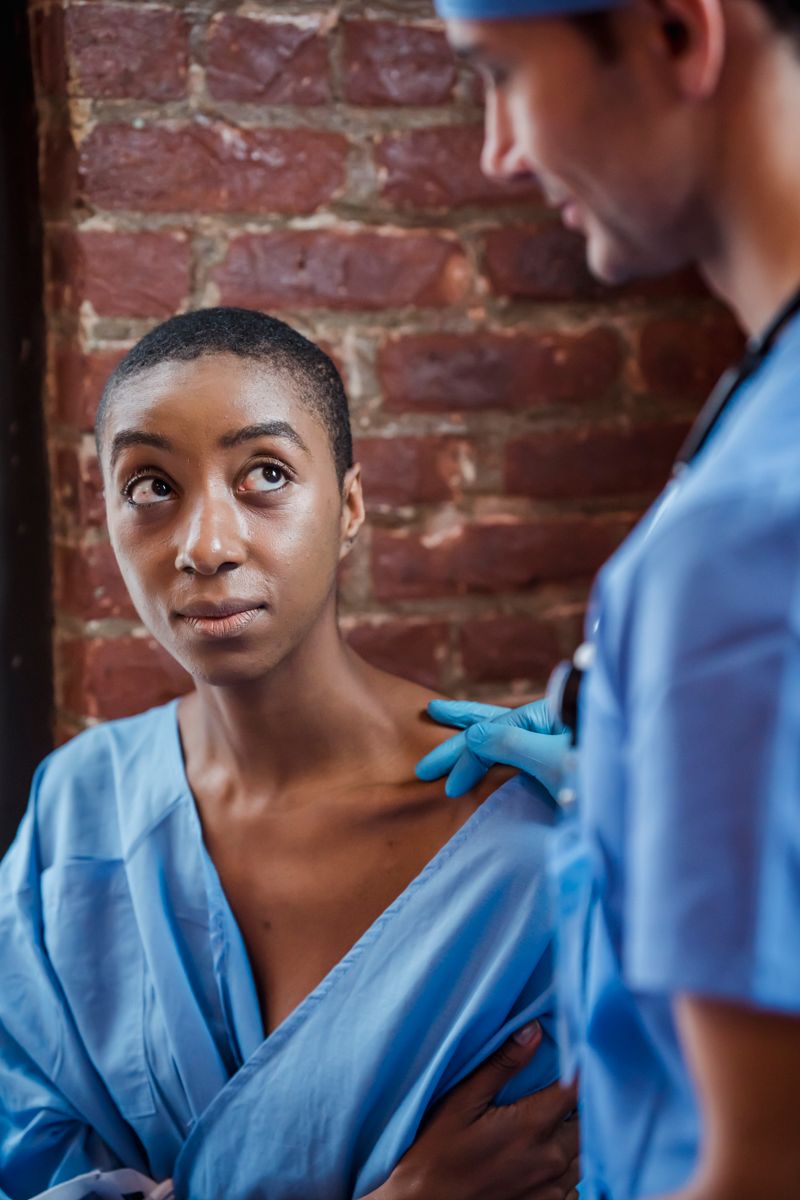
The New York State Department of Health runs Post-Treatment Support Services for Breast Cancer Survivors, for people who have finished treatment or will soon finish it, with an added focus on survivors who are Black. Services are free and include support groups, one-on-one mentoring from trained survivors, and referrals. The state funds three organizations to run it: SHARE in New York City, the Breast Cancer Network of Western New York, and the National Witness Project in Buffalo. Questions about the program go to canserv@health.ny.gov.
SHARE charges no fees, and all of its groups meet on Zoom or by phone. Its toll-free line is 844-ASK-SHARE (844-275-7427).
- Let's Talk About It: Black Women with Breast Cancer. A monthly 90-minute Zoom group for Black women in the New York City region who have finished active breast cancer treatment. The next sessions are Thursday, November 19 and Thursday, December 17, 2026, from 7 to 8:30 p.m. Eastern. Registration is required. Details and registration.
- Support group for Black women with metastatic breast cancer. For Black women diagnosed with stage 4 breast cancer. It meets on Zoom on the fourth Tuesday of each month, 6 to 7:30 p.m. Eastern. New members register online or by calling 844-275-7427, option 6.
- Sister-2-Sister mentoring. One-on-one Zoom mentoring that pairs you with a Black or Biracial breast cancer survivor who is at least two years past diagnosis. Contact blackmentorship@sharecancersupport.org.
Whatever brought you to this page, community health centers see patients regardless of insurance and charge on a sliding scale that is often $0. Our directory of free and charitable clinics lists centers by state. A same-day telehealth visit is self-pay and is not billed to Medicaid, so if you have Medicaid the clinic route will usually cost less. If you would rather see a clinician online today:
 Sesame Care
See a doctor online today.
Same-day video visits from $34
See a doctor todayZERO's Black Men's Prostate Cancer Initiative runs a national support group on Zoom for Black men diagnosed with prostate cancer, led by a licensed mental health professional. It meets on the second and fourth Monday of each month at 8 p.m. Eastern. Sign up through the form on ZERO's Black men's page; questions go to healthequity@zerocancer.org. ZERO's page does not state a cost.
- Sisters' Journey, New Haven, Connecticut. A faith-based breast cancer support organization that, in its words, honors "the experience of Black women and women of color." Its support group meets the third Tuesday of each month, 6 to 7:30 p.m., at St. Luke's Church, 111 Whalley Ave. Survivors, people in treatment, caregivers and loved ones are welcome, and no registration is needed. Call 203-288-3556 or email sistersjourney@sbcglobal.net.
- Sisters in Survival, Buffalo. The Breast Cancer Network of Western New York's support groups for women of color, led by an oncology social worker. They meet the second Monday of each month, 5 to 6 p.m., and the fourth Saturday, 10 to 11 a.m., at Spot Coffee, 1406 Hertel Ave. Register by calling 716-706-0060. The network also offers peer mentoring and one-on-one phone sessions.
- Witness Project of Long Island, Wyandanch. Free breast and cervical cancer education led by African American survivors, plus free help getting a low- or no-cost mammogram or Pap test. It is an education and navigation program rather than a support group. Call 631-491-4889, Monday to Friday 9 a.m. to 5 p.m., or email witnessprojectli@gmail.com.
- The National Witness Project, Buffalo. Cancer education and help from community health workers, and one of the state's funded programs for Black breast cancer survivors. Email WitnessCommunityOutreach@gmail.com or call 716-845-3383.
- SHARE caregiver group. For anyone whose family member, partner or friend has breast, ovarian, uterine or cervical cancer. It meets monthly on Zoom, 6 to 7:30 p.m. Eastern. Register online or call 844-275-7427.
- NYC Prostate Cancer Support (formerly Us TOO New York). Meets on Zoom the third Thursday of each month at 6 p.m. Eastern; the next meeting is November 19, 2026. Spouses and partners are encouraged to come. Email info@nycprostatecancersupport.org. It is open to all men, not only Black men.
- CancerCare. Free support from oncology social workers for people with cancer, caregivers, loved ones and anyone who has lost someone, including online groups. Call 800-813-HOPE (800-813-4673).
We looked for Black-focused cancer support groups meeting in New Jersey and could not confirm one with a current schedule as of October 29, 2026. ZERO's national Zoom group for Black men and CancerCare's online groups are open to you, and SHARE can tell you which of its Zoom groups you can join: call 844-275-7427. If you run a group we should list, write to hello@blackhealth.org.
If you are still looking for care, our New York City care page lists Black doctors, community health centers and free screenings across New York City, Newark and Jersey City.
Frequently asked questions
Are there free support groups for Black women with breast cancer in New York? ▼
Yes. New York State funds free post-treatment support with a focus on Black survivors. SHARE's Let's Talk About It group for Black women meets monthly on Zoom, its metastatic group meets the fourth Tuesday of each month, and Sisters in Survival meets in person in Buffalo.
Is there a support group for Black men with prostate cancer? ▼
ZERO runs a national Zoom group for Black men diagnosed with prostate cancer on the second and fourth Monday of each month at 8 p.m. Eastern, led by a licensed mental health professional.
Do I have to live in New York City to join SHARE's groups? ▼
SHARE describes Let's Talk About It as a group for Black women in the New York City region. Its groups meet on Zoom or by phone, so call 844-275-7427 to ask which ones are open to you.
Is there a group for caregivers? ▼
SHARE runs a monthly Zoom caregiver group for people whose loved one has breast, ovarian, uterine or cervical cancer, and CancerCare offers free support for caregivers at 800-813-4673.