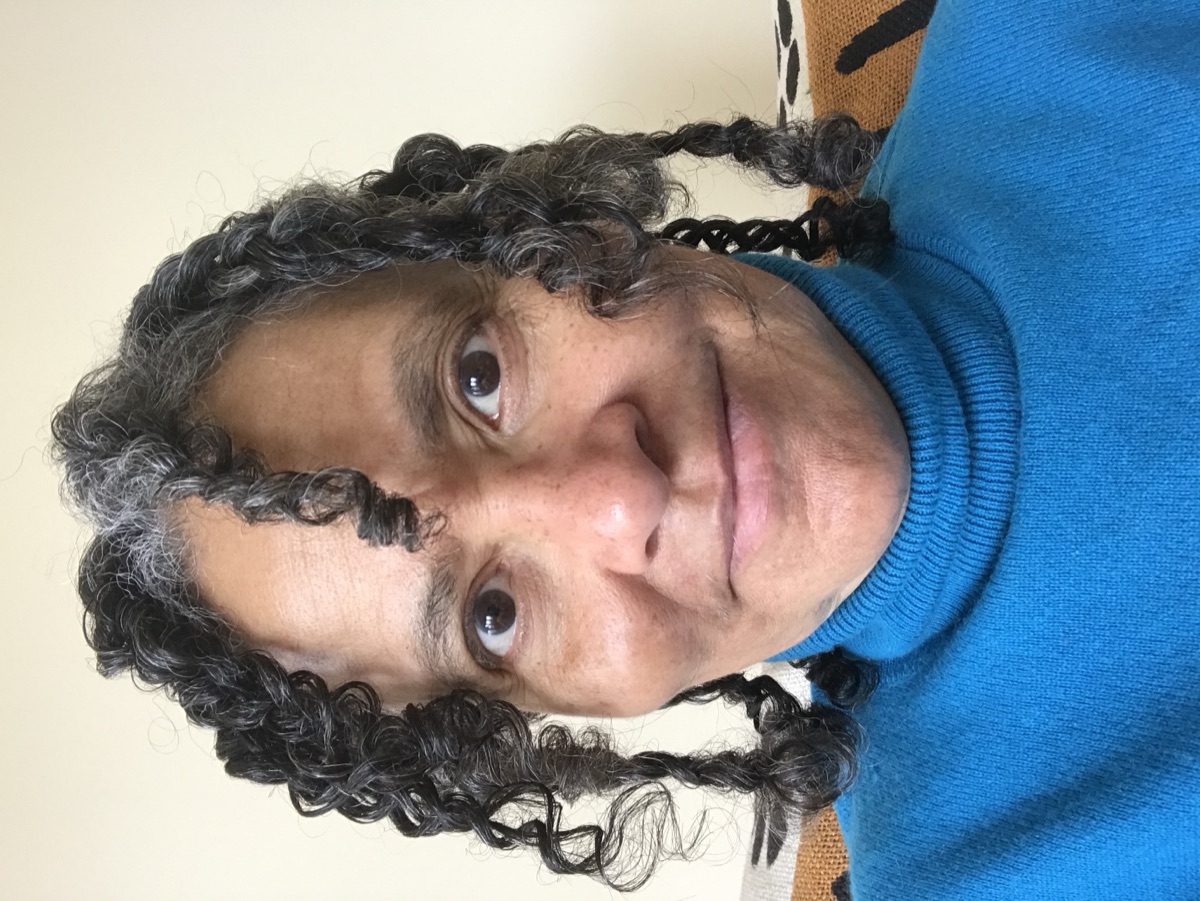
In 2000, Dr. Camara Phyllis Jones published a paper in the American Journal of Public Health that gave US public-health researchers and clinicians a vocabulary they did not previously have. The paper is called Levels of Racism: A Theoretic Framework and a Gardener's Tale, and it sits at PMID 10936998. It is short, plain, and the most-cited piece of public-health-equity scholarship of the last twenty-five years. If you have read anything in the racial-disparity literature in the last decade, the framework Jones laid out is probably underneath it, even when she is not cited by name.
The framework distinguishes three kinds of racism: institutional (the structure of who has access to what), personally mediated (individual prejudice, intentional or not), and internalized (the negative beliefs members of stigmatized groups absorb about themselves). The Gardener's Tale, the allegory she pairs with the framework, makes the institutional layer visible by walking through how a gardener with two flower boxes (one with rich soil, one with rocky soil) ends up explaining the height-of-flowers gap as something other than the soil.
That allegory is the part that gets quoted in policy testimony, training sessions, and op-eds. It is also the reason Jones's framework migrated from the academic literature into clinical training, public-health practice, and the structural-racism-and-health conversation that became national after 2020.
Who she is
Jones is a physician (Stanford MD) and an epidemiologist (Johns Hopkins ScM, Hopkins ScD). She trained at Wellesley undergrad, taught at Harvard School of Public Health, ran the Social Determinants of Health Branch at the CDC, and served as the 2015-2016 President of the American Public Health Association. She is currently a Senior Fellow at Morehouse School of Medicine's Satcher Health Leadership Institute and the Cardiovascular Research Institute. The career arc reads as the standard prestige path through US academic public health, with one important difference: she has spent the last three decades arguing, in technical-journal language and in lay-audience allegory, that racism is the structural variable the field had been trained to ignore.
The honors stack reflects that. Radcliffe Fellow at Harvard 2019-2020. Honorary Doctor of Science from Mount Sinai 2016. The John Snow Award in epidemiology, the field's prestige award named for the founder of modern public-health epidemiology, in 2011. APHA presidency, the largest US professional public-health body. The pattern is consistent: the establishment recognized the work even as the framework challenged the establishment.
What the framework says
The 2000 paper organizes racism into three operational layers, each with a distinct intervention pathway.
Institutional racism. Differential access to material resources, opportunities, and goods of society by race. The clearest examples in health: who gets cleaner air to breathe, who gets walkable neighborhoods, who gets a hospital with a stroke unit within twenty minutes, whose schools have working AC. None of this requires anyone to hold a personal prejudice. It is the system of who-got-what-where-and-when, codified in zoning, redlining, school district lines, hospital placement, and federal funding formulas.
Personally mediated racism. Prejudice (differential assumptions about the abilities, motives, and intents of others by race) and discrimination (differential actions on those assumptions). The clearest examples in health: the Hoffman 2016 PNAS pain-bias finding (PMID 27044069) that medical trainees endorse false biological differences between Black and white patients at rates that correlate with under-treatment of Black patient pain. Personally mediated racism happens person-to-person; it does not require the institutional layer to be active, but it usually rides on top of it.
Internalized racism. Acceptance by members of stigmatized races of negative messages about their own abilities and intrinsic worth. The clearest examples in health: medical mistrust patterns in Black patients that get characterized as a Black-patient problem rather than as a rational response to a documented history of medical-system harm. Internalized racism is downstream of the other two; the intervention pathway is restoring trust, not lecturing patients.
Why this framework runs through our reporting
Most of the disparity numbers we cite on this site map onto the Jones framework directly. The 3.5x Black-white maternal mortality gap is institutional (which hospitals deliver Black babies, what their bundles of care look like) plus personally mediated (whose pain gets believed in the third trimester) plus internalized (women hesitating to escalate symptoms). The pulse-oximeter racial bias finding is institutional (which calibration cohorts the FDA accepted, which devices got cleared) plus personally mediated (clinicians not adjusting for the documented bias even after Sjoding 2020). The Black-physician-pipeline story is institutional all the way down.
Whatever brought you to this page, community health centers see patients regardless of insurance and charge on a sliding scale that is often $0. Our directory of free and charitable clinics lists centers by state. A same-day telehealth visit is self-pay and is not billed to Medicaid, so if you have Medicaid the clinic route will usually cost less. If you would rather see a clinician online today:

See a doctor online today.
- Same-day video visits from $34
- Price shown before you book
- No insurance needed
 with Sesame Care
Affiliate link, we may earn a commission at no extra cost to you.
This is what the framework is for: making the disparity numbers parse not as a series of unconnected problems but as one structural pattern with multiple working layers. If you read more than a few articles on this site, you are already using the Jones framework whether you knew the name for it or not.
How to follow her work
The 2000 paper is open-access at PubMed Central; read it once, even if you have only ten minutes. PMID 10936998. Three pages, plain English, the framework you will see referenced everywhere else in the structural-racism-and-health literature.
Jones's 2014 TED talk, Allegories on Race and Racism, runs through the Gardener's Tale and two others (the Restaurant, the Dual Reality). It is on YouTube, freely available, and is the cleanest spoken-word version of the framework.
Her current public-facing institutional home is Morehouse School of Medicine's Satcher Health Leadership Institute as a Senior Fellow. The Institute publishes commentary, lectures, and policy briefs that extend the framework to current health-equity questions.
What you can take from this
Three concrete moves.
First, read the 2000 paper. It is the closest thing US public health has to a foundational text on race-and-health. The Gardener's Tale section in particular is worth knowing well; the next time you are in a conversation about a disparity number and someone reaches for a "but why" explanation, the framework gives you the structural answer.
Second, watch the TED talk. Twenty minutes. The Dual Reality allegory in particular is the one most readers find most useful for explaining race-and-health to friends and family who have not been in the public-health literature.
Third, the Jones framework is the lens you can carry into every clinical encounter. When something does not feel right in a clinic visit, the framework gives you three places to look (institutional, personally mediated, internalized) instead of one. That is more useful than any single piece of patient-advocacy advice we have written. Our directory is the practical companion when the next step is finding a different clinician.
Citations
Jones CP. Levels of racism: a theoretic framework and a gardener's tale. Am J Public Health. 2000;90(8):1212-1215. PMID 10936998. DOI 10.2105/ajph.90.8.1212.
Hoffman KM, Trawalter S, Axt JR, Oliver MN. Racial bias in pain assessment and treatment recommendations, and false beliefs about biological differences between blacks and whites. Proc Natl Acad Sci USA. 2016;113(16):4296-4301. PMID 27044069.
American Public Health Association: Camara Phyllis Jones served as President, 2015-2016.
Satcher Health Leadership Institute, Morehouse School of Medicine. satcherinstitute.org.