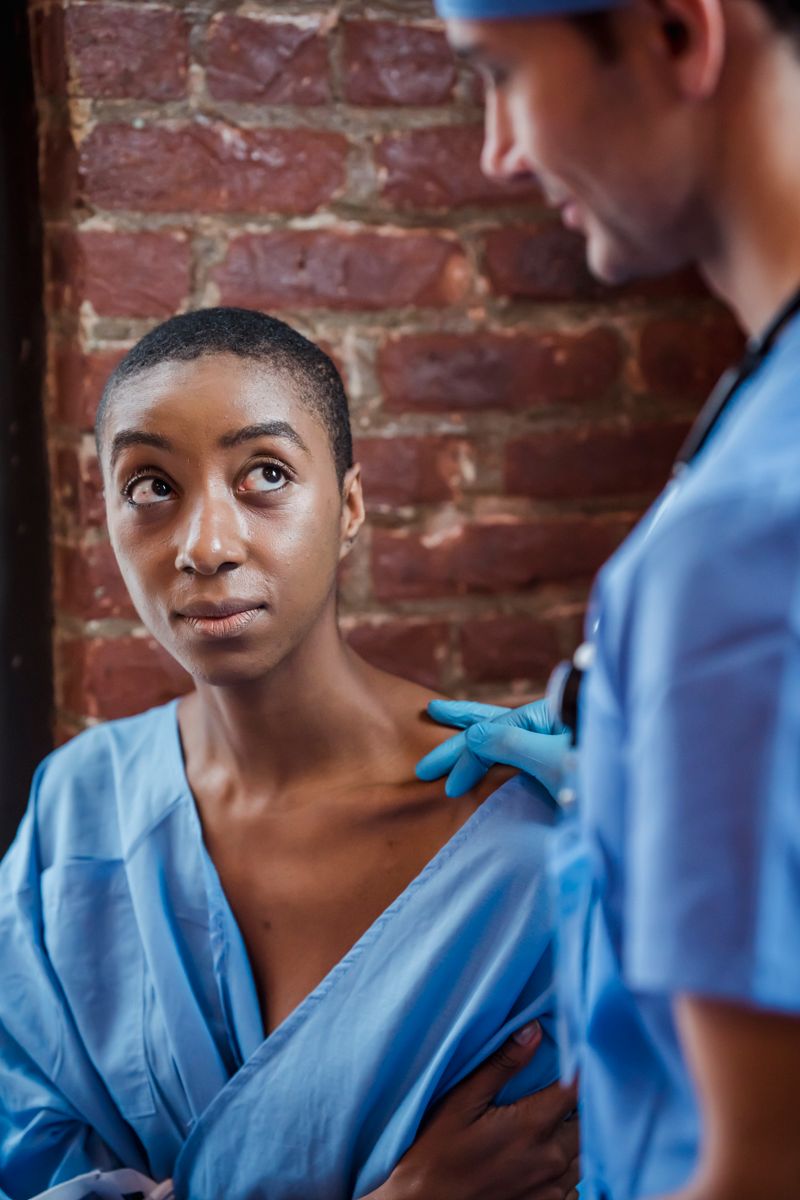
If your Pap or HPV test came back abnormal, your clinician likely used the word colposcopy next. That word can sound bigger than the appointment actually is. A colposcopy is an in-office exam, usually 10 to 20 minutes, where a clinician uses a lighted magnifying device called a colposcope to look closely at your cervix, the same view as a regular speculum exam, just magnified and lit. Most colposcopies find nothing that needs more than watching. When one does find something, that is the exam doing exactly what it is built to do: catching a change years before it could ever become cancer.
What ASC-US, LSIL, and HSIL actually mean
Pap and HPV results use specific language that sounds worse than it is. ASC-US (atypical squamous cells of undetermined significance) means a small number of cervical cells look mildly abnormal, almost always because of an HPV infection your immune system is still working through. LSIL (low-grade squamous intraepithelial lesion) is a step up: cells show clear low-grade changes, still usually caused by HPV that clears on its own within a year or two. HSIL (high-grade squamous intraepithelial lesion) means the changes are more advanced and more closely linked to precancer, which is why it is the result most likely to send you straight to colposcopy instead of a repeat test. None of these three results means you have cancer. They describe how closely your cervix needs to be watched next.
What happens during the exam
You lie back the same way you do for a Pap, feet in stirrups, while the clinician places a speculum to see the cervix. They apply a vinegar-like (acetic acid) solution with a cotton swab, which turns abnormal areas white so they stand out under the colposcope's light and magnification; this can cause a brief stinging or burning feeling. If an area looks abnormal, the clinician takes a small biopsy, a pinch of tissue about the size of a pencil eraser tip. The biopsy is the part that causes discomfort, usually described as a sharp cramp or pinch that passes within seconds. Taking an over-the-counter pain reliever an hour beforehand helps most women. Afterward, expect some spotting or dark discharge for a few days; skip tampons, sex, and douching until it clears, and ask your clinic what amount of bleeding should prompt a call.
When a colposcopy is the right next step
Not every abnormal result leads to colposcopy right away. ASCCP, the professional society that writes the national management guidelines, bases the decision on your combined risk: your current result plus your screening history, not the current result by itself. In general, a positive high-risk HPV test paired with ASC-US or worse, or an HSIL result on its own, points to colposcopy. A single mild result in someone with a clean screening history more often means a repeat test in a year instead. If your clinician recommends colposcopy, it is because your specific combination of results crossed the risk threshold where a closer look changes what happens next, not because something is already wrong.
Community health centers offer Pap smears and HPV screening on a sliding scale, often the exact test a paid telehealth visit would refer you out for anyway. Our directory of free and charitable clinics lists centers by state. A self-pay telehealth follow-up for an abnormal result is not billed to Medicaid, so book the screening at a clinic first. If you need a follow-up visit sooner:

Everlywell
An at-home HPV test for women using a vaginal swab sample, with physician-reviewed results delivered online.
Order an at-home HPV testAffiliate link, we may earn a commission at no extra cost to you.
If the biopsy finds CIN1, CIN2, or CIN3
A biopsy result comes back as cervical intraepithelial neoplasia, or CIN, graded 1 to 3 by how much of the cervical tissue looks abnormal. CIN1 is a marker of active HPV, not precancer, and the standard approach is surveillance: repeat testing in a year rather than treatment, because most CIN1 clears on its own as the immune system handles the virus. CIN2 sits in between; younger women who want to preserve fertility are often offered continued monitoring for up to two years, while others move to treatment. CIN3 is the true precancer stage, and treatment is recommended for essentially everyone who receives that result. Treatment for CIN2 and CIN3 is usually a LEEP (loop electrosurgical excision procedure), a quick in-office procedure that removes the abnormal tissue with a thin heated wire loop, or, for more extensive disease, a cone biopsy done in an operating room. Both are outpatient. Removing the abnormal cells at this stage is what stops them from ever becoming cancer.
How long results take
Biopsy results typically take 2 to 10 days to come back, depending on the lab. Ask before you leave the appointment how you will be notified (patient portal, phone call, or a scheduled follow-up visit), and write down the date you should expect to hear something. If more than two weeks pass with no word, call the office. A result that never reaches you is functionally the same as never having had the biopsy at all.
The cost isn't a reason to skip this
Colposcopy and the biopsy that comes with it are not optional extras bolted onto your Pap; both are diagnostic care, and there is a specific program built to pay for them. The National Breast and Cervical Cancer Early Detection Program (NBCCEDP), funded by the CDC and run through state health departments, covers cervical cancer screening and the full diagnostic follow-up it can lead to, including colposcopy, for uninsured and underinsured women ages 21 to 64 with income at or below 250% of the federal poverty level. Every state runs a local version of this program, and it is not a loan or a promise: it is an eligibility category you either meet or don't, and participating clinics bill the program directly. Federally Qualified Health Centers, found in nearly every county, also offer colposcopy on a sliding fee scale regardless of insurance status. You can find free screening and follow-up near you through our screening directory, including local listings like this one for Tallahassee, Florida, or search your own city.
Why this one appointment matters
Cervical cancer is one of the most preventable cancers there is, precisely because it takes years to develop and gives screening and follow-up a wide window to catch it. Black women in the United States still die of this disease at a hysterectomy-corrected rate of 10.1 per 100,000, roughly double the corrected rate for white women, and the gap traces less to biology than to who completes the follow-up after an abnormal result. That means the colposcopy on your calendar, and whatever comes after it, is not a formality. It is the step that closes the gap for you specifically. Keep the appointment, ask for the result if it doesn't arrive on schedule, and if a biopsy calls for treatment, schedule that too.
Frequently asked questions
Does a colposcopy hurt? ▼
The exam itself is similar to a Pap smear and shouldn't hurt. If your clinician takes a biopsy, most women feel a sharp pinch or cramp that lasts a few seconds. Taking a pain reliever an hour before your appointment can ease the cramping. Mild spotting and cramping for a day or two afterward is normal.
How long do colposcopy results take? ▼
Biopsy results usually take 2 to 10 days, depending on the lab. Ask your clinic before you leave how and when you'll be notified. If you haven't heard anything after two weeks, call and ask directly rather than assuming no news is good news.
What if I can't afford a colposcopy? ▼
The National Breast and Cervical Cancer Early Detection Program covers colposcopy and other diagnostic follow-up for uninsured and underinsured women ages 21 to 64 who meet income guidelines, through a state-run program in every state. Federally Qualified Health Centers also offer colposcopy on a sliding fee scale. Ask any clinic's front desk about both options before assuming you can't afford the appointment.
Does an abnormal Pap mean I have cancer? ▼
No. Most abnormal Pap or HPV results reflect HPV-related cell changes that your immune system can clear on its own, not cancer. A colposcopy and biopsy determine whether those changes need watching or treatment. Cervical cancer itself takes years to develop from these changes, which is exactly why screening and follow-up work.
What's the difference between CIN1 and CIN2 or CIN3? ▼
CIN1 means mild cell changes linked to an active HPV infection; most clinicians recommend watching it with repeat testing in a year rather than treating it, since it often clears on its own. CIN2 and CIN3 are more advanced, precancerous changes and are usually treated with a LEEP or, less often, a cone biopsy to remove the abnormal tissue before it can progress.