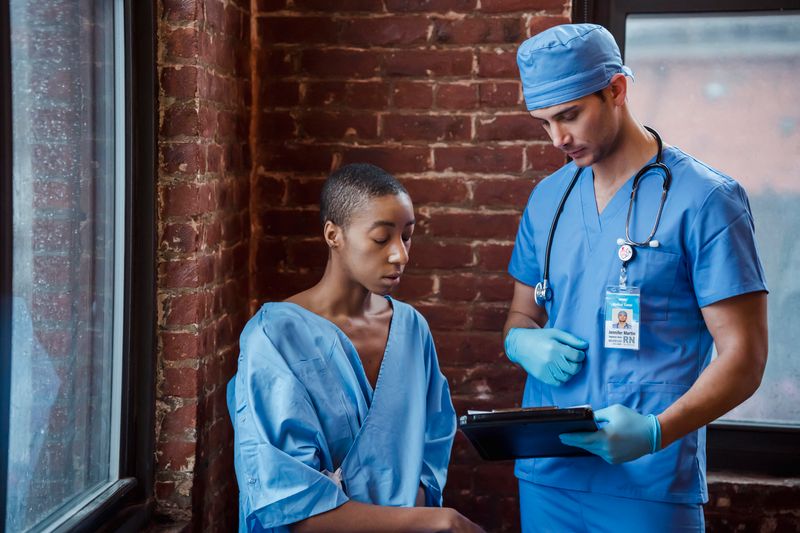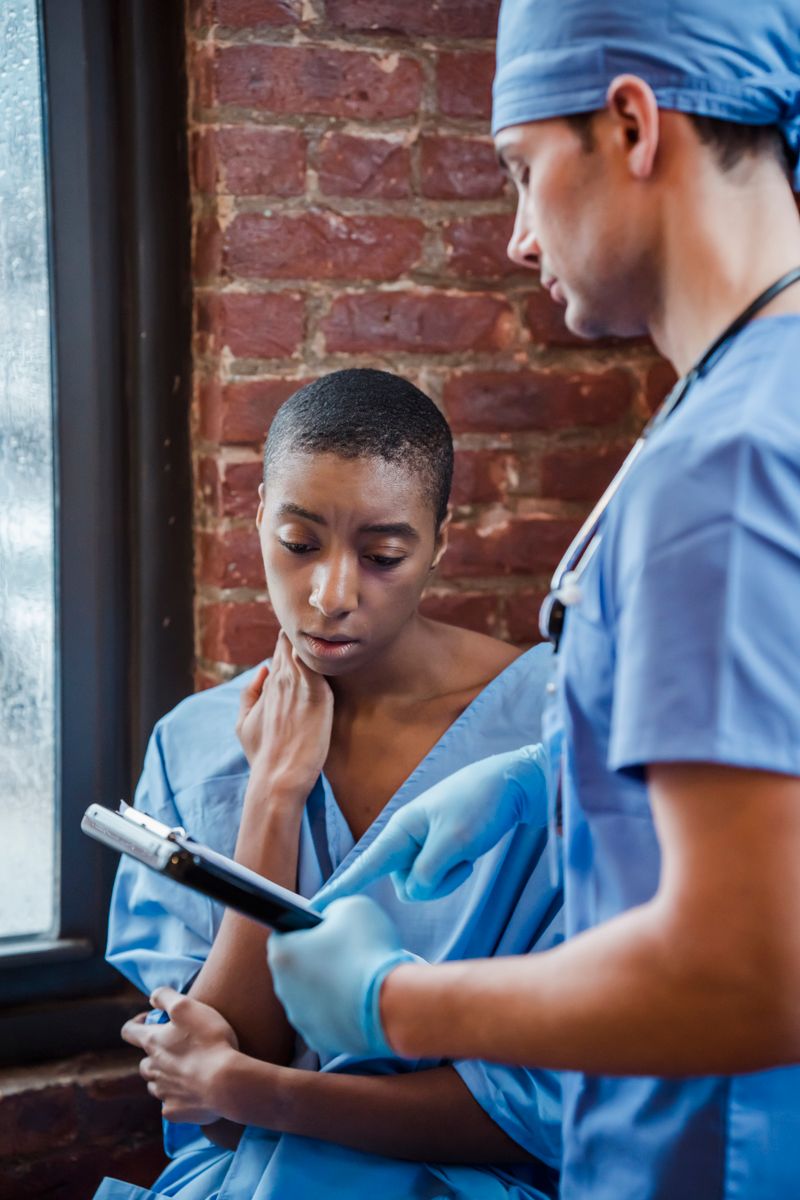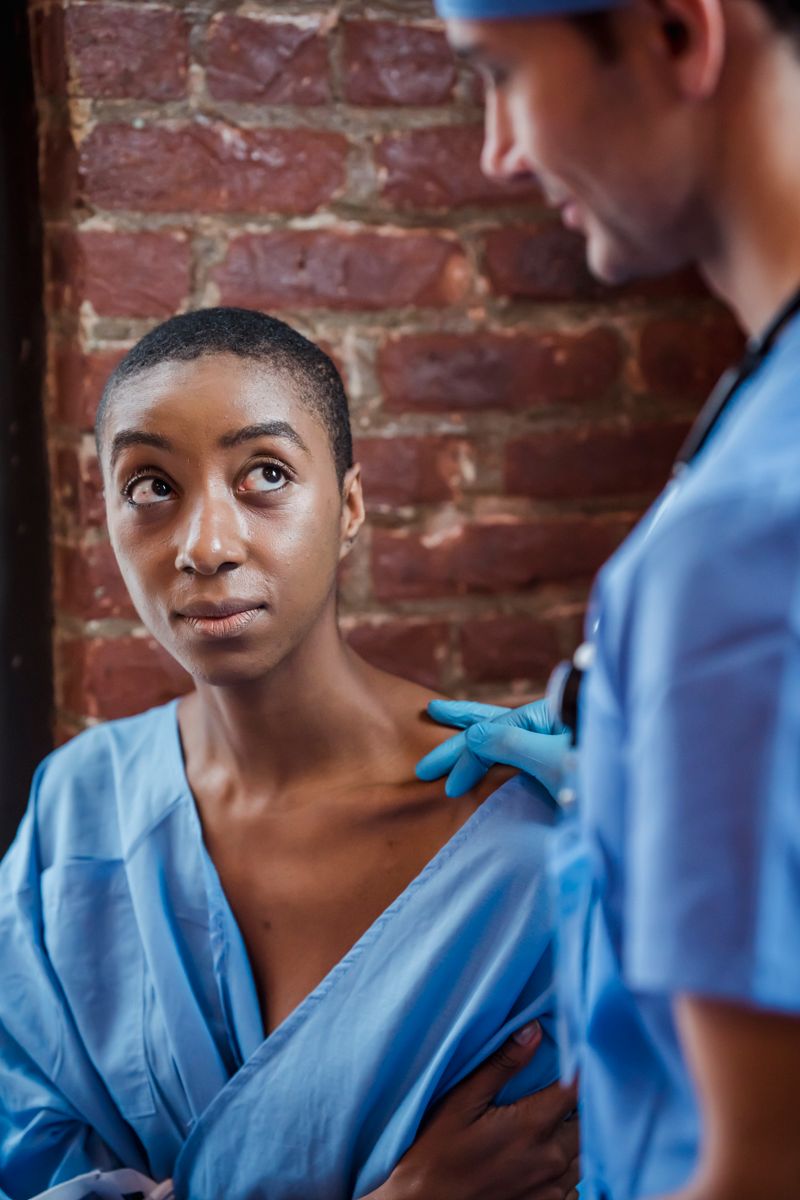
An ectopic pregnancy is a pregnancy that implants outside the uterus, almost always in a fallopian tube. It cannot survive, and as it grows it can rupture the tube and cause life-threatening internal bleeding. Black women are diagnosed with ectopic pregnancy more often than white women, and they die from it at far higher rates. The two facts that protect you are the same for everyone: recognize the warning signs early, and demand a pregnancy test and an ultrasound when something feels wrong.
What an ectopic pregnancy is
After an egg is fertilized, it normally travels down the fallopian tube and implants in the lining of the uterus, where there is room to grow. In an ectopic pregnancy, the fertilized egg implants somewhere else. About 97% of the time that place is a fallopian tube, which is why ectopic pregnancies are often called tubal pregnancies. A tube is narrow and cannot stretch to hold a growing pregnancy. As the pregnancy enlarges it can split the tube open, a rupture, which causes rapid internal bleeding. There is no way to move the pregnancy into the uterus and no way for it to survive outside the uterus. Treatment is about protecting the pregnant person's life and fertility.
The disparity, in real numbers
The gap shows up at both ends: Black women get ectopic pregnancies more often, and they survive them less often. In a study of more than 14 states' Medicaid data, the ectopic pregnancy rate was 46% higher for Black women than white women (relative risk 1.46). A separate analysis of an insured California health system from 2010 to 2019 found ectopic pregnancy in 21.9 of every 1,000 pregnancies among Black women versus 14.6 per 1,000 among white women. The mortality gap is the part that should make every reader pay attention. From 2003 to 2007, the ectopic pregnancy death rate was 6.8 times higher for Black women than white women. Ectopic rupture is a leading cause of first-trimester pregnancy-related death, and it kills Black women at a rate that no other group faces.
Why the risk is higher for Black women
The main driver is damage to the fallopian tubes. Scarred or narrowed tubes trap a fertilized egg before it reaches the uterus. The most common cause of that scarring is pelvic inflammatory disease (PID), an infection that usually starts as untreated chlamydia or gonorrhea. Black women carry a heavier burden of both. The lifetime rate of PID among Black women is 2.2 times that of white women (6.0% versus 2.7%) even among women with no diagnosed prior infection, which points to gaps in screening and treatment, not behavior. Each episode of PID raises the odds that a future pregnancy lands in a damaged tube. If you have had chlamydia, gonorrhea, or PID, tell every clinician who treats you in early pregnancy. Learn the symptoms in our guide to pelvic inflammatory disease in Black women.
Tubal damage is not the only risk factor. Your odds of an ectopic pregnancy go up if you have had one before, have had tubal surgery or a tubal ligation, smoke, conceive through in vitro fertilization, or become pregnant while using an intrauterine device. None of these guarantee an ectopic pregnancy. They are reasons to be evaluated quickly the moment you have a positive test and any pain or bleeding.
If you or someone with you has warning signs right now, call 911 or go to the nearest emergency department. Do not wait for an appointment and do not use a video visit for this. Emergency rooms must treat you regardless of insurance or ability to pay under EMTALA. For follow-up care afterwards, our directory of free and charitable clinics lists centers by state, and a same-day telehealth visit is not billed to Medicaid:
 Sesame Care
See a doctor online today.
Same-day video visits from $34
See a doctor todayThe warning signs you cannot ignore
Early symptoms can look like a normal pregnancy or a miscarriage, which is part of why ectopic pregnancies get missed. The signal to act on is pain that is sharp, stabbing, or concentrated on one side of the lower belly or pelvis, often paired with vaginal bleeding or spotting. Three symptoms point to a possible rupture and internal bleeding: pain at the tip of one shoulder (blood under the diaphragm irritates a nerve), sudden dizziness or lightheadedness, and fainting. A rupture is a surgical emergency. People bleed to death internally from ruptured ectopic pregnancies, and the bleeding is not always visible from the outside.
Why it gets missed, and how to advocate for yourself
Ectopic pregnancy is dangerous partly because it hides. Early on it can mimic a urinary infection, an ovarian cyst, or a normal early pregnancy. It is more dangerous when pain is not taken seriously. Research has documented that Black patients' pain is underestimated and undertreated across emergency and obstetric settings, and that Black women are less likely to receive tube-sparing surgery for ectopic pregnancy (relative risk 0.76 compared with white women). You do not have to accept being sent home unexamined. If you have a positive or possible positive pregnancy test and pain or bleeding, say the words out loud: I need a pregnancy test, an hCG blood level, and a transvaginal ultrasound to rule out an ectopic pregnancy. Bring someone with you if you can. Write down your last period date and any history of STIs, PID, or prior ectopic pregnancy.
How it is diagnosed and treated
Diagnosis rests on two tools used together. A transvaginal ultrasound looks for a pregnancy inside the uterus; if the uterus is empty but a blood test confirms pregnancy, an ectopic is suspected. Doctors also measure the pregnancy hormone hCG in the blood, often twice over 48 hours, because in a healthy early pregnancy that number rises in a predictable pattern. An abnormal rise plus an empty uterus points toward an ectopic pregnancy.
Treatment depends on how early and how stable you are. If the pregnancy is caught early, has not ruptured, and your vital signs are stable, a medication called methotrexate can stop the pregnancy from growing so your body reabsorbs it, with no surgery. You will need repeat blood tests afterward to confirm the hCG falls to zero. If the pregnancy is larger, if methotrexate is not an option, or if you choose surgery, a surgeon removes the ectopic pregnancy, sometimes saving the tube and sometimes removing it. If the tube has already ruptured, it is emergency surgery to stop the bleeding. The faster an ectopic pregnancy is found, the more options you have and the more likely your tube is preserved.
Fertility after an ectopic pregnancy
One ectopic pregnancy does not mean you cannot carry a pregnancy later. Many people go on to have healthy pregnancies, including after losing one fallopian tube, because the remaining tube can do the work. A prior ectopic pregnancy does raise the risk of another one, so future pregnancies should be confirmed early with an ultrasound to check that the pregnancy is in the uterus. Tell your clinician about your history at the first positive test, not at your first prenatal visit weeks later.
How to get care
If you are pregnant or could be, build your care around providers who listen. A clinician who takes your pain seriously and orders the right tests early is the single biggest protection against a missed ectopic pregnancy. You can find a Black OB-GYN or reproductive-health provider in our directory. If you have a history of STIs, PID, tubal surgery, or a prior ectopic pregnancy, say so at your first positive test and ask for an early ultrasound to confirm the pregnancy is in the uterus.
Frequently asked questions
Can an ectopic pregnancy be moved into the uterus and saved? ▼
No. There is no procedure to move an ectopic pregnancy into the uterus, and a pregnancy cannot survive outside the uterus. Treatment focuses on ending the ectopic pregnancy safely and protecting your fertility before the tube ruptures.
What does ectopic pregnancy pain feel like? ▼
It is often sharp or stabbing and concentrated on one side of the lower belly or pelvis, frequently with vaginal bleeding or spotting. Pain at the tip of one shoulder, sudden dizziness, or fainting can signal a rupture with internal bleeding and is a 911 emergency.
Why are Black women at higher risk of ectopic pregnancy? ▼
The largest driver is fallopian-tube damage from pelvic inflammatory disease, which usually follows untreated chlamydia or gonorrhea. Black women carry a higher burden of these infections and of PID, which scars the tubes and traps a fertilized egg before it reaches the uterus.
How is an ectopic pregnancy diagnosed? ▼
With a transvaginal ultrasound to look for a pregnancy in the uterus and blood tests that measure the pregnancy hormone hCG, often repeated over 48 hours. An empty uterus with a positive pregnancy test and an abnormal hCG pattern points to an ectopic pregnancy.
Can I still get pregnant after an ectopic pregnancy? ▼
Yes. Many people have healthy pregnancies afterward, even after losing one fallopian tube. Because a prior ectopic pregnancy raises the risk of another, confirm any future pregnancy early with an ultrasound to make sure it is in the uterus.
What should I say if a provider dismisses my pain? ▼
Ask directly for a pregnancy test, a blood hCG level, and a transvaginal ultrasound to rule out an ectopic pregnancy. If you are sent home and the pain continues or worsens, return or go to another emergency room. A missed ectopic pregnancy can rupture and become life-threatening.