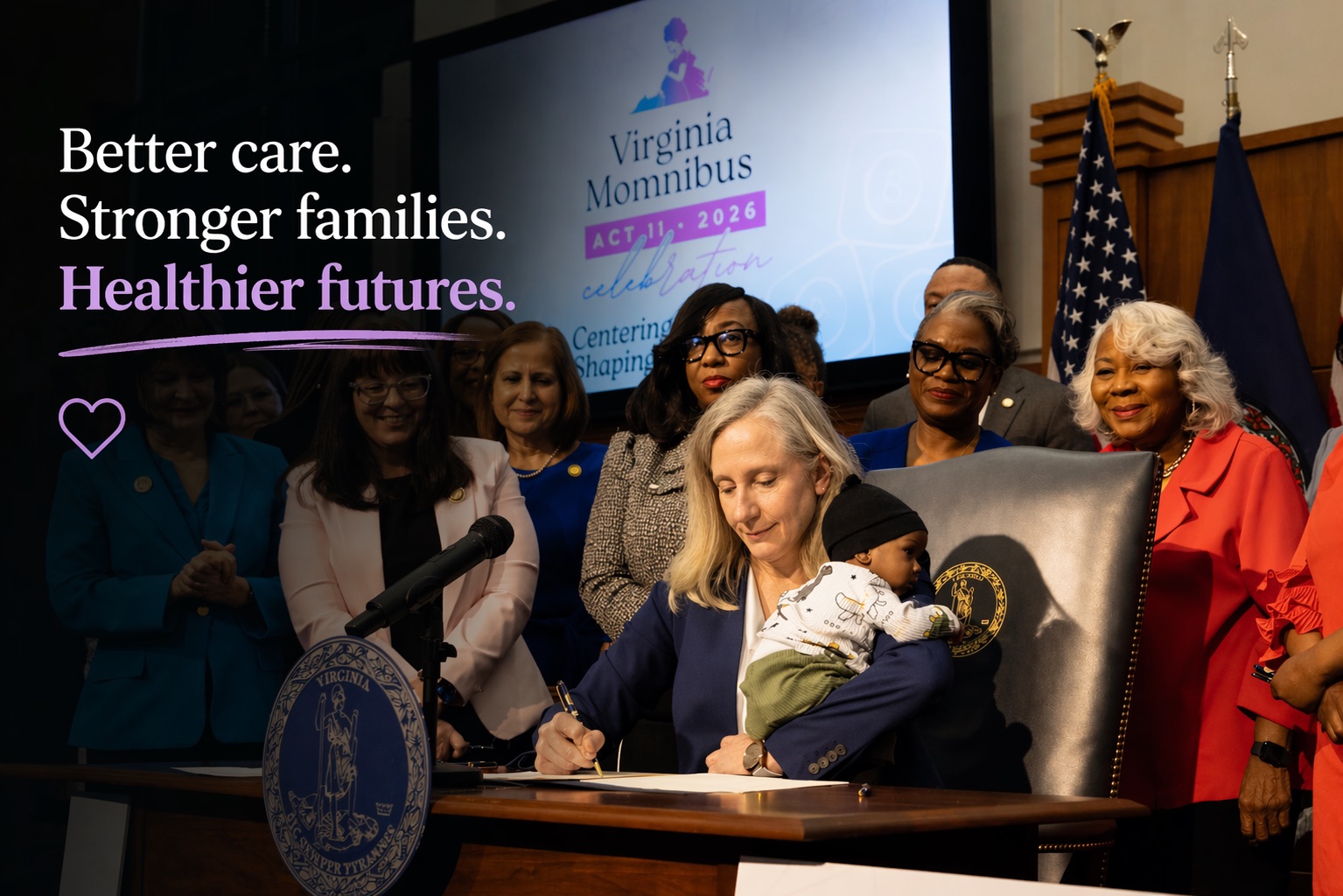
The 2020 bill was called the Black Maternal Health Momnibus Act of 2020. The version introduced in March 2026, H.R. 7973, is called the Momnibus Act. Between the two, the legislation kept its 14-title structure and its sponsor, Rep. Lauren Underwood (D-IL-14), but shed the population it names. We read all four bill texts against each other. The substitution is not rhetorical. It is written into the statute, section by section.
Four versions, one disappearing word
The first two versions named Black women directly. The 2020 H.R. 6142 used the standalone word "Black" eight times in its provisions, seven of them inside Title II, the Honoring Kira Johnson title, where the text directed community-based grants to "improving maternal health outcomes for Black women" and gave special consideration to organizations "led by Black women" (govinfo.gov bill text, BILLS-116hr6142ih, https://www.govinfo.gov/content/pkg/BILLS-116hr6142ih/html/BILLS-116hr6142ih.htm). The 2021 H.R. 959 kept the Black-naming frame and broadened the population, shifting the phrasing to "Black pregnant and postpartum individuals" while holding the explicit references in the same section.
The 2023 H.R. 3305 was the turn. The body provisions that had named Black women were replaced with an outcome-defined phrase: "demographic groups with elevated rates of maternal mortality, severe maternal morbidity, maternal health disparities, or other adverse perinatal or childbirth outcomes" (govinfo.gov bill text, BILLS-118hr3305ih, https://www.govinfo.gov/content/pkg/BILLS-118hr3305ih/html/BILLS-118hr3305ih.htm). That version still carried "Black" in its short title. The 2026 H.R. 7973 removed it from the title too. The only standalone "Black" left in the current bill sits inside a compound noun, "historically Black college or university," at Section 302(b)(12) (govinfo.gov bill text, BILLS-119hr7973ih, https://www.govinfo.gov/content/pkg/BILLS-119hr7973ih/html/BILLS-119hr7973ih.htm).
| Year | Bill | Short title | Standalone "Black" in provisions |
|---|---|---|---|
| 2020 | H.R. 6142 | Black Maternal Health Momnibus Act of 2020 | 8 (7 in Title II, 1 HBCU clause) |
| 2021 | H.R. 959 | Black Maternal Health Momnibus Act of 2021 | 8 (7 in Title II, 1 HBCU clause) |
| 2023 | H.R. 3305 | Black Maternal Health Momnibus Act | 1 (short title only) |
| 2026 | H.R. 7973 | Momnibus Act | 1 (HBCU compound noun only) |
What the 2026 bill still contains
The renaming did not gut the package. H.R. 7973 runs 14 titles, one more than the 2023 version, adding Title XIII for the NIH IMPROVE initiative, the Implementing a Maternal Health and Pregnancy Outcomes Vision for Everyone program. The other titles carry forward the structure built across the prior reintroductions: social determinants grants, a two-year postpartum WIC extension, the Kira Johnson community-organization funding, maternity care for veterans, perinatal workforce diversification, maternal mortality review committee data, maternal mental health grants, an end to shackling incarcerated pregnant people, telehealth models, a CMS perinatal payment model, and climate and vaccination provisions. Underwood introduced it in March 2026 with more than 190 House cosponsors, per the bill's introduced-version record.
| Title | Focus |
|---|---|
| I | Social determinants grants (housing, transport, food, child care) |
| II | Extending WIC two years postpartum |
| III | Honoring Kira Johnson: community-organization funding, respectful-care training |
| IV | Maternal health for veterans |
| V | Perinatal workforce growth and diversification |
| VI | Maternal mortality review committees, data, HBCU and MSI research |
| VII | Moms Matter: maternal mental health equity grants |
| VIII | Justice for Incarcerated Moms: ending shackling |
| IX | Tech to Save Moms: telehealth models |
| X | Impact to Save Moms: CMS perinatal payment model |
| XI | Maternal health pandemic-response provisions |
| XII | Protecting moms and babies against climate change |
| XIII | NIH IMPROVE (new in 2026) |
| XIV | Maternal vaccinations |
The outcome-defined substitution phrase that replaced the Black-naming language appears in twelve separate sections of the 2026 bill. The grants still flow toward the populations with the worst outcomes. What changed is that the statute no longer says who those populations are.
Whatever brought you to this page, community health centers see patients regardless of insurance and charge on a sliding scale that is often $0. Our directory of free and charitable clinics lists centers by state. A same-day telehealth visit is self-pay and is not billed to Medicaid, so if you have Medicaid the clinic route will usually cost less. If you would rather see a clinician online today:

See a doctor online today.
- Same-day video visits from $34
- Price shown before you book
- No insurance needed
 with Sesame Care
Affiliate link, we may earn a commission at no extra cost to you.
The disparity did not move with the language
The case for naming Black women in the original bill was the data, and the data has held. Black non-Hispanic maternal mortality was 50.3 per 100,000 live births in 2023, against 14.5 for white women, a 3.5-fold gap (PMID 39946528). The most recent federal figures, for 2024, put the overall U.S. rate at 17.9 deaths per 100,000 and report that the rates "were not statistically different from 2023 overall, by age, or by race and Hispanic-origin groups," with "the maternal mortality rates for Black non-Hispanic women" remaining "greater than those for other race and Hispanic groups" (Hoyert DL, NCHS Health E-Stat 113, PMID 41805296, https://pubmed.ncbi.nlm.nih.gov/41805296/). Across the six years over which the bill's language was rewritten, the Black-to-white death gap stayed at threefold or higher.
Whether race-neutral policy language reaches the same patients the race-explicit language was written to reach is a question the research record does not answer. A peer-reviewed source measuring whether the substitution changes which organizations win disparity-targeting grants, in programs like CDC's ERASE MM or HRSA's maternal and child health funding, has not been published. That gap is worth naming plainly rather than filling with assumption: the substitution's downstream funding effect is undocumented, not proven harmless and not proven harmful.
What the advocates and the author say
The people who built the movement behind the bill read the renaming as a loss. Angela Aina, co-founder and executive director of the Black Mamas Matter Alliance, told Capital B and The 19th that "there is a painful irony in a bill that originated as the Black Maternal Health Momnibus Act, that was named to address the Black maternal health crisis, no longer naming the population it was created to serve" (Rodriguez B, Capital B / The 19th, May 18, 2026, https://capitalbnews.org/black-maternal-health-federal-momnibus/). Nourbese Flint, president of All* Above All, said the change "suggests that there's something wrong with it being about Black women," which "is the piece that I am really concerned about." Deva Woodly, a professor of political science at Brown University, put the policy logic this way: "There is no race-neutral way to address Black maternal mortality. It has to be addressed honestly and unabashedly, and trying to address it in a way that does not name the subject is going to be inefficacious."
Aza Nedhari, of Mamatoto Village, directed the question past the bill's text and toward the conditions that forced the choice: "I do think that Congresswoman Underwood genuinely cares about this issue. She's been working on this for so long. I think we need to put the focus on where it needs to be: Why does she even have to make this choice in the first place?" (Capital B and The 19th attribute Nedhari as "President/CEO" of Mamatoto Village; the organization's own team page lists her title as "Executive Director, Co-Founder.")
Underwood, the bill's author across all four versions, disputes the framing that the legislation abandoned its subject. She told Capital B and The 19th that "the Momnibus does talk about the Black maternal health crisis," and that "it is not accurate to say that the Momnibus has removed references to Black." The bill text supports both readings at once: the provisions still target the populations dying at the highest rates, and the word that identified those populations is gone from the title and the operative sections.
The hearing question the bill now raises
The renaming reached a House hearing on April 17, 2026, when Rep. Summer Lee (D-PA-12) questioned HHS Secretary Robert F. Kennedy Jr. about federal directions to strip terms, including "Black," from funding applications. "How are we going to solve the Black maternal mortality crisis if we cannot say 'Black'?" Lee asked, in a line that Capital B and The 19th quoted from the exchange. Kennedy did not answer the naming question directly. A verbatim transcript of his response was not available in the public reporting we could retrieve, so we do not quote it here; the absence of a direct answer is itself part of the record this story documents.
What you can do
Read the bill in its own words. The full text of H.R. 7973 is public at govinfo.gov (https://www.govinfo.gov/content/pkg/BILLS-119hr7973ih/html/BILLS-119hr7973ih.htm); the section that holds the substitution language is the grant-eligibility text, and you can search the document for "demographic groups with elevated rates" to see the twelve places it appears.
Ask your representative where they stand. Look up whether your House member is one of the more than 190 cosponsors of H.R. 7973 on congress.gov, then call the district office and ask two things: whether they support the bill, and whether they will press for the Black-maternal-health funding to be tracked by race so the program can be held to the disparity it was built to close.
Get care that is built for this now, while the policy fight continues. If you are pregnant or planning to be and you want a clinician or a doula who treats Black patients and takes the mortality gap seriously, the blackhealth.org provider directory is a place to start, and the National Birth Equity Collaborative publishes patient resources on respectful maternity care and your rights during labor.