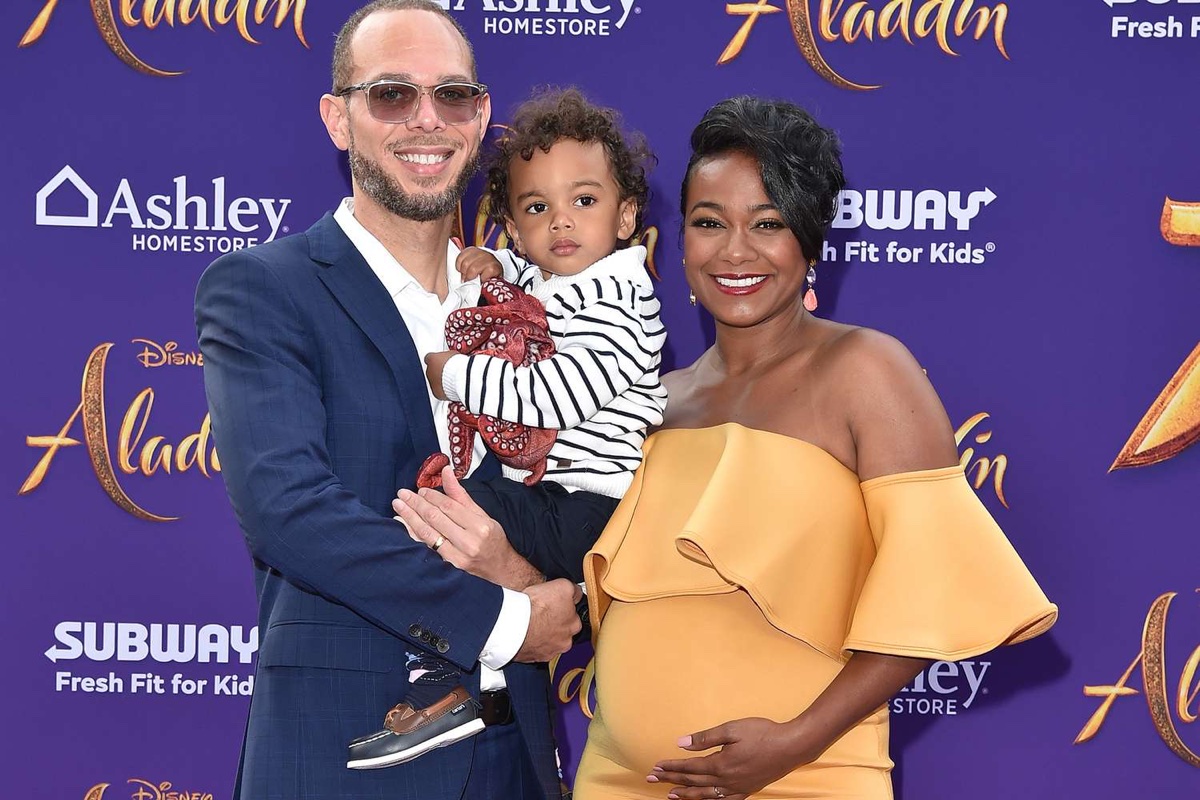
On the April 27, 2026 episode of the Pod Meets World podcast, Tatyana Ali described the 2016 birth of her first son as a case of obstetric violence. Hospital staff held her down and pushed the baby back inside her body during labor, and her exact words on the podcast were: "I was held down, my arms and legs. The term that I use is obstetric violence."
Her account names what the peer-reviewed record has been measuring for the better part of a decade. The Giving Voice to Mothers study, the largest US survey of mistreatment in pregnancy and childbirth, found that one in six US mothers reported at least one form of mistreatment, and that women of color carried the rate disproportionately (Vedam et al., Reproductive Health 2019; PMID 31182118). Black women in the United States die at three to four times the rate of white women during and after pregnancy. The disparity is not new; the question Ali's disclosure raises is whether a Black woman walking into an American hospital in 2026 has the language and the support to demand differently.
What she said and what she did not say
Ali, the Fresh Prince of Bel-Air alum, married Stanford professor Vaughn Rasberry in July 2016 and gave birth to their first son Edward in September 2016. She had planned a natural delivery. On the podcast, hosted by her Boy Meets World peers, she walked the audience through the moment her birth plan was overridden: "I mean, they pushed him back inside me. That's what happened. My baby was all the way crowned." She described being physically restrained for hours: "It's an incredibly dangerous thing that they did; they could have snapped his neck. This is after hours of them holding me down."
Edward was delivered safely but spent time in the NICU. Ali went on to deliver a second son, Alejandro, in 2019, and has since written and spoken about Black maternal health on platforms including a 2020 Essence essay titled "Birthright" and partnerships with Black Mamas Matter Alliance.
She framed her decision to speak now in distribution terms: "all the people I'm talking to, no one puts a mic in their face." That is the structural fact under the celebrity disclosure. The mistreatment-in-childbirth experience is common; the platform to make it audible is rare.
What the peer-reviewed record shows
The Vedam 2019 Giving Voice to Mothers study is the load-bearing US-population evidence. The study surveyed 2,138 women across the United States about their pregnancy and childbirth experiences. The headline finding: 17.3 percent reported at least one form of mistreatment, defined to include loss of autonomy, being shouted at or scolded, being threatened with the withholding of treatment or being forced to accept unwanted treatment, and ignored requests for help (PMID 31182118).
The race-stratified finding matters. Among lower-socioeconomic-status women, 27.2 percent of women of color reported mistreatment versus 18.7 percent of white women. The mistreatment rate held higher for women of color even after adjusting for income and other maternal characteristics. Hospital births showed a mistreatment rate of 28.1 percent; home births 5.1 percent. The setting and the staffing model are independent variables in the data, separate from any characteristic of the patient.
Sitting on top of the Vedam mistreatment data is the CDC mortality gap. In 2023, Black non-Hispanic maternal mortality was 50.3 deaths per 100,000 live births, against 14.5 for white non-Hispanic women, a 3.5-fold disparity per the NCHS Health E-Stat 100 brief. Our piece on the 2023 gap covers the data in depth. The 2024 figure (44.8 per 100,000) is lower than 2023 but NCHS itself notes the year-over-year change is not statistically significant. Ali's account of being held down is the lived experience that the mortality data reads as a structural pattern from the other end.
Three named voices doing the work
Saraswathi Vedam, RM, FACNM, MSN, is Principal Investigator at the Birth Place Lab at the University of British Columbia and lead author of the Giving Voice to Mothers study. Her work is the standing reference point for measuring and operationalizing respectful maternity care in the US literature.
Whatever brought you to this page, community health centers see patients regardless of insurance and charge on a sliding scale that is often $0. Our directory of free and charitable clinics lists centers by state. A same-day telehealth visit is self-pay and is not billed to Medicaid, so if you have Medicaid the clinic route will usually cost less. If you would rather see a clinician online today:

See a doctor online today.
- Same-day video visits from $34
- Price shown before you book
- No insurance needed
 with Sesame Care
Affiliate link, we may earn a commission at no extra cost to you.
Dr. Joia Crear-Perry, MD, FACOG, is the founder and president of the National Birth Equity Collaborative. The collaborative's policy work is the most-cited US Black-maternal-health policy framework in legislative drafting and federal advocacy.
The Black Mamas Matter Alliance is the coalition Ali has named as a partner. The alliance's state-by-state policy and care-model work is the operational layer beneath the federal-policy conversation, and the network Ali's 2020 Essence essay routes readers toward.
What the evidence does not yet tell us
Two things the peer-reviewed record does not pin down at the precision a reader might want. First, the proportion of Black-maternal-mortality deaths directly attributable to mistreatment of the kind Ali describes. The Vedam mistreatment data and the CDC mortality data are both real, but the direct causal chain between specific mistreatment events and specific maternal deaths is the subject of active research, not a settled finding. Second, the impact of doula care, midwifery models, and Black-clinician concordance on mistreatment rates specifically. The mortality and morbidity outcome evidence on these interventions is stronger than the mistreatment-rate evidence; the latter is still emerging.
What the evidence does support is that hospital settings, low-SES status, and being a woman of color all independently raise the mistreatment rate, and that Ali's account is consistent with the population-level data, not an outlier.
What you can do this week
Three concrete moves for a Black woman who is pregnant or planning a pregnancy.
First, write a birth plan and bring a copy to every prenatal visit. The Vedam mistreatment categories include "ignored requests for help" and "loss of autonomy." A documented birth plan, signed by you and acknowledged by your obstetric team, raises the cost of the override behaviors Ali described. The plan does not bind the team in an emergency; it does anchor what consent looked like before the labor started.
Second, bring a doula or a designated advocate who is not in your marriage or family role. A doula or trained advocate can ask the questions you may not be in a position to ask during active labor and can document what is happening. Doula care has documented mortality and morbidity benefits for Black mothers in particular; the Black Health provider directory lists Black doulas. Our piece on Illinois's 2026 private-insurance doula mandate covers the first state mandate for private-insurance doula coverage.
Third, ask your prenatal team specifically about racial-concordance options and Black-led practice models. Ali's account is a hospital-birth story; the Vedam mistreatment-rate gap (28.1 percent hospital vs 5.1 percent home) is also a setting-and-model story. Our piece on finding a Black OB-GYN covers the directory search workflow. The Virginia Momnibus piece covers the state policy lever for closing the gap when the clinic-level pathway is blocked.
Citations
Vedam S, Stoll K, Taiwo TK, et al. The Giving Voice to Mothers study: inequity and mistreatment during pregnancy and childbirth in the United States. Reproductive Health. 2019;16(1):77. PMID 31182118.
Hoyert DL. Maternal mortality rates in the United States, 2023. NCHS Health E-Stat 100, 2024. cdc.gov/nchs.
National Birth Equity Collaborative. birthequity.org.
Black Mamas Matter Alliance. blackmamasmatter.org.