What a keloid actually is
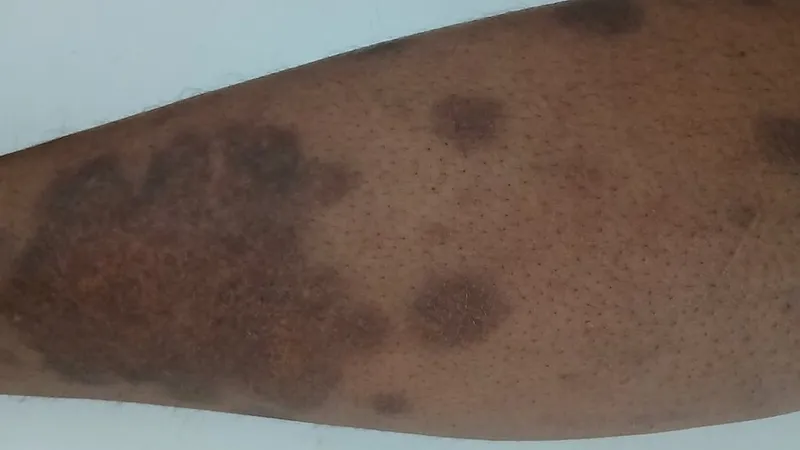
A keloid is what happens when the skin overshoots the repair. After an injury, the body lays down collagen to close the wound, then normally stops. In a keloid, the collagen-making cells keep going, so the scar grows thick, firm, and shiny, and it spreads out past the border of the original wound (Berman et al., Dermatologic Surgery 2017, PMID 27347634). That last part is the key difference from an ordinary raised scar, called a hypertrophic scar, which stays inside the wound and often flattens over months. A keloid does neither. It does not fade on its own, and reducing it takes treatment (American Academy of Dermatology).
Keloids show up most on the earlobes, the chest, the shoulders, the upper back, and the jaw and neck (American Academy of Dermatology). On an earlobe a keloid is often a round, firm ball; on the chest or shoulder it can spread into a raised, claw-like patch. They can itch, feel tender, or catch on clothing, and for many people the harder part is how a growing scar in a visible spot affects how they feel. Keloids are benign and never turn into cancer (American Academy of Dermatology).
Why keloids form more often on Black skin
Keloids are not spread evenly across the population. People of African, Asian, and Latin American descent develop them far more often than people with lighter skin, and among Black people the peak years run from ages 10 to 30 (American Academy of Dermatology). Family history carries a lot of weight: between one-third and one-half of people who get a keloid have at least one blood relative who also gets them (American Academy of Dermatology), which points to inherited differences in how a person's skin heals.
The exact reason keloids favor richly pigmented skin is not fully settled in the research. What is clear is that a keloid is a wound-healing response written into your biology, not a sign of poor skincare or a wound you mishandled (Berman et al., Dermatologic Surgery 2017, PMID 27347634). If keloids run in your family, your skin is more likely to react this way, and that is worth knowing before you get a piercing, a tattoo, or elective surgery.
What triggers a keloid
Almost anything that breaks or inflames the skin can set off a keloid in someone prone to them (American Academy of Dermatology). The common triggers:
- Piercings, especially ear piercing, which is one of the most frequent starts for a keloid.
- Acne and chickenpox, where inflamed spots heal into raised scars.
- Cuts, scrapes, burns, and even bug bites.
- Tattoos.
- Surgery, procedures, and injections, including the incision itself.
- Shaving the beard area, where repeated irritation can lead to keloid-like scarring along the jaw and neck.
Pregnancy can also raise the risk, likely through hormonal shifts (American Academy of Dermatology). The common thread is trauma to the skin. The smaller and more avoidable the injury, the more it is worth thinking twice if you already know you scar this way.
Whatever brought you to this page, community health centers see patients regardless of insurance and charge on a sliding scale that is often $0. Our directory of free and charitable clinics lists centers by state. A same-day telehealth visit is self-pay and is not billed to Medicaid, so if you have Medicaid the clinic route will usually cost less. If you would rather see a clinician online today:

See a doctor online today.
- Same-day video visits from $34
- Price shown before you book
- No insurance needed
 with Sesame Care
Affiliate link, we may earn a commission at no extra cost to you.
How keloids are treated
There is no single cure that erases a keloid for good. The honest goal of treatment is to flatten, soften, and shrink it while keeping it from coming back (American Academy of Dermatology). Because keloids are stubborn, dermatologists usually combine methods rather than relying on one, and starting while a keloid is still small gives every treatment a better chance.
Steroid injections into the keloid are the mainstay for most established ones. They shrink 50 to 80 percent of keloids, though many regrow within five years, which is why they are usually repeated and paired with other treatments (American Academy of Dermatology).
Combination injections work better than steroid alone. Pairing the steroid triamcinolone with a second drug, 5-fluorouracil, produced more than three times the treatment success of triamcinolone by itself in a 2024 analysis of 13 studies, with fewer of the small broken blood vessels that steroid injections can leave behind (Mavilakandy et al., Plastic and Reconstructive Surgery 2024, PMID 37337341). If a dermatologist recommends injections, ask whether the combination is right for you.
Silicone gel sheets, worn over the scar, can help flatten a keloid and may lower the odds of one forming after an injury. A Cochrane review of 20 trials found silicone sheeting reduced scar thickness and improved color, while cautioning that the underlying studies were of poor quality (O'Brien and Jones, Cochrane Database of Systematic Reviews 2013, PMID 24030657). Pressure earrings and dressings, worn 12 to 20 hours a day for months, are often used after surgery to keep a keloid from returning (American Academy of Dermatology).
Cryotherapy, freezing the keloid, can reduce its size and hardness and works best on smaller ones over three or more sessions. Laser treatment can lower a keloid's height and fade its color, and like most keloid care it works best paired with another treatment (American Academy of Dermatology).
Surgery is the one to be most careful with. Cutting a keloid out sounds like the obvious fix, but nearly 100 percent of keloids grow back after surgery done on its own (American Academy of Dermatology). Surgery only makes sense when it is paired with follow-up treatment, such as steroid injections, pressure, or radiation, to hold the keloid down as the wound heals. Never let a keloid be removed by cutting alone.
For a closer look at what the treatment research shows, including which injection combinations carry the strongest evidence, read our companion guide on what the evidence supports for keloid treatment.
Preventing keloids if you are prone
If you have had a keloid or they run in your family, the most reliable prevention is avoiding the wounds that start them where you can (American Academy of Dermatology).
- Skip elective piercings and tattoos, especially on the ears, chest, and shoulders where keloids form most.
- Because surgery itself can trigger a keloid (American Academy of Dermatology), tell any surgeon about your history before a procedure so they can plan the incision and start prevention early.
- Treat acne and folliculitis promptly to limit the inflammation that can scar.
- For beard-area bumps, adjust your shaving routine to reduce the repeated irritation that leads to scarring.
- If you do get a wound, ask about silicone gel sheets or pressure as soon as it heals, when prevention works best.
When to see a dermatologist
See a board-certified dermatologist early, while a keloid is small, rather than waiting for it to grow. Treatment works better on smaller keloids, and a dermatologist can confirm the diagnosis, since a firm, growing lump in a scar or at a piercing site can occasionally be something other than a keloid and should be looked at (American Academy of Dermatology). Get seen if:
- A raised scar keeps spreading past the wound, or it itches, hurts, or catches and tears.
- A keloid sits in a visible or awkward spot and affects how you feel or move.
- You have a new lump you are not sure about, before you try to treat it yourself.
Skin-of-color dermatologists treat keloids routinely and know which combinations work on richly pigmented skin. You can find a Black dermatologist in our directory.
Frequently asked questions
Can you get rid of a keloid permanently? ▼
There is no treatment that guarantees a keloid is gone for good. Keloids can be flattened, softened, and shrunk, but they tend to come back, which is why dermatologists usually combine treatments and repeat them over time (American Academy of Dermatology). Starting early, while a keloid is small, gives you the best result.
Are keloids dangerous or cancerous? ▼
No. Keloids are benign and never turn into cancer (American Academy of Dermatology). They can still itch, feel tender, catch on clothing, and affect how you feel about a visible scar. If a lump in a scar or piercing site is growing, painful, or new, see a dermatologist to confirm it is a keloid and not another kind of growth.
Why do I keep getting keloids when other people do not? ▼
Keloids are far more common in people of African, Asian, and Latin American descent, and between one-third and one-half of people who get them have a blood relative who does too (American Academy of Dermatology). It is a wound-healing trait written into your biology, not something you caused. If you are prone, avoiding elective piercings and tattoos and flagging your history before surgery are the most useful protections.
Is it safe to remove a keloid with surgery? ▼
Surgery done on its own is the treatment to be most careful with, because nearly 100 percent of keloids grow back after cutting alone (American Academy of Dermatology). Surgery only makes sense when it is paired with follow-up treatment such as steroid injections, pressure, or radiation. Talk to a dermatologist about the full plan before agreeing to have a keloid cut out.