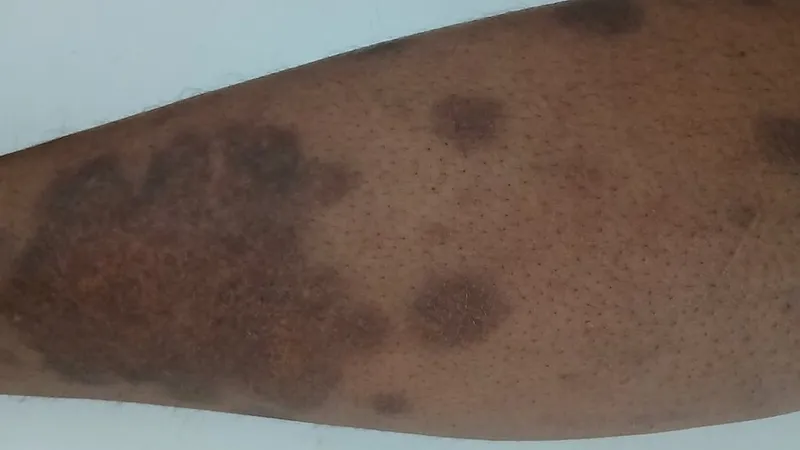
Vitiligo is an autoimmune disease in which the immune system destroys melanocytes, the cells that make skin pigment, leaving smooth white or depigmented patches. It is not contagious, it is not caused by anything you ate, touched, or did, and it is not a sign of poor hygiene. It affects roughly the same share of people across racial groups, around 1% to 1.4% of adults in the United States, but on brown and black skin the contrast between pigmented and depigmented areas is stark, which is why the disease feels more visible and weighs heavier here.
What vitiligo is, and what it is not
In vitiligo, the immune system mistakenly attacks and kills melanocytes. Without those cells, the skin in that spot makes no pigment and turns white. The patches are usually smooth, not scaly or itchy, and they often show up first in places exposed to friction or sun: the hands, face, around the eyes and mouth, elbows, knees, and genitals. It can also turn patches of hair white. Nothing the person did causes it, and you cannot catch it from someone who has it. Those two facts matter, because the stigma around vitiligo, the staring, the questions, the false belief that it is a fungus or contagious, is often heavier than the medical disease itself.
The two main types: non-segmental and segmental
Non-segmental vitiligo is by far the most common, roughly 85% to 90% of cases. It tends to appear symmetrically on both sides of the body, can spread over time, and is the type most clearly tied to autoimmune activity. Segmental vitiligo is the minority pattern. It appears on one side of the body in a band or segment, often starts younger, spreads quickly for about a year, then usually stops and stays stable. The distinction is not academic: it changes treatment. Stable segmental disease that has stopped spreading is the form most likely to be a candidate for surgical grafting, while non-segmental vitiligo is the form the newer creams and phototherapy target.
The autoimmune conditions to screen for
Vitiligo rarely travels alone. Because it is autoimmune, it raises the odds of other autoimmune conditions, and knowing that lets you catch them early. In a meta-analysis of US adults with vitiligo, the most common associated condition was thyroid disease, at a pooled prevalence near 14%, followed by psoriasis (about 5%), rheumatoid arthritis (about 3%), alopecia areata (about 3%), type 1 diabetes (about 2%), and pernicious anemia (about 2%). Thyroid disease is the standout, which is why a thyroid check (TSH, often with thyroid antibodies) is a reasonable thing to ask for after a vitiligo diagnosis. The more skin surface vitiligo covers, the higher the odds of these companions, so wider disease is a stronger reason to screen.
If thyroid screening turns up a problem, it often comes with its own skin and hair signals. Our guide to thyroid disease signs in the skin and hair of Black women covers what to watch for and which labs to ask about.
The mental-health toll is real, and it is heavier on dark skin
Vitiligo is not painful, but its psychological weight is well documented and is greater for people with darker skin, more body surface involved, or patches on the face and hands. In the global VALIANT study of 3,541 patients across 17 countries, 58.7% reported a diagnosed mental health condition, 28.8% reported diagnosed anxiety, and 24.5% reported diagnosed depression. More than half had moderate to severe depressive symptoms, and nearly half said vitiligo made them feel less confident or more self-conscious. A population study across Europe, Japan, and the US found that quality of life was worse for people with more extensive disease and for those with lesions on the head and hands. This is not vanity. It is a measurable burden, and it is a legitimate reason to treat, to seek therapy, or both.
Common skin conditions are treated in primary care, and community health centers charge on a sliding scale that is often $0. Our directory of free and charitable clinics lists centers by state. A same-day telehealth visit is self-pay and cannot be billed to Medicaid or commercial insurance, so the clinic route usually costs less. If you need a prescription sooner than the next appointment:
Prescription skincare from a licensed clinician.
- Online visit and a treatment plan for your skin
- From $59 a month, shown before you book
 with Sesame Care
Affiliate link, we may earn a commission at no extra cost to you.
Treatment, with realistic expectations
Repigmentation is slow and uneven. The face and neck respond best. Hands, feet, and bony areas are stubborn and often respond least. Treatment can stop spread and bring color back, but it takes months, and results vary by where the patches sit. Here is what is actually on the table.
Topical creams
Topical corticosteroids and topical calcineurin inhibitors (tacrolimus, pimecrolimus) are long-standing first-line options for limited disease, with calcineurin inhibitors often preferred for the face and around the eyes because they avoid the skin-thinning that long-term steroids can cause. The bigger development is ruxolitinib cream 1.5% (Opzelura), a topical JAK inhibitor the FDA approved in July 2022 for non-segmental vitiligo in patients 12 and older. It is the first drug ever approved to repigment vitiligo rather than just slow it. In the phase 3 TRuE-V trials, about 30% of patients reached at least 75% improvement in facial pigmentation (F-VASI75) by week 24, and roughly half reached that mark by week 52. The face responds far better than the hands, and treatment often runs well beyond 24 weeks before the full benefit shows.
Phototherapy and lasers
Narrowband UVB phototherapy (311 to 313 nm) is the workhorse for widespread non-segmental vitiligo, delivered in a clinic light box or sometimes a home unit, typically two to three times a week. For small, localized patches, the 308 nm excimer laser targets pigment loss spot by spot and can work faster on limited areas. Phototherapy is frequently combined with topical creams to push repigmentation further.
Surgery and camouflage
For vitiligo that has stayed stable, especially segmental disease that stopped spreading, surgical options such as skin grafting and melanocyte transplantation can move pigment-producing cells into white patches. Surgery is reserved for stable disease because grafting into actively spreading vitiligo tends to fail. Outside of medical treatment, cosmetic camouflage (color-matched concealers, self-tanners with dihydroxyacetone, medical tattooing for small stable spots) and daily, diligent sun protection both matter. Depigmented skin has no melanin shield, so it burns easily, and protecting the surrounding pigmented skin keeps the contrast from sharpening.
Itchy or scaly patches are not vitiligo, which is smooth and not inflamed. If your patches itch, flake, or thicken, the diagnosis may be something else; our guide to managing eczema on Black skin walks through how that condition reads on dark skin.
How to get care
Vitiligo on dark skin is best managed by a dermatologist who treats skin of color regularly, because repigmentation patterns, contrast, and post-treatment pigment changes all read differently on brown and black skin. A clinician who knows that will set realistic expectations by body area and will not mistake your patches for a fungal infection or a cosmetic concern. You can find a Black dermatologist in our directory. Bring a timeline of when the patches appeared and whether they are spreading, photos if you have them, and a written ask for a thyroid screen.
Frequently asked questions
Is vitiligo more common in Black people? ▼
No. Vitiligo affects all racial and ethnic groups at roughly the same rate, around 1% to 1.4% of US adults. It looks more dramatic on dark skin because the white patches contrast sharply with the surrounding pigment, which is also why the psychological and social impact tends to be heavier for people with darker skin.
Can vitiligo be cured? ▼
There is no cure, but it is treatable. Topical ruxolitinib cream (Opzelura), other topical medicines, narrowband UVB phototherapy, the excimer laser, and surgery for stable disease can stop the spread and bring pigment back. The face responds best; hands and feet are the hardest to repigment, and results take months.
What other conditions should I get checked for if I have vitiligo? ▼
Because vitiligo is autoimmune, it raises the odds of other autoimmune conditions. Thyroid disease is by far the most common companion (around 14% of US adults with vitiligo), so a thyroid screen is a reasonable ask. Type 1 diabetes, alopecia areata, and pernicious anemia are also seen more often, especially when more skin is involved.
What is the difference between segmental and non-segmental vitiligo? ▼
Non-segmental vitiligo is the most common form (about 85% to 90% of cases), appears symmetrically on both sides of the body, and can keep spreading. Segmental vitiligo appears on one side in a band, often starts younger, spreads for about a year, then usually stays stable. Stable segmental disease is the type most likely to qualify for surgical grafting.
Does insurance cover Opzelura for vitiligo? ▼
Ruxolitinib cream is FDA-approved for non-segmental vitiligo in people 12 and older, which strengthens a coverage case, but plans vary and many require prior authorization. Ask your dermatologist's office to document the diagnosis and prior treatments, and check the manufacturer's patient assistance options if cost is a barrier.
Is vitiligo contagious or caused by something I did? ▼
No on both counts. Vitiligo is an autoimmune condition in which the body's own immune system destroys pigment cells. You cannot catch it from anyone, and it is not caused by diet, hygiene, stress alone, or anything the person did. It is a medical condition, not a personal failing.
What this gets mistaken for
On Black skin, vitiligo is sometimes confused with: post-inflammatory hypopigmentation (usually has history of inflammation and the patches have indistinct edges); pityriasis alba (usually on children's faces, mild scale, less sharp edges); tinea versicolor (positive KOH prep, fine scale); hypopigmented sarcoidosis (patches can feel firm on palpation); leprosy (very rare in the US; patches have decreased sensation).