Why post-inflammatory hyperpigmentation hits Black skin harder
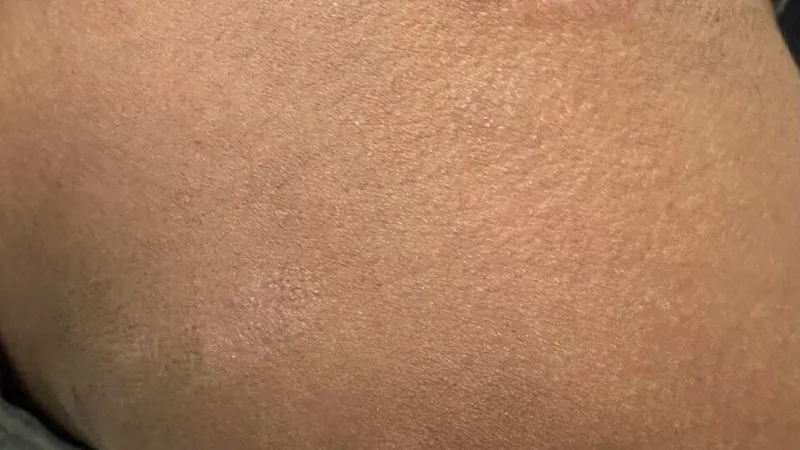
Post-inflammatory hyperpigmentation is the flat brown, gray, or black mark left behind after skin is inflamed or injured. Acne, eczema, razor bumps, bug bites, burns, and aggressive scrubbing all trigger it. The inflammation tells melanocytes, the cells that make pigment, to overproduce melanin, and that extra pigment lingers in the skin long after the original problem heals.
The reason it hits harder on Black skin is biology, not bad luck. Melanocytes in richly pigmented skin are more numerous and more reactive, so the same inflammatory insult triggers a stronger pigment response. Some of that extra melanin also drops into the dermis, the layer beneath the surface, where it gets absorbed by immune cells called melanophages and held there for months or years instead of shedding with normal skin turnover. PIH poses a substantial challenge specifically for people with Fitzpatrick skin types III to VI, and a spot that fades in weeks on lighter skin can persist for many months on darker skin.
The single most important idea: PIH is a symptom, not the root problem. If acne, eczema, or razor bumps keep flaring, new spots will keep replacing the ones you fade. The American Academy of Dermatology is direct about this: eliminate the cause and many spots clear on their own. Treating the trigger and treating the spot are the same project. If acne is the source, treat it early, because the AAD notes people with skin of color who let acne reach moderate or severe severity have a higher risk of dark spots and keloids. If razor bumps are the source, see our guide on razor bumps on Black skin.
Dark spot, melasma, or acanthosis nigricans: telling them apart
These three conditions get confused constantly, and treating one like another wastes months. Dark spots from PIH are scattered and asymmetric: they sit exactly where the skin was inflamed, whether that is a jawline breakout or a razor-bump patch on the neck, and they fade once the trigger is under control.
Melasma looks different and behaves differently. It is symmetric, mirrored patches across the cheeks, forehead, upper lip, and bridge of the nose, driven by ultraviolet light, visible light, heat, and hormones rather than a specific injury. In a global study of 324 melasma patients, 48% had a blood relative with the condition, so genetics load the gun before sun and hormones pull the trigger. Melasma pigment often sits deeper in the skin than PIH, which is why it resists the same creams and needs its own protocol. We cover that treatment ladder in melasma on Black skin.
Acanthosis nigricans is not a flat pigment change at all. It is a velvety, thickened darkening of the skin that settles into body folds, most often the back of the neck, the armpits, and the groin, and it is driven by high circulating insulin rather than inflammation or sun exposure. Mistaking it for a dirt stain or a stubborn dark spot means missing an early warning sign of insulin resistance and type 2 diabetes risk. If your dark patches feel raised or velvety rather than flat, read our guide to acanthosis nigricans and ask a doctor for a blood sugar check.
The evidence ladder: what actually fades dark spots
No topical works overnight, and the evidence is honest that complete clearance from creams alone is uncommon. In a 2024 systematic review of 46 studies covering 1,356 people with skin of color (70% Black), topical retinoids and chemical peels produced no complete responses but achieved partial fading in roughly two-thirds of patients. Partial fading, used consistently with sun protection, is what makes the visible difference. Here is the evidence ladder, from the non-negotiable foundation to the weakest-evidence option.
Sunscreen, tinted with iron oxide, every single morning. This is the foundation, not an optional add-on. Our guide to sunscreen for Black skin covers which formulas protect against visible light without the white cast. Our guide to sunscreen for Black skin covers which formulas protect against visible light without the white cast. Without daily sun protection, nothing else on this list works, because sun exposure deepens existing spots and triggers new ones. Darker skin needs a specific upgrade: both ultraviolet light and visible light (the light you can see) drive pigmentation, and visible light hits melanated skin harder. Ordinary chemical SPF does not block visible light. Iron oxides do. In a controlled study, iron-oxide-containing formulations significantly protected against visible-light-induced pigmentation in Fitzpatrick IV skin, while an SPF 50+ UV-only sunscreen did not. Use a broad-spectrum SPF 30 or higher, tinted with iron oxide, reapplied every two hours outdoors, plus a wide-brimmed hat when you can.
Common skin conditions are treated in primary care, and community health centers charge on a sliding scale that is often $0. Our directory of free and charitable clinics lists centers by state. A same-day telehealth visit is self-pay and cannot be billed to Medicaid or commercial insurance, so the clinic route usually costs less. If you need a prescription sooner than the next appointment:
Prescription skincare from a licensed clinician.
- Online visit and a treatment plan for your skin
- From $59 a month, shown before you book
 with Sesame Care
Affiliate link, we may earn a commission at no extra cost to you.
Topical retinoids (tretinoin, adapalene, tazarotene, retinol). The best-studied option for PIH in Black skin. In a 40-week double-blind, vehicle-controlled trial in Black patients, 0.1% tretinoin lightened hyperpigmented lesions by about 40% versus 18% for the placebo cream, with improvement first noticeable around four weeks. Retinoids speed cell turnover and help shed pigment-laden skin. The catch on darker skin: half the tretinoin group developed retinoid dermatitis (redness, peeling), and that irritation can itself trigger more PIH. Start low and slow, every other night, with moisturizer, and back off if you sting or peel.
Azelaic acid. Available over the counter around 10% and by prescription at 15% to 20%. It calms inflammation and interferes with overactive pigment cells, and it is generally well tolerated on darker skin. The honest caveat: a 2024 systematic review of skin-of-color PIH treatment found azelaic acid has been considered as a therapeutic option, but no published studies report results specifically for skin-of-color patients with PIH. It is a reasonable, low-irritation starting point, not a heavily proven one.
Vitamin C (L-ascorbic acid). An antioxidant and one of the AAD's recommended brightening ingredients for darker skin tones. A 2023 systematic review of seven studies found topical vitamin C produced significant lightening of treated skin, across concentrations from about 3.75% to 20%. It pairs well with sunscreen in the morning.
Niacinamide (vitamin B3). Works by a different mechanism: it blocks the transfer of pigment packets (melanosomes) from melanocytes to the surface skin cells. In clinical testing, niacinamide gave 35% to 68% inhibition of melanosome transfer and significantly reduced hyperpigmentation versus placebo after four weeks. Gentle, widely tolerated, and easy to layer with other actives.
Kojic acid. The weakest evidence tier on this list. Its best clinical data comes from a randomized split-face trial in melasma, not PIH: adding 2% kojic acid to a hydroquinone-glycolic acid gel cleared melasma in 60% of treated sides versus 47.5% without it. That trial was not in skin of color and did not study PIH specifically, and reviews of PIH treatment in skin of color do not include kojic acid at all. Treat it as a second-tier add-in, not a first choice.
A practical routine for most people: tinted sunscreen every morning, a gentle vitamin C serum underneath it, and a nighttime retinoid or azelaic acid a few nights a week, with niacinamide layered in anytime. Add one active at a time so you can tell what irritates you, because irritation feeds PIH.
Hydroquinone: the OTC ban and the cycling rule
Hydroquinone is still the reference prescription skin-lightener, and the regulatory picture surprises most people. There is no legal over-the-counter hydroquinone in the United States. Under the 2020 CARES Act reform, the FDA deemed every OTC skin-lightening product containing hydroquinone a misbranded new drug, and manufacturers had to pull them from shelves by September 23, 2020. In 2022 the FDA issued warning letters to a dozen companies still selling illegal OTC hydroquinone, citing reports of skin rashes, facial swelling, and ochronosis. Today the only FDA-approved product containing hydroquinone is Tri-Luma, a prescription-only combination cream cleared for short-term treatment of moderate-to-severe melasma. Any hydroquinone product sold without a prescription, in a store or online, is operating outside FDA law regardless of what the label claims.
Used correctly, under a dermatologist, a compounded hydroquinone cream (typically 2% to 4%) can fade PIH effectively. The rule is cycling, not continuous use: dermatologists prescribe it in defined windows, often a few months on followed by a break, rather than year-round application. That matters because a 2022 systematic review of exogenous ochronosis cases found the median duration of use before the condition appeared was 5 years, with cases clustering at concentrations above 4% and courses longer than 3 months associated with new-onset ochronosis. Ochronosis is a paradoxical blue-black or gray-blue facial staining that is notoriously hard to reverse, and in that review it was most often reported in people of African descent (45%), Black patients (56%), and Fitzpatrick skin types V to VI (52%). Hydroquinone works more slowly on darker complexions, so people self-escalate to stronger, longer courses, which is exactly what drives ochronosis. The lesson is never unsupervised, never indefinite, never the imported high-strength jar.
What makes dark spots worse
Picking, popping, and squeezing make PIH worse and raise scar risk, so hands off. Aggressive physical scrubs and exfoliating brushes do the same thing from a different angle: they injure the skin barrier and restart the inflammatory cycle that produces new pigment. If a product or a routine step burns, stings, or leaves skin raw, stop. That reaction is itself a PIH trigger.
The most dangerous self-treatment risk is unregulated skin-lightening creams, especially those manufactured abroad and sold outside FDA rules. Beyond illegal hydroquinone, the FDA has separately warned that some imported skin creams, soaps, and lotions contain mercury, a toxic metal that is absorbed through the skin with repeated use and can cause kidney damage and nervous-system harm, on top of undisclosed steroids that thin and permanently discolor skin. The FDA's practical tip: check the label for "mercurous chloride," "calomel," "mercuric," "mercurio," or "mercury," and stop using the product immediately if any of those words appear. Pregnant women, nursing infants, and young children are especially vulnerable to mercury toxicity. Never use liquid bleach on skin.
When to see a dermatologist
See a dermatologist if a spot has not budged after 3 to 6 months of consistent sunscreen plus one tolerated active, if patches are symmetric and facial rather than scattered (that points to melasma), if a patch feels velvety or thickened rather than flat (that points to acanthosis nigricans and warrants a diabetes screening), or if you are considering hydroquinone above what a dermatologist has prescribed you directly.
A dermatologist can also add tools that are not safe to use at home. Superficial chemical peels (glycolic, mandelic, lower-strength salicylic) can speed fading but must be dosed conservatively on darker skin, since too deep a peel can trigger more PIH rather than less. In the 2024 systematic review, lasers and energy-based devices were the only modality producing complete clearance in a meaningful subset of patients (26% complete response, 66% partial reduction across 165 patients), but they also induced new PIH in 11% to 17% of cases with repeated procedures. The wrong laser or too aggressive a peel can leave you worse than you started, so device settings and provider experience with darker skin matter more here than on lighter skin. To find a clinician experienced with darker skin, start with our provider directory.
Frequently asked questions
How do I tell a dark spot from melasma? ▼
Dark spots from PIH are scattered and asymmetric, tied to a specific pimple, bump, or injury, and fade once you stop the trigger. Melasma is symmetric, mirrored patches on both cheeks, the forehead, or the upper lip, driven by hormones, heat, and light rather than an injury. See our melasma treatment guide if your pattern matches that.
Can I still buy hydroquinone over the counter? ▼
No, not legally. The FDA deemed every OTC hydroquinone skin-lightening product a misbranded drug under the 2020 CARES Act reform and issued warning letters to sellers still marketing it in 2022. The only FDA-approved hydroquinone product is Tri-Luma, available by prescription only.
What single ingredient matters most for fading dark spots? ▼
A daily broad-spectrum sunscreen, tinted with iron oxide, because it blocks the visible light that worsens pigment in darker skin and protects the progress of every other treatment you use.
How long does it take for post-inflammatory hyperpigmentation to fade? ▼
A spot a few shades darker than your natural tone commonly fades over 6 to 12 months with consistent sunscreen and one active. Deeper or older discoloration can take years and may need prescription help.
Are mercury skin-lightening creams actually dangerous? ▼
Yes. The FDA has documented mercury poisoning linked to imported skin creams sold illegally in the US. Check labels for "mercurous chloride," "calomel," "mercuric," "mercurio," or "mercury" and stop use immediately if any appear.
My patches are velvety and on my neck, not flat. Is that a dark spot? ▼
Probably not PIH. Velvety, thickened, darkened skin in body folds is more likely acanthosis nigricans, a marker of insulin resistance, not a pigment-only condition. Read our acanthosis nigricans guide and ask your doctor for a blood sugar check.