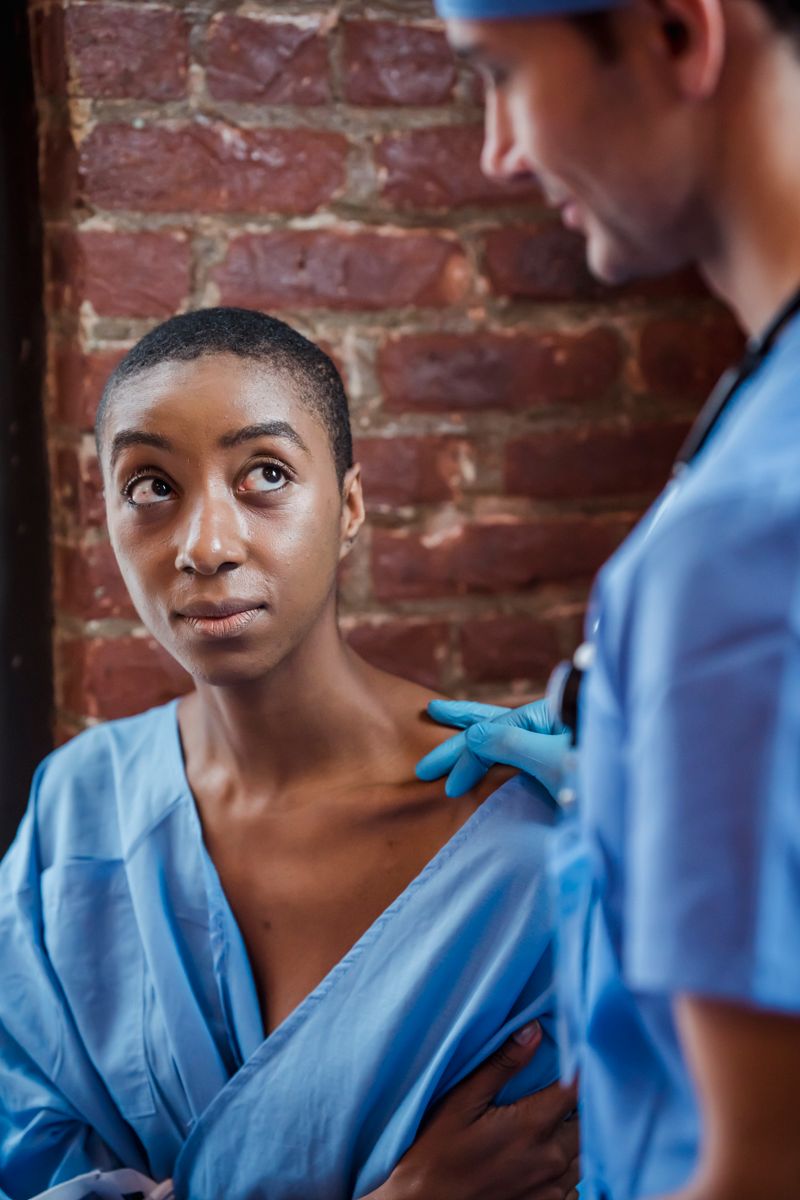
The paradox: less common, more deadly because it is caught later
Two facts about melanoma and Black skin are both true at once. Black people are diagnosed with melanoma far less often than white people. And Black people who do get melanoma are far more likely to die from it.
The American Cancer Society puts lifetime melanoma risk at about 3% (1 in 33) for white people and 0.1% (1 in 1,000) for Black people. Yet the Association of American Medical Colleges reports that "Black patients were about three times more likely than their White counterparts to die within five years of their diagnosis," and that "the higher mortality rates were most likely due to later-stage diagnosis." From 2011 through 2015, the five-year melanoma survival rate was 66% for Black patients versus 90% for non-Hispanic white patients.
Stage at diagnosis tells the story. CDC analysis of national data found that 16% of non-Hispanic Black people with melanoma were diagnosed after the cancer had already spread to distant organs, compared with 5% of non-Hispanic white people. Melanoma found early, while it is still confined to the skin, is highly survivable. Melanoma found after it has spread is not. The difference between those two outcomes is often months of noticing, or not noticing, a spot most people never think to check.
Where melanoma hides on Black skin
This is the part most skin cancer advice gets wrong for Black readers. The familiar warning is to watch sun-exposed skin: the back, the shoulders, the face. On Black skin, the most dangerous melanoma usually shows up somewhere else entirely.
The most common type of melanoma in people with darker skin is acral lentiginous melanoma (ALM). It develops on "the palms of the hands, the soles of the feet, or under the nails," and, unlike most melanomas, "does not appear to be related to sun exposure." In the CDC data, ALM accounted for 46% of melanomas with defined type in non-Hispanic Black patients, versus just 2% in white patients. The sole of the foot is a particularly common site.
Melanoma in Black skin also appears in mucosal sites that almost no one self-checks. The Skin Cancer Foundation advises monthly self-examinations that include "not just sun-exposed areas but also the soles of the feet, the palms, the toenail and fingernail beds and also the genital areas." Inside the mouth, the nasal passages, and the genitals are all real locations for melanoma in people of color.
This is the lesson of Bob Marley's death. In 1977 a dark spot appeared under the nail of his right big toe; the first doctor he saw attributed it to a soccer injury. It was acral lentiginous melanoma. It was not caught in time, spread to his lungs, liver, and brain, and killed him in 1981 at age 36. A spot under a toenail, mistaken for a bruise, is exactly the kind of melanoma that hides on Black skin.
Whatever brought you to this page, community health centers see patients regardless of insurance and charge on a sliding scale that is often $0. Our directory of free and charitable clinics lists centers by state. A same-day telehealth visit is self-pay and is not billed to Medicaid, so if you have Medicaid the clinic route will usually cost less. If you would rather see a clinician online today:

See a doctor online today.
- Same-day video visits from $34
- Price shown before you book
- No insurance needed
 with Sesame Care
Affiliate link, we may earn a commission at no extra cost to you.
If you want a visual reference for how melanoma presents on darker skin, see our atlas page on melanoma in skin of color.
What to look for: the ABCDEs, plus the signs specific to Black skin
The American Academy of Dermatology's ABCDE rule is the standard checklist for a changing mole:
- A is for Asymmetry. One half of the spot is unlike the other half.
- B is for Border. The spot has an irregular, scalloped, or poorly defined border.
- C is for Color. The spot has varying colors from one area to the next: shades of tan, brown, or black, or areas of white, red, or blue.
- D is for Diameter. Melanomas are usually larger than 6 millimeters (about a pencil-eraser width) when diagnosed, but they can be smaller.
- E is for Evolving. The spot looks different from your other spots or is changing in size, shape, or color.
Use the ABCDEs, and add the signs that matter most on Black skin:
- A dark streak under a fingernail or toenail that you did not get from an injury. A new pigmented band under a nail is the classic sign of subungual melanoma, which represents about a third of melanomas in people with darker skin. If you did not stub or slam the nail, do not wait for it to grow out.
- A new, changing, or growing spot on a palm or sole. These areas get almost no sun, so a new dark spot there is not a normal "sun freckle" and should be checked.
- A sore that will not heal, or a spot that itches, bleeds, or changes. The AAD advises seeing a board-certified dermatologist for any spot that is new, different from your others, or changing, itching, or bleeding.
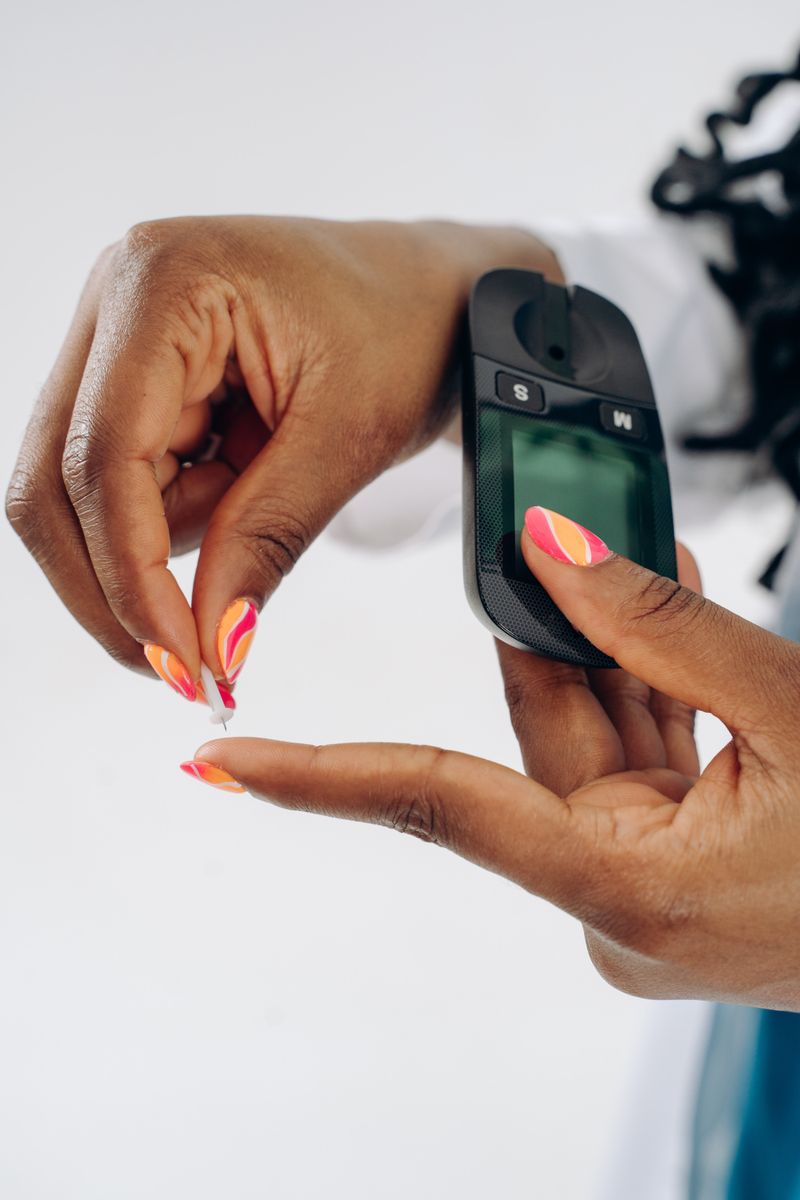
When you do a self-check, look at the palms, the forearms, between the fingers, the soles of the feet, between the toes, and the nail beds, not only the areas the sun reaches.
The sunscreen myth
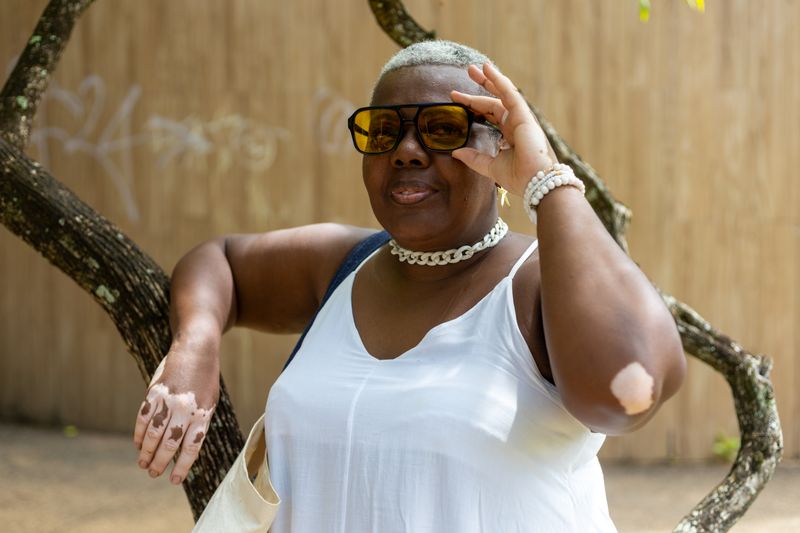
"Black people don't need sunscreen" is the misconception that costs lives. Melanin does provide some natural protection against UV damage, but the Skin Cancer Foundation is direct: "everyone, of any complexion, is still at risk for sun-related skin cancers," and increased melanin can create "a false sense of immunity." Sun protection still matters for Black skin, both for skin cancer and for hyperpigmentation.
But the more important point cuts the other way. The melanoma most likely to kill a Black patient, acral lentiginous melanoma on a palm, sole, or nail bed, is not caused by the sun at all. So sunscreen, while worth using, will not protect you from the type of skin cancer you are statistically most at risk for. Checking the places the sun never touches is what catches it.
Other skin cancers on Black skin
Melanoma is the deadliest, but it is not the most common. Squamous cell carcinoma is the most common skin cancer in Black people. In people of color these cancers also tend to favor less sun-exposed sites: "up to 60 to 75 percent of tumors arise on the palms of the hands, soles of the feet, under the nail (subungual) and the nail areas," and the sole of the foot is involved in 30 to 40 percent of cases. Squamous cell carcinoma in Black skin can also arise in areas of chronic scarring or long-standing inflammation. Any non-healing sore, scaly patch, or firm growing bump deserves a professional look.
When to see a dermatologist
See a board-certified dermatologist if you notice any of the following:
- A new dark streak under a fingernail or toenail not explained by an injury.
- A new or changing spot on a palm, sole, nail bed, or in the mouth or genital area.
- A mole that meets any of the ABCDE criteria.
- A sore that will not heal, or any spot that itches, bleeds, or is changing.
You do not need to wait for an annual exam. Early melanoma is highly treatable; the survival gap for Black patients is largely a gap in how early it is found. If you do not have a dermatologist, you can find one through our provider directory.
Frequently asked questions
Can Black people get skin cancer? ▼
Yes. Skin cancer is less common in Black people, but it does occur, and it is more often diagnosed at a later, more dangerous stage. The five-year melanoma survival rate is 66% for Black patients versus 90% for non-Hispanic white patients.
Where does melanoma usually appear on Black skin? ▼
Most often on the palms, the soles of the feet, and under the nails, and sometimes in the mouth or on the genitals. The most common type in darker skin, acral lentiginous melanoma, develops in these areas and is not caused by sun exposure.
What does melanoma under a nail look like? ▼
It typically appears as a new dark brown or black streak running the length of the nail that is not caused by an injury. A dark band under a nail with no clear cause should be checked by a dermatologist; this is the type of melanoma that went undiagnosed in Bob Marley.
Do I still need sunscreen if I have dark skin? ▼
Yes. Melanin offers partial UV protection, not full protection, so sun-related skin cancers are still possible. Keep in mind, though, that the melanoma Black patients are most at risk for is not sun-driven, so checking your palms, soles, and nails matters just as much as sun protection.