Why diabetes shows up on the skin
The skin is one of the first places diabetes leaves a mark. High blood sugar damages small blood vessels and nerves, dries the skin, and weakens its defense against bacteria and fungi. Many people notice a skin change before they ever get a blood-sugar diagnosis. That matters here because diabetes is not evenly distributed: in U.S. adults, diagnosed diabetes runs higher among non-Hispanic Black adults (13.9%) than non-Hispanic white adults (8.5%), per the National Center for Health Statistics. Black/African Americans also die from diabetes far more often than the population overall. Reading your skin accurately is one practical lever you control. For the bigger picture on risk and management, see our guide to type 2 diabetes.
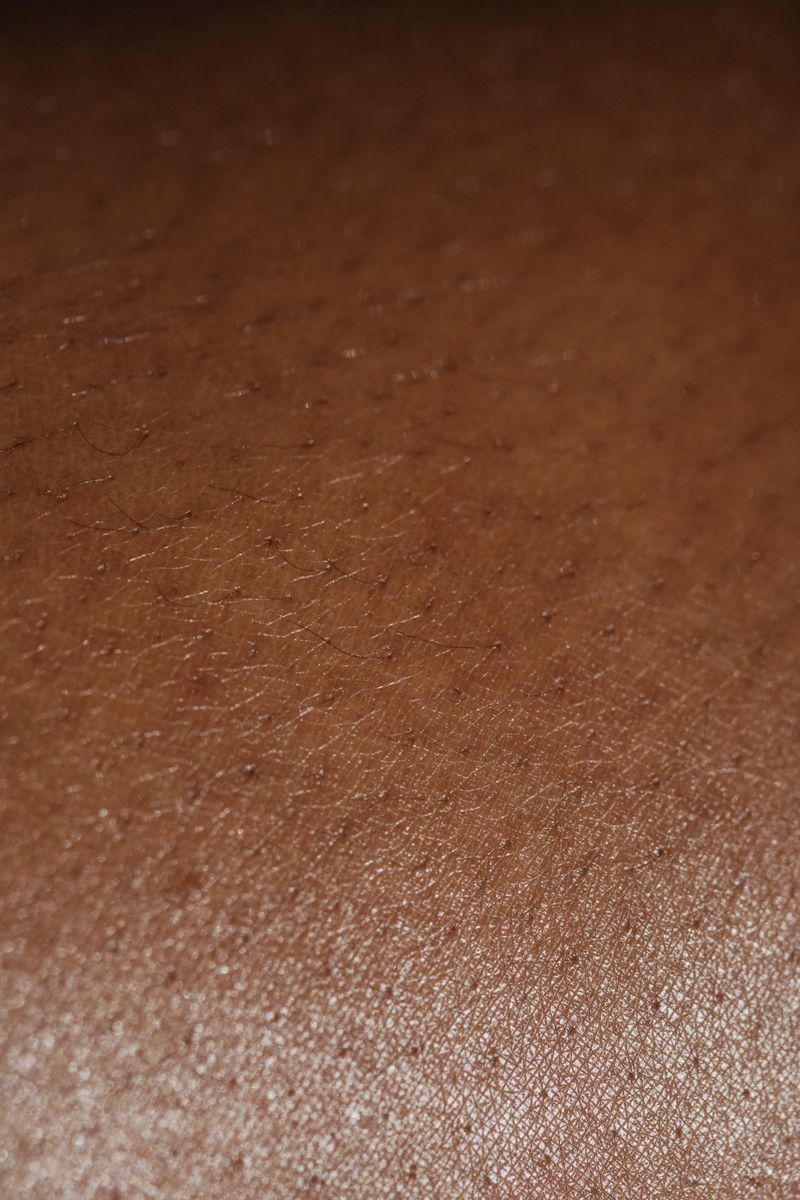
The catch on brown and Black skin: most medical photos of these conditions were taken on light skin, so the textbook "red" descriptions do not match what you see. Learning the darker-skin version of each sign is the point of this page.
Diabetic dermopathy (shin spots)
Diabetic dermopathy is the single most common skin manifestation of diabetes, appearing in as many as half of people who have it. It shows up as round or oval spots on the shins. On lighter skin they are described as reddish-brown; on darker skin they read as flat brown or tan patches that can look like old bruises or scars and blend into normal pigment. They may feel slightly scaly early on, then flatten and sometimes leave a small dent.
Shin spots are harmless and do not need treatment. They are not the problem themselves; they are a signal. More spots tend to track with longer diabetes duration and higher HbA1c, so a new crop is worth mentioning at your next visit. When blood sugar is well controlled they often fade, though that can take 18 to 24 months.
Acanthosis nigricans (dark, velvety patches)
A dark patch or band of thickened, velvety skin on the back of the neck, the armpits, or the groin is acanthosis nigricans. It is driven by high insulin levels acting on skin cells, which makes it an early external flag for insulin resistance and prediabetes. It is more common in people with darker skin and in type 2 diabetes. People often mistake it for dirt that will not scrub off, or for a tan; it is neither.
Because it points upstream to insulin resistance, acanthosis nigricans is a reason to get blood sugar checked rather than a cosmetic issue to bleach away. We cover the neck presentation in detail in acanthosis nigricans on the neck in Black skin.
Slow-healing wounds, foot ulcers, and the amputation gap
This is the most dangerous category, and where the racial disparity is starkest. Between 15% and 25% of people with diabetes will develop a foot ulcer, and about half of healed ulcers come back within three years. Nerve damage means you may not feel a sore forming, and poor circulation means it heals slowly once it does.
The downstream gap is severe. In a national Medicare analysis, Black/African American beneficiaries had 1.98 times the odds (95% CI 1.93 to 2.03) of a lower-limb amputation within one year of a diabetic foot ulcer diagnosis compared with non-Hispanic white beneficiaries, even after adjusting for age, comorbidities, and area deprivation. Part of that gap is delayed specialist care, not biology. The practical implication is simple: do not wait on a foot wound. Early attention is the difference-maker.
Community health centers are primary care: they see patients regardless of insurance, charge on a sliding scale that is often $0, and can manage a condition like blood pressure or diabetes long-term. Our directory of free and charitable clinics lists centers by state. A same-day telehealth visit is self-pay and is not billed to Medicaid, so an ongoing clinic relationship usually costs less over a year. If you want a telehealth visit sooner:

See a doctor online today.
- Same-day video visits from $34
- Price shown before you book
- No insurance needed
 with Sesame Care
Affiliate link, we may earn a commission at no extra cost to you.
On darker skin, the warning colors differ. Redness that signals infection can look dusky, purplish, or simply darker than the surrounding skin rather than bright red, so use warmth, swelling, pain, and drainage as your cues alongside color.
Dry, itchy skin
Xerosis (dry skin) affects as many as 40% of people with diabetes, often worst on the feet and lower legs. High blood sugar pulls water out of the body, and nerve damage can reduce the sweating that normally keeps skin supple. Dry, cracked skin is not just uncomfortable: cracks are entry points for infection, especially on the feet. On darker skin, dryness can also show up as an ashen, gray cast. Daily moisturizing is genuine prevention here, not vanity.
Recurrent fungal and bacterial infections
Skin and nail infections are common in poorly controlled diabetes, present in roughly one in five patients. Yeast (candida) thrives in warm, moist folds: under the breasts, in the groin, between toes, and at the corners of the mouth. Fungal nail infection (onychomycosis) is especially common, affecting nearly half of people with type 2 diabetes, and thickened, crumbling nails raise the risk of an ingrown nail or a break in the skin that turns into an ulcer. Recurrent boils, styes, or stubborn athlete's foot can all be the skin flagging blood sugar that is running high.
Necrobiosis lipoidica
Less common but important: necrobiosis lipoidica appears in roughly 0.3% to 1.6% of people with diabetes, usually as firm patches on the shins that develop a waxy, shiny, slightly sunken center with a raised border. On lighter skin the border is reddish-brown; on darker skin these patches often look purplish or hyperpigmented. The thinned skin over them breaks down easily and can ulcerate, so these lesions should be watched and shown to a clinician rather than ignored.
How pigment complicates the picture on Black skin
Here is the wrinkle unique to brown and Black skin: almost any inflammation, a scratch, a healed sore, a fungal patch, can leave behind post-inflammatory hyperpigmentation (PIH), a dark mark where the skin reacted. PIH is more common and more stubborn in darker skin (Fitzpatrick types III to VI) because there is more melanin and more reactive pigment cells; in some groups it follows the majority of inflammatory skin events.
Two practical consequences. First, a lingering dark spot does not necessarily mean the original problem is still active; PIH can take months to years to fade on its own. Second, real diabetic signs can hide inside a field of normal pigment variation and old marks. The fix is not to self-diagnose by color alone. Track texture (raised, scaly, waxy, dented), location (shins, feet, skin folds), and behavior (healing or not), and bring photos to your provider.
Foot care that actually prevents amputations
Given the amputation gap, daily foot care is the highest-value habit on this page. The guidance from the National Institute of Diabetes and Digestive and Kidney Diseases (NIDDK) is concrete:
- Check your feet every day, tops, bottoms, and between the toes. Use a mirror or ask someone if you cannot see the soles. Pick a fixed time, like when you take your shoes off at night.
- Moisturize the tops and bottoms of your feet to prevent cracks, but not between the toes, where trapped moisture invites infection.
- Call your provider the same day for a cut, blister, or bruise that has not started to heal in a few days; skin that is red, warm, or painful; or a callus with dried blood inside it (often the first sign of a wound underneath).
- A foot wound that turns black and smelly can mean gangrene and is an emergency.
Well-controlled blood sugar is the foundation under all of this. If you take metformin or another diabetes medication, taking it consistently is part of protecting your skin and feet, not separate from it.
When to see a doctor
Book a visit for: any new dark velvety patch (get blood sugar checked), shin patches that develop a waxy or sunken center, recurrent or spreading fungal or bacterial infections, or persistently dry, cracking skin. Treat as urgent and call the same day: any foot sore not healing within a few days, signs of infection (warmth, swelling, pain, dusky or darkening skin, drainage), or a wound turning black or foul-smelling. When in doubt about a foot, err toward calling. The downside of an extra call is small; the downside of waiting is your limb.
If you need a clinician who treats Black patients and takes the amputation gap seriously, the blackhealth.org provider directory is a place to start.
Frequently asked questions
What do diabetic shin spots look like on dark skin? ▼
They appear as flat, round or oval brown or tan patches on the shins that can resemble old scars or bruises and may blend into surrounding pigment. They are usually harmless but signal diabetes, and tend to increase with longer disease duration and higher blood sugar.
Are dark spots on the shins always from diabetes? ▼
No. Many things cause shin discoloration, including healed injuries and post-inflammatory hyperpigmentation, which is especially common and long-lasting on darker skin. But clustered brown patches on both shins in someone with diabetes or its risk factors are classic for diabetic dermopathy and worth mentioning to a provider.
Why are Black people with diabetes at higher risk of amputation? ▼
The risk is largely about care, not biology. Black Medicare patients had nearly twice the odds of amputation within a year of a foot-ulcer diagnosis, and part of that gap traces to delayed specialist referral and unequal access to timely care. Daily foot checks and same-day calls for non-healing wounds are the main levers individuals control.
Can controlling my blood sugar make these skin changes go away? ▼
Often, yes, over time. Shin spots commonly fade once diabetes is well controlled, though it can take 18 to 24 months. Acanthosis nigricans can improve as insulin resistance improves. Post-inflammatory marks, however, fade on their own timeline regardless of blood sugar.
Is dry, itchy skin a sign of diabetes? ▼
It can be. Dry skin (xerosis) affects up to 40% of people with diabetes, driven by high blood sugar and nerve damage, and is often worst on the lower legs and feet. Persistent unexplained dryness and itch, especially with other signs, is worth a blood-sugar check.