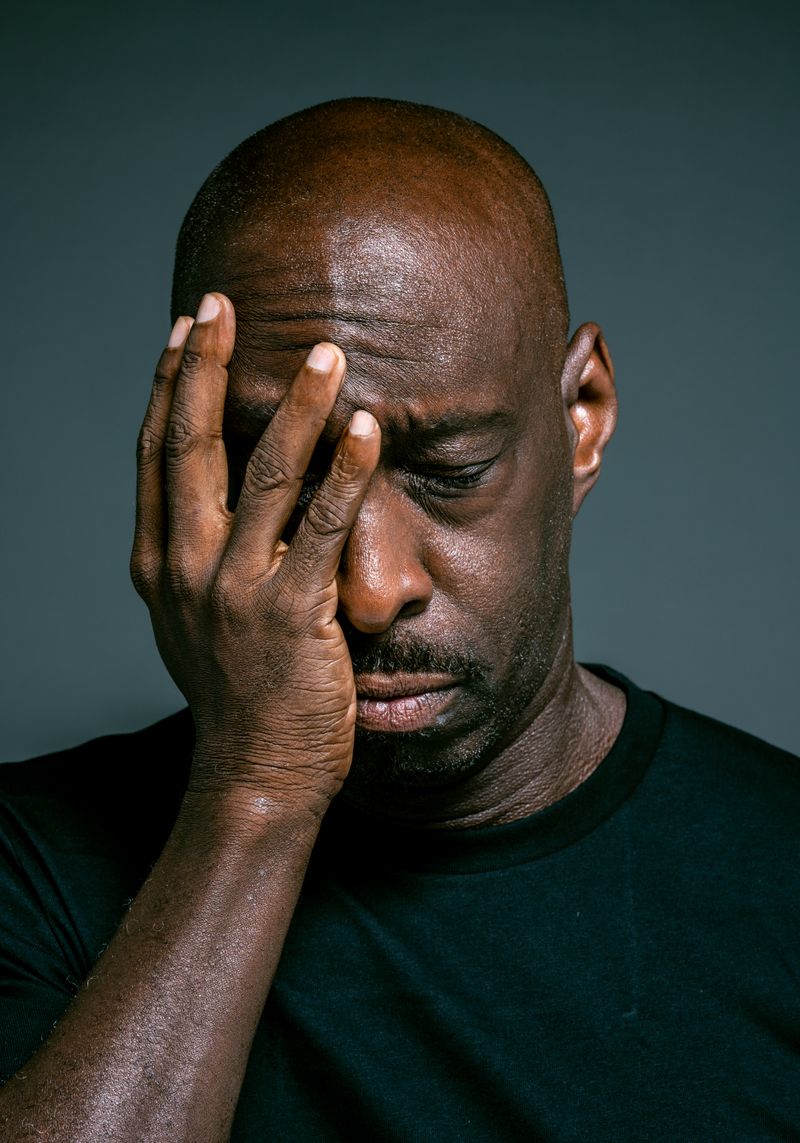
Social anxiety disorder is an intense, lasting fear of being watched, judged, or embarrassed in everyday social or performance situations. It is more than shyness. The fear is strong enough to disrupt work, school, and relationships, and it often comes with physical symptoms: blushing, sweating, a racing heart, nausea, and a trembling voice. The most common response is avoidance, which shrinks a person's world over time. An estimated 12.1% of U.S. adults experience social anxiety disorder at some point in life, and about 7.1% have it in any given year, according to the National Institute of Mental Health. Among African American adults specifically, the lifetime rate is 7.6%, making it one of the most common anxiety disorders in this group, according to data from the National Survey of American Life.
More than shyness
Shyness is a temperament. Plenty of people feel nervous before a presentation or quiet at a party and recover quickly. Social anxiety disorder is different in degree and consequence. The fear is out of proportion to the actual threat, it shows up reliably across situations, it lasts six months or longer, and it pushes the person to avoid the situation or endure it with significant distress. The worry centers on a specific dread: that you will act in a way, or show anxiety symptoms, that others will judge as humiliating. Common triggers include speaking in meetings, eating in front of others, making phone calls, dating, or simply walking into a room where you might be watched. When avoidance starts costing promotions, friendships, or medical appointments, it has crossed from a personality trait into a treatable condition.
Vigilance in a hostile world is not a disorder
This is where the picture gets more complicated for Black Americans, and where careless diagnosis does harm. Many Black adults carry a heightened awareness in predominantly white or openly hostile spaces: reading a room, monitoring tone, adjusting speech and posture to stay safe. Researchers call this vigilance coping, defined as continuously monitoring and modifying your behavior and surroundings to anticipate discrimination. In a study of 221 Black adults in Detroit, vigilance was a direct response to experienced discrimination, not an irrational fear (Himmelstein et al., 2014). That distinction matters. Bracing for bias you have actually encountered is an accurate read of your environment. Social anxiety disorder is a fear of negative judgment that is excessive, generalizes across safe and unsafe settings alike, and persists where no real threat exists. A good clinician asks where the fear shows up, whether it tracks real risk, and whether it follows you into spaces that are genuinely safe. Vigilance is a response to racism. A disorder is a condition that needs treatment. Both can be present at once, and naming each correctly is the clinician's job.
Under-diagnosed, under-treated
Black adults with anxiety and depressive disorders use outpatient psychotherapy and medication less than White adults, even though these conditions tend to be chronic and Black patients often experience greater functional impairment from them (Dean et al., 2022). The gap is decades old. As far back as the 1990s, clinicians noted that African Americans were underrepresented both in mental health treatment settings and in the research that shapes care (Paradis et al., 1994). The reasons are layered: cost and insurance, a shortage of Black clinicians, medical mistrust earned through real harm, and the chance that a clinician misreads culturally grounded guardedness as either pathology or, worse, dismisses genuine distress. Discrimination itself raises the odds. Among 3,570 African American adults, experiences of racial discrimination were associated with higher odds of social anxiety disorder, with the pattern differing by gender (Nguyen et al., 2023).
Community mental health centers see patients on a sliding scale, and they take patients a private practice would turn away over insurance. If you're in crisis right now, our crisis resources page lists free, immediate options. Our directory of free and charitable clinics lists centers by state. A paid online mental health platform is not billed to Medicaid, so check the community mental health center in your county first. If you want to start with a paid platform today:

Talk to a licensed therapist online.
- Sessions by video, phone or chat
- 20% off your first month
- Start from home, on your schedule
 with BetterHelp
Affiliate link, we may earn a commission at no extra cost to you.
When Black and Caribbean Black adults do meet criteria for an anxiety disorder, they tend to experience higher overall severity and functional impairment than White adults (Himle et al., 2009). In other words, the disorder is not milder in Black patients. It is more often missed, and it goes untreated longer. If you have experienced anxiety alongside trauma tied to racism, our coverage of PTSD and racial trauma in Black Americans explains how these conditions overlap and differ.
The 'strong Black person' barrier
The expectation to project unbreakable strength is a real barrier to care, and it has been measured. Among Black women, a stronger felt obligation to display strength predicted more depressive symptoms, with self-silencing as one mechanism: suppressing your own needs to keep up the appearance of coping (Abrams et al., 2018). The same ideal shapes whether people seek help at all. A 2024 study found that dimensions of the Superwoman Schema, including the obligation to suppress emotions and resistance to vulnerability, suppressed the intention to seek help (Nelson et al., 2024). For Black men, the script is often that anxiety is weakness and silence is dignity. None of that changes the underlying biology. Social anxiety disorder is a treatable condition, not a character flaw, and asking for help is the move that strength actually makes possible. Our piece on depression in Black men covers how this silence plays out and how to break it.
How it is diagnosed
There is no blood test for social anxiety disorder. A clinician diagnoses it through a clinical interview, asking about the fear, how long it has lasted, which situations trigger it, what physical symptoms appear, and how much it interferes with work, school, and relationships. The standard threshold is a marked, persistent fear lasting six months or more that is out of proportion to the actual situation and causes meaningful distress or avoidance. A culturally responsive clinician will go further: distinguishing the disorder from realistic vigilance in discriminatory settings, screening for overlapping conditions like depression, trauma, and other anxiety disorders, and taking your account of your own environment seriously rather than pathologizing it.
What treatment works
Social anxiety disorder responds well to treatment. The strongest evidence is for cognitive behavioral therapy, specifically the version that includes exposure: working through feared situations gradually, with a therapist, until the fear loses its grip. A large network meta-analysis concluded that individual CBT produces large effect sizes and should be regarded as the best initial treatment for social anxiety disorder (Mayo-Wilson et al., 2014). For people who decline therapy or want medication alongside it, SSRIs (selective serotonin reuptake inhibitors) show the most consistent benefit. The same analysis found that psychological treatment tends to hold its gains better after treatment ends, while many people who respond to an SSRI relapse within months of stopping it. That argues for therapy as the foundation, with medication as a strong support or alternative.
Culturally responsive care raises the odds that treatment sticks. CBT works, but the research base for it in Black populations is thin, and experts recommend adapting it to account for cultural context and the reality of discrimination rather than delivering an off-the-shelf protocol (Coyle-Eastwick et al., 2024). A clinician who understands the difference between a disorder and a rational response to racism, and who does not flinch from naming either, will get you further than one who does not.
How to get care
Start by naming what you are experiencing to a primary care doctor or directly to a therapist: a persistent fear of being judged that is shrinking your life. Ask specifically for cognitive behavioral therapy with exposure, since that is the evidence-based standard. If medication comes up, ask why a given SSRI is being suggested and what the plan is for staying on or coming off it. Finding a clinician who shares your context can make the work easier and the diagnosis more accurate. You can find a Black mental health provider through our directory. If the first clinician misreads your guardedness as the whole story, you are allowed to find another. The right fit is part of the treatment.
Frequently asked questions
Is social anxiety disorder just extreme shyness? ▼
No. Shyness is a temperament that does not necessarily interfere with your life. Social anxiety disorder is a persistent, out-of-proportion fear of judgment that lasts six months or more and disrupts work, school, or relationships, usually through avoidance. It is a diagnosable, treatable condition.
How do I know if my caution around white or hostile spaces is a disorder? ▼
Guardedness that tracks real risk, where you have actually faced bias, is an accurate read of your environment, not a disorder. Social anxiety disorder is fear that is excessive, follows you into genuinely safe settings, and persists where no real threat exists. A culturally aware clinician can help tell the two apart, and both can be present at once.
Why are Black adults less likely to get treated for social anxiety? ▼
Barriers include cost and insurance, a shortage of Black clinicians, medical mistrust earned through real harm, and the cultural pressure to project strength. Research shows Black adults use psychotherapy and medication for anxiety less than White adults, even though the conditions are often more impairing.
What is the most effective treatment for social anxiety disorder? ▼
Cognitive behavioral therapy with exposure has the strongest evidence and is considered the best initial treatment. SSRIs are an effective alternative or addition. Therapy tends to hold its gains better after it ends, while medication benefits often fade if the drug is stopped.
Can social anxiety disorder go away on its own? ▼
It can wax and wane, but untreated social anxiety disorder tends to be chronic and often worsens through avoidance, which reinforces the fear. Among Black adults specifically, anxiety disorders that go untreated are linked to greater functional impairment. Evidence-based treatment changes the course.