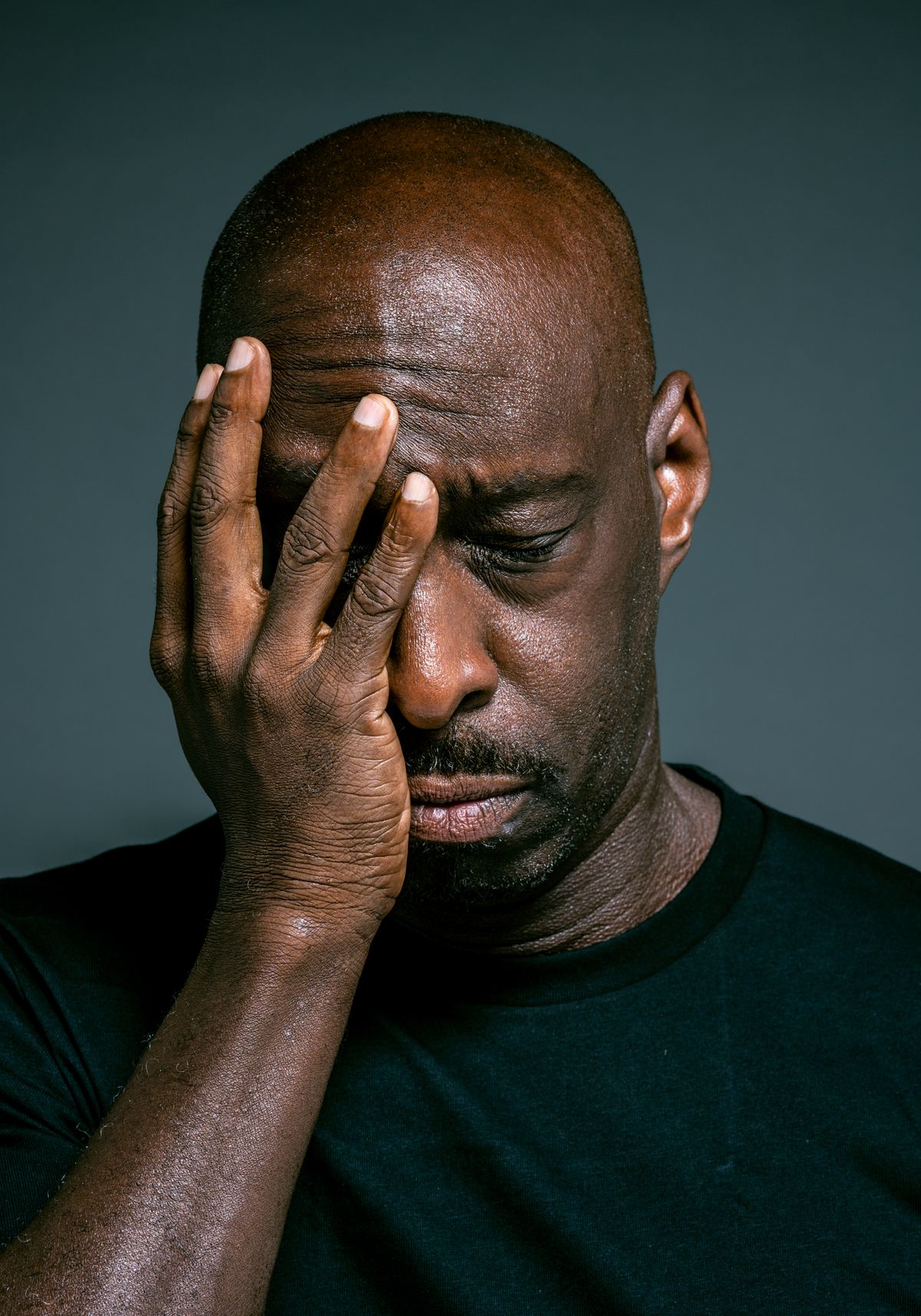
What anxiety actually feels like
Anxiety is your body's alarm system firing when there is no real emergency. Everyone feels nervous sometimes. An anxiety disorder is when that alarm stays on, gets out of proportion to what is happening, and starts interfering with work, relationships, and daily life.
Here is the part that surprises people: anxiety is as much a body experience as a mind experience. The National Institute of Mental Health lists the core signs of generalized anxiety disorder as worrying excessively about everyday things, trouble controlling that worry, feeling irritable or on edge, trouble falling or staying asleep or feeling fatigued, and clear physical symptoms: pain such as headaches, muscle aches, and stomachaches; trembling or twitching; sweating; lightheadedness; and feeling out of breath.
That somatic side matters. When the loudest symptoms are a racing heart, chest tightness, headaches, or gut problems, it is easy to assume something is wrong with your heart or your stomach rather than your stress level. People can spend months in doctors' offices getting tests for physical complaints before anyone names the anxiety underneath. If your body feels like this and the medical workups keep coming back clean, anxiety is worth asking about directly.
Generalized anxiety versus panic: they are not the same
The two most common patterns people search for are very different experiences.
Generalized anxiety disorder (GAD) is the slow burn. It is excessive, hard-to-control worry about many everyday things, happening on most days for at least six months, paired with the physical symptoms above. The worry feels constant and bigger than the situation deserves, and you cannot talk yourself out of it.
Panic disorder is the spike. It involves sudden, unexpected, repeated panic attacks: short episodes of intense fear that hit with physical symptoms like chest pain, a pounding or racing heart, shortness of breath, dizziness, sweating, trembling, nausea, and a frightening sense that something terrible is about to happen. A single panic attack is not a disorder. Panic disorder is when the attacks recur and you start living in fear of the next one.
Because a panic attack can feel exactly like a heart attack, many people first show up in the emergency room. That is a reasonable instinct, and getting checked is the right call. But once a physical cause is ruled out, the next step is a mental health evaluation, not silence.
There are other anxiety disorders too, including social anxiety disorder and specific phobias. If your symptoms do not fit neatly into one box, that is normal. A clinician can sort it out.
If you or someone you love is in crisis, call or text 988 to reach the Suicide and Crisis Lifeline, free, 24 hours a day. For help with alcohol or drug use, SAMHSA's National Helpline at 1-800-662-4357 is free, confidential, and answers 24 hours a day. For ongoing care, community health centers offer sliding-scale counseling and our directory of free and charitable clinics lists centers by state. A same-day telehealth visit is not billed to Medicaid, so the clinic route usually costs less. If you want to talk to a clinician sooner:

Talk to a licensed therapist online.
- Sessions by video, phone or chat
- 20% off your first month
- Start from home, on your schedule
 with BetterHelp
Affiliate link, we may earn a commission at no extra cost to you.
Why anxiety gets missed in Black adults
Start with the data, because it corrects a harmful myth. Anxiety is not rarer in Black communities. Decades-old primary care research found no racial difference in how often patients met criteria for anxiety disorders, in symptom patterns, or in functional impairment. The problem is not that Black people get less anxious. The problem is that the anxiety gets recognized and treated less.
The treatment gap is stark. In 2024, only 14.7% of Black adults received any mental health treatment in the past year, compared with 22.9% of US adults overall, making Black adults about 36% less likely to get care. The medication gap is just as wide: 8.7% of Black adults received mental health treatment through medication versus 16.7% nationally. On top of that, Black adults with anxiety and depressive disorders tend to experience these conditions as more chronic and with greater functional impairment than White adults, and they underuse both therapy and medication.
So why the gap? It is tempting to blame attitudes, but the research does not support that. A study of anxious primary care patients found no significant differences between Black and White patients across nine separate beliefs about mental health treatment, and the authors concluded that differences in beliefs and preferences do not fully explain the large, persistent racial disparities in care. Something systemic is doing the work. The real drivers documented in the literature include:
- Access and cost. Finding a clinician, getting an appointment, and affording it are not evenly distributed.
- Clinician bias and misdiagnosis. When symptoms get attributed to a physical complaint or a personality trait instead of anxiety, the right treatment never starts.
- Medical mistrust and experiences of discrimination. A history of being dismissed or mistreated by the health system makes people understandably cautious. Researchers building models of treatment-seeking among Black adults specifically include medical mistrust, perceived discrimination, and racial identity as central factors.
- Stigma and the pressure to be strong. The "Strong Black Woman" expectation of endless self-reliance and self-silencing is linked in research to more anxiety and depressive symptoms and to more negative attitudes toward seeking help. Strength becomes a reason to suffer quietly instead of a reason to get care.
None of this is your failing. Naming the barrier is the first step to getting around it.
What treatment actually works
Anxiety is one of the most treatable mental health conditions. You have real options, and they work better in combination for many people.
Therapy. Cognitive behavioral therapy (CBT) is the most research-supported talk therapy for anxiety. It teaches you to recognize the thought patterns that feed the alarm and to change how you respond, so the worry loses its grip. Acceptance and commitment therapy (ACT) is another evidence-based option.
Here is what matters for Black readers specifically: therapy works better when it fits your context. A 2023 meta-analysis of 42 studies with 4,114 participants found that culturally adapted CBT produced moderate-to-large reductions in anxiety and depression compared with both control groups and other active treatments. An earlier meta-analysis of 76 studies found that interventions designed for a specific cultural group were about four times more effective than generic ones delivered to mixed groups. Translation: a therapist who understands your community and adapts the work to it is not a luxury. It is a measurable advantage.
Medication. For many people, medication makes therapy possible by turning the volume down. NIMH lists antidepressants such as SSRIs (selective serotonin reuptake inhibitors) and SNRIs (serotonin-norepinephrine reuptake inhibitors) as standard treatments for GAD, along with anti-anxiety medications such as benzodiazepines and buspirone. Medication choices are individual, and they are a conversation to have with a prescriber, not a decision to make from a search result.
Lifestyle support. This does not replace treatment, but it strengthens it: regular movement, consistent sleep, limiting caffeine and alcohol, and a support network you can be honest with. These reduce the baseline load your nervous system carries.
How to get help, step by step
- Name it to one person. A doctor, a trusted friend, a faith leader. Saying it out loud breaks the silence that anxiety thrives in.
- Start with a check-up if the symptoms are physical. Get the racing heart or chest pain evaluated so you know your heart is fine. Then tell that same provider you want to talk about anxiety, not just rule out disease.
- Find a therapist who fits. Cultural fit improves outcomes, so it is worth seeking out a clinician who understands your experience. Our guide to finding a Black therapist walks through where to look and what to ask.
- Consider online therapy if access is the barrier. If schedules, transportation, or local availability are in the way, online therapy connects you with licensed clinicians from home.
- Browse the directory. You can search vetted clinicians and mental health providers in our provider directory and explore more guidance in our mental health hub.
- Be patient with the process. Finding the right therapist or medication can take a couple of tries. That is normal and not a sign that treatment will not work for you.
Frequently asked questions
How do I know if I have anxiety or if it is just stress? ▼
Stress usually has a cause and fades when the situation passes. An anxiety disorder is worry or fear that is out of proportion, hard to control, lasts most days for months (six months or more in the case of generalized anxiety disorder), and interferes with your daily life and includes physical symptoms like restlessness, fatigue, muscle tension, and sleep problems. If that sounds like you, it is worth an evaluation.
Can anxiety cause physical symptoms like chest pain and a racing heart? ▼
Yes. Physical symptoms are core to anxiety. Generalized anxiety disorder commonly brings headaches, muscle aches, stomachaches, trembling, sweating, lightheadedness, and shortness of breath, and panic attacks bring chest pain, a pounding heart, and shortness of breath that can feel like a heart attack. Get new chest pain checked medically, then pursue an anxiety evaluation if the workup is clean.
Does therapy actually work for Black adults? ▼
Yes, and it works better when it is culturally adapted. Meta-analyses show culturally adapted CBT produces moderate-to-large reductions in anxiety, and interventions designed for a specific cultural group are far more effective than generic ones. Finding a therapist who understands your experience is a real advantage.
Why are Black adults treated for anxiety less often? ▼
Not because anxiety is rarer or because Black people want help less. Research finds Black and White patients hold similar beliefs about treatment, so beliefs do not explain the gap. The drivers are systemic: access, cost, clinician bias and misdiagnosis, medical mistrust, and stigma. In 2024, Black adults were about 36% less likely than US adults overall to receive mental health treatment.
What should I do if I am in crisis right now? ▼
Call or text 988 to reach the 988 Suicide and Crisis Lifeline. It is free, confidential, available 24/7, and staffed by trained counselors. If you are in immediate physical danger, call 911.