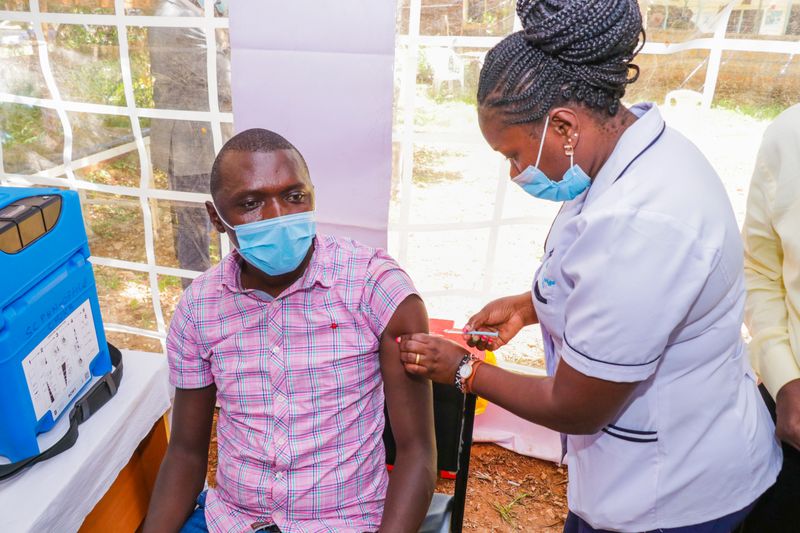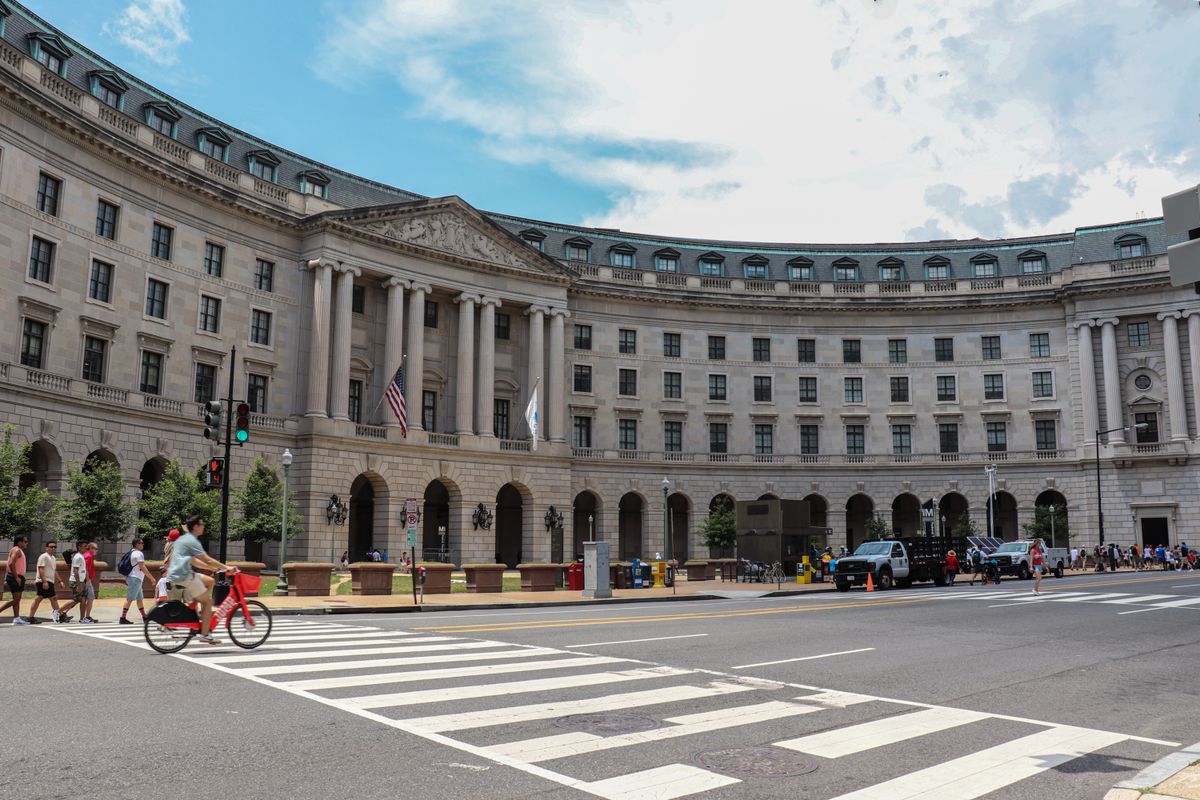
The plan would move the program that funds most of the CDC's overseas disease work. It lands on the same agency that produces the surveillance data U.S. Black HIV care depends on, at a moment when that reporting is already on hold.
The plan moves PEPFAR out of the agency that built it
PEPFAR, the President's Emergency Plan for AIDS Relief, has run for 22 years and, by the directors' account, has "saved more than 26 million lives" and "keeps 20 million people alive on HIV treatment." The eight wrote that "most of CDC's overseas offices and workforce are sustained by PEPFAR funding," and that those offices are where "American doctors, nurses, scientists, and public health experts work side by side with foreign ministries of health to support laboratories, train local disease detectives, and keep patients on treatment for HIV."
The directors traced a specific sequence. On May 5, they wrote, the State Department froze the funds needed to extend 105 active CDC cooperative agreements that supported HIV treatment for 8.1 million people. If that freeze holds past June 1, the collective warned, "at least 18 CDC global outposts could close before the end of the year," and "up to 85% of CDC's global presence could evaporate over the next two years."
The directors set that warning against active outbreaks. On May 16, the World Health Organization declared the Bundibugyo Ebola outbreak in the Democratic Republic of the Congo and Uganda a public health emergency of international concern. As of the CDC's May 31 situation summary, the DRC had reported 282 confirmed cases and 42 confirmed deaths, alongside 220 suspected cases, across the Ituri, Nord-Kivu, and Sud-Kivu provinces; Uganda had reported 9 confirmed cases and 1 confirmed death, plus one probable case and one probable death, in and around the capital, Kampala (https://www.cdc.gov/ebola/situation-summary/). A separate hantavirus cluster linked to a cruise ship in the South Atlantic had killed three, the directors noted. A Kaiser Family Foundation issue brief published May 22 frames the handoff as the next step in a transition already underway, describing the CDC as having "gone through staff reductions and seen a diminished role under the Trump administration" (https://www.kff.org/global-health-policy/issue-brief/the-u-s-presidents-emergency-plan-for-aids-relief-pepfar/).
A bipartisan bench: six confirmed directors and two acting
The signatories are not a single-party bloc. STAT identified them as "former directors or acting directors of the Centers for Disease Control and Prevention," and the lineup runs across six administrations. Six are confirmed former directors: William Roper, Jeffrey Koplan, Tom Frieden, Robert Redfield, Rochelle Walensky, and Mandy Cohen. Two served as acting directors: Richard Besser and Anne Schuchat. The bench includes the Trump-era confirmed director, Redfield, alongside the two Biden-era confirmed directors, Walensky and Cohen. That composition is the point: the warning carries the weight of the people who have run the agency under both parties, not the objection of one camp.
Health departments and community health centers test for HIV at low or no cost, and can often connect you to a PrEP assistance program that covers the medication regardless of insurance. Our directory of free and charitable clinics lists centers by state. A same-day telehealth visit for testing or PrEP is self-pay and is not billed to Medicaid, so check the free routes first. If you want to start today:

Everlywell
An at-home HIV test using a finger-prick sample, with physician-reviewed results delivered confidentially online.
Order an at-home HIV testAffiliate link, we may earn a commission at no extra cost to you.
Why this reaches Black patients in the U.S.
The international framing hides a domestic stake, and it runs through the data. AIDSVu's PrEP-to-Need Ratio, the standard measure of whether prevention is reaching the people most at risk, is built from a ratio of PrEP users to new HIV diagnoses each year, and it depends on the CDC's HIV surveillance reporting (https://aidsvu.org/data-methods/data-methods-statecounty/). That reporting is the same workstream the directors say is at risk. The CDC has already paused PrEP-coverage reporting and "advises against citing specific PrEP coverage data points, as historical estimates will be updated" (https://www.cdc.gov/hiv/data-research/facts-stats/); its original June 2025 resumption target has now slipped 11 months past.
The equity gap that reporting is meant to track is documented in the peer-reviewed record. Researchers led by Samuel R. Bunting at the University of Chicago Medicine and Sinai Health System found that "PrEP has decreased overall HIV incidence, but does not appear to have decreased HIV incidence disparity," with the county-level PrEP-to-Need Ratio ranging from 26.8 in New York County to 1.46 in Shelby County, Tennessee, which contains Memphis, an 18-fold gap (Bunting et al, J Gen Intern Med 2023, PMID 35678988, https://pubmed.ncbi.nlm.nih.gov/35678988/). A separate county-level analysis led by Ryan Doherty at the Medical College of Wisconsin's Center for AIDS Intervention Research found that "percent African American and percent uninsured had negative correlations" with the same ratio (Doherty et al, AIDS Educ Prev 2022, PMID 35647866, https://pubmed.ncbi.nlm.nih.gov/35647866/). The counties with the highest HIV burden carry the lowest prevention coverage, and the agency responsible for measuring that gap is the one being moved.
What you can do
Three steps put you ahead of the June 1 date.
Call your state health department's HIV/AIDS program office and ask whether PrEP access and HIV-treatment program funding continue past June 1. The question matters most in the South, which carries the largest share of new diagnoses; Georgia, Alabama, and Mississippi run the program offices closest to the heaviest Black HIV burden. In Mississippi, that office is the State Department of Health STD/HIV Office, reachable at 601-576-7723 (https://msdh.ms.gov/msdhsite/_static/14,0,150.html).
Check whether your care is funded through the Ryan White HIV/AIDS Program, the federal safety net for people with HIV who are uninsured or underinsured, and confirm your local Part A or Part B grantee is still operating. HRSA runs a provider locator for the program at findhivcare.hrsa.gov (https://findhivcare.hrsa.gov/).
If your PrEP prescription lapses, do not wait it out. Ask the clinic or community health center that fills your prescription whether it can bridge you, and ask your provider for a same-day plan. For finding a clinician who treats Black patients with HIV, the blackhealth.org provider directory is a starting point.
This is a developing story tied to a June 1 implementation date, and we will update it as the State Department, the CDC, and Congress act.