Pneumonia is a lung infection that fills the air sacs with fluid or pus. The most common bacterial cause in adults is Streptococcus pneumoniae, the pneumococcus, and it sends an estimated 150,000 adults to the hospital every year in the United States. A vaccine prevents the worst of it. For Black adults the math is sharper: the disease is more common, it lands earlier in life, and vaccination coverage runs lower than it should.
Why this hits Black adults harder
Active Bacterial Core surveillance, the CDC system that tracks invasive pneumococcal disease, shows Black adults carrying the highest incidence and mortality across every adult age group. The timing is the part most people miss. In non-Black adults, invasive pneumococcal disease rates climb steadily with age. In Black adults, rates peak at 55 to 59, roughly a decade earlier (CDC MMWR, 2025). That earlier peak is exactly why waiting until 65 to think about the vaccine leaves a real gap.
The protection gap compounds the risk. Among adults 50 to 64 who already had a medical reason to be vaccinated, coverage with any pneumococcal vaccine was 38.2% for Black adults versus 39.3% for White adults, and only 27.9% for Hispanic adults (CDC MMWR, 2025). When a disease starts earlier and a smaller share of the at-risk group is protected, the toll falls heaviest on the people who needed the shot soonest. The conditions that raise pneumococcal risk, including type 2 diabetes and COPD, are themselves more common and often diagnosed later in Black adults, which stacks the deck further.
Who is at higher risk
Age is the biggest single factor. Healthy adults 65 and older are over 10 times more likely to be hospitalized with pneumococcal pneumonia than adults 18 to 49 (American Lung Association). But several conditions push risk up well before 65:
- Diabetes. High blood sugar blunts the immune response to infection.
- Chronic lung disease, including COPD and asthma.
- Chronic heart disease, including heart failure.
- Smoking. Cigarette smoke damages the airway defenses that clear bacteria.
- Chronic liver or kidney disease.
- Sickle cell disease. The spleen filters pneumococcus out of the blood, and in sickle cell disease the spleen stops working, often by age 2. That functional asplenia leaves people open to severe, fast-moving pneumococcal infection (American Society of Hematology, 2020).
The CDC lists these same conditions, alcohol use disorder, and immune-weakening conditions as reasons to vaccinate adults 19 to 64, not to wait (CDC MMWR, 2025). If you have one of them, the vaccine is for you now.
Whatever brought you to this page, community health centers see patients regardless of insurance and charge on a sliding scale that is often $0. Our directory of free and charitable clinics lists centers by state. A same-day telehealth visit is self-pay and is not billed to Medicaid, so if you have Medicaid the clinic route will usually cost less. If you would rather see a clinician online today:

See a doctor online today.
- Same-day video visits from $34
- Price shown before you book
- No insurance needed
 with Sesame Care
Affiliate link, we may earn a commission at no extra cost to you.
The pneumococcal vaccines: who gets what, when
The rules changed on October 23, 2024. The Advisory Committee on Immunization Practices (ACIP) now recommends a single dose of pneumococcal conjugate vaccine for every adult 50 and older who has never had one, down from the old cutoff of 65 (CDC MMWR, 2025). For Black adults, whose disease peaks in the late 50s, that lower age is the change that matters most.
If you have never had a pneumococcal vaccine, you have three approved paths. Any one of them completes your protection:
- PCV20 (Prevnar 20), a single shot.
- PCV21 (Capvaxive), a single shot. CDC notes PCV21 is expected to cover more of the strains now circulating in U.S. adults than the other conjugate vaccines.
- PCV15 (Vaxneuvance) followed by PPSV23 (the older polysaccharide vaccine, Pneumovax 23) at least one year later, or after 8 weeks if you are immunocompromised, have a cochlear implant, or have a cerebrospinal fluid leak.
If you already started a series years ago with the older PCV13, ACIP recommends finishing with PCV20 or PCV21 rather than PPSV23 alone (CDC MMWR, 2025). Bring your vaccination record to the appointment. If you cannot find it, your clinician or pharmacist can usually pull it from a state immunization registry. Do not skip the shot because the paperwork is unclear; a repeat dose is far less dangerous than the disease.
How to recognize pneumonia
Pneumococcal pneumonia tends to come on fast. The CDC lists the core signs as chest pain, cough, fever and chills, and rapid or difficult breathing (CDC). The cough often brings up colored or rust-tinged phlegm, and the chest pain usually sharpens when you breathe in deep.
In older adults the picture can be quieter and more dangerous. Instead of a dramatic fever, an older person may show confusion or low alertness as the first sign (CDC). A parent or grandparent who suddenly seems foggy, withdrawn, or off their baseline can be developing pneumonia even without a loud cough. From the lungs, pneumococcus can spill into the bloodstream (bacteremia) or the lining of the brain (meningitis), and those complications kill a meaningful share of the adults who get them.
A note on oxygen readings and darker skin
If you use a home pulse oximeter, know its blind spot. In a study of more than 48,000 paired measurements, Black patients had nearly three times the rate of occult hypoxemia, dangerously low blood oxygen that the device missed, compared with White patients. The oximeter read a safe 92 to 96% while arterial blood was actually below 88% (Sjoding et al., New England Journal of Medicine, 2020. PMID 33326721). Melanin absorbs some of the light the device relies on, so it can overestimate your oxygen. The signs of cyanosis are also harder to read on dark skin; instead of blue, lips and gums may look gray or ashen. The takeaway: a reassuring number on the device does not cancel out real symptoms. Trust how you feel and how you look in person.
How to get the vaccine and find care
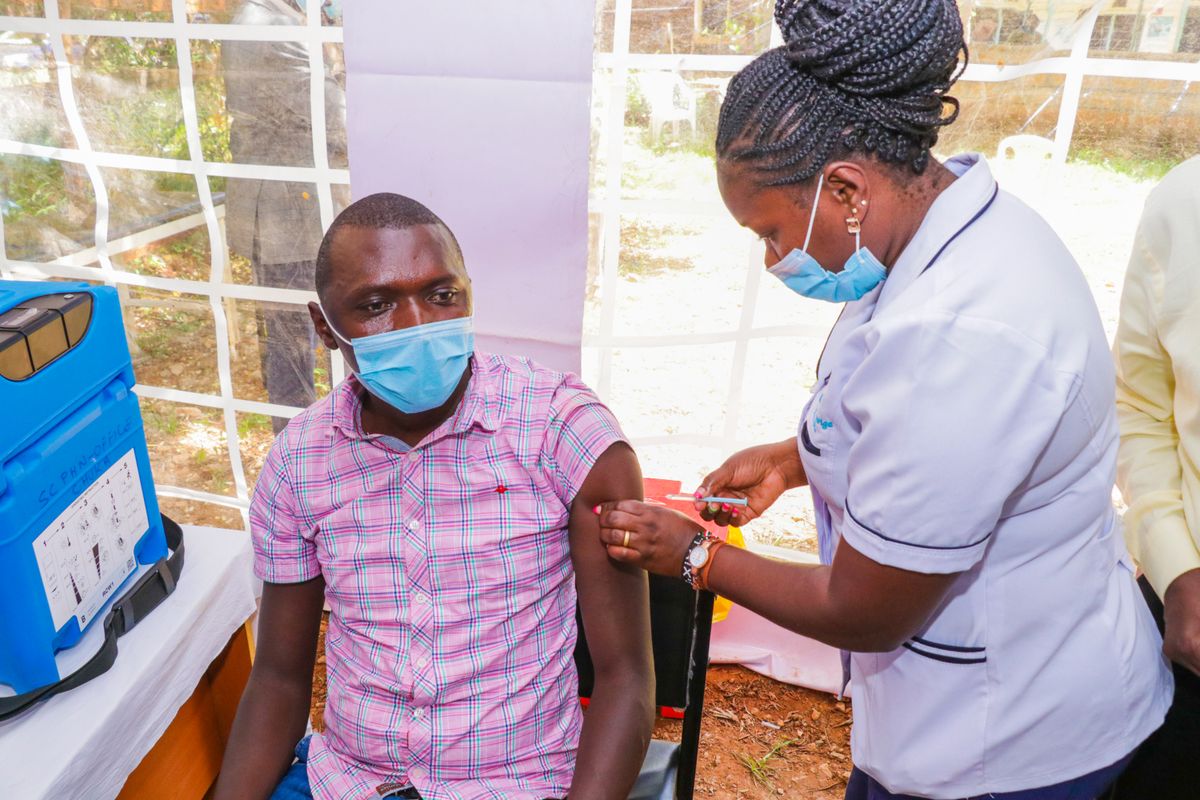
You can get the pneumococcal vaccine at most pharmacies, primary care offices, and many community health centers. Under the Affordable Care Act, ACIP-recommended vaccines are covered with no copay by most private insurance, and Medicare Part B covers pneumococcal vaccination in full. Ask directly: "I am 50 or older (or I have diabetes, COPD, heart disease, or sickle cell). Which pneumococcal vaccine do I need, and is today fine?" While you are there, ask whether you are also due for the Shingrix vaccine for shingles, a separate shot worth covering at the same visit. If you want a clinician who knows the disparities in this article and will take your history seriously, find a Black clinician in the directory.
Frequently asked questions
Do I need the pneumococcal vaccine if I am under 65? ▼
Yes if you are 50 or older, or if you are 19 to 64 with diabetes, COPD, asthma, heart disease, chronic liver or kidney disease, sickle cell disease, or if you smoke. ACIP lowered the routine age to 50 in October 2024, and the at-risk recommendation for younger adults has stood for years.
What is the difference between PCV20, PCV21, and PPSV23? ▼
PCV20 and PCV21 are conjugate vaccines given as a single shot and are the first choice for most adults. PPSV23 is an older polysaccharide vaccine, now used mainly as a follow-up after PCV15 a year later. PCV21 is expected to cover more of the strains currently circulating in U.S. adults.
Can I get the pneumococcal vaccine with my flu shot? ▼
Yes. You can receive the pneumococcal vaccine at the same visit as a flu or COVID vaccine, given in different arms. Combining visits is a common way to catch up, so ask your pharmacist or clinician.
How can I tell pneumonia apart from a bad cold or the flu? ▼
Pneumonia tends to bring chest pain that worsens when you breathe in, fast or labored breathing, a cough with colored phlegm, and a fever with chills. Symptoms that get worse rather than better after a few days, or any trouble breathing, point toward pneumonia and warrant a same-day call.
Does the pneumococcal vaccine give you pneumonia? ▼
No. These vaccines do not contain live bacteria and cannot cause pneumococcal disease. The most common reactions are a sore arm, mild fever, or fatigue for a day or two.