Know when the concern belongs to a dermatologist
The American Academy of Dermatology's four warning signs are simple: a spot that differs from your other spots, changes, itches, or bleeds. Any one of them means book a dermatologist rather than waiting for a routine visit. A dark line or streak in a nail and a sore that will not heal belong on that list too.
Primary care is a fine first stop for an obvious infection, a simple rash, or an acne refill. A changing pigmented spot should not wait on a referral chain.
Hair loss is also a reason to book now, not to watch. Central centrifugal cicatricial alopecia (CCCA) is the most frequent cause of scarring hair loss in African American women, and it destroys hair follicles permanently. Starting treatment early can stop it from spreading and sometimes regrows hair, and the AAD is blunt that hair loss products you can buy in stores or online cannot treat it. Only a prescription works.
Build a photo timeline before you go
Change over time is the most useful thing you can hand a dermatologist, and it is the one thing the exam room cannot reconstruct. Photograph the concern today, then search your camera roll for older photos that happen to show the same area.
Keep the shots useful: daylight or good indoor light, no flash washing out your skin tone, one wide shot that shows where it sits on your body, one close shot in focus, and something for scale, like a coin. Date every image. Then write a short timeline: when it appeared, what it has done since, and what you have already put on it.
List every product, including hair and any lightening products
Write down everything that touches your skin and scalp: cleansers, moisturizers, acne or fade creams, oils, gels, edge control, relaxers, color, and anything used with a weave or braids. The fastest method is photographing the labels.
How your hair is styled is clinical history, not small talk. A 2016 review in the Journal of the American Academy of Dermatology sorts hair care and styling practices into high, moderate, and low risk for traction alopecia, and spotting the high-risk habits is how a dermatologist stops hair loss before it becomes permanent. Bring an accurate account of how your hair is styled and how often.
Disclose any skin lightening or fade products plainly. They change how pigment behaves and how a spot reads, and nothing about the visit works if your dermatologist is examining treated skin without knowing it.
Bring your family history, especially scarring
Keloid history changes decisions before anything cuts your skin. Between 33% and 50% of people who develop a keloid have at least one blood relative who gets them, so ask your family before the visit. CCCA also runs in families, per the AAD, so ask relatives about thinning at the crown specifically, not just baldness.
Round it out with any family history of skin cancer, eczema, psoriasis, vitiligo, or lupus, plus your own medication list and diagnoses.
What a full-body skin exam should cover
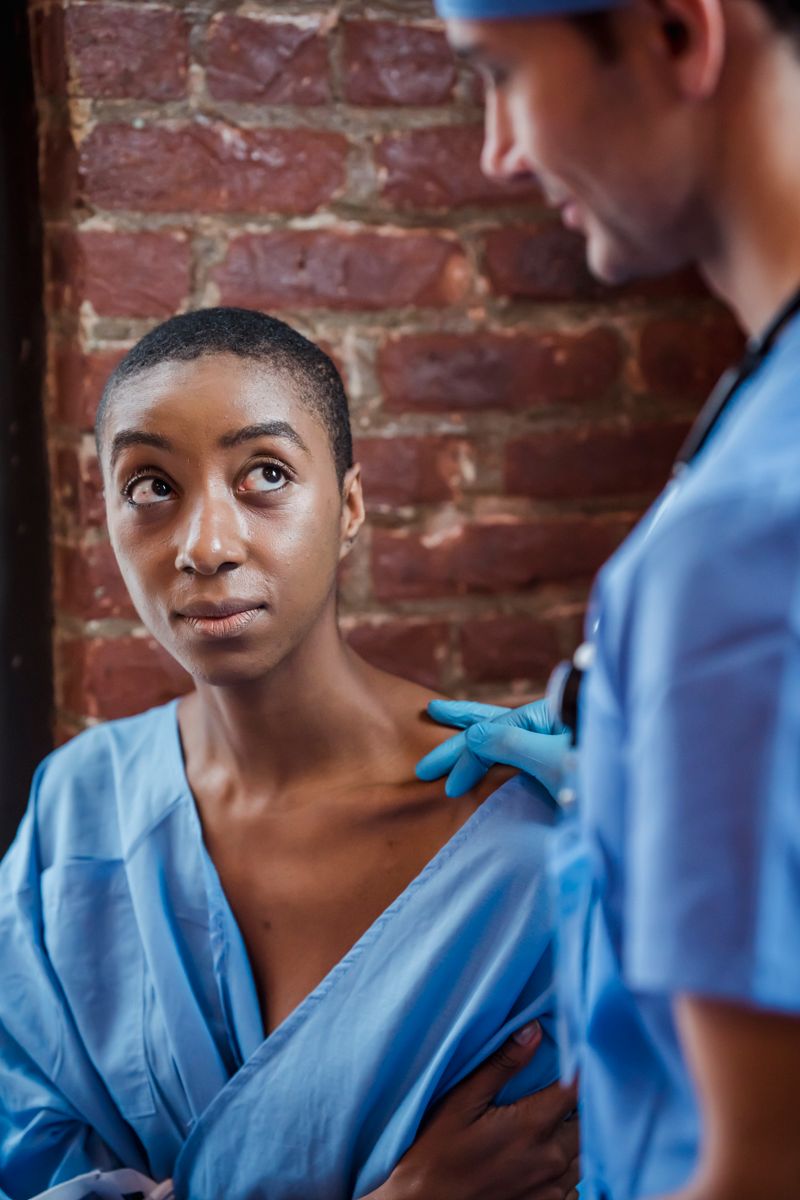
The AAD's skin self-exam guide maps the territory: forearms, underarms, fingernails, and palms; the backs of your legs and feet, the spaces between your toes, your toenails, and your soles; the back of your neck and your scalp with the hair parted; and your back and buttocks with a hand mirror. Use that same map as your own checklist for the exam room, and if the scalp, soles, or nails get skipped, ask for them by name.
These sites matter because in darker skin tones, skin cancer often develops where little or no sun reaches: the palms, soles, fingers and toes, nails, mouth or lip, buttock, and the anal or genital area. It can still appear on sun-exposed skin like your face and neck, so the whole body counts.
Whatever brought you to this page, community health centers see patients regardless of insurance and charge on a sliding scale that is often $0. Our directory of free and charitable clinics lists verified centers by state. A same-day telehealth visit is self-pay and is not billed to Medicaid, so if you have Medicaid the clinic route will usually cost less. If you would rather see a clinician online today:

Sesame Care
A same-day online visit with a licensed clinician for common health concerns, starting as low as $34. Prices are shown before you book; visits start at $34 and vary by clinician and location (checked August 2026).
See a doctor todayAffiliate link, we may earn a commission at no extra cost to you.
Acral lentiginous melanoma is why hands and feet get checked. Melanoma is rare in absolute terms, but this subtype accounts for 36% of melanoma subtypes in Black patients, the greatest share of any group, and its five-year survival across all patients (80.3%) trails cutaneous melanoma overall (91.3%).
Point out nail changes: a dark line or streak, darker skin next to a nail, a nail lifting off a finger or toe, a nail splitting down the middle, or a bump under a nail. Unlike a bruise, a melanoma line does not grow out with the nail.
The stakes are about detection, not biology. Skin cancer in people with darker skin tones is often already advanced by the time it is diagnosed, which makes treatment harder. That is a detection failure, and early, complete exams are the fix. Practical prep: skip nail polish that day, wear your hair in a style that can come down, and dress in clothes that are easy to change out of.
Questions worth asking, including about skin of color experience
"How much of your practice is patients with skin of color?" is an informed question, not a rude one. In a 2008 survey of US dermatology residency programs, only 14.3% of chief residents and 14.6% of program directors could identify an expert at their institution who ran a skin of color clinic, and 30.2% of chief residents reported a rotation with specific experience treating patients with skin of color. The same survey found most programs did give residents experience with CCCA, and all reported experience with keloids and melasma, so the measured gap was in dedicated training and expertise. That was 2008; asking is how you find out where your dermatologist stands today.
If you keloid, or keloids run in your family, say so before anything is cut or frozen, and ask how that changes the plan. Ask specifically about freezing: in its keloid treatment guidance, the AAD warns that cryosurgery can cause a permanent light spot on brown or black skin and may not be recommended on darkly pigmented skin.
Also ask what happens to your pigment after any procedure, what the site will look like while healing, how and when you get results, and who calls you if a biopsy comes back abnormal.
Wait times, insurance, and when teledermatology helps
Access turns on insurance more than urgency. In a secret-shopper study across 28 states where callers reported a new and changing mole, appointment success was 96% with commercial coverage, 94% with Medicare, and 17% with Medicaid. Median waits were 7 days for commercial and Medicare callers (typical range 2 to 25 days) and 13 days for Medicaid (typical range 4 to 33 days).
Work the system: call several practices, ask to be put on the cancellation list, ask whether a nurse practitioner or physician assistant sees new patients sooner, and say plainly that the spot is changing.
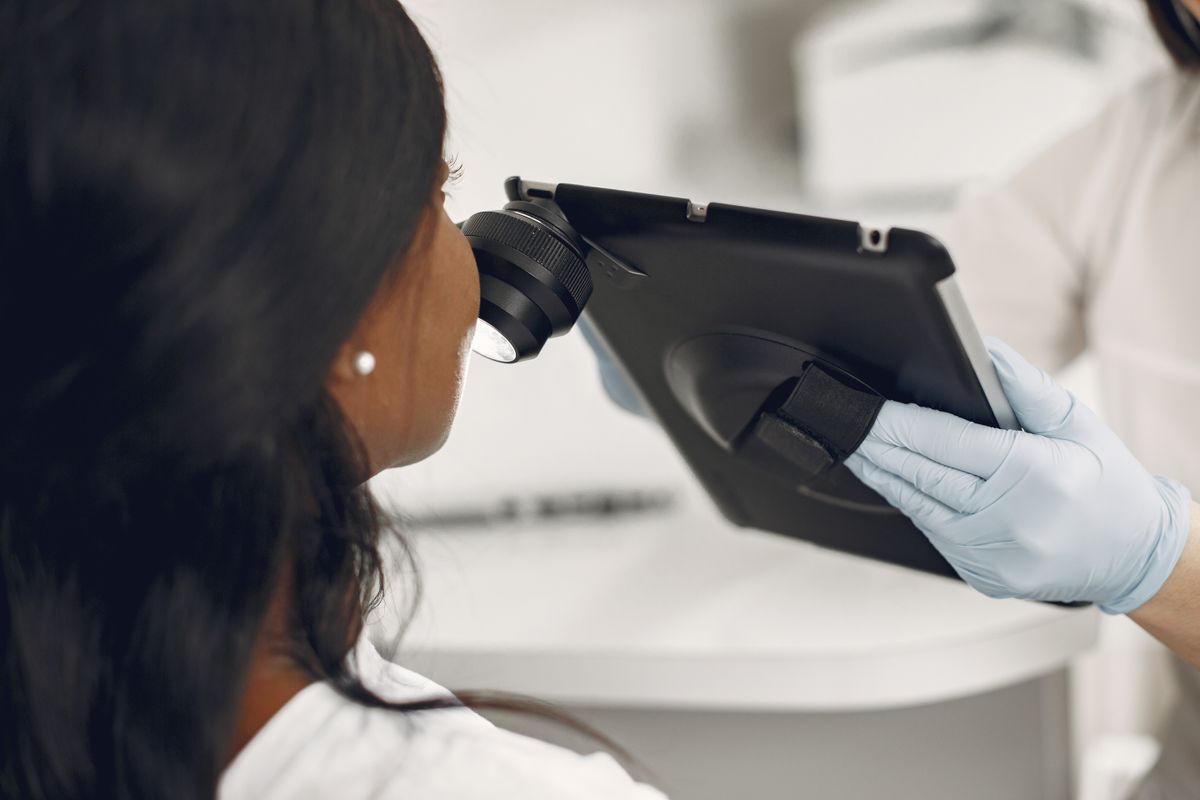
Teledermatology can shorten the wait for rashes, acne, and a first look at a hair or scalp concern. In a randomized trial at a pediatric dermatology clinic, diagnoses made from parent-submitted smartphone photos agreed with the in-person exam 83% of the time. Its limits are real: a photo cannot replace a full-body exam of the scalp, soles, and nails, and anything that needs a biopsy needs an in-person visit. Use it to get seen faster, not to avoid being seen.
What first-visit procedures involve
A skin biopsy is an office procedure. The site is cleaned and numbed with injected anesthetic, so you should not feel pain during it. A shave biopsy removes the topmost layers of skin and is the most used type. A punch biopsy removes a piece about the size of a pencil eraser and may need one or two stitches. An excisional biopsy uses a scalpel and is the likely choice if melanoma is suspected.
For keloids, expect a combination plan, not a lone procedure. The AAD reports that nearly 100% of keloids return after surgical removal alone, so most patients get another treatment around the surgery. The AAD names pressure garments or pressure earrings and cryosurgery after surgery, radiation to prevent regrowth, and a series of corticosteroid injections before surgery. Silicone gel sheets and laser are separate AAD-listed keloid treatments, often combined with injections or pressure.
Before you leave, get aftercare in writing: what the site will look like while healing, what to put on it, and whether your keloid history changes the choice of procedure.
Your appointment checklist
- Dated photos of the concern, wide and close, plus any older photos of the same area
- Product list or label photos: skin, scalp, hair styling, and any lightening or fade products
- Family history of keloids, skin cancer, and hair loss, plus your medication list
- Written questions, with the keloid and cryosurgery questions on top if they apply
- No nail polish, hair in a style that can come down, clothes that are easy to change out of
- Book by the four signs: differs, changes, itches, bleeds
Frequently asked questions
Should I see a dermatologist or start with my primary care doctor? ▼
Go straight to a dermatologist for any spot that differs from your others, changes, itches, or bleeds, and for a dark line in a nail, a sore that will not heal, or hair loss at the crown. Primary care is a fine first stop for an obvious infection or an acne refill, but a changing pigmented spot should not wait on a referral chain. When you call, the AAD advises saying you found a sign of skin cancer.
Is it okay to ask a dermatologist about their experience with Black skin? ▼
Yes, and it is an informed question. A 2008 survey of US dermatology residency programs found only about 14% of chief residents and program directors could identify a skin of color expert running a clinic at their institution, and 30.2% of chief residents reported a rotation with specific skin of color experience, even though most programs covered CCCA and all covered keloids and melasma. That is a training-system gap, not a reason to skip dermatology. Ask how much of the practice is patients with skin of color and how pigment changes after procedures are handled.
Why does the exam need to include my scalp, palms, soles, and nails? ▼
In darker skin tones, skin cancer often develops on sites that get little or no sun: the palms, soles, fingers and toes, nails, mouth or lip, buttock, and anal or genital area. Acral lentiginous melanoma, the palms-soles-nails subtype, makes up 36% of melanoma subtypes in Black patients, the greatest share of any group. The scalp check also matters for hair loss: CCCA is the most frequent cause of scarring hair loss in African American women, and treatment works best before follicles scar. If any of these sites get skipped, ask for them by name.
I keloid. What should I say before any procedure? ▼
Say it up front, before consenting to a biopsy, excision, or freezing, and mention family history: 33% to 50% of people who develop keloids have a blood relative who gets them. Ask about cryosurgery specifically, since the AAD's keloid guidance warns it can leave a permanent light spot on brown or black skin. If the visit is about treating a keloid, expect a combination plan: nearly 100% of keloids return after surgery alone, so the AAD pairs surgery with pressure garments or earrings, cryosurgery, radiation, or corticosteroid injections given before surgery.
Can I do this over video or by sending photos instead? ▼
Teledermatology is a legitimate way to get seen faster for rashes, acne, and a first look at a hair or scalp concern. In one randomized trial at a pediatric dermatology clinic, diagnoses from parent-submitted smartphone photos matched the in-person exam 83% of the time. But a photo cannot replace a full-body exam of the scalp, soles, and nails, and anything that needs a biopsy needs an in-person visit. Use it to shorten the wait, not to skip the exam.