The flake can't tell you which one it is, but the rest of your skin can
Dry scalp and dandruff both shed white flakes, and both can itch. The AAD describes the scale of dandruff and seborrheic dermatitis as white to yellowish and says it can be dry or greasy, and a 2015 review from University of Miami dermatologists says the same. A dry-looking flake doesn't rule dandruff out.
Look at what comes with the flakes instead.
- Dry scalp follows dry-skin triggers. The AAD says hot water dries your skin and your scalp, and its dry-skin advice targets long hot showers and dry indoor air. If your shins are turning ashy in the same weeks and nothing below points to dandruff, start there.
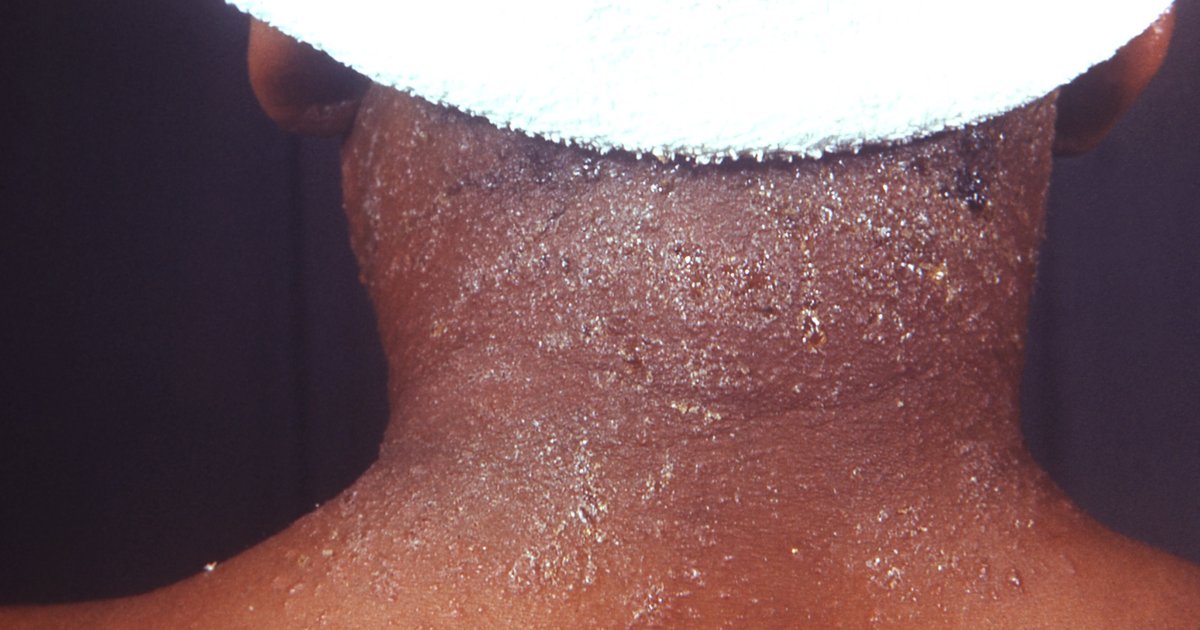
- Seborrheic dermatitis itches and comes back. On darker skin, the AAD says the scalp rash tends to look pink, slightly purple or lighter than your natural skin tone, and some people develop white spots on the scalp. Discolored patches point to seborrheic dermatitis, though mild dandruff can flake with no visible inflammation at all.
- It shows up past the hairline. The AAD lists oily skin between and under the eyebrows, the sides of the nose, behind and inside the ears, the beard area and the chest. Flaking in those spots points away from plain dry scalp.
- Watch what oil does. Dermatologists at the University of Alabama at Birmingham wrote in 2023 that many people grease the scalp to treat seborrheic dermatitis “misinterpreted as ‘dry scalp’ due to the presence of scale”. In one lab study they cite, the yeast involved grew on butter, olive oil and coconut oil. No clinical study has tested hair oils on seborrheic dermatitis, so this is expert reasoning, not a trial result.
If gentler washing and moisture haven't helped, and especially if oiling your scalp made the flaking worse, treat it as dandruff. For the head-to-head shampoo trials and how product buildup fits in, see our guide to dandruff versus dry scalp on Black hair.
Cold, dry air flares dandruff and dries out the scalp at the same time
The AAD is specific about the calendar. Its overview says flare-ups “are often seasonal, with most occurring during the winter and early spring,” and that the condition “may disappear during warm, humid weather.” Its self-care guidance adds that flare-ups are common when the weather turns cold and dry, because the dryness often sets one off.
The skin barrier is part of why. A 2016 review led by researchers at the University of Copenhagen concluded that low humidity and low temperatures reduce the skin's barrier function and make skin more reactive to irritants. The AAD also lists cold and dry air among the triggers for scalp psoriasis.
Clinic numbers point the same way, with limits. At one hospital dermatology clinic in Istanbul, seborrheic dermatitis accounted for 7.3% of adult outpatients in December and 3.8% in June, across two years and 5,316 diagnoses.
That's one city and one patient population. A US analysis of dermatology office visits from 1990 to 1998 found a seasonal trend for seborrheic dermatitis that did not reach statistical significance. Plenty of people flare in the cold, and not everyone does.
What to change once the heat comes on:
- Wash in warm water, not hot. The AAD names hot showers during cold, dry weather as a seborrheic dermatitis trigger, because hot water dries the skin and the scalp.
- Run a humidifier while you sleep. The AAD recommends one in the bedroom for dry skin, cleaned regularly.
- Wear the hat, but line it. The AAD advises a hat outdoors to head off winter flares. It also warns that a hat or scarf rubbing over hair pulled back tightly can lead to traction alopecia, and that silk or satin is gentler. Keep your hair loose underneath.
Your wash schedule decides how often the medicine reaches your scalp
The federal rule for over-the-counter dandruff shampoos requires the label to say “For best results use at least twice a week or as directed by a doctor.” The AAD's everyday advice for Black hair is to wash once a week or every other week, to prevent the product buildup that dries hair. For curly or coily hair, the AAD's dandruff guidance splits the difference: medicated shampoo about once a week, if tolerated.
Protective styles stretch that gap. Across all styles in that London survey, the average time between washes was 17.9 days, and braids or a weave pushed it past a month. On that schedule, a medicated shampoo reaches the scalp about once a month.
Washing less hasn't been shown to cause dandruff. A survey of caregivers of 201 African American girls found no association between how often hair was washed and seborrheic dermatitis. What a long wash cycle does is cut the number of doses, which is why the scalp-only routine and the leave-on options below matter.
Pick the active ingredient by the job it does
The FDA's rule for over-the-counter dandruff products sets the active ingredients and strengths below, and ketoconazole 1% is sold over the counter under its own FDA approval. Some work on the yeast behind seborrheic dermatitis and some loosen scale. If a shampoo stops working as well as it did, the AAD says rotating to a different one can help.
Common skin conditions are treated in primary care, and community health centers charge on a sliding scale that is often $0. Our directory of free and charitable clinics lists verified centers by state. A same-day telehealth visit is self-pay and cannot be billed to Medicaid or commercial insurance, so the clinic route usually costs less. If you need a prescription sooner than the next appointment:
Affiliate
| Active ingredient | What it does | Over-the-counter strength | Watch for |
|---|---|---|---|
| Zinc pyrithione | Antifungal | 0.3% to 2% in rinse-off products (0.95% to 2% when labeled for seborrheic dermatitis); 0.1% to 0.25% in leave-on products | Irritant contact dermatitis in about 3% of patients, per the 2015 review |
| Ketoconazole | Antifungal | 1%; the 2% shampoo is prescription only | 1% label: ages 12 and up, not on a broken or inflamed scalp, stop if a rash appears. The 2% label lists hair discoloration and abnormal hair texture among reported reactions |
| Selenium sulfide | Slows skin cell turnover and loosens scale | 1%, or 0.6% micronized | Orange-brown scalp discoloration reported with the stronger 2.5% shampoo |
| Coal tar | Calms inflammation, loosens scale, cuts oil | 0.5% to 5% | Required warnings: sunburn risk for up to 24 hours after use, no prolonged use without a doctor. The AAD says it can discolor light-colored, bleached or tinted hair |
| Salicylic acid | Softens thick scale so treatment can reach the skin | 1.8% to 3% | A scale softener, not an antifungal |
Every product in the FDA's dandruff rule carries the same warning: if the condition worsens or does not improve after regular use as directed, see a doctor. The ketoconazole 1% label puts a clock on it, telling you to stop and ask a doctor if it hasn't improved in 2 to 4 weeks.
Medicated shampoo belongs on the scalp, not the length of your hair
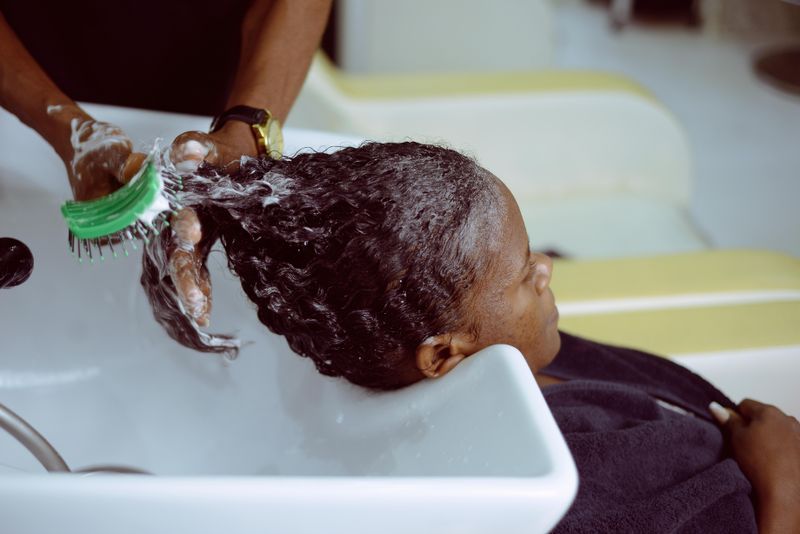
The AAD tells people with curly or coily hair to apply dandruff shampoo only to the scalp, as the ingredients that treat dandruff can dry your hair. A wash day built around that looks like this.
- Part first. Work in sections so the product lands on skin, not on the hair shaft. A bottle with an applicator tip makes this easier.
- Use warm water. Hot water is a flare trigger in cold weather.
- Lather on the scalp and give it time. The AAD says some dandruff shampoos need to sit for up to 5 to 10 minutes. Follow your bottle or your dermatologist.
- Rinse thoroughly. The AAD says cleanser left on the skin can irritate it and bring on a flare.
- Then take care of the hair. The AAD says you can shampoo and condition with your regular products afterward, and its Black hair guidance calls for conditioner every wash, coating the ends.
- Oil the ends, not the scalp. The UAB dermatologists advise keeping oils off the scalp and on the lengths, where hair gets the benefit.
- Go light on styling products. For seborrheic dermatitis, the AAD suggests using hair spray, gel and pomade sparingly and choosing alcohol-free products.
- Keep a maintenance day. Once the flaking is under control, the AAD says patients often keep using dandruff shampoo once a week to prevent flare-ups.
Under braids, locs and weaves, plan scalp access before the install
A protective style can stay in for weeks, and a flaking scalp underneath it gets no shampoo between washes. Four habits make that easier to manage.
- Treat first, install second. The AAD advises treating a seborrheic dermatitis flare as soon as it starts, because early treatment keeps it from getting worse. Starting a long style mid-flare means treating it through parts you can barely reach.
- Leave room to reach the skin. To prevent traction alopecia, the AAD already recommends thicker braids and locs, looser braids at the hairline, and braids worn no longer than 6 to 8 weeks. Bigger parts also give an applicator tip somewhere to go.
- Ask about a leave-on treatment. A 2025 review in American Family Physician lists prescription antifungal or corticosteroid solutions, foams and oils for scalp seborrheic dermatitis, and the UAB dermatologists recommend leave-in foams, oils and ointments for people who don't wash often. A medicated oil is a prescription vehicle, not the same thing as scalp grease. Tell your clinician how many days pass between washes so the form fits the style.
- Take it down if your scalp says so. The AAD advises removing a weave right away if it causes pain or irritates your scalp, and choosing sewn-in over bonding glue. In the survey of 201 girls, hair extensions were associated with caregiver-reported seborrheic dermatitis, an association that cannot show cause.
Some scalp flaking is a sign of something other than dandruff
Breakage, tenderness or burning at the crown can be early CCCA
Central centrifugal cicatricial alopecia (CCCA) is a scarring hair loss that often begins in the center of the scalp. The AAD says hair breakage in the center of the scalp may be its first sign, and that before hair loss shows, some people feel tiny bumps or a scalp that feels scaly or crusty. Itching, pain, tenderness, burning, stinging and a pins-and-needles feeling can come with it.
Flaking can sit right on top of it. In a chart review of 69 people diagnosed with CCCA at a New York hospital, seborrheic dermatitis was the most common condition diagnosed alongside it, and patients were 38 on average when the hair loss began and 42 when they came in. In a separate report on nine patients whose complaint was breakage at the crown, biopsies read in full for eight showed typical CCCA changes in five and a finding suggestive of early CCCA in two more.
A 2023 review co-written by Wake Forest dermatologists proposed that long-running seborrheic dermatitis may help trigger CCCA. That's a hypothesis, not a finding.
What is established: the AAD says hair loss products bought in stores or online cannot treat CCCA, and starting prescription treatment early can keep it from spreading. Our guide to CCCA and other causes of hair loss in Black women covers what treatment involves.
Thick, sharp-edged plaques that crack or bleed point to psoriasis
The AAD says scalp psoriasis can look a lot like dandruff, but it brings a silvery sheen and dry scale, sometimes dry enough that the skin cracks and bleeds, and it can appear behind the ears. On darker skin, involved areas may have a dark brown or violet hue, according to a 2014 review from the Skin of Color Center at Mount Sinai St. Luke's Roosevelt in New York, and sharply bordered, scaly plaques are one of the clues that confirm it.
Check your elbows, knees and lower back, where the AAD says plaques usually form, and look for tiny dents in your nails. The same review names scalp sarcoidosis and discoid lupus among conditions that can mimic psoriasis, and the AAD says a dermatologist may remove a small skin sample when signs of two conditions overlap. Our guide to scalp psoriasis on Black skin covers treatment that fits a weekly or longer wash.
A child's scaly scalp needs a ringworm check before any dandruff shampoo
Scalp ringworm, or tinea capitis, can pass for ordinary flaking. In a study of 300 children up to age 10 at three urban pediatric practices, 22% had scalp scaling. Seborrheic dermatitis and eczema were common causes, and nine children grew the ringworm fungus Trichophyton tonsurans on culture. All nine were Black. Looking alone does not sort those apart, which is why testing matters.
The AAD's signs of scalp ringworm include a scaly bald patch, black dots in a bald area, thick crusty patches, a raised, soft, spongy area, oozing sores, swollen lymph nodes and intense itch. On the scalp, the AAD says, ringworm requires prescription medicine, and everyone in the home needs to use an antifungal shampoo.
Don't start with an adult dandruff shampoo: the ketoconazole 1% label says to ask a doctor for children under 12. Our guide to scalp ringworm in Black children covers testing, the oral medicine, school and the rest of the household.
Bring your wash schedule to the dermatologist
A plan written for washing several times a week won't hold up on a two-week wash cycle. Tell the dermatologist how many days pass between washes, what style you wear and how long it stays in, and every product that touches your scalp, oils included. Our first dermatologist appointment guide has the full checklist, including how to take photos that help.
To find a Black dermatologist near you, start with our dermatology directory. If your area comes up short, work through the search order in how to find a Black dermatologist.
Frequently asked questions
Why does my scalp get flakier in fall and winter? ▼
Two different things get worse at once. The AAD says seborrheic dermatitis, the condition behind most dandruff, flares most in winter and early spring, and a review from the University of Copenhagen found that low humidity and low temperatures weaken the skin's barrier. Hot showers in cold weather make both worse. Figure out which one you have before you treat it.
Should I grease my scalp when it flakes in cold weather? ▼
Not if it could be dandruff. Dermatologists at the University of Alabama at Birmingham advise keeping oils off the scalp and on the ends, because the yeast behind seborrheic dermatitis grows on common oils in lab studies. No clinical trial has tested this, and a survey of 201 African American girls linked infrequent oil use, not frequent use, to reported seborrheic dermatitis, so the evidence is thin in both directions. If oil made your flaking worse, that's your answer.
How do I treat dandruff under braids or locs? ▼
Get the medicated shampoo onto the scalp along the parts on wash day and let it sit as the label directs. The AAD suggests about once a week for curly or coily hair, if tolerated. Between washes, ask a clinician about a prescription foam, solution or medicated oil. The AAD also recommends wearing braids no longer than 6 to 8 weeks and taking a style down if it hurts or irritates your scalp.
How long should I use dandruff shampoo before seeing a dermatologist? ▼
The ketoconazole 1% label says to stop and ask a doctor if the condition worsens or has not improved in 2 to 4 weeks. Go sooner for breakage or tenderness at the crown, thick plaques that crack or bleed, a soft, spongy swelling, or any scaly bald patch on a child.
Can I use dandruff shampoo on my child's flaky scalp? ▼
Ask first. The ketoconazole 1% label says to ask a doctor for children under 12. Scaling on a child's scalp can be seborrheic dermatitis, eczema or scalp ringworm, and in one study of 300 children, the nine who grew the ringworm fungus on culture were all Black. The AAD says scalp ringworm requires prescription medicine, so a dandruff shampoo alone will not clear it.
Can flaking and hair breakage mean CCCA? ▼
It can. The AAD says breakage in the center of the scalp may be the first sign of CCCA, a scarring hair loss, and that some people feel a scaly or crusty scalp before hair loss shows. Seborrheic dermatitis was the most common condition found alongside CCCA in a New York chart review of 69 patients, so treating the flakes does not rule it out. Book a dermatologist and ask whether a scalp biopsy makes sense.