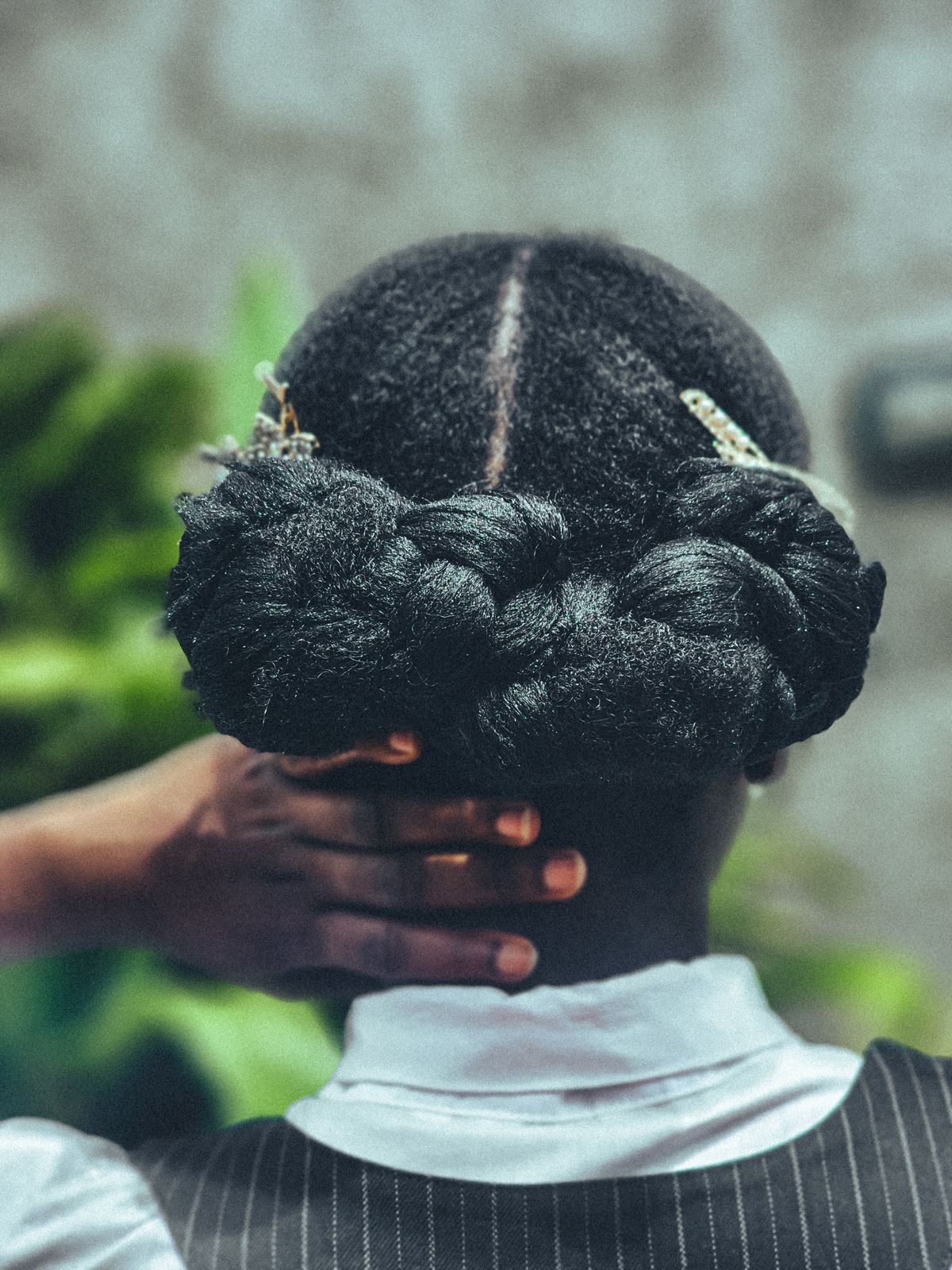
What traction alopecia is, and how common it is
Traction alopecia is hair loss caused by repeated, sustained pulling on the hair root. The follicle does not break from one tight ponytail. It fails after the same tension is applied over and over, for months or years, until the root can no longer hold or replace the hair. It is the leading preventable cause of hair loss in women of African descent.
A Cape Town population study by Nonhlanhla Khumalo and colleagues found traction alopecia in 31.7% of African adult women, compared with 2.2% of men, and in 17.1% of schoolgirls. Prevalence was highest in people whose usual style was extensions attached to relaxed hair, at 48%. A separate review put the overall figure at roughly one-third of women who wear traumatic styles for a prolonged period. This is not a rare diagnosis. It is close to a default outcome of a styling pattern that is common across the community.
How it shows up on your scalp
Traction alopecia appears where the pulling is, which is usually the front hairline and the temples. The classic clue is the fringe sign: a thin band of short, fine, retained hairs left along the very edge of the hairline while the hair just behind it thins out. Those wispy survivors are diagnostic. They are also the reason this gets dismissed as a normal receding hairline for too long.
Before the hair thins, the scalp often warns you. Early traction alopecia can show small bumps or pus-filled spots around the stressed follicles, a form of folliculitis from the constant pull. Tenderness, stinging, or little crusts after a fresh install are not the price of a good style. They are the follicle telling you the tension is too high. The American Academy of Dermatology lists broken hairs around the forehead, a receding hairline, patches of loss where hair is pulled tight, and scalp pain, stinging, or tenting as the signs to act on.
Why early matters: reversible now, permanent later
This is the part that decides the outcome. In its early stage, traction alopecia is non-scarring. The follicles are stressed but intact, and they can recover once the tension stops. Push past that stage by keeping the same pulling styles, and the inflammation destroys the follicle and replaces it with scar tissue. At that point the loss is a scarring (cicatricial) alopecia, and no medication or transplant can wake a follicle that is gone. As one dermatology review puts it plainly, in its later stages the disease may progress into an irreversible scarring alopecia if traumatic hairstyling continues. The same review notes there is no cure once it scars. The whole game is catching it while the follicle is still alive.
An over-the-counter minoxidil from any pharmacy is the same active ingredient a paid prescription service sells at a markup, and a community health center can check for an underlying cause on a sliding scale. Our directory of free and charitable clinics lists centers by state. A same-day telehealth visit is self-pay and is not billed to Medicaid, so try the pharmacy shelf and a clinic workup first. If you want a telehealth visit instead:
Talk to a clinician about hair loss.
- Online consult on causes and prescription options
- Price shown before you book
 with Sesame Care
Affiliate link, we may earn a commission at no extra cost to you.
The styles and practices that drive it
No single style is banned. The common thread is tension plus time, and the risk multiplies when hair is chemically processed. Khumalo's data found the highest risk when traction was added to relaxed hair, with roughly triple the odds versus natural, unprocessed hair. The styles most often implicated:
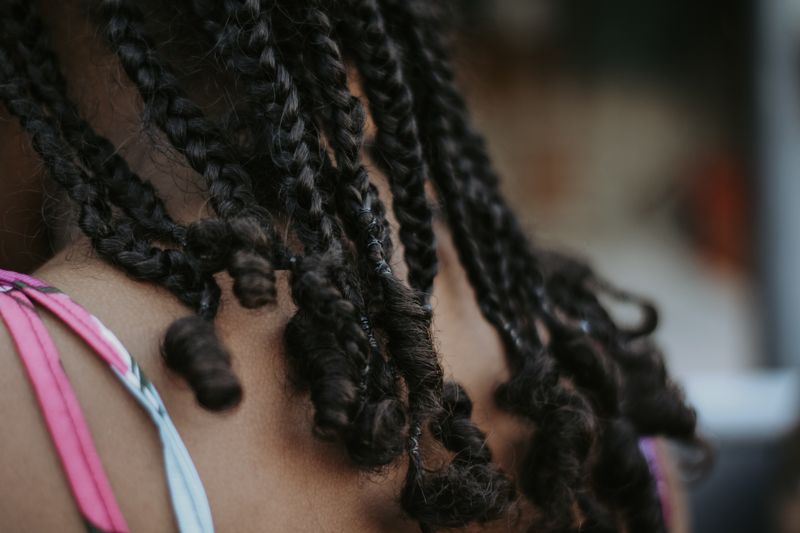
- Tight braids and cornrows, especially thin braids that concentrate pull on a small patch of scalp.
- Weaves and extensions, particularly glued-in over sewn-in, and any install that adds weight to relaxed hair.
- Locs, where the weight of mature locs pulls steadily at the roots, and thin locs more than thick ones.
- Tight ponytails, buns, and edge-laid updos worn the same way every day.
- Sleeping in rollers as a routine rather than for special occasions.
The single most useful rule: if a style hurts, tents the skin into little peaks where hairs are pulled, or gives you bumps, it is too tight. Pain is not normal and it is not the cost of looking good. It is early damage.
How to prevent it without giving up your styles
Prevention is about loosening and rotating, not quitting. The AAD's guidance is specific: keep braids loose, especially around the hairline; do not wear braids longer than two to three months; choose thicker braids and locs over thin ones; alternate styles so the same follicles are not pulled the same way for years; and favor sewn-in weaves over glued-in. Give the hairline breaks between installs. Tell your braider directly when it is too tight, before the style sets, not after.
How it is treated
Step one is always to remove the tension. Nothing a dermatologist prescribes can outrun ongoing pulling. Once the load is off, treatment targets inflammation and regrowth:
- Topical or intralesional steroids to calm the inflammation around stressed follicles.
- Antibiotics when there is folliculitis, the bumps and pus-filled spots, to clear the infection and inflammation.
- Minoxidil to stimulate regrowth. A 2023 retrospective study in the Journal of the American Academy of Dermatology reported that low-dose oral minoxidil improved hair density and produced regrowth in traction alopecia patients, many of whom had carried the loss for years.
- Hair transplant or surgical restoration, reserved for stable, burnt-out scarring cases where the tension has stopped and the disease is no longer active. It restores hair to scarred zones; it does not treat an active, progressing case.
How to tell it apart from CCCA
Traction alopecia is not the only hair loss that disproportionately affects Black women, and the two most common get confused. Location is the fastest tell. Traction alopecia hits the edges, the hairline and temples, where styles pull, and it leaves the fringe sign. Central centrifugal cicatricial alopecia (CCCA) starts at the crown or vertex and spreads outward in a circle, with no fringe. The two can also coexist; studies have found traction alopecia in a meaningful share of CCCA patients. Because the treatments and the urgency differ, and because a scarring process can hide under either pattern, a dermatologist may take a small biopsy to be certain. If your thinning is at the crown rather than the edges, read our companion guide on CCCA in Black women.
How to get care
Traction alopecia is one of the few causes of hair loss you can stop in its tracks, and the clock is the only thing working against you. Book a dermatologist when you first notice edge thinning, broken hairs, or scalp pain after styling, not after a year of watching the hairline creep back. A clinician who understands Black hair, styling practices, and scarring alopecias will read your scalp correctly and will not write off real loss as a normal hairline. Find a Black dermatologist in our directory. If the spots around your hairline have darkened from years of inflammation, our guide to hyperpigmentation on Black skin covers what helps.
Frequently asked questions
Will my hair grow back from traction alopecia? ▼
If you catch it early, before the follicles scar, yes. The follicles are stressed but alive in the non-scarring stage and can recover once you stop the tension, often with help from minoxidil and anti-inflammatory treatment. Once the loss has progressed to scarring, with smooth shiny skin and no follicle openings, that hair cannot regrow. That is why early action decides the outcome.
What is the fringe sign in traction alopecia? ▼
The fringe sign is a thin band of short, fine, retained hairs left along the very front edge of the hairline while the hair just behind it thins out. It is a hallmark of traction alopecia and helps dermatologists tell it apart from other causes of hairline recession.
Are braids and weaves bad for your hair? ▼
Not by themselves. The problem is tension over time, made worse by chemical relaxing. Loose braids, thicker braids and locs, sewn-in rather than glued-in weaves, rotating styles, and taking breaks between installs all lower the risk. The rule of thumb: if a style hurts, stings, or tents the scalp, it is too tight and is causing damage.
How is traction alopecia different from CCCA? ▼
Traction alopecia affects the edges, the hairline and temples where styles pull, and shows the fringe sign. CCCA starts at the crown or vertex and spreads outward, with no fringe. They can occur together. Because the patterns and treatments differ, a dermatologist may take a biopsy to confirm which one you have.
Can a hair transplant fix traction alopecia? ▼
Only in specific cases. Transplants are reserved for stable, burnt-out scarring loss where the tension has stopped and the disease is no longer active. A transplant into an actively progressing case can fail. The first and non-negotiable step is always removing the tension; surgery is a last resort, not a substitute.