Hepatitis B is a virus that attacks the liver. In adults it usually clears on its own, but when it does not, it becomes a chronic infection that can run for decades while a person feels completely fine. That silent stretch is where the damage happens: scarring (cirrhosis), liver failure, and liver cancer. Two facts make this a Black-health priority. Black Americans die from hepatitis B at a higher rate than white Americans, and the virus is far more common in African immigrant communities, where many people were infected at birth and have never been tested. There is now one clear move that answers all of it: a single blood test the CDC says every adult should get at least once.
What hepatitis B actually does to the liver
Hepatitis B virus (HBV) infects liver cells and triggers an immune response that, over years, inflames and scars the liver. When the infection becomes chronic, the body never fully clears it. Roughly 15 to 25 percent of people with chronic hepatitis B go on to develop serious liver disease, including cirrhosis, liver failure, or liver cancer, according to the CDC. The catch is timing: most people with chronic HBV are asymptomatic and have no evidence of liver disease at the moment they are diagnosed, which is exactly why the infection earns its name as a silent driver of liver cancer.
That silence is the danger. Someone can carry hepatitis B for 20 or 30 years, feel healthy, never see a yellow tint in their eyes or any of the classic signs, and only learn they have it when cirrhosis or a liver tumor is already advanced. You cannot feel hepatitis B doing its work. You can only test for it.
Why this hits Black communities harder
The disparity shows up in both infection and death. In 2023, CDC surveillance recorded chronic hepatitis B at 9.5 cases per 100,000 among Black Americans versus 6.1 per 100,000 in the overall population, and the hepatitis B death rate among Black Americans (0.71 per 100,000) ran about 60 percent higher than the national rate (0.44 per 100,000). Older national survey data found being Black was associated with nearly a fourfold higher odds of testing positive for hepatitis B markers compared with white Americans, a gap that persisted even after accounting for socioeconomic and behavioral factors.
The sharpest concentration is in African immigrant communities. About 12 percent of everyone living with chronic hepatitis B in the United States was born in Africa, and roughly 70 percent of all U.S. chronic hepatitis B is in people born outside the country, where childhood and birth transmission are common and vaccination came later. Community studies put chronic hepatitis B prevalence in some African immigrant populations as high as 8 to 15 percent, with fewer than one in five people aware they are infected. If you or your parents were born in sub-Saharan Africa, Southeast Asia, or another high-prevalence region, this is your test to ask for by name.
Whatever brought you to this page, community health centers see patients regardless of insurance and charge on a sliding scale that is often $0. Our directory of free and charitable clinics lists centers by state. A same-day telehealth visit is self-pay and is not billed to Medicaid, so if you have Medicaid the clinic route will usually cost less. If you would rather see a clinician online today:

See a doctor online today.
- Same-day video visits from $34
- Price shown before you book
- No insurance needed
 with Sesame Care
Affiliate link, we may earn a commission at no extra cost to you.
How hepatitis B spreads, and how it does not
Hepatitis B passes through blood and certain body fluids: from mother to baby at birth, through sex, through shared needles, and through shared personal items that can carry blood like razors or glucose monitors. The single most important route for chronic infection is transmission at birth. Without preventive treatment, about 90 percent of infants born to a mother with hepatitis B will acquire the virus, and roughly 90 percent of babies infected that early go on to chronic infection. That is why so many adults with chronic hepatitis B were infected as infants, long before they had any say in it.
Hepatitis B does not spread through casual contact. You do not get it from sharing food or drinks, hugging, kissing on the cheek, coughing, sneezing, or sitting next to someone. Carrying hepatitis B is not a moral failing or a hygiene problem, and the stigma that says otherwise is one reason people avoid the test that could protect them. Most people with it were infected at birth or through ordinary exposures decades ago.
The new rule: every adult, screened once
In 2023 the CDC made the recommendation simple: every adult should be screened for hepatitis B at least once in their lifetime. The right test is the triple panel, three results from one blood draw: hepatitis B surface antigen (HBsAg), antibody to surface antigen (anti-HBs), and total antibody to core antigen (anti-HBc). Together those three tell you whether you have an active infection that needs care, whether you have recovered, whether you are protected, or whether you are unprotected and should get the vaccine.
The CDC moved to universal screening on purpose. Risk-based testing, where a provider only orders the test if you disclose a stigmatizing risk, missed most people living with chronic hepatitis B. Screening everyone removes the need to disclose anything and cuts the disparity at the root. People with ongoing exposure should keep testing periodically while the risk continues; for most adults, one negative triple panel is enough. This is distinct from hepatitis C, a different virus with its own one-time screen and, unlike hepatitis B, a cure. Many people benefit from being tested for both.
Hepatitis B is vaccine-preventable
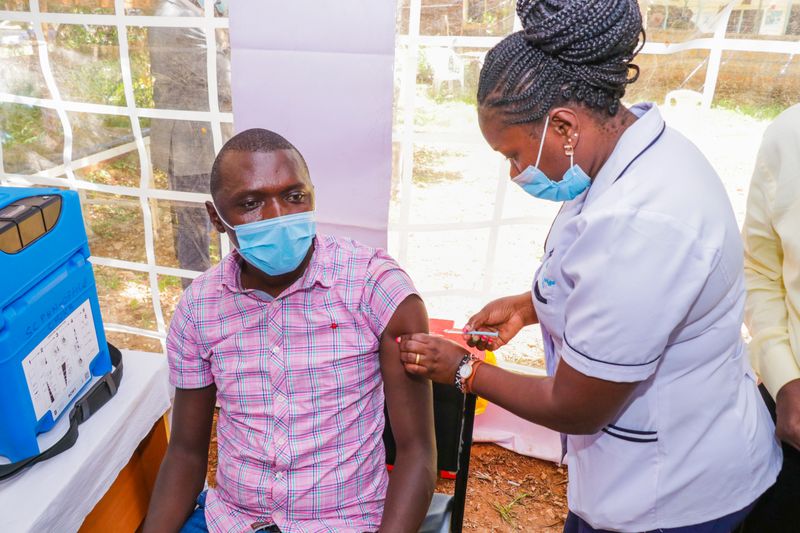
There is a safe, effective hepatitis B vaccine, and the recommendation is now broad. Since 2022 the CDC's advisory committee recommends hepatitis B vaccination for all adults aged 19 through 59, for adults 60 and older with risk factors (and as an option for anyone 60-plus who wants it), and a birth dose for every newborn within the first 12 hours of life. The birth dose is the single biggest tool against mother-to-child transmission. If you are an adult who never completed the series, you can start it now. If your triple-panel screen shows you are not protected, the vaccine is the next step.
If you already have chronic hepatitis B
Chronic hepatitis B is not curable yet, but it is very treatable. Daily antiviral pills such as tenofovir and entecavir suppress the virus, and long-term use lowers the risk of cirrhosis, liver cancer, and death. Not everyone with chronic hepatitis B needs antivirals right away; a liver specialist decides based on viral levels, liver enzymes, and signs of damage. Everyone with chronic infection needs regular monitoring, including liver-cancer surveillance with an ultrasound about every six months, because catching a tumor early is what makes it treatable.
Care gaps add to the disparity here too. A U.S. study of chronic hepatitis B patients documented racial differences in how care unfolds, and Black patients diagnosed with liver cancer tend to present at later stages and are less likely to receive curative treatment or a transplant. Earlier diagnosis through screening, and consistent surveillance once diagnosed, is how those gaps close. If liver scarring is the bigger worry on your chart, our explainer on fatty liver disease in Black patients covers the other leading driver of cirrhosis.
How to get care
Ask any primary care clinician for the hepatitis B triple panel by name, and ask for the vaccine if the result shows you are not protected. If you test positive for chronic infection, ask for a referral to a hepatologist or gastroenterologist and confirm you are set up for ultrasound surveillance. To start with a clinician who understands the stakes for Black patients, find a Black primary care doctor or liver specialist in our directory. The test is one blood draw. The information it gives you can be the difference between a manageable condition and a missed cancer.
Frequently asked questions
Should I get tested for hepatitis B if I feel completely healthy? ▼
Yes. The CDC recommends every adult get screened at least once, and most people with chronic hepatitis B have no symptoms for decades while the liver is being damaged. Feeling fine does not mean you are clear. One blood draw with the triple panel gives you the answer.
Can hepatitis B be cured? ▼
Not yet. Chronic hepatitis B is controlled, not cured. Daily antiviral medication suppresses the virus and sharply lowers the risk of cirrhosis and liver cancer, and regular ultrasound surveillance catches problems early. This is different from hepatitis C, which can be cured with a short course of pills.
How do most people get hepatitis B? ▼
Through blood and body fluids. The most common route for chronic infection is transmission from mother to baby at birth, which is why many adults were infected as infants. It also spreads through sex, shared needles, and shared items that carry blood. It does not spread through food, hugging, or casual contact.
Is there a hepatitis B vaccine for adults? ▼
Yes. The CDC recommends the hepatitis B vaccine for all adults aged 19 through 59, for older adults with risk factors, and a birth dose for every newborn. If your screening shows you are not protected, you can complete the vaccine series at any age.
Why is hepatitis B more common in African immigrant communities? ▼
In many high-prevalence regions, including parts of sub-Saharan Africa, the virus was commonly passed from mother to child at birth before widespread birth-dose vaccination. As a result, chronic hepatitis B prevalence in some African immigrant communities in the U.S. runs as high as 8 to 15 percent, and most people who have it do not know.
What is the triple panel test? ▼
It is three hepatitis B results from one blood draw: surface antigen (HBsAg), surface antibody (anti-HBs), and core antibody (total anti-HBc). Together they show whether you have an active infection, have recovered, are protected by vaccine, or are unprotected and should be vaccinated.