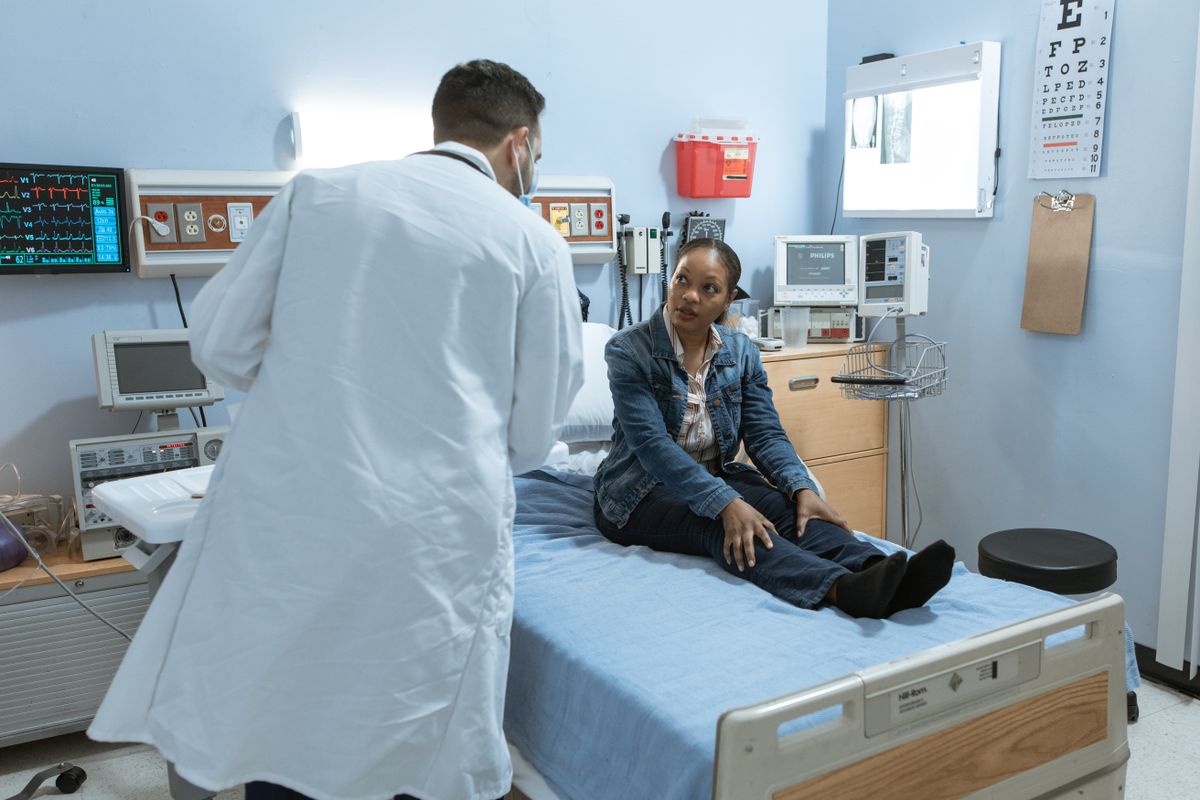
The disparity is large, and it is mostly preventable
Kidney disease hits Black Americans harder at every stage. Chronic kidney disease (CKD) is present in 22% of non-Hispanic Black adults compared with 13% of non-Hispanic White adults. The gap widens at the severe end: non-Hispanic Black persons reach end-stage kidney disease (ESKD), the point where dialysis or a transplant is needed to survive, at four times the rate of White persons. Black people are roughly 14% of the U.S. population but account for about 30% of everyone living with kidney failure.
This is not destiny written into biology. Most of it traces to two conditions that damage kidneys quietly over years, plus access gaps that delay diagnosis and treatment. The conditions are treatable, and the testing that catches kidney damage early is cheap and routine.
Blood pressure and diabetes do most of the damage
Diabetes and high blood pressure are the two leading causes of kidney failure in the United States, behind 37% and 27% of ESKD cases respectively. High blood sugar and high pressure both wear out the tiny filters in the kidneys over time. Black adults carry more of both: more than 2 in 10 adults with high blood pressure already have CKD, and that figure is higher in Black adults (24%) than White adults (14%).
The practical takeaway is that kidney protection runs through blood-pressure and blood-sugar control. If you have hypertension, getting it to target is the most direct way to protect your kidneys. Read our guides on high blood pressure in Black men and on choosing the right blood-pressure medication, since the drug class that protects kidneys is a specific conversation to have with your clinician.
APOL1: the gene variant that explains part of the gap
Part of the disparity is genetic, and it has a name: APOL1. The APOL1 gene comes in variants called G1 and G2 that arose in West Africa, where they protected against a parasite that causes sleeping sickness. They are common in people of recent West African ancestry, which includes most Black Americans, and rare in everyone else.
The risk shows up when a person inherits two risk copies, one from each parent (the combinations G1/G1, G1/G2, or G2/G2). That two-copy "high-risk genotype" is carried by about 13% of Black Americans. It raises the risk of several kinds of kidney disease, including focal segmental glomerulosclerosis (FSGS), a scarring of the kidney's filters. People with two APOL1 risk copies have roughly a 10 times higher chance of FSGS, and APOL1-driven kidney disease tends to progress to failure faster than other forms.
Two things keep this in perspective. First, most carriers stay healthy: of people with two risk copies, about 80% never develop kidney disease, so the genotype raises risk rather than guaranteeing harm. Second, APOL1 is not an excuse for fatalism. The variant interacts with the same drivers above, and there is now a genetic test and a growing set of treatments aimed specifically at APOL1-mediated disease. If kidney failure runs in your family, APOL1 testing is worth raising with a nephrologist.
Community health centers are primary care: they see patients regardless of insurance, charge on a sliding scale that is often $0, and can manage a condition like blood pressure or diabetes long-term. Our directory of free and charitable clinics lists centers by state. A same-day telehealth visit is self-pay and is not billed to Medicaid, so an ongoing clinic relationship usually costs less over a year. If you want a telehealth visit sooner:

See a doctor online today.
- Same-day video visits from $34
- Price shown before you book
- No insurance needed
 with Sesame Care
Affiliate link, we may earn a commission at no extra cost to you.
Early kidney disease is silent, so testing is the whole game
Here is the hard part: about 87% of adults with CKD do not know they have it. Early kidney damage produces no pain and no obvious signs. By the time symptoms arrive, a large share of kidney function is often already gone. That is why two tests, not symptoms, are how kidney disease gets caught in time.
eGFR (a blood test). This estimates how well your kidneys filter, calculated from a blood creatinine level plus your age and sex. A result of 60 or higher is in the normal range, below 60 can mean kidney disease, and 15 or below signals kidney failure.
uACR (a urine test). The urine albumin-to-creatinine ratio measures protein leaking into your urine, often the earliest sign of damage, before eGFR drops. A result of 30 mg/g or less is normal. Above 30 mg/g points to possible kidney disease. This test can flag trouble while your eGFR still looks fine, which is exactly why it matters.
If you have diabetes, get both tests every year. If you have high blood pressure, heart disease, or a family history of kidney failure, ask your clinician how often you should be checked. You can request these tests by name.
Why the 2021 eGFR change matters for Black patients
For years, the standard eGFR equation included a "race coefficient" that automatically reported a higher kidney-function number for any patient logged as Black. Race is a social category, not a biological one, and the adjustment made Black patients' kidneys look healthier than they were. The effect was to delay CKD diagnosis, delay referral to a nephrologist, and delay placement on the transplant waiting list.
In 2021, a National Kidney Foundation and American Society of Nephrology task force endorsed a new race-free equation, the CKD-EPI 2021 formula, which removed race entirely (Inker et al, New England Journal of Medicine). Using it raises the recorded prevalence of kidney disease in Black adults, which is the point: it surfaces disease that the old math hid.
The transplant system then corrected backward. Starting January 5, 2023, the Organ Procurement and Transplantation Network required every kidney transplant program to review Black candidates whose waitlist date had been set using the old race-based calculation and to credit them the earlier qualifying time they should have had. If you or a family member is on a kidney transplant waitlist and was listed before 2023, ask the transplant center whether your waiting time was adjusted.
Symptoms that actually show up
When kidney disease does produce symptoms, it usually means damage is well underway. The signs people most often notice:
- Swelling in the ankles, legs, or around the eyes, from fluid the kidneys can no longer clear.
- Foamy or bubbly urine, a sign of protein leaking through damaged filters.
- Fatigue and weakness, often from anemia that develops as kidney function falls.
- Nausea or loss of appetite, and trouble concentrating, as waste builds up in the blood.
Dialysis and transplant access is its own disparity
The gap does not close once kidneys fail. Black patients are more likely to reach kidney failure and start dialysis, yet historically less likely to be referred for a transplant, evaluated, waitlisted, and matched, even though a transplant offers longer survival and better quality of life than long-term dialysis. The 2023 waitlist correction addressed one specific piece of that, the race-based eGFR listing date, but earlier referral and a clinician who advocates for transplant evaluation still change outcomes. If you are facing dialysis, ask directly about transplant evaluation rather than waiting to be offered it.
How to get care
Start with a clinician who will run the numbers and act on them. At your next visit, ask for an eGFR and a uACR if you have not had them, confirm your blood pressure and blood sugar are at target, and bring your family history of kidney disease or dialysis. If you have the APOL1 high-risk profile or a strong family history, ask whether you should see a kidney specialist. Find a Black nephrologist or primary care clinician in our directory to start the conversation with someone who takes your history seriously.
Frequently asked questions
Why are Black Americans more likely to get kidney disease? ▼
Three reasons combine. Black adults carry more of the two conditions that damage kidneys, high blood pressure and diabetes. About 13% carry the APOL1 high-risk genotype, which raises the risk of fast-progressing kidney disease. And access gaps delay diagnosis and treatment. The result is CKD in 22% of Black adults versus 13% of White adults, and four times the rate of kidney failure.
What is APOL1 and should I get tested? ▼
APOL1 is a gene with variants (G1 and G2) common in people of West African ancestry. Carrying two risk copies, the case for about 13% of Black Americans, raises the risk of FSGS and faster kidney decline. Most carriers never develop kidney disease, so the test is most useful if kidney failure runs in your family or you already have signs of kidney damage. Raise it with a nephrologist.
What tests check for kidney disease? ▼
Two. An eGFR blood test estimates how well your kidneys filter (60 or higher is normal, below 60 may mean disease). A urine albumin-to-creatinine ratio (uACR) checks for protein leaking into urine (30 mg/g or less is normal). The uACR can catch damage before eGFR drops. People with diabetes should get both yearly.
Why did doctors remove race from the eGFR equation? ▼
The old equation reported a higher kidney-function number for Black patients, making their kidneys look healthier than they were and delaying diagnosis, specialist referral, and transplant listing. Race is a social, not biological, category. The 2021 race-free CKD-EPI equation removed it, which surfaces kidney disease in Black patients that the old math hid.
If a relative was waitlisted for a kidney before 2023, do I need to do anything? ▼
Possibly. Since January 5, 2023, transplant programs are required to review Black candidates listed using the old race-based eGFR and credit them the earlier waiting time they should have had. If your relative was listed before 2023, ask their transplant center whether their waiting time was adjusted.
Can early kidney disease be reversed? ▼
Damage that has already happened is usually not reversible, but progression can be slowed or stopped. Controlling blood pressure and blood sugar, using kidney-protective medications, avoiding regular NSAID painkillers like ibuprofen, and not smoking all help. Caught early through eGFR and uACR testing, many people keep their kidneys working for life and never need dialysis.