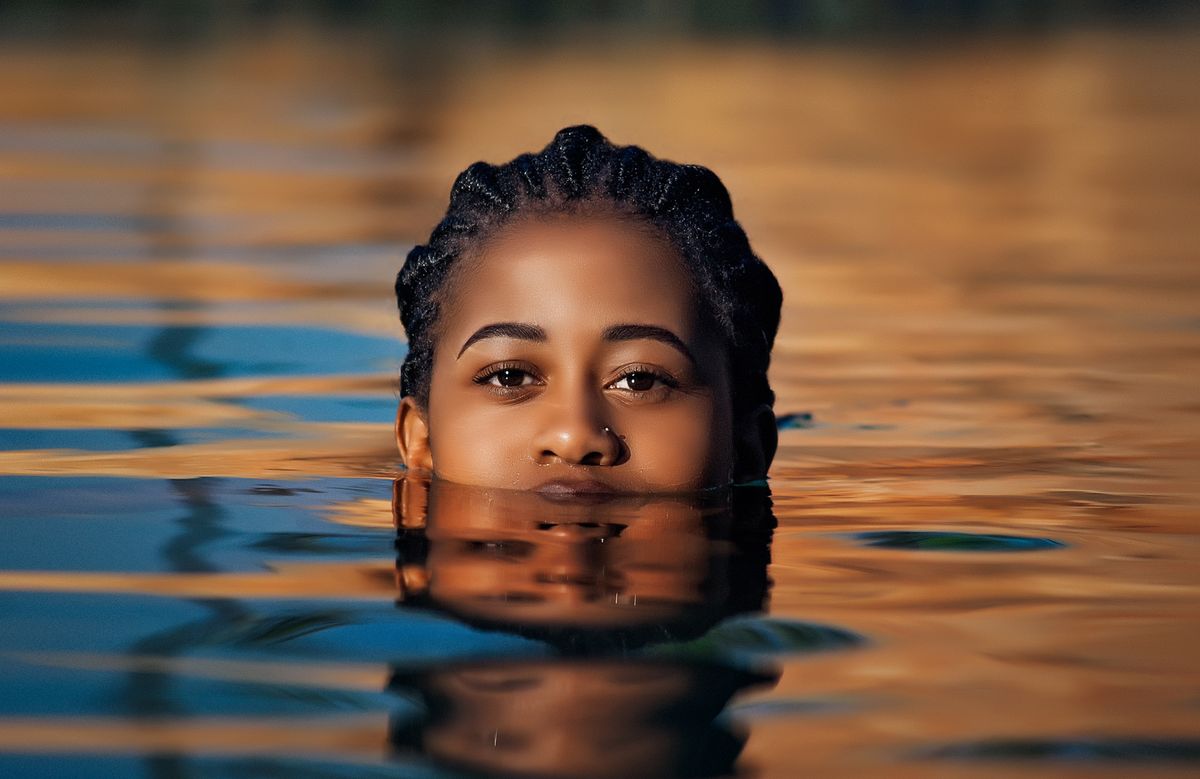
You can swim with braids and locs. The routine is four steps and adds about ten minutes to a pool day. It is worth the ten minutes: in a Wake Forest survey of 103 Black women, 37.9% said they avoid exercise at times because of their hair, and half had changed their hairstyle to make exercise possible (JAMA Dermatology, 2013). Water is where that trade gets made most often, and it is the one activity where opting out carries a drowning risk of its own.
What pool water does to braided and loc'd hair
The damage is mechanical first and chemical second. Dermatologists in Tokyo examined 67 members of the Japan National Swimming Team against 54 age-matched people who did not swim. Hair discoloration showed up in 61% of the swimmers and none of the comparison group, electron microscopy found the cuticle gone completely, and X-ray microanalysis detected chlorine inside the cortex. The authors traced it to cuticle damage from friction with water, which then let hypochlorous acid reach the cortex and degrade the pigment (PMID 11092265). That sample was elite swimmers training daily, and the hair was not Afro-textured. The mechanism carries over. The dose does not.
For tightly coiled hair the practical consequence lands on handling. A 2023 review in the International Journal of Cosmetic Science concluded that the fragility of curly hair comes from knotting and from cracks and flaws forming in the fibre, not from a difference in the hair's amino acid composition (PMID 36374002). The step that costs you hair after a swim is usually the detangling, not the swim.
Green hair after a pool season is copper, not chlorine, and the reason it lands is cuticle damage: lab work showed that treating hair with chlorinated water sharply increased how much copper the fibre took up (PMID 7233585). The tint is reported mostly in blond and bleached hair, where it shows (PMID 7555100).
Before you get in: soak, seal, cover
Shower first, for a full minute. CDC's reason is about the pool rather than your hair: a one-minute shower removes most of the dirt, sweat and oils that use up the chlorine the pool needs to kill germs. Your hair gets soaked in the process, which is the part you want.
Then seal. The American Academy of Dermatology's summer hair guidance says to apply oil or a leave-in conditioner before you get in, because it "creates a physical barrier between your hair and harmful chlorine." Coconut oil is the one carrying published data: in Journal of Cosmetic Science experiments, coconut oil used as a pre-wash treatment reduced protein loss in both damaged and undamaged hair, while mineral oil and sunflower oil did not (PMID 12715094). Lauric acid is small and straight enough to get inside the shaft. The other two sit on top of it.
One claim we could not source: that hair already saturated with clean water cannot take on pool water. No published study we found tests it. Soak anyway, since CDC recommends the pre-swim shower on its own terms, but the barrier layer is the step with evidence behind it.
Caps that actually fit braids, locs and an afro
For years the caps sold at scale were sized for hair that lies flat against the head. Large-volume silicone caps changed that, and the fight over whether they counted is worth knowing. In 2021 FINA, then the world governing body for competitive swimming, refused to approve the SOUL CAP for the Tokyo Olympics, saying athletes at that level had "never used, neither require to use, caps of such size and configuration" and that the cap did not follow "the natural form of the head." After a global backlash and a review, FINA approved it on September 1, 2022, and renamed itself World Aquatics in January 2023. The rule that kept large-volume caps out of elite competition is gone.
Whatever brought you to this page, community health centers see patients regardless of insurance and charge on a sliding scale that is often $0. Our directory of free and charitable clinics lists verified centers by state. A same-day telehealth visit is self-pay and is not billed to Medicaid, so if you have Medicaid the clinic route will usually cost less. If you would rather see a clinician online today:

Sesame Care
A same-day online visit with a licensed clinician for common health concerns, starting as low as $34. Prices are shown before you book; visits start at $34 and vary by clinician and location (checked August 2026).
See a doctor todayAffiliate link, we may earn a commission at no extra cost to you.
For everyone swimming at the Y on a Tuesday: size the cap for the hair you have now, not the hair you had before the install, and put it on over hair that is already soaked and sealed. Silicone is the option if latex bothers your skin. Treat a cap as a cover rather than a seal, because water gets in at the edges and the rinse afterward still happens.
After you get out: rinse now, wash on a schedule, dry all the way
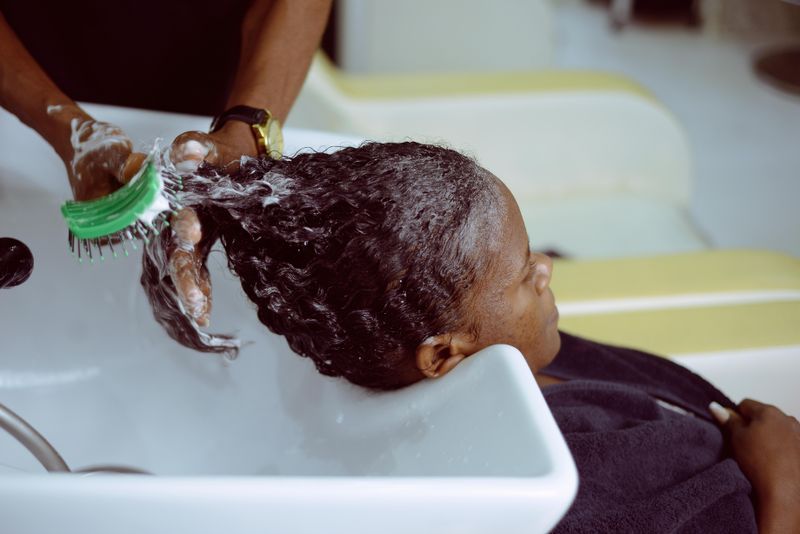
Rinse immediately. The AAD's sequence after that is to wash with a shampoo formulated for swimmers, which removes the chlorine, then follow with a deep conditioner to restore moisture. Dry your ears thoroughly at the same time. CDC lists ear drying as the step that keeps germs from growing in the outer ear and causing swimmer's ear.
Nobody has published a wash frequency for a swimmer wearing braids or locs, and the dermatology guidance stops at wash, then deep condition. What works in practice: rinse every time you get out, clarify once a week if you are in the pool several times a week, co-wash or rinse and condition on the days between, and deep condition the same day you clarify. Treat that as a routine, not a finding.
Then dry it all the way. Locs hold water in the core long after the outside feels dry, and a dense install hides water at the root. Squeeze the length with a microfiber towel, then finish at the roots with a blow dryer on cool. We could not find a study linking damp locs to a specific scalp infection, so treat full drying as maintenance, not a proven infection-prevention step. Do not sleep on wet locs.
A fresh install: the question is tension, not water
Nothing published sets a waiting period between an install and a swim. The evidence here is about tension. Traction alopecia affects roughly one third of women of African descent who wear high-tension styles for long stretches, the risk rises with how hard the hair is pulled and how long the pulling lasts, and tight braids, cornrows and locs sit in the highest-risk group. Left alone it can end as scarring alopecia that does not grow back (PMID 29670386).
So the question about a new install is not whether the pool will ruin it. If the style still hurts the day after, if there are bumps along the parts, or if the hairline is tenting, it is too tight and swimming is beside the point. Loosen it or take it down. If it is comfortable, the pool does not care how new it is. Our guide to protective styles without hair loss covers what a safe install feels like on day one.
Swim lessons, and the thing hair should never cost
Drowning kills about 4,000 people in the United States each year and is the leading cause of death among children ages 1 to 4 (CDC, MMWR Vital Signs, 2024). In that same analysis, unintentional drowning deaths among Black people were 601 in 2019, 750 in 2020, 780 in 2021 and 675 in 2022.
CDC puts the reason in the built environment and writes the history out plainly: public pools were racially segregated, and the pools available were often too small and too shallow to swim in. When integration was mandated, many closed, few new ones were built, and private clubs restricted access through membership and residency rules. A recent survey named access to a nearby pool as a major barrier to swim-skills training. Today 36.8% of Black adults report not knowing how to swim and 36.9% have ever taken a lesson. Those are numbers about pools, not about people.
Lessons work. In a case-control study across six states, formal swimming lessons were associated with an 88% lower risk of drowning among children aged 1 to 4, though the estimate was imprecise and its confidence interval ran from a 3% to a 99% reduction (PMID 19255386). The American Academy of Pediatrics counts drowning as a leading cause of injury-related death in children, with almost 900 US children under 20 dying of drowning in 2018 (PMID 34253571).
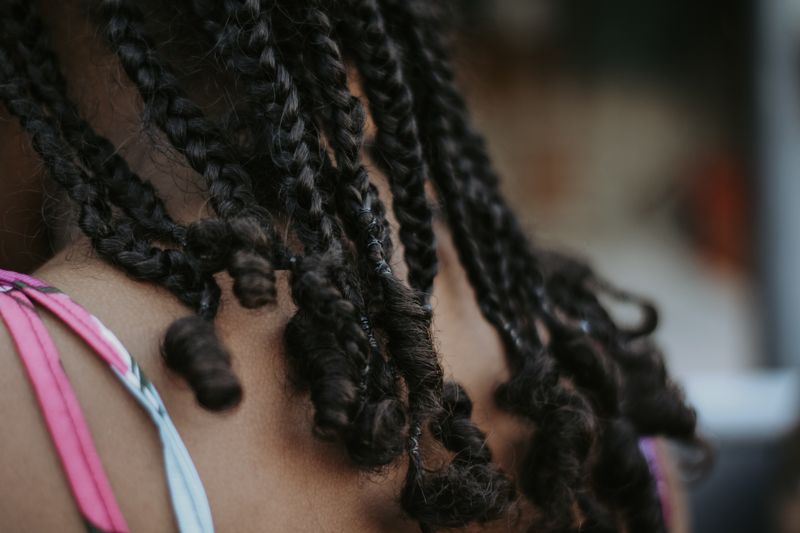
Hair enters this early. Focus groups with 37 Black high school girls in Newark, New Jersey documented them trading knowledge about keeping a style intact through physical education class (PMID 34140421). A swim lesson is not a gym class you can make up next week. Book it, then build the hair routine around it. Braids and locs are easier to manage at a pool than loose hair, because they need no detangling on the deck.
How to get care for your scalp
A dermatologist who treats textured hair can tell traction alopecia from ordinary breakage in one visit, and that distinction decides whether the hair grows back. If your scalp is tender or flaking, if density at your edges is dropping, or if a child has a patch that is not growing, find a Black dermatologist in our directory and filter by city. Bring photos from before your current style.
Frequently asked questions
Can you swim with locs? ▼
Yes, with the same routine as braids: soak with clean water, seal with oil or leave-in conditioner, cap, rinse the moment you get out, then dry to the core. Locs are where the drying step matters most, because water sits inside the loc long after the outside feels dry.
Does a swim cap keep braids completely dry? ▼
No. A large-volume silicone cap holds the hair, cuts contact with the water and stops the tugging, but water gets in at the edges. Treat it as one layer of protection and keep the rinse and wash routine either way.
How soon after getting braids can I swim? ▼
No published guidance sets a waiting period. The documented risk is tension, not water: traction alopecia tracks with how hard the hair is pulled and how long the pulling lasts (PMID 29670386). If the install still hurts, if there are bumps along the parts, or if the hairline is tenting, that style needs loosening before it needs a pool.
Is a salt water pool gentler on hair than a chlorine pool? ▼
A salt water pool is a chlorine pool. The Indiana Department of Health puts it directly: salt is not a disinfectant. A salt chlorinator passes water containing dissolved salt through a reaction cell that generates free chlorine, and the chlorine is what disinfects. Ocean water is different water, but the hair routine does not change.
Will chlorine turn my hair green? ▼
Copper does that, not chlorine. Copper in the water binds to hair whose cuticle has already been damaged, and chlorinated water is what does that damage (PMID 7233585). The tint is reported mostly in blond and bleached hair, where it shows against the color.
How often should I wash braids if I swim several times a week? ▼
Rinse every time you get out. Beyond that, no trial has tested a wash schedule for swimmers in braids or locs. A workable default is one clarifying or swimmers' shampoo wash a week followed by a deep conditioner, with rinses and conditioner between.