Beard dandruff in Black men is usually seborrheic dermatitis, the same condition behind scalp dandruff, showing up in the beard. You get white or yellowish flakes, itch, and on brown and Black skin, patches under the hair that look pink, purple, lighter or darker than the skin around them rather than red (American Academy of Dermatology). The fix is a medicated dandruff shampoo massaged into the skin under the beard and left on for a few minutes, not more beard oil. Razor bumps and dry skin look similar but need different care, and they are easy to tell apart once you know where to look.
What beard dandruff looks like on Black skin
Dandruff and seborrheic dermatitis sit on one spectrum. Dandruff is the mild end, limited to the scalp with flaking and no visible inflammation. Seborrheic dermatitis adds inflamed, scaly patches and can show up in other oily areas (Borda and Wikramanayake, 2015). The academy lists the beard among them, along with the eyebrows, the skin beside the nose, the ears and, in men especially, the chest (AAD).
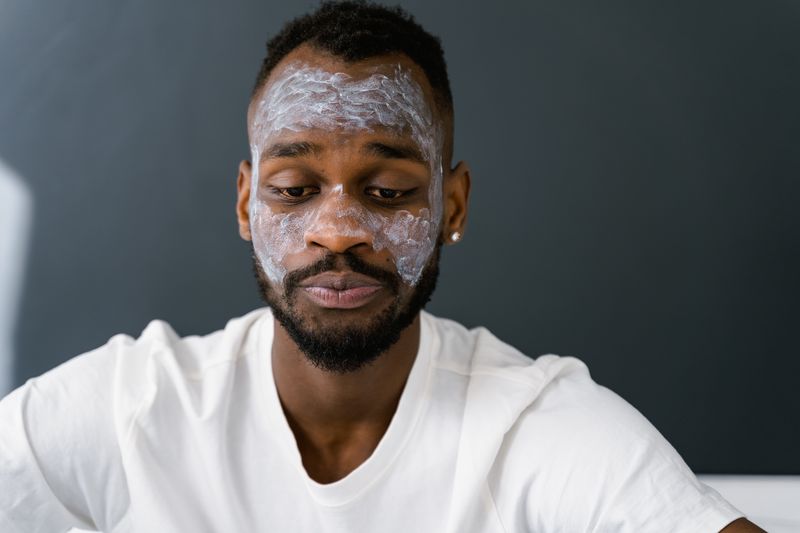
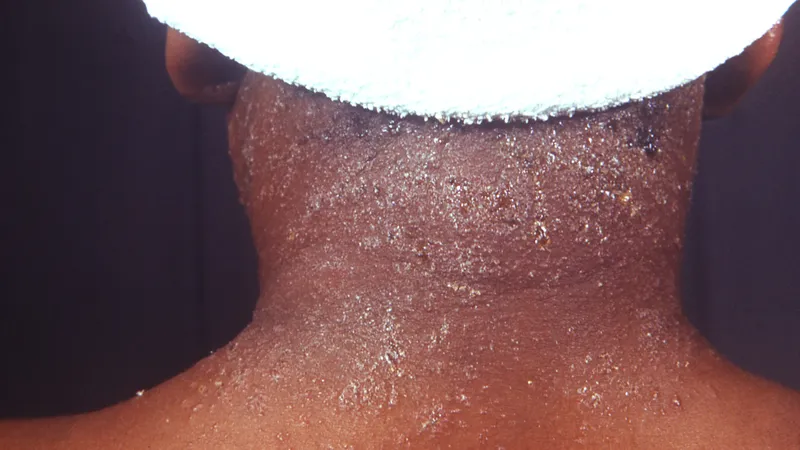
The flakes are white to yellowish and can be dry or greasy, and they itch (AAD). What most guides get wrong for Black men is the skin underneath. The academy says that on darker skin tones the rash often looks pink, slightly purple, or lighter than the surrounding skin, while lighter skin tends to show a red, raised rash (AAD). Look along the jawline, the cheeks above the beard line, the mustache area and the creases beside your nose. If your eyebrows and the sides of your nose flake at the same time, that points to seborrheic dermatitis.
The academy is specific about who gets it: in the United States, Black people are the most likely to develop seborrheic dermatitis, and men are more likely than women worldwide (AAD). Flares tend to be seasonal, mostly in winter and early spring, and stress sets them off too (AAD). Skin oil and the yeast that normally lives on skin both play a part in why it happens (Borda and Wikramanayake).
Beard dandruff, razor bumps, dry skin or ringworm?
Razor bumps (pseudofolliculitis barbae). Firm, itchy and sometimes painful bumps in the beard area, sometimes darker than your skin, that come from tightly curled hairs growing back into the skin after shaving or tweezing (Perry et al., 2002). You see bumps at the hairs, not flaking patches, and they get worse with close shaves. They need different care. See our guide to razor bumps on Black skin or our page on pseudofolliculitis barbae.
Common skin conditions are treated in primary care, and community health centers charge on a sliding scale that is often $0. Our directory of free and charitable clinics lists centers by state. A same-day telehealth visit is self-pay and cannot be billed to Medicaid or commercial insurance, so the clinic route usually costs less. If you need a prescription sooner than the next appointment:
 Sesame Care
Prescription skincare from a licensed clinician.
From $59 a month, priced up front
Start a skincare consultDry skin. Small white flakes that fall loose, with tight-feeling skin and no greasy scale or discolored patches underneath. It improves with gentle cleansing and moisture; if moisture alone settles it within a couple of weeks, dryness was the likely cause. Our guide to dandruff versus dry scalp on Black hair walks through the same test for the scalp.
Ringworm of the beard (tinea barbae). Rare, but worth knowing because steroid creams make it worse. In a case series of nine people, it looked like inflamed bumps around hair follicles or a swollen, boggy patch, and four cases were linked to using topical steroids. Pet contact was linked to three. All cleared with antifungal pills over 6 to 8 weeks (Bonifaz et al., 2003). If a patch in your beard is getting more swollen and pus-filled while you use hydrocortisone, stop and get it checked.
How to treat beard dandruff without drying out your beard
Start with an over-the-counter dandruff shampoo. The academy lists the active ingredients to look for: zinc pyrithione, salicylic acid, sulfur, selenium sulfide, ketoconazole and coal tar (AAD). Its seborrheic dermatitis guidance says dandruff shampoo can treat the beard and face as well as the scalp (AAD).
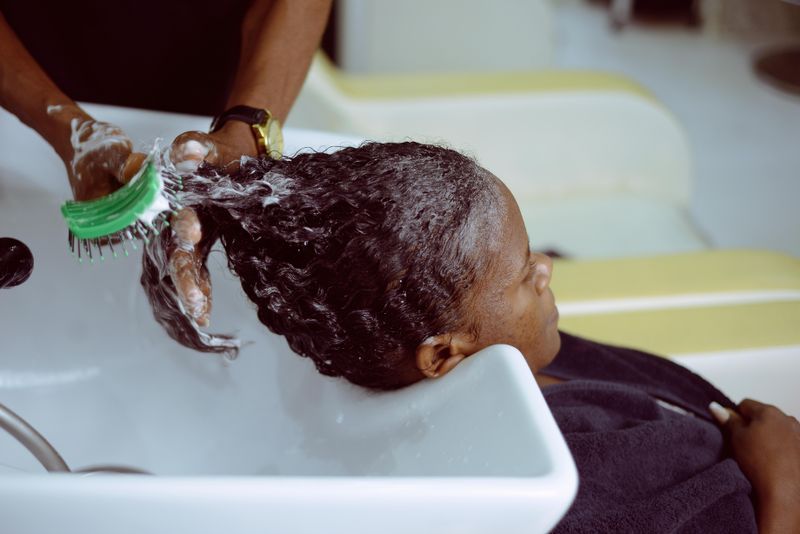
Coarse, coily beard hair dries out fast, which is why many men quit medicated shampoo after a week. The academy's advice for curly and coily hair applies here: put the dandruff shampoo on the skin, not along the hair, because the ingredients that treat dandruff can dry the hair, and condition with your regular products afterward (AAD). A routine that follows that advice:
- Wet the beard with warm water.
- Work a small amount of dandruff shampoo into the skin under the beard with your fingertips.
- Leave it on for the time on the label. The academy notes some dandruff shampoos need 5 to 10 minutes (AAD).
- Rinse well, then use your usual conditioner or a light leave-in on the hair itself.
How often: the academy says people with curly or tightly coiled hair may be told to use dandruff shampoo about once a week, and that once the flaking is under control many people keep using it once a week to prevent flares (AAD; AAD). If a shampoo stops working, it may help to rotate to one with a different active ingredient (AAD). Coal tar can make skin more sensitive to sun, so pair it with sun protection (AAD).
When over-the-counter shampoo is not enough
If your beard is still flaking after a few weeks of correct use, a dermatologist has stronger options. The academy lists these for seborrheic dermatitis on the skin (AAD):
- Ketoconazole cream, gel or foam, an antifungal approved for seborrheic dermatitis in people 12 and older with a healthy immune system.
- A short course of a corticosteroid, such as hydrocortisone, to calm a flare quickly. It is used briefly and as directed to avoid side effects.
- Roflumilast foam (Zoryve), approved for seborrheic dermatitis in people 9 and older and applied once a day. In the trial the academy cites, 64.7% of patients who had dark spots and 46.2% who had light spots saw them clear within 8 weeks.
- Pimecrolimus cream or tacrolimus ointment, which calm inflammation without being steroids.
In the phase 3 roflumilast trial, 79.5% of people using the foam reached clear or almost clear skin with at least a two-point improvement at 8 weeks, compared with 58.0% using the foam without the drug (Blauvelt et al., 2024). The authors note the trial lasted only 8 weeks for a long-term condition.
A 2026 panel of dermatologists writing about high-curl-pattern hair noted that some common hair care practices may contribute to seborrheic dermatitis or make it worse, and that more research on racial and ethnic differences is needed (Callender et al., 2026). Bring your real routine to the appointment: how often you wash your beard, what you put on it, and whether you shave the edges. For the scalp side of the same condition, see our guides to seborrheic dermatitis on Black skin and winter scalp flakes on natural hair.
When to see a doctor
See a board-certified dermatologist if the flaking has not improved after a few weeks of correct dandruff shampoo use, if patches are leaving dark or light marks, if the area is swollen, painful or oozing, or if you cannot tell whether it is razor bumps, seborrheic dermatitis or something else (AAD). The academy also notes that people living with HIV have a higher risk of seborrheic dermatitis, and that it can be widespread and hard to treat in people with AIDS (AAD). If a severe rash came on suddenly, ask about an HIV test. Our guide to free STD and HIV testing lists where to go.
You can find a board-certified dermatologist near you in our directory.
Frequently asked questions
Why do I get dandruff in my beard? ▼
Usually because of seborrheic dermatitis, the condition behind scalp dandruff, which also affects oily areas like the beard, eyebrows and the sides of the nose. Skin oil and the yeast that normally lives on skin both play a part, and cold weather and stress make flares more likely.
Is beard dandruff the same as dry skin? ▼
No. Dry skin gives small loose flakes with no discolored patches and improves with moisture. Seborrheic dermatitis gives greasy or dry flakes over patches that, on dark skin, look pink, purple, lighter or darker than your skin, and it needs a medicated shampoo.
Will beard oil get rid of beard dandruff? ▼
Not on its own. Oil can soften flakes and the hair, but the treatment for seborrheic dermatitis is a medicated dandruff shampoo on the skin under the beard. Use oil or conditioner on the hair after you rinse the shampoo out.
How often should I wash my beard with dandruff shampoo? ▼
For coarse or coily hair, the American Academy of Dermatology says about once a week is often enough, applied to the skin rather than the hair, and many people keep a once-a-week wash going after the flaking clears to prevent flares.
Can beard dandruff leave dark spots? ▼
Yes. On darker skin, seborrheic dermatitis can leave dark or light patches, especially on the face. Treating it early is the best way to prevent them, and a dermatologist can treat marks that remain.