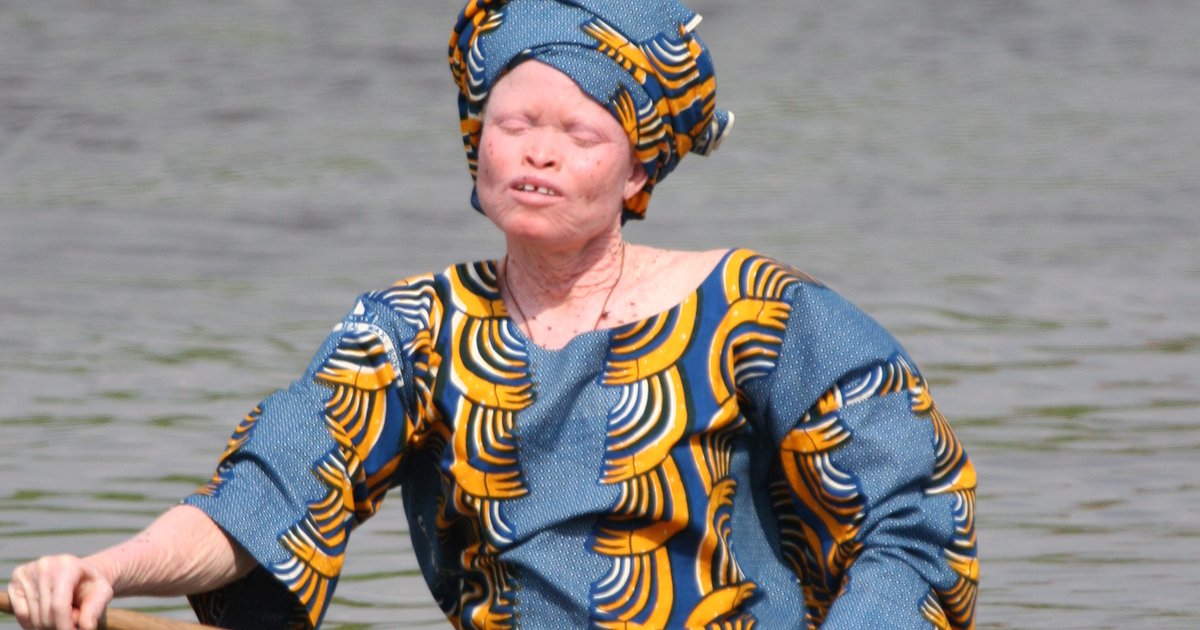
Black people with albinism are born with little or no melanin in their skin, hair and eyes because they inherited an albinism gene from both parents, who usually have typical coloring themselves (NOAH). Albinism is more common in people of African descent than in people of European descent (MedlinePlus). The two health needs that matter most for life are protecting the skin from the sun, because the skin cancer risk is very high, and getting early, ongoing help for vision, which glasses alone cannot correct (NOAH). With both, people with albinism live full, normal-length lives (Grønskov et al., 2007).
What albinism is, and why it shows up in Black families
Oculocutaneous albinism is a group of inherited conditions that reduce pigment in the skin, hair and eyes. It is caused by changes in genes the body uses to make melanin, including TYR, OCA2, TYRP1 and SLC45A2, and it is inherited in an autosomal recessive pattern: a child has to receive a changed copy from each parent (MedlinePlus). When both parents carry the gene, each pregnancy has a one in four chance of a baby with albinism (NOAH). Most children with albinism are born to parents whose hair and eye color are typical for their background (NOAH).
How common it is depends on where your family comes from. MedlinePlus estimates oculocutaneous albinism at about 1 in 4,000 to 7,000 people in African populations and 1 in 12,000 to 15,000 in European populations (MedlinePlus). In the United States overall, about 1 in 18,000 to 20,000 people has some type of albinism (NOAH). Rates are higher in parts of sub-Saharan Africa: the United Nations cites estimates of 1 in 1,400 in Tanzania (United Nations), and a review in Photochemistry and Photobiology reports rates as high as 1 in 1,000 in some groups (Wright et al., 2015).
The type matters for what a person looks like. Type 2 (OCA2) usually means pale skin with hair that can be light yellow, blond or light brown, and it is about twice as common as type 1 in African and African American populations (MedlinePlus; Durham-Pierre et al., 1994). Type 3 can leave reddish-brown skin and ginger or red hair (MedlinePlus), and it was first traced to the TYRP1 gene in Black southern Africans (Manga et al., 1997). A genetic test can pin down the exact type (NOAH).
Skin cancer is the biggest medical risk
Melanin is the skin's built-in sun protection, and people with albinism have little or none of it. A review in the Journal of Skin Cancer estimates that Black people with albinism in sub-Saharan Africa have about a 1,000-fold higher risk of squamous cell carcinoma of the skin than the general population, and that these cancers tend to be aggressive and to come back after treatment (Lekalakala et al., 2015).
A 2026 meta-analysis pooled 12 studies of 1,747 people with albinism. It found skin cancer in about 19% and actinic keratosis, a precancerous rough patch from sun damage, in about 38%. Squamous cell carcinoma made up about 55% of the cancers and basal cell carcinoma about 34%; melanoma was rare (Tranquillini et al., 2026). The authors note the studies varied widely, so treat those figures as a rough picture, not a personal risk score. The United Nations reports that in some countries a majority of people with albinism die of skin cancer between 30 and 40, and stresses that it is highly preventable when people can get sunscreen, sun-protective clothing and regular checks (United Nations).
Community health centers and local vision-charity programs offer low-cost or free eye exams and glasses to patients who qualify by income. Our directory of free and charitable clinics lists centers by state. A self-pay online vision service does not replace an in-person exam for eye disease, so the clinic route is usually the safer first stop. If you want an online option instead:

Sesame Care
An online vision test reviewed by a licensed clinician, to renew a glasses or contact lens prescription. Prices are shown before you book; visits start at $34 and vary by clinician and location (checked August 2026).
Take an online vision testSponsored
Everyday sun protection that works
The National Organization for Albinism and Hypopigmentation (NOAH) recommends sunscreen, hats, sunglasses and sun-protective clothing, and says that with proper protection people with albinism can enjoy outdoor activities even in summer (NOAH). The American Academy of Dermatology's sunscreen baseline for everyone is a broad-spectrum product with SPF 30 or higher, and water resistant if you will sweat or swim (AAD). In practice:
- Sunscreen every morning on all exposed skin, including ears, the back of the neck, the scalp at the part and the lips, reapplied through the day outdoors.
- Tightly woven long sleeves and a wide-brimmed hat. NOAH points to opaque clothing as part of protection (NOAH).
- Shade during the middle of the day, and sunglasses for both comfort and eye protection.
- Regular skin checks by a dermatologist. A review in the Orphanet Journal of Rare Diseases says regular skin exams for early detection of skin cancer should be offered to everyone with albinism (Grønskov et al.).
Know what to show the dermatologist between visits: a rough, scaly patch that will not heal, a sore that bleeds or crusts, or a lump that grows, especially on sun-exposed skin like the face and ears. Our guides to sunscreen and skin cancer signs on dark skin cover products and what each cancer type looks like.
Vision: what to expect and what helps
Almost all people with albinism have some visual impairment (United Nations), because the retina and the nerve connections between the eye and brain develop differently without melanin. NOAH says the presence of these eye problems is part of how albinism is diagnosed (NOAH). Common features include (MedlinePlus; NOAH):
- Reduced sharpness of vision that glasses cannot fully correct.
- Nystagmus, quick back-and-forth eye movements.
- Strabismus, eyes that do not point the same way.
- Photophobia, strong sensitivity to bright light and glare.
Visual acuity usually falls somewhere between 20/60 and 20/400 (Grønskov et al.). NOAH notes that even people considered legally blind, at 20/200 or worse, usually learn to use their vision for reading, riding a bike and much else, and some can drive (NOAH). What helps:
- An eye doctor with low vision experience. The National Eye Institute describes vision rehabilitation as training on magnifiers, setting up the home, and adjusting phone and computer settings (NEI).
- Glare control. Sunglasses or tinted contact lenses outdoors; indoors, light placed over the shoulder rather than in front for reading (NOAH).
- Optical aids. Strong reading lenses, handheld magnifiers, small telescopes and screen magnification. Bioptic glasses, with small telescopes mounted on the lenses, are allowed for driving in some states (NOAH).
For children, it is worth asking the school early about vision supports such as seating near the board, large print and screen magnification. If cost is the barrier, our guide to eye exams without insurance lists lower-cost options.
Other health questions
Albinism itself does not affect intelligence, development or fertility, and lifespan is normal (Grønskov et al.). One less common form needs attention: Hermansky-Pudlak syndrome, which combines albinism with bleeding problems and bruising and can involve the lungs and bowel. NOAH advises suspecting it if a person with albinism bruises or bleeds unusually, or if a test for a type of albinism comes back inconclusive (NOAH). Tell your doctor about easy bruising, nosebleeds or heavy bleeding after dental work.
Stigma, safety and support
NOAH writes that people with albinism are at risk of isolation because the condition is often misunderstood, and that stigma can be sharpest within communities of color, where a child's race or paternity may be questioned (NOAH). The science answers that question: both parents carry the gene (MedlinePlus). A Brazilian review describes the same pattern of neglect and exclusion and calls health education for families, schools and clinicians part of the care (Marçon and Maia, 2019).
In parts of Africa the harm goes further. The United Nations reports discrimination, violence and even killings of people with albinism driven by myths, and marks International Albinism Awareness Day to push back (United Nations). In the United States, NOAH runs support networks and can connect families with other families who have albinism (NOAH).
Care checklist
For a baby or child newly diagnosed, or an adult building a care team:
- An eye exam with a pediatric ophthalmologist or a low vision specialist. You can search for an ophthalmologist in our directory.
- A dermatologist for regular skin checks. Search for a dermatologist.
- A genetic counselor if you want the type confirmed or are planning another pregnancy (NOAH).
- Sun protection built into daily routine from infancy.
- Contact with other families through NOAH.
Frequently asked questions
Can two Black parents have a baby with albinism? ▼
Yes. Most types of albinism are recessive, so two parents with typical coloring who each carry the gene have a 1 in 4 chance with each pregnancy of having a child with albinism. It says nothing about paternity.
How common is albinism in Black people? ▼
MedlinePlus estimates about 1 in 4,000 to 7,000 people in African populations, compared with 1 in 12,000 to 15,000 in European populations. In some groups in sub-Saharan Africa it is as common as 1 in 1,000.
Do people with albinism have red eyes? ▼
Usually not. NOAH says most people with albinism have blue eyes, and some have hazel or brown eyes. In some lighting, blood vessels at the back of the eye can make the eyes look reddish or violet.
What is the biggest health risk with albinism? ▼
Skin cancer from sun exposure, mostly squamous cell carcinoma. Daily sunscreen, protective clothing and regular dermatologist checks are the most important prevention.
Is albinism the same as vitiligo? ▼
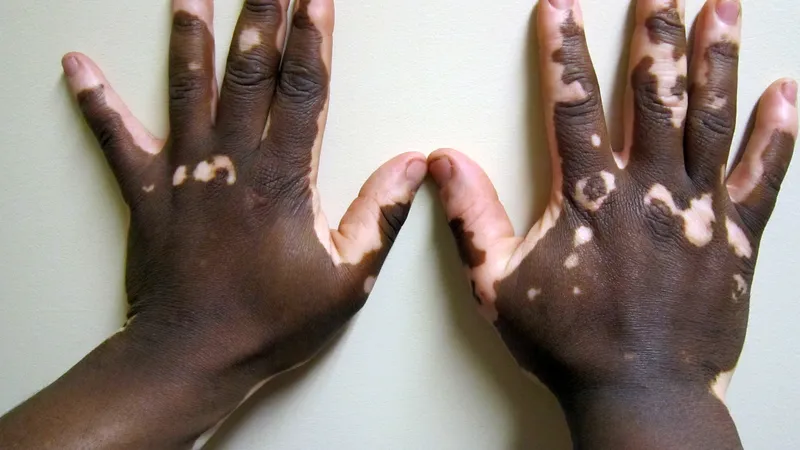
No. Albinism is genetic, present from birth and affects the eyes. Vitiligo is generally autoimmune and causes patches of lost skin color that usually appear later in life.