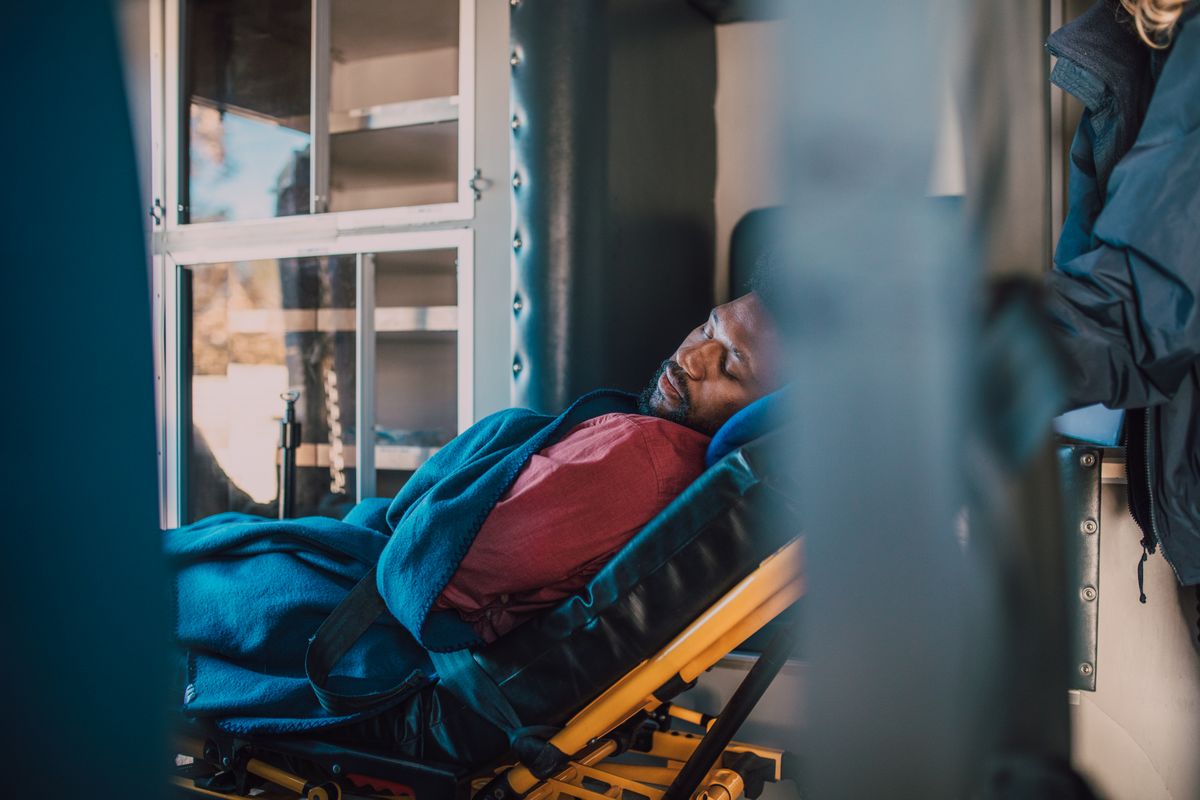
Thirty years of peer-reviewed research document a consistent pattern: Black patients presenting to U.S. emergency departments wait longer for care, receive pain medication at substantially lower rates, are assigned lower triage acuity despite equivalent severity, and leave without being seen at more than double the rate of white patients. A 2022 Michigan study of nearly 6,500 ED encounters found a left-without-being-seen rate of 5.7% for Black patients versus 2.3% for white patients. A 2019 meta-analysis covering 1990 to 2018 found Black patients had 40% lower odds of receiving analgesia for acute pain. These are system-level failures, not patient-level ones. Knowing the data and knowing your rights gives you a concrete way to push back.
What the Research Documents
The landmark 1993 study by Todd, Samaroo, and Hoffman in JAMA established that Black and Hispanic patients with long-bone fractures were significantly less likely to receive adequate analgesia despite having the same documented injuries (PMID 8445817). The gap has not closed. A 2022 study by Kang et al. using the National Hospital Ambulatory Medical Care Survey found Black patients had 45% lower odds of receiving opioids for pain after adjusting for pain severity and insurance, a gap the authors attributed to non-clinical factors in physician decision-making (PMID 35358938). A 2022 study by Jarman et al. found 38% lower odds of opioid analgesia for abdominal pain, with Black patients also less likely to receive non-opioid alternatives (PMID 36409944). On triage, a 2023 study by Peitzman et al. found Black patients with chest pain were 24% less likely to receive high-acuity assignments, with the gap most pronounced for subjective complaints where clinician discretion is highest (PMID 37788029). A 2022 study by Boley et al. documented Black high-acuity patients being routed to fast-track areas at higher rates, with the authors concluding that rapid-triage systems exacerbated racial disparities (PMID 35907271). For background on how pain bias is taught in medical training, see our piece on the pain tolerance myth and the care gap it creates.
Why Undertriage Is Especially Dangerous for Stroke and Heart Emergencies
Black adults have a higher burden of stroke and arrive within the three-hour tPA treatment window at lower rates than the overall population. A 2022 systematic review by Ikeme et al. in Stroke found only 26% of Black patients reached a hospital within three hours of stroke onset, and Black patients received tPA at lower rates overall (PMID 35105178). When ED undertriage compounds delayed arrival, the treatment window closes. Stroke protocols ("stroke alert") and chest pain pathways are standardized and time-triggered, making them substantially less vulnerable to individual clinician bias than unprotocolized assessments. Use them: if you arrive with sudden one-sided weakness, facial droop, speech changes, or a severe sudden headache, say "I am concerned about stroke." If you arrive with chest pain, say "I need a chest pain protocol." These are recognized activation phrases. For a full breakdown of symptoms and timing, see our guide on stroke warning signs in Black adults.
Your Rights in Any Emergency Department
EMTALA (1986) requires every Medicare-participating hospital ER to provide a medical screening exam to anyone who presents, regardless of insurance, immigration status, or ability to pay. If an emergency condition is found, the hospital must stabilize you or arrange a transfer. CMS summarizes these protections at cms.gov/priorities/your-patient-rights/emergency-room-rights. Separately, Joint Commission-accredited hospitals must provide a patient advocate service, ensure language access, and accept formal grievances. Ask at registration for the patient advocate office. It is free and requires no documentation.
If you or someone with you has warning signs right now, call 911 or go to the nearest emergency department. Do not wait for an appointment and do not use a video visit for this. Emergency rooms must treat you regardless of insurance or ability to pay under EMTALA. For follow-up care afterwards, our directory of free and charitable clinics lists verified centers by state, and a same-day telehealth visit is self-pay:

Sesame Care
A same-day online visit with a licensed clinician for common health concerns, starting as low as $34. Prices are shown before you book; visits start at $34 and vary by clinician and location (checked August 2026).
See a doctor todayAffiliate link, we may earn a commission at no extra cost to you.
A Concrete Advocacy Guide for Your ER Visit
Before you go: Know your medications, dosages, and allergy history. If you have a chronic condition (hypertension, diabetes, sickle cell, heart disease), state it at triage even if it seems unrelated. Comorbidities affect severity scoring.
At triage: Describe your pain numerically ("7 out of 10") and functionally ("I cannot walk without support"). Use time language: "This started 40 minutes ago and is getting worse." Do not minimize. Research shows patients who understate pain intensity are under-medicated at higher rates. If you have symptoms that could indicate cardiac or stroke emergency, say those words: "I am concerned about my heart" or "I am concerned this could be a stroke." These phrases activate specific triage protocols at most hospitals.
If your condition changes while you wait: Return to the triage desk immediately. Do not wait. Say clearly: "My condition has changed and I need to be reassessed." You have the right to request a triage reassessment at any time. Staff cannot refuse this request. If you are told to return to your seat without a reassessment and you believe you are deteriorating, say: "I need to speak with a charge nurse right now."
If you are in pain and have not received medication: Ask directly: "I have reported my pain as [number] and I have not received any pain medication. Can you tell me why and what the plan is?" Document the time. If the response is unsatisfactory, ask to speak with the charge nurse. Asking for a reason creates accountability. You can also ask: "Is there a non-opioid option I can receive while I wait?" Ketorolac (Toradol), for example, is an IV NSAID that is highly effective for acute pain and has no abuse potential.
Bring someone if you can: Patients with a companion receive higher acuity scores and shorter wait times in several studies. An advocate who can speak on your behalf when you are in severe pain, communicate your history clearly, and take notes on times and conversations is an asset. If you do not have someone available, ask at registration for a patient advocate.
After your visit: You have the right to a copy of your medical records, including triage notes. If you believe you were undertriaged, under-medicated, or mistreated, file a written complaint with the hospital's patient relations office and, separately, with your state health department and with CMS at 1-800-MEDICARE. Document the date, time, your assigned triage level, and the names of staff who provided care. EMTALA violations can also be reported to the HHS Office of Inspector General. These complaints create records and, at scale, force system change.
Build Your Baseline Before an Emergency
A primary care relationship before an emergency is one of the most effective tools available. A provider who knows your baseline can communicate it to ED staff directly, flag your risk factors in your chart, and help you understand which symptoms warrant 911 versus urgent care. If you are looking for a Black or Black-serving clinician who understands the specific health context you bring to every appointment, use our directory to find one near you. For related context on how documented bias in clinical training shapes pain care, read our piece on what the Hoffman study found about pain bias in medical training.
Frequently asked questions
Do Black patients really wait longer in the emergency room? ▼
Yes. A 2021 study using 2013-2017 national ambulatory care data confirmed Black and Hispanic patients experienced longer ED wait times than white patients after adjusting for hospital type, insurance, and other factors (PMID 33812329). A 2022 Michigan study found Black patients left without being seen at a rate of 5.7% versus 2.3% for white patients. Improvement has occurred in some systems, but the disparity persists nationally.
What can I do if I think I'm not getting adequate pain medication in the ER? ▼
Ask directly: "I've rated my pain as [number] and I haven't received any pain medication. Can you explain the plan?" Document the time. Ask for a non-opioid option like IV ketorolac if opioids are declined. Ask to speak with the charge nurse if the response is unsatisfactory. File a formal grievance with the hospital's patient relations office after your visit if you believe care was withheld.
What is EMTALA and how does it protect me? ▼
EMTALA requires every Medicare-participating hospital with an ER to provide a medical screening exam to anyone who presents, regardless of insurance, ability to pay, or immigration status. If an emergency is found, the hospital must provide stabilizing treatment or arrange a transfer. Violations can be reported to CMS at 1-800-MEDICARE.
Can I request a patient advocate in the emergency room? ▼
Yes. Accredited hospitals must have a patient advocate or patient relations service. Ask at registration or ask any staff member. The service is free. You can also bring your own advocate: a family member or friend whose presence the hospital cannot refuse without a specific clinical reason.
What should I say at triage to be triaged correctly? ▼
State your pain on a 0-10 scale, describe functional limitations ("I cannot walk unassisted"), and give a clear timeline ("started 45 minutes ago and is getting worse"). Do not minimize. For cardiac or stroke symptoms, say: "I am concerned this could be a stroke" or "I need a chest pain protocol." These phrases activate standardized care pathways.
What if my symptoms get worse while I'm in the waiting room? ▼
Return to the triage desk and say: "My condition has changed and I need to be reassessed." You have the right to a reassessment at any time. If you are turned away without one, ask immediately to speak with the charge nurse. Do not wait to be called back.