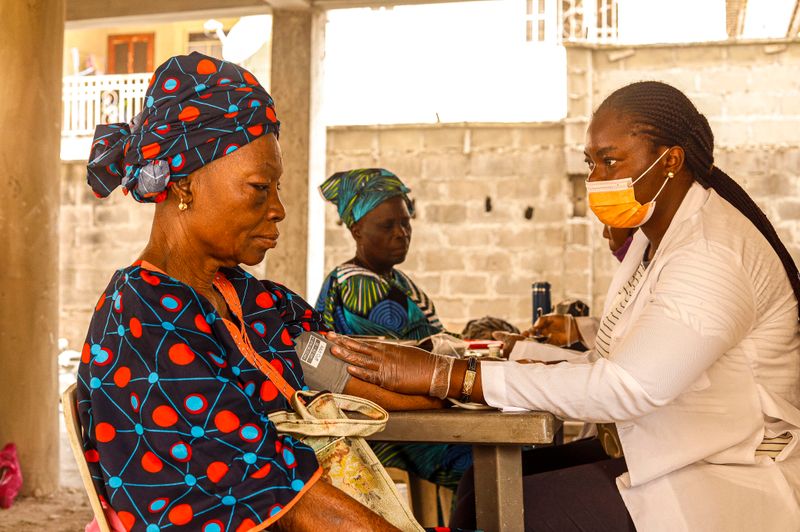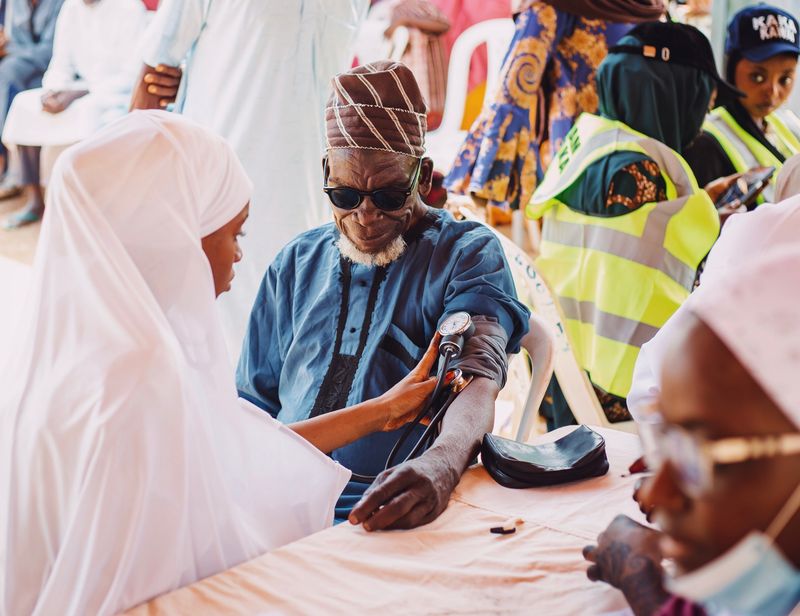
If you are a woman between 35 and 64 with no insurance, or insurance that does not cover screening, CDC's WISEWOMAN program pays for your blood pressure, cholesterol and blood sugar screening, follow-up visits for uncontrolled blood pressure, health coaching and referrals to low-cost medication. It runs in 32 states, two tribal organizations and one territory, and you enter through the same door as the free mammogram program: your state's breast and cervical cancer screening program. The American Heart Association's 2025 statistics report puts age-adjusted hypertension prevalence among non-Hispanic Black women at 56.9%, and 38% of US adults with high blood pressure do not know they have it. A free screening is how you find out.
Who qualifies, and what the free screening covers
Congress authorized WISEWOMAN in 1993 as an add-on to the National Breast and Cervical Cancer Early Detection Program (NBCCEDP). CDC's eligibility language, dated May 15, 2024: women aged 35 to 64 who are uninsured, underinsured or have lower incomes, and who participate in the NBCCEDP. Older CDC materials, including the footer of CDC's own site, still say 40 to 64; the current program pages, the funding cycle that began in September 2023 and North Carolina's program page all say 35 to 64. If a clinic says you are too young at 37, ask them to check the current rule.
What it pays for, from CDC's FAQ (May 14, 2024): blood pressure, diabetes, body mass index and cholesterol screening; counseling; referral for medical evaluation when a number is abnormal; follow-up appointments for uncontrolled high blood pressure; and referrals to lifestyle programs, health coaching, tobacco quitlines and low-cost medication. Local health departments, doctors' offices and community health centers deliver it. Between 2008 and 2013 the program served nearly 150,000 women, 91% of whom had at least one risk factor for heart disease or stroke.
Which states have WISEWOMAN through 2028
CDC says it funds 35 recipients but does not list them on its program pages, so we pulled the awards from USAspending.gov, the federal spending database, under assistance listing 93.436. All 35 run from Sept. 30, 2023 to Sept. 29, 2028. The 32 states: Alabama, Arizona, Arkansas, California, Colorado, Connecticut, Delaware, Hawaii, Illinois, Indiana, Kansas, Louisiana, Michigan, Minnesota, Mississippi, Missouri, Montana, Nebraska, Nevada, New Hampshire, New Jersey, North Carolina, Ohio, Pennsylvania, Rhode Island, South Carolina, Tennessee, Utah, Vermont, Washington, West Virginia and Wisconsin. The tribal recipients are the SouthEast Alaska Regional Health Consortium and the Native American Rehabilitation Association of the Northwest in Oregon; the territory is the Northern Mariana Islands.
Not funded this cycle: 18 states and the District of Columbia, including Texas, Florida, Georgia, New York, Maryland and Virginia. Florida held an award in the 2018 to 2023 cycle and does not now. Some funded states use another name (Utah's is BeWise), so ask for "the WISEWOMAN heart screening." Our screening directory lists low-cost cardiovascular screening sites by state and city.
The cheapest route is usually a community health center: they see patients regardless of insurance, charge on a sliding scale set by your income, and cannot turn you away for inability to pay. Our directory of free and charitable clinics lists centers by state. Ask any regular office for the self-pay rate and a prompt-pay discount before you book, because the cash price is often well below the billed one. A same-day telehealth visit is self-pay and is not billed to Medicaid or commercial insurance, so if you are covered the clinic route costs less. If you would rather see the price up front and book today:

Sesame Care
A same-day online visit with a licensed clinician. Prices are shown before you book; visits start at $34 and vary by clinician and location (checked August 2026).
See the price before you bookAffiliate link, we may earn a commission at no extra cost to you.
How to enroll: call the breast and cervical program first
WISEWOMAN has no separate application. You qualify by enrolling in your state's NBCCEDP program, which CDC funds in all 50 states, the District of Columbia, 5 territories and 11 tribes or tribal organizations.
- Find the program. Search your state health department's site for "breast and cervical cancer program"; each state brands it (NC BCCCP, South Carolina's Best Chance Network, Texas BCCS). Our guide to a free mammogram without insurance walks through finding it.
- Ask for an eligibility screening. South Carolina's checklist (July 2024) asks for proof of identity, 30 days of state residency, income (pay stubs, a benefits statement or an employer letter) and insurance status. Bring the same anywhere.
- Ask for WISEWOMAN by name: "I want the WISEWOMAN heart screening with my breast and cervical screening." The tests can happen at the same visit.
- Keep the follow-up. If a number is high, the program pays for the follow-up visit and connects you to coaching and low-cost medication. That is where the benefit is.
| State | Program to call | Who qualifies (as published) | Heart screening |
|---|---|---|---|
| North Carolina | NC BCCCP and NC WISEWOMAN, at local health departments and some community health centers. Division of Public Health 919-707-5000; provider finder on the DPH site. | Income at or below 250% of the federal poverty level; no insurance or insurance that does not cover screening; no Medicare Part B or Medicaid. Ages 35 to 64. Effective Jan. 15, 2025. | Yes: blood pressure, cholesterol, blood sugar, BMI, coaching and medication referrals. |
| South Carolina | Best Chance Network, SC Department of Public Health: 1-800-450-4611, BCNHelp@dph.sc.gov. | SC residents 21 to 64, uninsured, underinsured or on a high-deductible plan, within the income guideline (published for June 30, 2026 to June 29, 2027). | SC DPH holds a 2023 to 2028 WISEWOMAN award (USAspending.gov); the BCN pages do not describe it. Ask by name. |
| Texas | Breast and Cervical Cancer Services (BCCS), Texas HHSC, through contracted clinics. | Texas resident; gross household income at or below 200% of the federal poverty level; no access to other coverage for the same services. Revision 25-3, effective Sept. 1, 2025. | No WISEWOMAN award in the 2023 to 2028 cycle. Use a health center sliding fee (below). |
No WISEWOMAN near you: four other free or low-cost routes
1. A federally funded health center. HRSA requires the health centers it funds to serve everyone, even those who cannot pay, and to charge on a sliding fee scale; blood pressure, cholesterol and A1c are routine there. Use HRSA's Find a Health Center tool, our guide to community health centers, or our clinic directory.
2. Your county health department. In North Carolina, WISEWOMAN itself runs through local health departments. In any state, the health department knows which chronic disease clinics and screening events are running in your county this year. Ask for adult health services.
3. A barbershop, church or pharmacy program. Community screening in Black spaces is the best-tested model in the literature. In a cluster-randomized trial across 52 Black-owned barbershops in Los Angeles, 319 Black men with uncontrolled hypertension got either pharmacist-led treatment in the shop or barber encouragement to see a doctor; at six months systolic pressure fell 27.0 mm Hg versus 9.3 mm Hg, and 63.6% versus 11.7% reached a reading under 130/80 (Victor and colleagues, New England Journal of Medicine, 2018). The FAITH trial, 373 Black adults with uncontrolled hypertension across 32 New York City churches, 76% of them women, found a lay-led lifestyle program lowered systolic pressure 5.79 mm Hg more than health education at six months (Schoenthaler and colleagues, 2018). Ask your church's health ministry whether it runs a blood pressure program, and ask your pharmacist about a free cuff check.
4. Screen yourself, then bring the numbers. The US Preventive Services Task Force recommends blood pressure screening for every adult 18 and older (Grade A, 2021) and confirming a high office reading with out-of-office measurements before diagnosis. Our guide to home blood pressure monitoring covers choosing a validated cuff and measuring correctly.
What your numbers mean, and what to do at each result
Blood pressure. The 2025 AHA/ACC guideline keeps the 2017 categories: normal is below 120/80; elevated is 120 to 129 on top with less than 80 on the bottom; stage 1 hypertension is 130 to 139 on top or 80 to 89 on the bottom; stage 2 is 140 or higher on top or 90 or higher on the bottom. The goal is below 130/80. New in 2025: at stage 1 with lower calculated risk, the guideline calls for three to six months of lifestyle change, then medication if you are still at 130/80 or higher. Ask for the diagnosis to be confirmed with home or repeat readings. The AHA's 2025 report puts a Black woman's lifetime risk of hypertension between ages 20 and 85 at 85.7%, so treat a normal reading as a baseline to recheck, not a pass.
Cholesterol. The 2018 AHA/ACC cholesterol guideline draws three lines. An LDL of 190 mg/dL or higher means a statin with no further risk calculation. Adults 40 to 75 with diabetes and an LDL of 70 or higher also start a statin. Adults 40 to 75 with an LDL of 70 to 189 get a 10-year risk estimate and a clinician discussion; the WISEWOMAN referral visit is where that happens. Our guide to high cholesterol and statins for Black patients covers what to ask.
Blood sugar. The American Diabetes Association's 2025 Standards of Care define an A1c below 5.7% as normal, 5.7% to 6.4% as prediabetes and 6.5% or higher as diabetes; on fasting glucose the lines are 100 to 125 mg/dL and 126 or higher. A prediabetes result is exactly what the program's lifestyle referral exists for. A diabetes-range result needs a confirmatory test and a treatment plan, and the program pays for that referral visit.
How to get care
Start with the call to your state's breast and cervical cancer screening program, with proof of income, residency and insurance status ready, and in a funded state ask for the WISEWOMAN heart screening at the same visit. If you have Medicaid or Medicare Part B, North Carolina's rules exclude you; book a preventive visit through your plan and ask for the same three tests. If your state is not funded, or you are outside 35 to 64, a HRSA health center runs them on a sliding fee. When a number is high and you want a clinician who has spent a career on Black women's hearts, find a Black cardiologist in our directory and bring your results to the first visit.
Frequently asked questions
Is WISEWOMAN really free? ▼
Yes. CDC funds the screening, the follow-up visit for uncontrolled blood pressure, the coaching and the referrals. South Carolina's Best Chance Network states there are no costs to you for covered breast and cervical procedures; North Carolina describes its screenings as free or low-cost. Treatment is separate: since 2000, federal law has let states move a woman diagnosed with cancer through the program onto Medicaid for treatment.
Do I have to get a mammogram or Pap test to get the heart screening? ▼
You have to enroll in the breast and cervical program, because WISEWOMAN serves that program's participants and CDC's model is that the same provider offers both. Cervical screening runs from 21 to 64, mammography from 40 to 64 and the heart screening from 35 to 64.
What if my state does not have WISEWOMAN? ▼
Eighteen states and DC are not funded in the 2023 to 2028 cycle, including Texas, Florida, Georgia, New York, Maryland and Virginia. Use a HRSA-funded health center, which charges a sliding fee and screens blood pressure, cholesterol and A1c as routine care, or your county health department. The state breast and cervical program still gives you a free mammogram and Pap test.
I have Medicaid. Can I use WISEWOMAN? ▼
In North Carolina, no: the published rules exclude women with Medicaid or Medicare Part B. Other states publish their own rules, so ask. If you are excluded, book a preventive visit through your plan and ask for blood pressure, a lipid panel and an A1c.