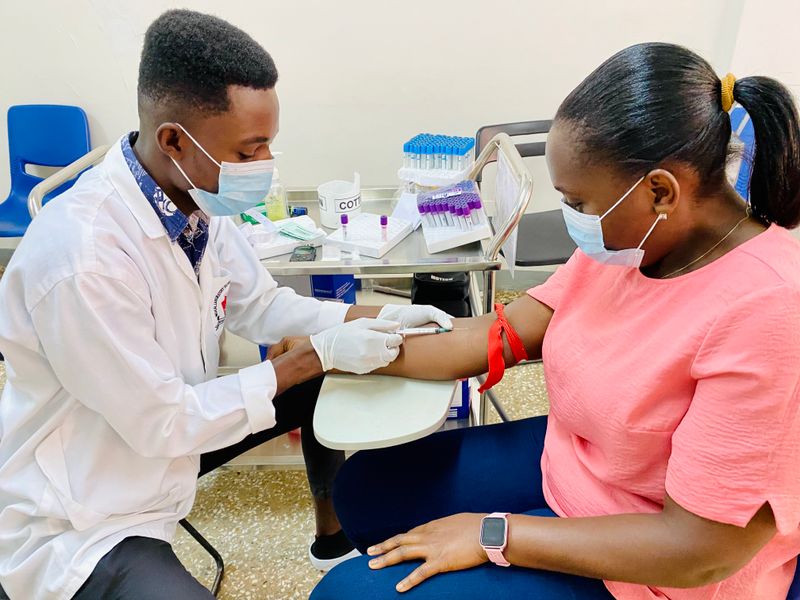
Gonorrhea is still curable, and the cure is one shot. Since December 2020 the CDC has recommended a single 500 mg intramuscular dose of ceftriaxone for uncomplicated gonorrhea of the urethra, cervix, rectum, or throat, given alone with no second antibiotic. Neisseria gonorrhoeae has developed resistance to every antibiotic class ever aimed at it, which is why the guidance keeps narrowing. Two things on your side of that fight matter: getting tested at every site you have sex, and making sure your partner gets treated.
One injection, and why the second drug was removed
Before 2020, standard treatment was two drugs: a ceftriaxone shot plus a gram of azithromycin by mouth. The CDC dropped the azithromycin. Treatment is now ceftriaxone 500 mg intramuscular, single dose, as monotherapy. For people weighing 150 kg (300 lbs) or more, the dose is a single 1 g injection. If chlamydia has not been ruled out at the same visit, doxycycline 100 mg twice a day for 7 days is added, since ceftriaxone does not treat chlamydia.
Azithromycin came out for a reason. Resistance to it in gonococcal isolates rose from 0.6% to 4.6% between 2013 and 2018, and dosing everyone with a gram of a macrolide also drives resistance in unrelated bacteria the drug hits along the way.
The drug list has been shrinking for 80 years
N. gonorrhoeae has outlasted sulfonamides, penicillin, and tetracyclines. Fluoroquinolones were the go-to until 2007, when CDC surveillance found quinolone-resistant strains circulating widely and stopped recommending them, leaving cephalosporins as the only class left. A 2025 study in the American Journal of Epidemiology opens by stating that the organism has developed resistance to all antibiotics recommended for treatment, and that reports of reduced susceptibility to ceftriaxone, the last-line drug, are increasing.
Those strains have reached the United States. In 2022, Massachusetts identified two cases of a strain with reduced susceptibility to ceftriaxone, cefixime, and azithromycin, plus resistance to ciprofloxacin, penicillin, and tetracycline, the first such detection in the country. Here is the part that got lost in the headlines: both patients were cured by the standard 500 mg ceftriaxone injection. Reduced susceptibility signals where this is heading, not that treatment has failed. What keeps the shot working is ordinary: take the full treatment, get partners treated, and return for a repeat test when asked.
What the case numbers measure, and what they do not
The CDC counted 601,319 reported gonorrhea cases nationally in 2023. The reported case rate among Black Americans that year was 557.8 per 100,000, peaking in young adulthood at 2,151.7 per 100,000 among those aged 20 to 24 and 1,590.8 among 15 to 19 year olds. If you are Black and in your late teens or twenties, gonorrhea is common in the population you date in.
Community health centers test on a sliding scale and many charge nothing; our directory of free and charitable clinics lists centers by state. At-home kits are self-pay and are not billed to Medicaid, so if you have Medicaid the clinic route will almost always cost less. If you would rather test at home:

Everlywell
At-home STI test panels covering chlamydia, gonorrhea, HIV, herpes, and syphilis, with a mail-in sample and physician-reviewed results online.
Browse at-home STI testsAffiliate link, we may earn a commission at no extra cost to you.
The limitation belongs in the same breath as the number. Those are diagnosed and reported cases, not measured infections. The CDC states that because gonococcal infections can be asymptomatic, trends in case reports are influenced by both changes in incidence and screening coverage. Screen a population harder and you find more of it, whether or not more is there. NHANES stopped testing for gonorrhea in 2008 after finding prevalence too low and too clustered to estimate reliably, so there is no national survey to check the counts against.
The explanation is not behavioral, and the CDC says so in its own surveillance report: these disparities are unlikely to be fully explained by differences in sexual behavior and may reflect differential access to quality sexual health care as well as differences in sexual network characteristics. Where background prevalence is higher, the same encounter carries a greater chance of meeting an infected partner. A 1999 network analysis mapped the mechanism, finding partner choice in the Black population both more dissortative and more segregated, so an infection circulates inside that network rather than dispersing.
A urine test is not a full test
Gonorrhea in the throat and rectum is usually silent, and a urine test cannot detect it. Those sites need their own swabs. Our guide to what a standard STI panel covers and skips explains how to ask for them. In a San Francisco study of men who have sex with men, 64% of gonococcal infections were at non-urethral sites and would have gone untreated on urethral testing alone, and about 85% of rectal infections caused no symptoms. A 2022 Los Angeles clinic study found more than 65% of rectal and throat cases would be missed on urogenital testing alone, and backed three-site testing regardless of orientation or reported behavior.
This is not a men's issue. At a college health center, adding risk-based throat and rectal screening for women caught infections urogenital screening alone would have lost: 28.57% of the gonorrhea cases found there came from extragenital sites. The swab happens only if the clinician orders it, and they order it based on what you tell them. Say which kinds of sex you have, oral, anal, vaginal, and ask for testing at each site.
Throat infection is the hardest site to cure, which is why the CDC recommends a test-of-cure 7 to 14 days after treating pharyngeal gonorrhea, by culture or nucleic acid amplification test, while none is needed after urogenital or rectal treatment. The throat is also where researchers suspect much of the resistance is bred, because gonococci there sit alongside harmless Neisseria species carrying resistance genes they can swap.
What untreated gonorrhea does
In women, untreated gonorrhea can ascend into the uterus and fallopian tubes and cause pelvic inflammatory disease, which scars tubes and raises the risk of infertility and ectopic pregnancy. In men, it can spread to the epididymis and cause a painful, swollen testicle. Treating the original infection prevents both.
The complication clinicians miss most is disseminated gonococcal infection (DGI), when the bacteria enter the bloodstream. It occurs in roughly 0.5% to 3% of gonorrhea infections. The classic form is migratory joint pain, inflamed tendon sheaths, and a scattered rash, usually with fever. A ten-year review of DGI cases at a North Carolina hospital found arthritis or tenosynovitis in 11 of 12 patients, 11 of 12 hospitalized, and 4 needing surgery.
The rash is where it gets missed on us. DGI makes a small number of scattered lesions rather than a sheet of rash, usually on the arms, legs, hands, and feet and often near the sore joints. Reported forms include hemorrhagic pustules, petechiae, and purpuric macules. In one 2025 case report the only finding was a non-itchy, non-blanching petechial rash on the tops of the feet, sparing the soles. On brown and black skin the usual cue fails: a 2025 dermatology review documents that on deeper skin tones the redness of inflammation is often subtle or masked by pigmentation and reads as violaceous, gray, or brown instead, producing missed and delayed diagnoses. The signs that hold on any skin tone are that the spots do not blanch when pressed and that you can feel them raised under a fingertip.
Where to get tested and treated without a regular doctor
You need neither a primary-care relationship nor insurance. Local health department STD clinics test and treat gonorrhea directly, often the same day and often free. Title X family planning clinics test on a sliding scale based on income, and federally qualified health centers cannot turn you away for inability to pay. All three give the injection on site, which matters, because a prescription you have to fill elsewhere is a treatment plenty of people never complete.
Ask about expedited partner therapy at the same visit. It lets your clinician send treatment home for your partner without examining them first, closing the loop reinfection depends on. Legal status varies by state, permissible in most and only conditionally allowable in a few, so ask what yours permits. To find a clinician who treats sexual health as ordinary medicine, find a Black primary care doctor or OB-GYN in our directory. If you are also weighing HIV prevention, our guide to PrEP for Black Americans covers how to start.
Frequently asked questions
Can gonorrhea be cured with pills instead of a shot? ▼
No. The recommended treatment is a single 500 mg intramuscular ceftriaxone injection, which has no equally reliable oral equivalent. Alternative regimens exist for cephalosporin allergy, but they are second choices. Doxycycline pills may be added for 7 days if chlamydia has not been ruled out.
Does a urine test check for gonorrhea in my throat? ▼
No. Urine and genital tests only detect infection at that site. Throat and rectal gonorrhea need their own swabs, and both are usually symptom-free. More than 65% of throat and rectal cases are missed on urogenital testing alone, so tell your clinician which kinds of sex you have and ask for a swab at each site.
Is gonorrhea becoming untreatable? ▼
Not yet. Ceftriaxone still works, and the two US cases with reduced ceftriaxone susceptibility found in Massachusetts in 2022 were both cured by the standard injection. The concern is real because this bacterium has already defeated sulfonamides, penicillin, tetracyclines, and fluoroquinolones, which is why finishing treatment and treating partners matters.
Why are reported gonorrhea rates higher in Black communities? ▼
Reported rates count diagnoses, and screening intensity shapes them. Beyond that, the CDC attributes the difference to access to quality sexual health care and to sexual network structure rather than behavior: where background prevalence is higher, the same encounter carries a higher chance of meeting an infected partner.
What does gonorrhea look like when it spreads to the skin? ▼
Disseminated gonococcal infection causes a few scattered spots, usually on the arms, legs, hands, and feet, often near painful joints and with fever. They can be hemorrhagic pustules, petechiae, or purpuric macules. On brown and black skin the inflammation reads violaceous, gray, or brown rather than red, so judge by whether the spots fail to blanch under pressure, and get evaluated the same day.