Pityriasis alba is a common, harmless skin condition that leaves pale, slightly scaly patches, most often on a child's cheeks, chin or upper arms. It shows up on every skin tone, but on brown and Black skin the contrast is sharp, so it gets noticed, worried over and sometimes mistaken for vitiligo or a fungal infection. In most children the color comes back on its own within months, and gentle moisturizing plus daily sun protection is usually all it needs.
What pityriasis alba looks like on brown and Black skin
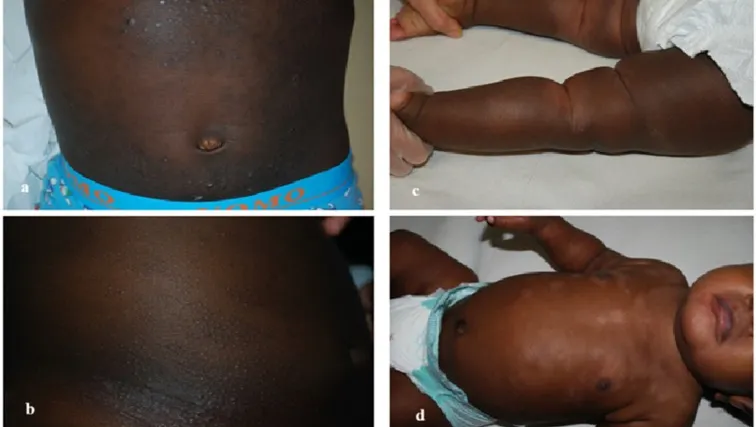
The patches are round or oval, usually a few centimeters across, with soft edges that blend into the surrounding skin. A 2015 review in Pediatric Dermatology describes a multistage course: a patch can start faintly inflamed, then settle into a lighter, dry area that may itch a little or not at all, and then slowly fill back in (Miazek et al., 2015). The face is the classic spot, especially the cheeks, but the neck, shoulders and upper arms are common too.
On darker skin, the early inflamed stage rarely looks red. It is more likely to read as a slightly rough, ashy patch. The stage people notice is the pale one, and the reason is simple: the skin around the patch keeps its usual color or tans, and the patch stays lighter. The result can look like a light coin on the cheek.
A 2023 review of post-inflammatory hypopigmentation in the Journal of Clinical Medicine explains why the contrast is so strong on brown skin. Pityriasis alba is more noticeable in darker skin types, sun exposure makes the surrounding skin tan more easily, and the thickened, flaky surface of the patch itself may block some of the ultraviolet light that would otherwise darken it (Rao et al., 2023). That is why parents often see it most at the end of summer.
Things that point toward pityriasis alba: the patches are lighter rather than truly white, the edges are fuzzy, the surface feels a little dry or fine-scaled, and the child has dry skin or eczema elsewhere.
Who gets it, and why
Pityriasis alba is a condition of childhood and adolescence. In a study of 122 patients in India, 92% were younger than 15, and boys and girls were affected about equally (Gawai et al., 2021). The 2015 review notes that although it occurs worldwide, its incidence is markedly higher in darker skin phototypes (Miazek et al.).
Nobody has pinned down a single cause, but the strongest link is to atopy, the family of conditions that includes eczema, hay fever and asthma. In that same study, a personal history of atopy roughly tripled the odds and a family history multiplied them by about five, while washing the face often, with or without soap, showed no clear link (Gawai et al.). An earlier review in Cutis also connected it with more sun exposure and less sunscreen use (Lin and Janniger, 2005). Many dermatologists treat it as a mild cousin of eczema, and the Pediatric Dermatology review says exactly that.
One honest limitation: there is very little research on pityriasis alba specifically in children with skin of color, a gap a 2023 commentary in the Journal of Drugs in Dermatology calls out directly (Choi et al., 2023). Most of the numbers above come from studies of mixed or non-US populations.
What it gets mistaken for
Three look-alikes matter, because each is treated differently.
Common skin conditions are treated in primary care, and community health centers charge on a sliding scale that is often $0. Our directory of free and charitable clinics lists centers by state. A same-day telehealth visit is self-pay and cannot be billed to Medicaid or commercial insurance, so the clinic route usually costs less. If you need a prescription sooner than the next appointment:
 Sesame Care
Prescription skincare from a licensed clinician.
From $59 a month, priced up front
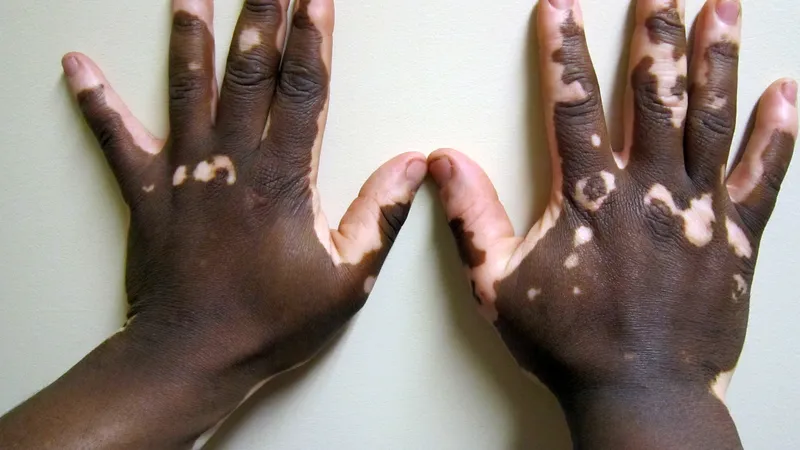
Start a skincare consultVitiligo. Vitiligo removes pigment completely, so its patches are chalk or milk white with sharp borders, and they often sit around the eyes, mouth, hands or joints. Pityriasis alba patches are lighter, not white, with soft edges and a little scale. Under a Wood's lamp in a dermatology office the difference is usually obvious. Our guide to vitiligo on Black skin covers that condition.
Tinea versicolor. This yeast overgrowth also causes light patches on brown skin, but it favors the chest, back and shoulders of teens and adults, and the spots often have a fine, powdery scale that shows when the skin is stretched. A quick skin scraping confirms it. See tinea versicolor on Black skin.
Light marks left after eczema or another rash. Any inflammation can leave a temporary light spot on dark skin. Pityriasis alba is really a version of this, and the treatment overlaps. Our hub on white spots on Black skin walks through the full list of causes.
Rarely, a light patch that will not go away in a child or young adult of color is something more serious. Hypopigmented mycosis fungoides, an uncommon slow-growing skin lymphoma, has been described almost exclusively in skin of color and more often in younger people (Rao et al.). It is not something to fear in a typical case, but it is the reason a patch that keeps spreading, stays put for more than a year, or sits on the trunk, hips or buttocks rather than the face deserves a dermatologist and sometimes a small biopsy.
How to treat it
Treatment aims at two things: calming the dry, mildly inflamed skin, and keeping the surrounding skin from tanning so far ahead of the patch. The Cutis review is candid that emollients and mild steroid creams may speed repigmentation but have limited efficacy, and that without treatment the patches normally resolve within months to years (Lin and Janniger). The 2023 review reassures that most cases resolve within one year (Rao et al.).
Moisturize twice a day. A plain, fragrance-free cream or ointment on the face and any dry areas, including right after bathing, treats the dryness that seems to drive the condition. Choose thick creams over thin lotions.
Use sunscreen on the face every morning. Sunscreen will not erase the patches, but it narrows the color gap by keeping the skin around them from darkening. A tinted mineral sunscreen avoids the white cast that can make a light patch look worse. Our guide to sunscreen for Black skin covers picks that work on darker tones.
Ask about a prescription cream if it itches or lingers. A short course of a low-strength steroid cream can settle the inflammation. For the face, many dermatologists prefer a calcineurin inhibitor such as tacrolimus ointment or pimecrolimus cream, which does not thin the skin, and the 2015 review calls these the most important medicines for the condition (Miazek et al.). In one prospective study summarized in the 2023 review, tacrolimus, calcipotriol or a steroid applied twice daily each reduced the light patches by eight weeks (Rao et al.).
What to skip: bleaching or lightening creams on the surrounding skin, harsh scrubs, and home remedies that sting. Irritation is the thing you are trying to calm, and on darker skin it can leave new dark marks around the light ones.
When to see a doctor
Pityriasis alba does not need an urgent visit. Book a regular appointment with your child's pediatrician or a dermatologist if:
- The patches are bright white rather than lighter, or have sharp borders.
- They are spreading quickly, or new ones keep appearing on the trunk, hips or buttocks.
- A patch has not improved after about a year of moisturizer and sunscreen.
- The skin is very itchy, cracked or weeping, which suggests eczema that needs its own treatment.
- The patch is on an adult, or appeared after starting a new medicine or skin product.
Bring photos taken in daylight a few weeks apart. On dark skin, a change in contrast is easier to judge in pictures than from memory. If you want a dermatologist who sees skin of color every day, search our provider directory.
Frequently asked questions
Is pityriasis alba contagious? ▼
No. It is not an infection and cannot spread to siblings or classmates. Tinea versicolor, a look-alike, is caused by a yeast that lives on everyone's skin, and it is not considered contagious either.
Does pityriasis alba go away on its own? ▼
Usually, yes. Most cases fade within about a year, and some take longer or come back in later summers. Moisturizer and daily sunscreen help the color even out sooner.
Is pityriasis alba the same as vitiligo? ▼
No. Vitiligo removes pigment completely and leaves milk-white patches with sharp edges. Pityriasis alba leaves lighter, slightly scaly patches with soft edges, and the color returns. A dermatologist can usually tell them apart at a glance or with a Wood's lamp.
Can adults get pityriasis alba? ▼
It is mainly a condition of children and teenagers. A new light patch in an adult is more often something else, such as tinea versicolor, post-inflammatory hypopigmentation or vitiligo, so it is worth having it checked.
Is it caused by not washing enough or by soap? ▼
There is no good evidence for either. In a study of 122 patients, how often the face was washed, with or without soap, was not linked to the condition. Dry skin and a personal or family history of eczema or allergies were.