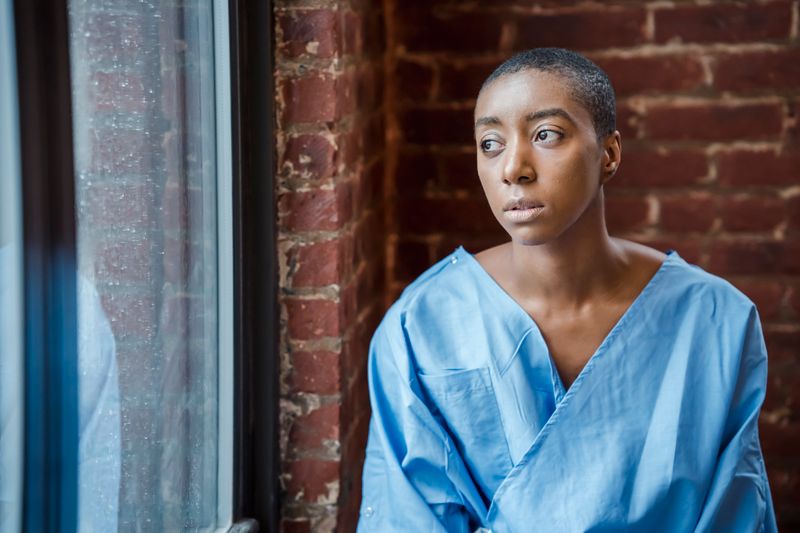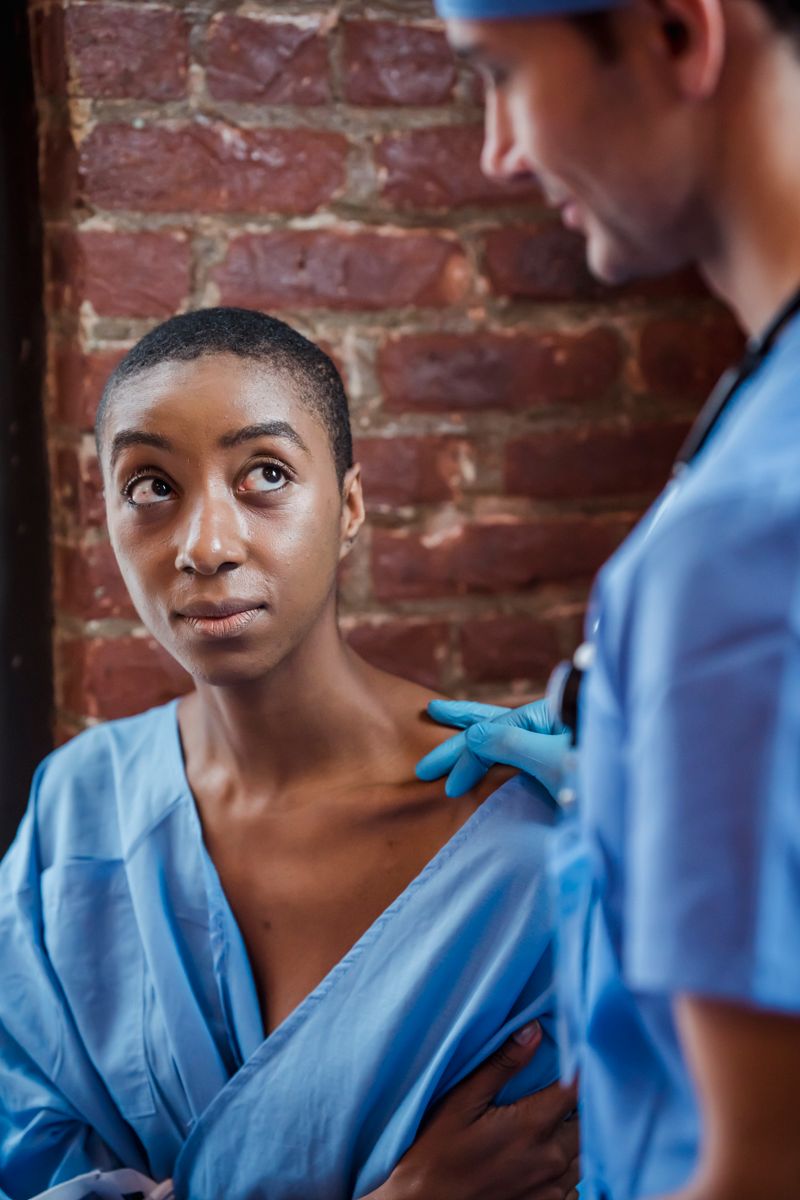
The thyroid is a small gland at the front of your neck that sets the speed of your body. When it makes too little hormone, everything slows down: that is hypothyroidism. When it makes too much, everything races: that is hyperthyroidism. Both are common in women, both are easy to confirm with a blood test, and both get missed when the symptoms are written off as stress, aging, depression, or weight gain. For Black women the stakes are sharper. Research shows Black patients are referred for thyroid care at an older age, with larger glands and more severe symptoms, and that Graves disease, the most common cause of an overactive thyroid, is roughly twice as common in Black women as in white women.
What the thyroid does, and the two ways it goes wrong
Thyroid hormone controls how fast your cells use energy. It touches your heart rate, body temperature, weight, mood, digestion, and your menstrual cycle. There are two main problems, and they pull in opposite directions.
Hypothyroidism means the gland is underactive and the body slows down. The most common cause is Hashimoto's disease, an autoimmune condition where the immune system attacks the thyroid. According to the National Institute of Diabetes and Digestive and Kidney Diseases (NIDDK), Hashimoto's affects about 5 in 100 Americans and is 4 to 10 times more common in women than men.
Hyperthyroidism means the gland is overactive and the body speeds up. The most common cause is Graves disease, also autoimmune, in which the immune system drives the thyroid to make too much hormone. Graves can also inflame the tissue behind the eyes, a condition called Graves eye disease (Graves ophthalmopathy).
Symptoms that get blamed on something else
Thyroid symptoms overlap with everyday life, which is exactly why they get dismissed. The HHS Office on Women's Health notes that thyroid symptoms are sometimes mistaken for menopause, and that postpartum thyroid problems get written off as the baby blues. The pattern matters more than any single symptom.
An underactive (slow) thyroid commonly causes:
- Fatigue and feeling drained no matter how much you sleep
- Unexplained weight gain
- Feeling cold when others are comfortable
- Constipation
- Dry skin and thinning or shedding hair
- Heavy or irregular menstrual periods, or trouble getting pregnant
- Brain fog, poor memory, and low mood or depression
An overactive (fast) thyroid commonly causes:
- Weight loss even with a normal or bigger appetite
- A racing or irregular heartbeat
- Anxiety, irritability, and trouble sleeping
- Sweating and trouble tolerating heat
- Shaky hands (tremor) and muscle weakness
- Frequent bowel movements
- Bulging, dry, or irritated eyes, the hallmark of Graves eye disease
If you have been told your fatigue is just stress, your weight is just willpower, or your low mood is just depression, and the usual fixes are not working, that is the moment to ask for a thyroid test. Some of these signs, including skin and hair changes, show up differently on Black skin and Black hair textures. We cover those specific clues in thyroid skin and hair signs in Black women. Persistent unexplained tiredness has several common causes worth ruling out together, which we break down in why Black women feel exhausted.
Why the Black-patient angle matters
The disease patterns differ by race, and so does the care. A 2014 JAMA study of more than 20 million person-years in US military personnel found Graves disease was almost twice as common in non-Hispanic Black women as in non-Hispanic white women, and over two and a half times as common in Black men. Hashimoto's, by contrast, was more common in white personnel. So the overactive thyroid is the bigger story for many Black patients, while the underactive one is less likely but still real.
The care gap is the harder part. A 2023 review in the Journal of Clinical Endocrinology and Metabolism documented that Black patients with thyroid disease are referred to specialists at an older age and later in the disease, often after the gland has grown large enough to cause pressure or trouble swallowing. In that review, 45% of Black patients had compressive symptoms at referral versus 21% of white patients. Black patients also faced worse thyroid cancer outcomes, more aggressive tumor types, and higher rates of inferior surgery. The lesson is not that the disease is untreatable. It is that being diagnosed early changes the outcome, and early diagnosis starts with a test you may have to ask for.
Thyroid disease also rarely travels alone. Autoimmune thyroid disease clusters with other autoimmune conditions. NIDDK notes that Hashimoto's is more likely if you already have type 1 diabetes, celiac disease, lupus, rheumatoid arthritis, or Sjogren's syndrome. If you carry one autoimmune diagnosis, thyroid trouble is worth checking for.
How thyroid disease is diagnosed
The diagnosis is built on blood tests, because symptoms alone cannot confirm it.
- TSH first. Thyroid stimulating hormone is the screening test. A high TSH points to an underactive thyroid; a low TSH points to an overactive one. The American Thyroid Association puts the general reference range around 0.4 to 4.0 milli-units per liter.
- Free T4 and T3 next. If TSH is abnormal, your clinician checks the actual thyroid hormones (free T4, sometimes T3) to confirm and measure how far off you are.
- Antibodies for the cause. Thyroid peroxidase (TPO) antibodies confirm Hashimoto's. Other antibodies and a radioactive iodine uptake scan help confirm Graves disease.
One nuance worth knowing: the TSH reference range is not one fixed number for everyone. The American Thyroid Association notes the target shifts with age and during pregnancy, with tighter trimester-specific ranges in pregnancy and a higher acceptable TSH in adults in their seventies and eighties. If your TSH is borderline and your symptoms are real, ask whether antibodies or a repeat test in a few weeks make sense rather than being told you are simply normal.
How thyroid disease is treated
For an underactive thyroid, the treatment is levothyroxine, a daily pill that replaces the hormone your thyroid can no longer make. NIDDK advises taking it in the morning on an empty stomach, then rechecking TSH about 6 to 8 weeks later so the dose can be adjusted. Once your dose is stable, monitoring is usually once or twice a year. Levothyroxine is not a crash treatment; it is a steady replacement you take for life in most cases.
For an overactive thyroid, there are three main paths, per NIDDK. Antithyroid medicine (methimazole most often, or propylthiouracil in the first trimester of pregnancy) lowers hormone production. Radioactive iodine, taken by mouth, shrinks the gland over weeks to months. Surgery removes part or most of the thyroid. The right choice depends on your age, the severity, pregnancy plans, and whether you have Graves eye disease, which is managed alongside by an eye specialist. Black patients face higher rates of inferior surgery and worse surgical outcomes in the literature, which is one more reason to seek a high-volume surgeon and a clinician who takes your case seriously.
Thyroid nodules and when cancer is a concern
A thyroid nodule is a lump in the gland. Most nodules are benign. A clinician evaluates a nodule with an ultrasound and, if it looks suspicious or is large enough, a fine-needle biopsy. The reason to take a new neck lump seriously is the disparity in outcomes: the 2023 JCEM review found Black patients tend to present with larger tumors and more aggressive cancer types and have worse survival, which traces back to later diagnosis rather than to anything inevitable about the disease. A lump that is growing, hard, or paired with trouble swallowing or a hoarse voice gets evaluated, not watched from a distance.
Pregnancy considerations
Thyroid function matters before and during pregnancy. NIDDK notes that many women already on levothyroxine need a higher dose during pregnancy, so tell your clinician as soon as you know you are pregnant. The Office on Women's Health warns that untreated hypothyroidism in pregnancy raises the risk of preeclampsia, miscarriage, stillbirth, and problems with the baby's growth and brain development, and untreated hyperthyroidism raises the risk of premature birth and low birth weight. If you are planning a pregnancy and have thyroid symptoms, ask for a TSH check first.
How to get care
Start with a primary care clinician and ask directly: "Can we check my thyroid with a TSH test?" It is one blood draw. If the result is abnormal or borderline with real symptoms, ask for free T4 and antibody testing, and for a referral to an endocrinologist. Given that Black patients are diagnosed later and treated less well in the data, a clinician who listens the first time is worth finding. You can find a Black endocrinologist or primary care clinician in our directory who will take your symptoms seriously and run the test.
Frequently asked questions
What is the first test for a thyroid problem? ▼
A TSH (thyroid stimulating hormone) blood test. A high TSH suggests an underactive thyroid and a low TSH suggests an overactive one. If it is abnormal, your clinician adds free T4, sometimes T3, and antibody tests to find the cause. It is one blood draw and you can ask for it directly.
Is thyroid disease more common in Black women? ▼
Graves disease, the main cause of an overactive thyroid, is about twice as common in Black women as in white women, per a 2014 JAMA study. Hashimoto's, the main cause of an underactive thyroid, is more common in white women. Black patients are also more likely to be diagnosed later and with more advanced disease, which is why asking for the test early matters.
Can thyroid problems be mistaken for depression or stress? ▼
Yes. An underactive thyroid causes fatigue, low mood, brain fog, and weight gain, which overlap with depression and stress. An overactive thyroid causes anxiety, a racing heart, and trouble sleeping. The Office on Women's Health notes thyroid symptoms are also mistaken for menopause. If the usual explanations are not adding up, ask for a TSH test.
How is an underactive thyroid treated? ▼
With levothyroxine, a daily pill that replaces the missing hormone. NIDDK advises taking it in the morning on an empty stomach and rechecking TSH about 6 to 8 weeks later to adjust the dose. Most people take it long term, with monitoring once or twice a year once the dose is stable.
Are thyroid nodules cancer? ▼
Most thyroid nodules are benign. A clinician evaluates a lump with ultrasound and, if needed, a fine-needle biopsy. Take a new, growing, or hard neck lump seriously, especially with trouble swallowing or a hoarse voice, because Black patients tend to be diagnosed later with more aggressive thyroid cancers, which worsens outcomes.
If you are waiting on an appointment. A thyroid panel you collect at home can give you a TSH number to bring to a clinician, which is useful when the next available appointment is months out. It is not a diagnosis: thyroid disease is confirmed by a clinician reading your labs alongside your symptoms, and treatment always requires a prescriber. If you do not have a clinician yet, our directory is the better first stop.