Biotin is a B vitamin your body needs in microgram amounts
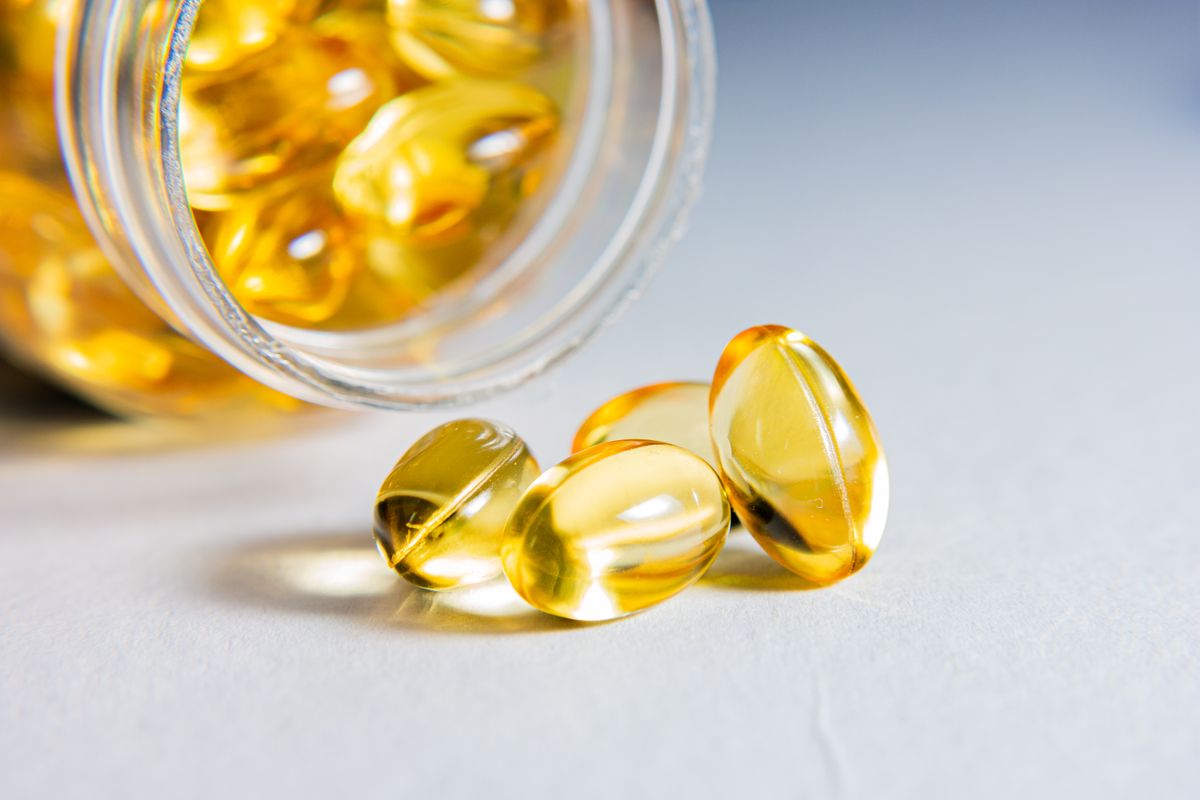
Biotin, or vitamin B7, is a cofactor for enzymes that metabolize fats, amino acids and glucose. The amount the body needs is tiny. The NIH Office of Dietary Supplements sets the Adequate Intake for adults 19 and older at 30 micrograms a day, which is 0.03 mg, and states that severe biotin deficiency in healthy individuals eating a normal mixed diet has never been reported. It is in meat, fish, eggs, organ meats, seeds, nuts, sweet potatoes, spinach and broccoli.
Deficiency does happen in specific situations. ODS names three groups: people with biotinidase deficiency, a genetic disorder; people with chronic alcohol exposure, which inhibits absorption; and pregnant and breastfeeding women, at least a third of whom develop marginal deficiency. Outside those situations the follicle is not short of biotin, and adding more does not hand it something it was missing.
No randomized trial of biotin for hair loss has been published
A 2017 systematic review in Skin Appendage Disorders searched for case reports and randomized trials of biotin for hair and nail growth. It found 18 reported cases. In every one, the patient had an underlying condition causing poor hair or nail growth, and every case improved on biotin. The authors concluded that biotin may help in biotin deficiency and in specific conditions such as brittle nail syndrome or uncombable hair, that those cases are uncommon, and that there is a lack of sufficient evidence for supplementation in healthy individuals.
A review published the same year in the Journal of Drugs in Dermatology was blunter. At that point there had been no clinical trials of biotin for alopecia of any kind, and no randomized controlled trial of its effect on hair quality or quantity in humans. Its authors compared clinical evidence against market analytics and called the popularity vastly disproportionate to the evidence supporting it.
Absence of trials is not proof that something does nothing. The claim the record supports is narrower: nobody has demonstrated a hair benefit in people whose biotin levels are normal, and the reviews that went looking kept reporting the same gap. A 2019 review of vitamins and minerals in hair loss said micronutrients play an important but not entirely clear role, that deficiency may be a modifiable risk factor, and that large double-blind placebo-controlled trials are still required to establish any association.
High-dose biotin can make a heart attack look like a normal blood test
Many laboratory immunoassays are built around the bond between biotin and a protein called streptavidin. When extra biotin is circulating, it competes with the biotin the test itself is using. Depending on the assay design the result comes back falsely high or falsely low, and nothing about the number looks wrong on the page.
The FDA issued a safety communication on this in November 2017 and updated it on November 5, 2019, under the title "UPDATE: The FDA Warns that Biotin May Interfere with Lab Tests". The agency singled out one test. Troponin is the biomarker used to diagnose a heart attack, and biotin interference pushes some troponin assays falsely low, turning a heart attack into a reassuring result. Before the 2017 communication the FDA received a report that one patient taking high levels of biotin died following low troponin results, on a troponin test subject to biotin interference. In 2019 it wrote that it was still receiving adverse event reports of falsely low troponin, and it now publishes a list of cleared troponin assays where the risk has not been addressed. That safety communication has since been retired from fda.gov, so the version linked below is an archived capture; the FDA page listing the affected troponin assays is still live and repeats the same warning.
The doses are not exotic. The FDA notes that the recommended daily allowance is 0.03 mg, that it is aware of many supplements containing 20 mg of biotin and some containing up to 100 mg per pill with directions to take several a day, and that products promoted for hair, skin and nail benefits can carry up to 650 times the recommended daily intake.
A 2017 study in JAMA gave six healthy adults 10 mg of biotin daily for a week, a dose its authors called common in over-the-counter supplements. Interference appeared in 9 of the 23 assays that used biotin and streptavidin, and in none of the 14 that did not. The direction split by design: five of eight competitive immunoassays read falsely high, and four of fifteen sandwich immunoassays read falsely low. Six people is a very small study and the authors called it preliminary. It is still a clean demonstration that an ordinary supplement dose moves real results.
A 2018 Mayo Clinic study measured how often this comes up. Of 1,944 outpatients surveyed, 7.7% reported taking biotin. Of 1,442 plasma samples from emergency department patients, 7.4% held biotin at or above 10 ng/mL, the lowest known interference threshold for one manufacturer's immunoassays. That is close to one in thirteen samples drawn in that emergency department.
An over-the-counter minoxidil from any pharmacy is the same active ingredient a paid prescription service sells at a markup, and a community health center can check for an underlying cause on a sliding scale. Our directory of free and charitable clinics lists verified centers by state. A same-day telehealth visit is self-pay and is not billed to Medicaid, so try the pharmacy shelf and a clinic workup first. If you want a telehealth visit instead:
Affiliate
It also distorts thyroid tests, where a hair loss workup often starts
Thyroid disease causes hair shedding, so a thyroid panel is a routine part of evaluating hair loss. Those assays use the same chemistry.
A 2016 case report in the journal Thyroid describes a patient taking megadoses of biotin for progressive multiple sclerosis whose labs showed extremely elevated free thyroxine and triiodothyronine, suppressed TSH, and an elevated TSH receptor antibody. On paper, that is severe Graves' disease. He had no symptoms of an overactive thyroid. Every abnormal assay used biotin-streptavidin affinity. Temporarily stopping the biotin resolved all of it. One patient is one patient, and what it demonstrates is that the pattern is possible, not how often it happens.
So the supplement someone takes for hair loss can distort the test used to find out why their hair is falling out. Our guide to thyroid hair loss and skin signs in Black women covers what those tests look for.
How long to stop beforehand is unsettled. The FDA says sufficient information is not available to know whether stopping for any number of hours prevents incorrect results. The author of the Thyroid case report suggested at least two days is enough to avoid major misdiagnoses. Because the guidance does not agree with itself, tell the lab and your clinician what you take and let them decide rather than guessing at a washout. If biotin was prescribed for a medical condition, do not stop it without asking the prescriber.
Collagen has real trials, and they measured skin, not hair
Collagen is the other supplement sold hard for hair, and its evidence base is better than biotin's. It is also about a different body part. A 2021 systematic review and meta-analysis in the International Journal of Dermatology, written by academic authors with no industry affiliation on record, pooled 19 randomized, double-blind, controlled trials of hydrolyzed collagen covering 1,125 participants aged 20 to 70, 95% of them women. The outcomes were skin wrinkles, hydration, elasticity and firmness, and pooled results favored collagen over placebo on hydration, elasticity and wrinkles.
The single trials underneath a pooled result are worth reading with the affiliations attached. A 2019 randomized, placebo-controlled study in Nutrients reported gains in skin hydration, elasticity, roughness and density in 72 women aged 35 and over. Three of its four authors work for Dermatest GmbH, a commercial dermatology testing laboratory, and the product tested is a branded drink, ELASTEN by QUIRIS Healthcare. The paper's conflict statement declares none while noting that the sponsor had no influence on the analysis, which tells you there was a sponsor. The product is also a blend: 2.5 g of collagen peptides plus acerola extract, vitamin C, zinc, vitamin E and biotin. No result from it belongs to collagen by itself, and the collagen drink in question contains the ingredient this page is about.
Read the endpoints. Every one is a skin measurement. Neither paper measured hair, and there is no comparable body of hair trials behind the marketing. If you are taking collagen for your skin, the evidence is on your side, and the strongest version of it is the pooled independent trials rather than a single sponsor-linked study of a blend. If you are taking it for your hair, you are extrapolating, and it is fair to know that is what you are doing.
More is not better: one common ingredient causes hair loss
Selenium turns up in hair, skin and nail formulas and in multivitamins, so check your labels for it. The NIH fact sheet on selenium says chronically high intakes cause selenosis, most commonly characterized by hair loss and nail brittleness or loss, along with a garlic odor in the breath, a metallic taste, skin rash, nausea and fatigue. The upper intake level for adults is 400 micrograms a day.
Stacking is how people cross those lines without noticing. A multivitamin, a hair gummy and a separate mineral supplement each look sensible alone and add up past the limit together. Add the labels up, not one at a time.
The FDA does not approve supplements before they are sold
Under the Dietary Supplement Health and Education Act, the FDA does not have the authority to approve dietary supplements before they are marketed. The agency's own question-and-answer page says there are no laws or regulations limiting the serving size of a supplement or the amount of a dietary ingredient in a serving; the manufacturer decides, and that decision does not require FDA approval. FDA does not test dietary supplements before they are sold, and in general it is limited to enforcement after a product is already on the market.
That is how a single pill can legally hold 20 mg of biotin, hundreds of times the adequate intake, and tell you nothing about troponin. It is also why "FDA approved" on a supplement page is a reason to trust the page less.
What to do about shedding, and what to say before a blood test
Find the cause before buying a supplement for it. Shedding has a short list of common, checkable causes, and several have blood tests behind them: iron stores, thyroid function and vitamin D. Our guides on iron deficiency anemia in Black women and vitamin D in Black adults explain what those tests show.
Pattern matters as much as bloodwork. Two worth ruling out are traction alopecia, from sustained tension at the hairline, and central centrifugal cicatricial alopecia, which scars the follicle. Neither has been shown in a trial to respond to a supplement, and with scarring hair loss how early it is caught changes the outcome more than anything on a supplement shelf. Our guide to hair loss in Black women walks through both.
Before any blood test:
- Bring the bottle or a photo of the label. Many hair, skin and nail products do not put biotin in the product name.
- Tell the phlebotomist and the clinician who ordered the test what you take, including gummies, prenatal vitamins and multivitamins.
- In an emergency room with chest pain, say it before the draw.
- If a result does not match how you feel, ask whether the assay uses biotin-streptavidin technology. The FDA advises clinicians to consider biotin interference in exactly that situation.
None of this makes biotin dangerous to swallow. NIH says plainly that biotin has not been shown to cause harm. The risk sits in the test rather than the body, right up until a test result is the thing your care depends on.
Frequently asked questions
Does biotin make hair grow if my levels are normal? ▼
There is no trial showing that it does. The documented benefit comes from case reports in people who already had an underlying cause of poor hair or nail growth. A 2017 review found no clinical trial of biotin for alopecia of any kind and no randomized controlled trial of its effect on hair quality or quantity in humans.
How much biotin is in a typical hair supplement? ▼
Far more than the body uses. The Adequate Intake for adults is 0.03 mg, or 30 micrograms, a day. The FDA reports it is aware of many supplements containing 20 mg and some up to 100 mg per pill, and that hair, skin and nail products can carry up to 650 times the recommended daily intake. Labels often print the dose in micrograms, so 10,000 mcg and 10 mg are the same amount.
Should I stop taking biotin before a blood test? ▼
Tell your clinician and the lab first and let them advise. The FDA says sufficient information is not available to know whether stopping for any number of hours prevents incorrect results. A published case report suggested at least two days is usually enough for biotin-sensitive assays. If biotin was prescribed for a medical condition, do not stop without asking the prescriber.
Is biotin itself dangerous? ▼
Not in the usual sense. NIH states that biotin has not been shown to cause harm, and it is water soluble. The documented harm runs through laboratory tests: a falsely low troponin can hide a heart attack, and distorted thyroid results can produce a diagnosis you do not have.
Does collagen help hair? ▼
The trials measured skin. A 2021 meta-analysis of 19 randomized trials, by authors with no industry affiliation on record, found benefits for skin hydration, elasticity and wrinkles across 1,125 participants. Hair was not an outcome in that work, so a hair benefit is an extrapolation rather than a finding. The single 2019 trial cited alongside it was run by staff of a commercial testing laboratory on a branded multi-ingredient drink, so its result cannot be assigned to collagen alone.
My hair is shedding. What should I do first? ▼
Get the cause identified rather than starting a supplement. Ask about iron stores, thyroid function and vitamin D, and have the pattern of loss examined by a clinician who treats textured hair. Scarring hair loss responds to early treatment and not to supplements.