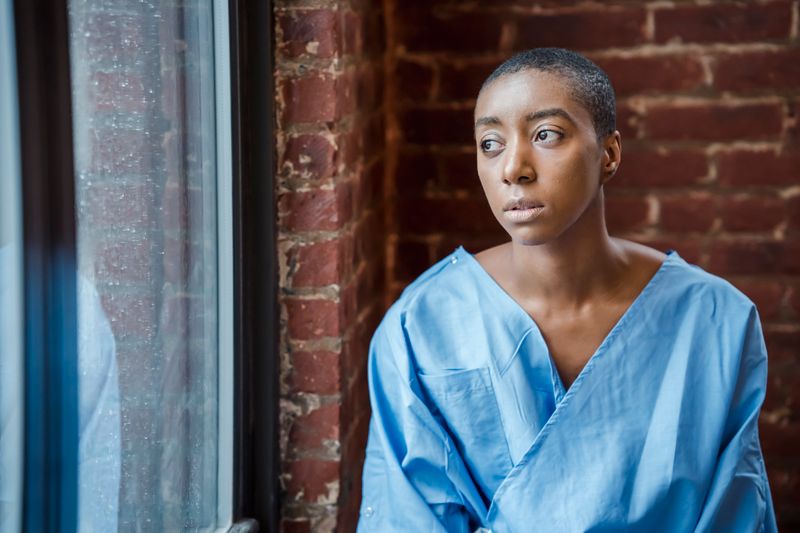
Fibromyalgia causes pain across the whole body: both sides, above and below the waist, lasting months. It comes with crushing fatigue, sleep that never refreshes, and a mental haze people call fibro fog. It is not arthritis eating your joints and it is not in your head. It is a condition in how the central nervous system processes pain, and it is real. For Black women, the harder problem is getting anyone to name it. Black women with fibromyalgia report higher pain severity and more interference with daily life than white women, yet they are diagnosed less often and treated less aggressively.
What fibromyalgia actually is
Fibromyalgia is a long-term disorder that causes pain and tenderness throughout the body. The National Institute of Arthritis and Musculoskeletal and Skin Diseases describes it as an increased sensitivity to pain, and brain imaging studies have found altered signaling in the neural pathways that carry pain. The leading explanation is central sensitization: the nervous system turns up the volume on pain signals, so ordinary pressure and ordinary aches register as severe. That is why a doctor can press on a spot that would barely register for someone else and you feel it sharply.
This matters because of what fibromyalgia is not. It does not erode joints the way rheumatoid arthritis does. It does not inflame organs the way lupus does. X-rays, ordinary blood panels, and joint exams come back normal, which is exactly why patients spend years being told nothing is wrong. Normal scans do not mean normal pain. They mean the problem is in signal processing, not in the tissue itself.
The symptom picture
The defining feature is widespread musculoskeletal pain: in the arms, legs, neck, back, chest, and abdomen, on both sides and above and below the waist. Around that core sit a cluster of symptoms that, together, separate fibromyalgia from ordinary aches:
- Profound fatigue, the kind that does not lift after a full night in bed.
- Unrefreshing sleep. You wake as tired as you went down. Many people have disrupted deep sleep.
- Fibro fog: trouble concentrating, word-finding problems, and short-term memory lapses.
- Headaches, including migraines.
- Irritable bowel symptoms: cramping, bloating, alternating constipation and diarrhea.
- Heightened sensitivity to light, noise, odors, and temperature, and widespread tenderness to touch.
The pain is the spine of the diagnosis. This is the line that separates fibromyalgia from chronic fatigue, where exhaustion leads. If your central problem is fatigue without the body-wide pain, read our piece on what causes chronic fatigue in Black women, which covers the anemia, thyroid, and lupus workup that often gets missed first.
How fibromyalgia is diagnosed
There is no blood test or scan that confirms fibromyalgia. Diagnosis is clinical, made by a doctor who knows the criteria. The 2016 revision of the American College of Rheumatology criteria uses two scored measures: the widespread pain index, which counts how many body regions hurt, and the symptom severity score, which rates fatigue, unrefreshing sleep, cognitive symptoms, and other complaints. A diagnosis requires a widespread pain index of 7 or higher with a symptom severity score of 5 or higher, or an index of 4 to 6 with a score of 9 or higher, plus generalized pain in at least four of five body regions, with symptoms steady for at least three months.
Whatever brought you to this page, community health centers see patients regardless of insurance and charge on a sliding scale that is often $0. Our directory of free and charitable clinics lists centers by state. A same-day telehealth visit is self-pay and is not billed to Medicaid, so if you have Medicaid the clinic route will usually cost less. If you would rather see a clinician online today:

See a doctor online today.
- Same-day video visits from $34
- Price shown before you book
- No insurance needed
 with Sesame Care
Affiliate link, we may earn a commission at no extra cost to you.
The other half of diagnosis is ruling out conditions that look similar, and this step matters more for Black women because several of those lookalikes are also common in this group. Lupus, thyroid disease, iron-deficiency anemia, and rheumatoid arthritis can all produce pain and exhaustion, and lupus in particular hits Black women disproportionately. A proper workup checks for them with blood tests before settling on fibromyalgia. Fibromyalgia can also coexist with those conditions, so a lupus or thyroid diagnosis does not rule it out. Ask your clinician which conditions they tested for and what the results were.
Why Black women face delay and dismissal
The gap is not biology. In one secondary analysis of women with fibromyalgia, Black women reported significantly higher pain severity and greater interference with daily function than white women, and those disparities held over time (Jacobs and colleagues, Journal of Integrative and Complementary Medicine, 2023). Researchers note that while fibromyalgia is recorded more often in white patients, prevalence may actually be similar or higher among Black women, and the lower diagnosis rate reflects who gets believed and worked up, not who has the disease.
The clearest evidence for why sits in a 2016 study in the Proceedings of the National Academy of Sciences. Half of the white medical students and residents surveyed endorsed false beliefs about biological differences between Black and white people, such as the idea that Black people have thicker skin or less sensitive nerve endings. Those who held these beliefs rated a Black patient's pain as lower and made less accurate treatment recommendations. When the symptom you bring is invisible pain, a clinician who quietly discounts that pain is a clinician who will not order the workup.
This bias is measurable in everyday care, not just hypotheticals. A national analysis of outpatient visits from 2006 to 2015 found Black patients were less likely than white patients to receive pain medication for the same complaints (Ly, Pain Medicine, 2019). Fibromyalgia adds a second layer: it carries heavy stigma because the symptoms are invisible and the diagnosis is contested, and a 2025 synthesis of patient experiences found that disbelief, long delays to diagnosis, and gender stereotyping are central to how patients are treated. For Black women, the cultural expectation to be the strong one who endures without complaint can push the same symptoms further underground. None of that makes the pain less real. It makes naming it out loud, and pushing for a workup, more important.
What actually treats fibromyalgia
There is no cure, but the condition is manageable, and the evidence points to a combination rather than a single fix. The pieces that work together:
- Education and self-management. Understanding that the pain is real and that movement will not damage you changes how you approach the condition.
- Graded aerobic and gentle movement. Walking, water exercise, and similar low-impact activity, started slow and built up gradually, reduce pain and improve function. Pushing too hard too fast backfires; the word is gradual.
- Sleep and stress care. Treating the unrefreshing sleep and the stress that amplifies pain is part of the treatment, not a side note.
- Cognitive behavioral therapy. CBT helps with the pain, the sleep, and the mood symptoms that travel with fibromyalgia.
- FDA-approved medications. Three drugs are approved specifically for fibromyalgia: duloxetine and milnacipran, which adjust pain-signaling chemistry, and pregabalin, which calms overactive nerve signaling and can improve sleep.
One thing does not work: opioids. There is no clinical-trial evidence that opioids treat fibromyalgia, treatment guidelines recommend against them, and patients on opioids tend to do worse than those on other treatments (Goldenberg and colleagues, Mayo Clinic Proceedings, 2016). This cuts both ways for Black women. It means a clinician who refuses opioids is following the evidence, not dismissing you. And it means the real treatments, the approved drugs and the structured movement and therapy, are what you should be asking for. If mood symptoms or stress are part of the picture, our guide to depression in Black women covers how to get that addressed alongside the pain.
How to get care
Start with a clinician who will take the pain seriously and run the workup. A primary care doctor can begin the evaluation and the lookalike blood tests; a rheumatologist is the specialist who confirms fibromyalgia and rules out lupus and rheumatoid arthritis. Bring a written symptom log: where it hurts, how long, how your sleep and concentration have been. Ask directly, "Have you ruled out lupus, thyroid, anemia, and rheumatoid arthritis, and are we using the ACR criteria for fibromyalgia?" If you want a clinician more likely to take your pain at face value, you can find a Black rheumatologist or primary care doctor in our directory. If the depression, anxiety, or stress riding alongside the pain needs care too, a Black therapist through telehealth can treat that part in parallel.
Frequently asked questions
Is fibromyalgia the same as chronic fatigue syndrome? ▼
No. They overlap and often coexist, but the lead symptom differs. Fibromyalgia is defined by widespread body pain, with fatigue alongside it. Chronic fatigue syndrome (ME/CFS) is defined by disabling exhaustion that worsens after activity. A clinician uses the symptom pattern to tell them apart.
Can fibromyalgia be cured? ▼
There is no cure, but it is treatable. A combination of gentle aerobic exercise, sleep and stress care, cognitive behavioral therapy, and FDA-approved medication can substantially reduce pain and improve daily function for most people.
Why do my scans and blood tests look normal if I have fibromyalgia? ▼
Because fibromyalgia is a disorder of how the nervous system processes pain, not damage to joints or tissue. Imaging and standard blood tests are normal by design. Those tests still matter, to rule out lupus, thyroid disease, anemia, and rheumatoid arthritis, which can cause similar symptoms.
Are Black women more likely to have fibromyalgia? ▼
Black women are diagnosed less often, but research suggests true prevalence may be similar or higher than in white women, and Black women report worse pain and more interference with daily life. The lower diagnosis rate reflects underdiagnosis tied to racial bias in pain assessment, not lower disease rates.
What medications are approved for fibromyalgia? ▼
The FDA has approved three: duloxetine and milnacipran, which adjust pain-signaling chemistry, and pregabalin, which calms overactive nerve signaling. Opioids are not recommended; there is no evidence they help, and patients on them tend to do worse.
Which doctor diagnoses fibromyalgia? ▼
A primary care doctor can start the evaluation and order the blood tests that rule out other conditions. A rheumatologist is the specialist who confirms the diagnosis using the ACR criteria and excludes lupus and rheumatoid arthritis.