Genital herpes is one of the most common infections Black women carry, and one of the most misunderstood. HSV-2, the virus that causes most genital herpes, shows up in about 34.6% of non-Hispanic Black Americans, the highest rate of any group the CDC measures. Among Black women the number is higher still, because HSV-2 is more common in women than men. Most people who have it never find out, because the virus usually causes no symptoms or symptoms so mild they get blamed on something else. None of that makes it a moral failing. It is a skin virus, it is treatable, and a daily pill keeps it quiet and cuts the odds of passing it to a partner.
About the numbers you may have seen
| The circulating number | What the primary source says | Primary source |
|---|---|---|
|
Half of Black women have genital herpes ~50% |
CDC publishes 34.6% for Black adults, and no Black-women figure The survey reports HSV-2 by race and by sex separately and never crosses the two, so no federal source publishes a single percentage for Black women. Any figure you see is someone's arithmetic on the published numbers, not a CDC statistic. |
CDC NCHS Data Brief No. 304, NHANES 2015-2016 |
|
HSV-2 is rising in Black communities Rising |
Falling: 41.5% in 1999-2000 to 34.6% in 2015-2016 Prevalence declined linearly across every racial and ethnic group measured over that period. The total-population figure fell from 18.0% to 12.1%. |
CDC NCHS Data Brief No. 304, trend analysis |
Half of Black women have genital herpes
The survey reports HSV-2 by race and by sex separately and never crosses the two, so no federal source publishes a single percentage for Black women. Any figure you see is someone's arithmetic on the published numbers, not a CDC statistic.
HSV-2 is rising in Black communities
Prevalence declined linearly across every racial and ethnic group measured over that period. The total-population figure fell from 18.0% to 12.1%.
Why HSV-2 is so common, and so often invisible
HSV-2 is a virus that lives in nerve cells near the base of the spine. After the first infection it stays in the body for life and reactivates from time to time, sometimes with a sore, more often with nothing you can see or feel. The CDC puts overall HSV-2 prevalence among adults 14 to 49 at 11.9%, with 15.9% of women carrying it compared with 8.2% of men. For Black Americans the figure reaches 34.6%. Read that as an absolute, not a comparison: roughly one in three Black adults, and more than one in three Black women, already lives with this virus. It is ordinary.
The reason most carriers never know is that HSV-2 sheds quietly. The CDC states plainly that the majority of people infected with HSV-2 have never been diagnosed, and that most genital herpes infections are passed by people who are unaware they have it or have no symptoms at the moment of transmission. So the high numbers in Black communities are not about behavior. They reflect a virus that spreads silently combined with a testing system that rarely looks for it. A standard STI panel does not include an HSV-2 blood test unless you ask, so a virus one in three people carries goes unmeasured in the exam room.
How to actually get diagnosed: ask for type-specific testing
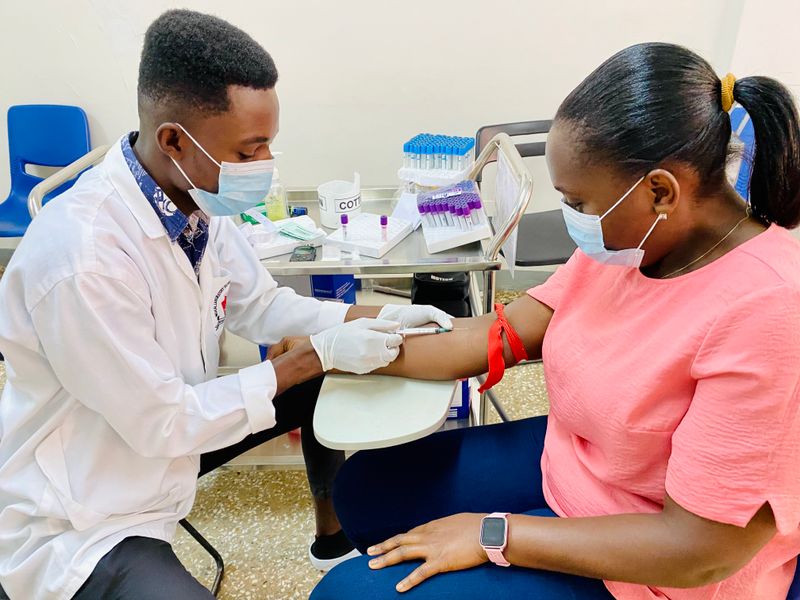
If you have a sore, a swab of the lesion (a PCR or culture) confirms herpes and tells the lab whether it is HSV-1 or HSV-2. When there is no sore, the test that diagnoses a past infection is a type-specific serologic blood test, usually an HSV-2 IgG. The CDC says these tests can be used to aid diagnosis of HSV infection in the absence of genital lesions. This matters because it is the only way most people will ever learn their status, and because the older, non-type-specific herpes tests are unreliable and should not be used.
Two cautions worth saying out loud. First, knowing your HSV-1 versus HSV-2 status changes what the result means, so insist the lab runs the type-specific version. Second, a low-positive IgG result can be a false alarm, so a borderline number should be confirmed before anyone tells you that you have genital herpes. If a clinician dismisses your request for testing or hands you a diagnosis off a borderline number without confirming it, that is a reason to seek a second opinion, not to assume you are stuck.
There are two ways to get a type-specific test. Community health centers test for HSV and other sexually transmitted infections on a sliding scale, and many charge nothing at all; our directory of free and charitable clinics lists verified centers by state. If you would rather not sit in a waiting room, an at-home blood test mails you a kit and returns physician-reviewed results privately. At-home kits are self-pay and are not billed to Medicaid, so if you have Medicaid the clinic route will almost always cost you less.
If you would rather test at home than visit a clinic:
Best for private at-home testingAt-home lab tests

Everlywell
At-home lab tests including hemoglobin A1c, thyroid and hormone panels, STI panels, and FIT colon cancer screening, with physician-reviewed results.
Browse testsAffiliate link, we may earn a commission at no extra cost to you.
Daily antivirals control it and protect partners
There is no cure for genital herpes, but the treatment works and the infection does not get worse over time. Antiviral pills shorten and soften outbreaks, and taken every day as suppressive therapy they prevent most of them. The CDC's recommended suppressive dose is valacyclovir 500 mg or 1 gram by mouth once a day (acyclovir and famciclovir are alternatives). People with frequent outbreaks often do better on the higher dose. Many people take it for years with few side effects; others use it only when they have an outbreak.
Suppressive therapy does more than stop sores. In a randomized trial of 1,484 couples in which one partner had HSV-2, once-daily valacyclovir cut the risk of transmitting the virus to the uninfected partner by about 48%. Combined with condoms and avoiding sex during an outbreak, a daily pill makes passing HSV-2 to a partner substantially less likely. That is a concrete, evidence-backed way to protect someone you care about.
HSV-2 and HIV: one more reason testing matters
HSV-2 is not only a sexual-health issue on its own. Carrying it roughly triples the chance of acquiring HIV if exposed, because herpes draws immune cells that HIV targets to the genital surface, even between outbreaks. A systematic review across general-population studies found prevalent HSV-2 raised the risk of HIV acquisition about threefold in both men and women. For Black women, who already face the steepest HIV burden of any group of women in the country, that link is a practical reason to know your HSV-2 status and to talk with a clinician about HIV prevention. If HIV risk is on your mind, our guides to HIV prevention for Black women and PrEP for Black Americans walk through the options.
Pregnancy: how to prevent neonatal herpes
The one situation where genital herpes turns dangerous is a newborn exposed during delivery, which is rare but serious. It is also largely preventable, and the prevention starts with you telling your provider. The American College of Obstetricians and Gynecologists recommends that anyone with a history of genital herpes be offered suppressive antiviral medicine at or beyond 36 weeks of pregnancy, which lowers the chance of an outbreak and viral shedding at delivery and reduces the need for a cesarean done for herpes. If you have an active genital sore or symptoms when labor starts, a cesarean delivery is offered to protect the baby.
The highest risk to a newborn actually comes from a mother who catches herpes for the first time late in pregnancy, when her body has not yet built antibodies. That is one more reason to disclose your status to your partner and your obstetric team early, and to keep using protection in the third trimester if your partner has herpes and you do not.
Talking to a partner
Disclosure feels heavier than it needs to, in part because the stigma around herpes is out of proportion to the virus. Keep it factual and short. You can say you have HSV-2, that it is common and managed with a daily pill, that the pill plus condoms lowers the chance of passing it on, and that you wanted them to have the facts. Have the conversation before sex, not after, and not in the middle of an outbreak. Many partners already carry the virus themselves without knowing, and our guide to genital herpes in Black men covers how it shows up and what to ask for. A partner who reacts badly to honest, accurate information is telling you something useful about them, not about you.
How to get care
Bring two asks to your next appointment: a type-specific HSV-2 blood test if you have never been tested, and a prescription for suppressive valacyclovir if you have outbreaks or want to lower transmission risk to a partner. A clinician who takes the subject seriously, without judgment, makes all of this easier. You can find a Black OB-GYN or primary care clinician in our directory who treats sexual health as routine care. If you are pregnant, raise your herpes history at your first prenatal visit so the 36-week plan is in place well before delivery.
Frequently asked questions
Does having HSV-2 mean I did something wrong? ▼
No. HSV-2 is a common virus that about one in three Black adults carries, and most people who have it caught it from a partner who did not know they had it. It is an infection, not a judgment on your behavior or character.
How do I get tested if I have no symptoms? ▼
Ask specifically for a type-specific HSV-2 blood test (an HSV-2 IgG). It is usually not included in a standard STI panel unless you request it. If you have a sore, a swab of the sore is the most accurate test.
Will daily medicine keep me from passing herpes to my partner? ▼
It lowers the risk substantially but does not remove it. Daily valacyclovir cut transmission to partners by about 48% in a large trial. Pairing it with condoms and avoiding sex during an outbreak lowers the risk further.
Can I have a healthy pregnancy and baby with genital herpes? ▼
Yes. Most people with genital herpes have healthy pregnancies. Tell your obstetric team about your history so you can start suppressive medicine at 36 weeks, and a cesarean is offered only if you have an active sore or symptoms when labor begins.
Is there a cure for genital herpes? ▼
No cure exists yet, but the infection is controlled, not progressive. Antiviral pills prevent and shorten outbreaks, and many people go long stretches with no symptoms at all.
Why is HSV-2 more common in Black communities? ▼
HSV-2 spreads silently because most carriers have no symptoms, and routine testing rarely looks for it. Higher measured prevalence reflects a quietly transmitted virus and gaps in testing and care, not differences in behavior.