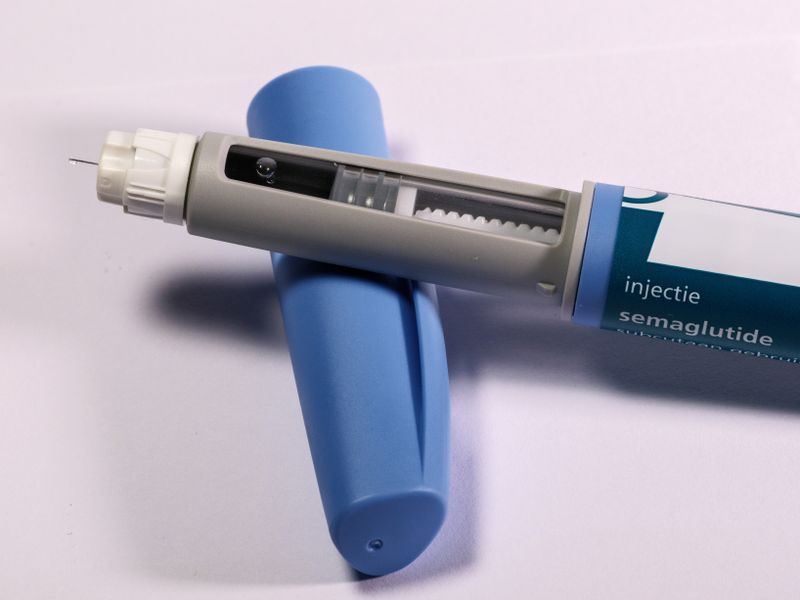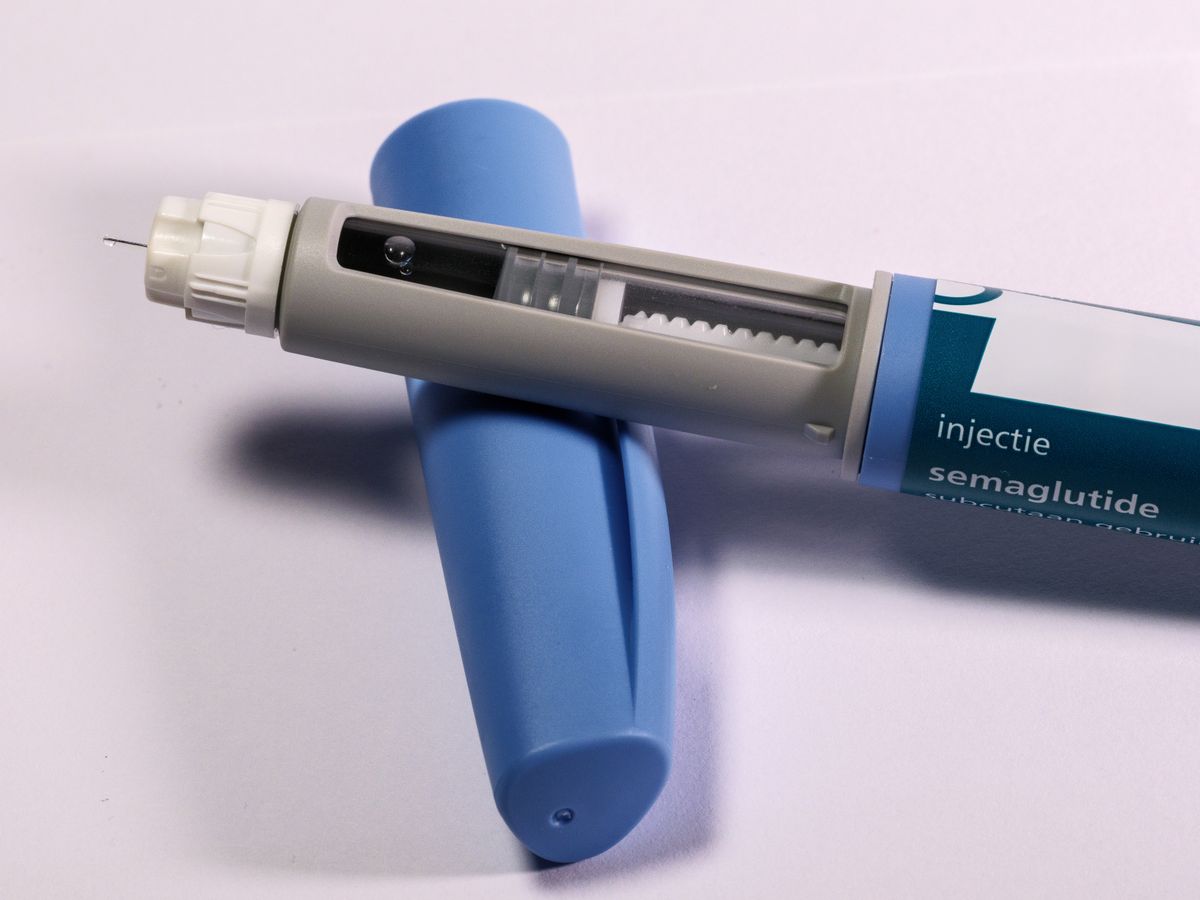
Federal law lets drug plans exclude "agents when used for weight loss," and Medicare Part D turned that permission into a hard exclusion, even for morbid obesity, per CMS's own Part D manual. That is why the same pen can be covered for one neighbor and denied for another: the indication on the prescription is the door. A GLP-1 prescribed for type 2 diabetes, for moderate-to-severe obstructive sleep apnea, or for MASH liver disease goes through the regular Part D door today. The weight-loss indication needs one of the newer doors below.
The Medicare GLP-1 Bridge is a CMS demonstration running from July 1, 2026 through December 31, 2027. Eligible Part D beneficiaries pay a flat $50 a month for Wegovy (injection or tablets), the Zepbound KwikPen, or Foundayo, prescribed for weight management. It runs outside the normal Part D flow: the deductible does not apply, and prior-authorization decisions come back within 72 hours through a central processor.
The qualification math, verbatim from CMS's provider criteria: BMI of 35 or higher; or BMI 30 or higher plus heart failure with preserved ejection fraction, uncontrolled hypertension despite two medications, or chronic kidney disease stage 3a or above; or BMI 27 or higher plus prediabetes, a previous heart attack or stroke, or symptomatic peripheral artery disease. Two fine-print items worth knowing before you plan around it: there is no appeals process under the Bridge, and the Zepbound single-dose vials and pens are not included, only the KwikPen. Our earlier explainer on who qualifies for the Bridge walks the criteria in detail.
Ask your primary care doctor or a community health center first: they can bill your insurance for an FDA-approved GLP-1 like Wegovy or Zepbound if your plan covers it, which costs far less than paying a telehealth service out of pocket. Our directory of free and charitable clinics lists verified centers by state. Many online weight-loss services sell compounded semaglutide or tirzepatide instead: compounded GLP-1 medications are not FDA-approved products, and the FDA does not review compounded drugs for safety, effectiveness, or quality. A same-day telehealth visit is self-pay and is not billed to Medicaid. If you still want to explore a telehealth option:
SHED
Online GLP-1 weight-loss care with a licensed prescriber, including FDA-approved brands and compounded semaglutide or tirzepatide, which are not FDA-approved products.
Check weight-loss eligibilityAffiliate link, we may earn a commission at no extra cost to you.
For Medicaid the weight-loss exclusion is permissive, meaning each state chooses. Per KFF's January 2026 survey, thirteen state fee-for-service Medicaid programs covered GLP-1s for obesity, a number that moves in both directions as budgets shift, so confirm against your own state's preferred drug list. The federal BALANCE model adds a new path: CMS negotiates prices directly with the manufacturers, and state Medicaid agencies can join from May 2026 through January 2027, with a manufacturer-funded lifestyle support program attached at no cost. CMS is explicit that joining the model does not guarantee coverage for any individual, and prior authorization still applies. Our state pages, like online GLP-1 access in Georgia, track the state-level picture.
If no coverage door opens, the honest price floor comes from the manufacturers' own pharmacies, not from aggregator sites, which still widely print 2025 numbers. As of August 7, 2026, on the companies' own pages: LillyDirect sells Zepbound self-pay starting at $299 a month for 2.5 mg, $399 for 5 mg, and $449 for the higher doses, on the condition that you refill within 45 days; miss the window and the price steps up to $499 to $699. NovoCare sells Wegovy pens at $199 a month for the two starter doses through the end of 2026, then $349 a month for standard doses and $399 for the high-dose pen, and the Wegovy pill starts at $149 a month. Both companies also run commercial-insurance savings cards that can bring copays as low as $25 for people whose employer plans cover the drugs.
The compounding era was built on the drug shortage, and the shortage is over: FDA declared tirzepatide resolved in December 2024 and semaglutide in February 2025, and the grace periods for compounders ended in spring 2025. Compounded semaglutide and tirzepatide are not FDA-approved products, and as of May 31, 2026 the agency had received 990 adverse-event reports for compounded semaglutide and more than 730 for compounded tirzepatide, some involving hospitalization from dosing errors. FDA also warns about outright fraud, including products whose labels name compounding pharmacies that do not exist. Its red-flag list for telehealth sellers: claims that a compounded drug is the same as the approved one, deep discounts, and no real prescription step. With manufacturer cash prices now at $199 to $449, the discount case for compounded versions has thinned considerably.
Whichever door you use, the approval runs on documentation. Before the visit, make sure your chart actually contains the numbers the criteria ask for: a current BMI, blood pressure readings and your medication list if hypertension is the qualifying condition, an A1C if prediabetes or diabetes is in play, and kidney function labs if CKD is. Ask your clinician to write the indication that matches your records, and if a denial comes back under a regular plan, ask for the denial reason in writing; most plans reverse on appeal when the documented criteria are met. A community health center can do the workup on a sliding scale; our directory of community health centers and free clinics lists verified centers by state.
Frequently asked questions
Does Medicare cover Wegovy or Zepbound for weight loss? ▼
Not through the regular Part D benefit; federal law excludes weight-loss agents there. But from July 2026 through December 2027, the Medicare GLP-1 Bridge covers eligible beneficiaries at a flat $50 a month with prior authorization. GLP-1s prescribed for diabetes, moderate-to-severe sleep apnea, or MASH are covered under Part D as usual.
Is compounded semaglutide still legal? ▼
The mass-market version no longer has a legal basis: the shortages that permitted copies ended in 2024-2025, and FDA enforcement grace periods expired in spring 2025. Narrow patient-specific exceptions exist, but FDA has logged over 1,700 adverse-event reports for compounded GLP-1s and warns about fraudulent products. Compounded GLP-1s are not FDA-approved.
What if my BMI is under 30? ▼
The Medicare Bridge accepts BMI 27 and up when paired with prediabetes, a prior heart attack or stroke, or symptomatic peripheral artery disease. Commercial plans set their own thresholds, commonly BMI 30, or 27 with a weight-related condition, matching the FDA labels. The documentation in your chart, not the number alone, is usually what decides it.