What semaglutide is: Ozempic versus Wegovy
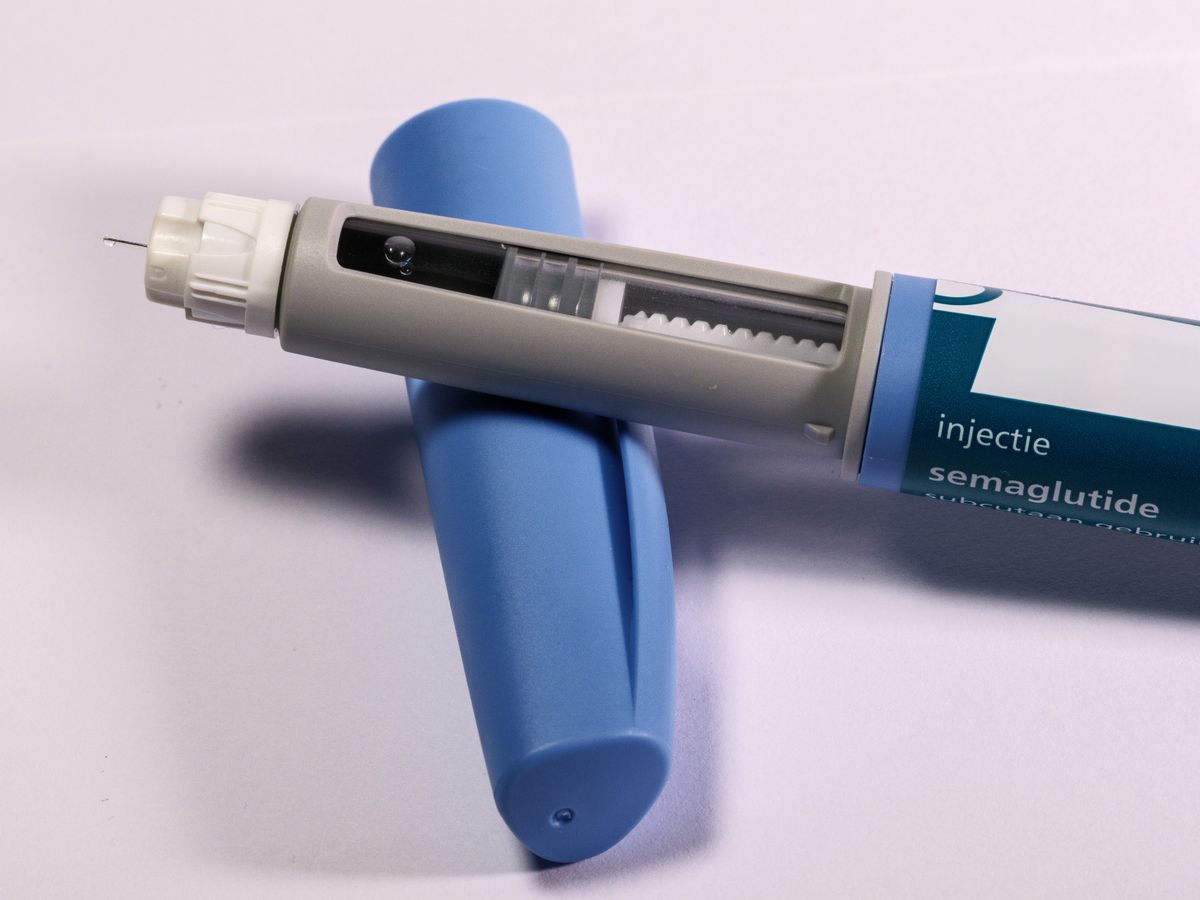
Ozempic and Wegovy are the same molecule, semaglutide, a GLP-1 receptor agonist. They are not interchangeable because they are approved for different uses and dosed differently.
- Ozempic was approved in 2017 for type 2 diabetes, and later to lower cardiovascular risk in adults with type 2 diabetes and heart disease. Maximum dose 2.0 mg weekly.
- Wegovy was approved in 2021 for chronic weight management, and in 2024 became the first weight drug FDA-approved to reduce major cardiovascular events in adults with obesity or overweight. Maximum injectable dose 2.4 mg weekly.
If you want the plain-language drug overview, see our semaglutide overview. If you are weighing telehealth prescribing in your state, see online GLP-1 options by state.
How many Black patients were actually in the trials
This is the part mainstream coverage skips.
For weight loss, the Wegovy evidence rests on the STEP program. A 2024 race and ethnicity analysis pooled STEP 1 and STEP 3 and reported participants as White 75.3 percent, Black 8.8 percent, Asian 10.6 percent, and other 5.3 percent. The original STEP 1 trial (Wilding et al., NEJM 2021), which randomized 1,961 adults, was about 74 to 75 percent White and roughly 6 percent Black.
For diabetes, the Ozempic evidence rests on the SUSTAIN program. A dedicated 2020 race and ethnicity post hoc analysis pooled the trials and included only 82 to 127 Black participants per dose group in SUSTAIN 1 to 5 and 7, plus 54 per group in SUSTAIN 6.
Both analyses state plainly that the trials were not designed to test for race differences. That under-representation is itself the story: a drug now prescribed heavily to a population with the country's highest obesity burden was tested in samples where that population was a small fraction.
What the subgroup data shows about efficacy
The reassuring finding: where the data exists, it does not show Black patients responding worse.
Ask your primary care doctor or a community health center first: they can bill your insurance for an FDA-approved GLP-1 like Wegovy or Zepbound if your plan covers it, which costs far less than paying a telehealth service out of pocket. Our directory of free and charitable clinics lists centers by state. Many online weight-loss services sell compounded semaglutide or tirzepatide instead: compounded GLP-1 medications are not FDA-approved products, and the FDA does not review compounded drugs for safety, effectiveness, or quality. A same-day telehealth visit is self-pay and is not billed to Medicaid. If you still want to explore a telehealth option:
Online weight-loss care with a licensed clinician.
- Price shown before you book
 with Sesame Care
Affiliate link, we may earn a commission at no extra cost to you.
In the STEP weight trials, there were no significant interactions between treatment effect and race (STEP 1 and 3: p greater than or equal to 0.07) or ethnicity, and the weight loss versus placebo was clinically meaningful across every racial subgroup. For context, in STEP 1 overall, semaglutide 2.4 mg produced a mean body weight change of negative 14.9 percent versus negative 2.4 percent for placebo at 68 weeks.
In the SUSTAIN diabetes trials, HbA1c fell by about 1.0 to 1.5 percentage points and body weight by about 2.3 to 4.7 kg across race and ethnicity subgroups, with only minor variation.
The honest read: efficacy appears consistent by race, but the Black subgroups were too small to rule out smaller differences. "No difference detected" in an underpowered subgroup is weaker evidence than a difference proven in a large one.
Side effects and what to watch
The dominant side effects are gastrointestinal. The FDA Wegovy label lists nausea, diarrhea, vomiting, and constipation among the most common reactions (incidence 5 percent or higher), and the most common reasons for stopping were nausea (1.8 percent), vomiting (1.2 percent), and diarrhea (0.7 percent). In STEP 1, GI disorders affected 74.2 percent of the semaglutide group versus 47.9 percent on placebo. By race, GI event rates in the SUSTAIN analysis were broadly similar in Black and White participants.
The equity and access gap
Black women have the highest obesity prevalence of any group in the U.S., 56.9 percent, compared with 35.5 percent of White women (NHANES). By clinical need, this is a population that stands to benefit substantially.
Access does not match need. A 2024 to 2025 retrospective cohort of roughly 39 million eligible adults found fewer than 3 percent of eligible people with obesity received a GLP-1 prescription, and after adjustment Black patients had lower odds of receiving semaglutide than White patients (adjusted odds ratio about 0.8), with even lower odds for Hispanic and Asian patients. Cost compounds it: Wegovy's U.S. list price is about $1,349 per month, far out of reach for many uninsured or underinsured patients.
The under-representation problem itself
The pattern repeats: a population carrying the heaviest disease burden was a single-digit percentage of the trials that established the drug. That is not unique to semaglutide, but it matters here because the marketing reach into Black communities is enormous while the evidence base for Black patients specifically is thin. The right response is not fear (the data we have is reassuring), it is rigor: more representative trials, and honesty that current race-specific conclusions rest on small samples.
If you are weighing semaglutide against the newer dual-agonist option, see tirzepatide versus semaglutide in Black patients. For the link between central weight and metabolic risk, see belly weight and insulin resistance in Black women.
What to do if you're considering it
- Confirm you do not have a personal or family history of medullary thyroid carcinoma or MEN 2 before starting.
- Ask your clinician which version fits your situation: Ozempic for type 2 diabetes, Wegovy for weight management.
- Plan for GI side effects in the first weeks; slow dose escalation reduces them.
- Check coverage early. Out-of-pocket cost is the single biggest reason prescriptions go unfilled.
- Start with the basics at our semaglutide overview, and check state-specific telehealth options at online GLP-1 by state. To find a clinician, browse the provider directory.
Frequently asked questions
Does Ozempic work for Black women? ▼
The trial evidence says yes. In the weight-loss (STEP) and diabetes (SUSTAIN) programs, semaglutide produced clinically meaningful weight and blood-sugar reductions across racial subgroups, with no statistically significant difference by race. The caveat is that Black participants were a small share of these trials.
Is Ozempic the same as Wegovy? ▼
Same active drug, semaglutide, but different approved uses and doses. Ozempic is approved for type 2 diabetes (up to 2.0 mg weekly); Wegovy for chronic weight management (up to 2.4 mg weekly). They are not interchangeable.
What are the most common side effects? ▼
Mostly gastrointestinal: nausea, diarrhea, vomiting, and constipation. These are the most frequently reported reactions and the most common reasons people stop.
Why were so few Black patients in the trials? ▼
The pivotal trials were international and not designed to recruit or analyze by race, so Black participants ended up at roughly 6 to 9 percent of enrollment. Both published race analyses note the trials were underpowered for race-specific conclusions.
Why is it harder for Black patients to get? ▼
Despite the highest obesity burden, Black patients are modestly less likely than White patients to be prescribed semaglutide after adjustment, and the roughly $1,349 monthly list price plus insurance hurdles block many people regardless of race.