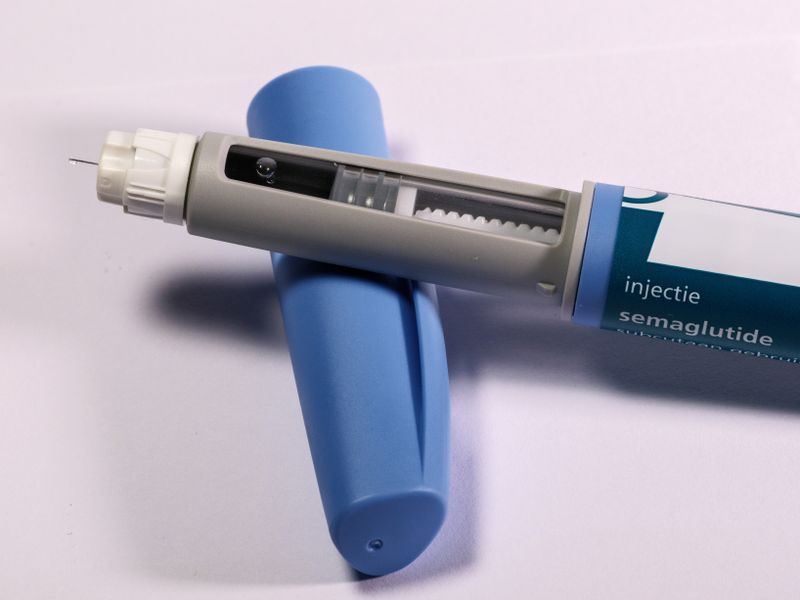
What each drug is
Semaglutide is sold as Ozempic for type 2 diabetes and Wegovy for chronic weight management. Same molecule, different approved uses and doses. Tirzepatide is sold as Mounjaro for type 2 diabetes and Zepbound for chronic weight management, again the same molecule under two brand names.
For the plain-language drug overviews, see tirzepatide and semaglutide. If you are weighing telehealth prescribing in your state, see online GLP-1 access by state.
How they differ: one hormone versus two
Semaglutide is a GLP-1 receptor agonist. It mimics one gut hormone, glucagon-like peptide-1, which slows stomach emptying, blunts appetite, and improves insulin response.
Tirzepatide is a single molecule that activates two receptors: GLP-1 and GIP (glucose-dependent insulinotropic polypeptide). The dual action is the mechanistic reason researchers expected, and found, larger effects on weight and blood sugar. That difference shows up in the head-to-head numbers below.
The head-to-head efficacy evidence
This is the part that matters, because both drugs have direct comparisons against each other, not just against placebo.
For weight loss, SURMOUNT-5 randomized 751 adults with obesity and without diabetes to the maximum tolerated dose of tirzepatide or semaglutide for 72 weeks. Tirzepatide produced a 20.2 percent mean reduction in body weight versus 13.7 percent for semaglutide (about 22.8 kg versus 15.0 kg), and a larger waist-circumference reduction (18.4 cm versus 13.0 cm). Both differences were statistically significant (p less than 0.001).
For type 2 diabetes, SURPASS-2 randomized 1,879 adults on metformin to one of three tirzepatide doses or semaglutide 1 mg for 40 weeks. HbA1c fell more on tirzepatide at every dose: 2.01, 2.24, and 2.30 percentage points for tirzepatide 5, 10, and 15 mg versus 1.86 points for semaglutide. The added drop versus semaglutide was 0.15, 0.39, and 0.45 percentage points (the 5 mg comparison reached p = 0.02; the higher doses p less than 0.001). Weight loss was also greater on tirzepatide, by 1.9, 3.6, and 5.5 kg across the three doses.
For context on the standalone weight-loss data, SURMOUNT-1 (the tirzepatide pivotal obesity trial, 2,539 adults) produced mean weight reductions of 16.0, 21.4, and 22.5 percent across the 5, 10, and 15 mg doses versus 2.4 percent for placebo at 72 weeks. The comparable semaglutide pivotal trial, STEP 1, produced about 14.9 percent versus 2.4 percent for placebo.
Ask your primary care doctor or a community health center first: they can bill your insurance for an FDA-approved GLP-1 like Wegovy or Zepbound if your plan covers it, which costs far less than paying a telehealth service out of pocket. Our directory of free and charitable clinics lists centers by state. Many online weight-loss services sell compounded semaglutide or tirzepatide instead: compounded GLP-1 medications are not FDA-approved products, and the FDA does not review compounded drugs for safety, effectiveness, or quality. A same-day telehealth visit is self-pay and is not billed to Medicaid. If you still want to explore a telehealth option:
Online weight-loss care with a licensed clinician.
- Price shown before you book
 with Sesame Care
Affiliate link, we may earn a commission at no extra cost to you.
Side effects compared
For both drugs the dominant side effects are gastrointestinal: nausea, diarrhea, vomiting, and constipation, mostly mild to moderate and concentrated in the dose-escalation weeks.
In the head-to-head SURMOUNT-5 trial, the rate of stopping treatment because of GI side effects was low in both groups and slightly lower on tirzepatide: 2.7 percent versus 5.6 percent for semaglutide. In SURMOUNT-1, GI adverse events were reported across the tirzepatide dose arms at rates higher than placebo, with most events non-serious and tied to dose escalation.
What the trials actually enrolled: the Black-subgroup reality
This is where the comparison gets interesting for Black readers, and where most coverage stays silent.
The semaglutide pivotal trials were thin on Black participants. A pooled race-and-ethnicity analysis of the STEP weight-loss program reported Black participants at 8.8 percent; the SUSTAIN diabetes program ran similarly low. The tirzepatide SURMOUNT-1 trial was also majority White (roughly 71 to 83 percent across analyses), with Black participants a single-digit-to-low share.
The exception is the direct head-to-head. SURMOUNT-5 enrolled 19 percent Black participants and 26 percent Hispanic participants across 32 U.S. and Puerto Rico sites. That is a markedly more representative sample than the foundational trials of either drug. It still was not powered to detect a race-specific efficacy difference, and the published trial did not report separate efficacy by race. So the honest read is: the best direct comparison we have enrolled Black patients at roughly the rate you would want, found a clear overall advantage for tirzepatide, and gives no signal that race changes the answer. "No race difference found" remains weaker than "race difference ruled out," because the subgroup analysis was not the trial's job.
Cost and access
Price often decides this in practice, and the two drugs are not priced the same.
Tirzepatide (Zepbound) carries a list price around 1,086 dollars per month; semaglutide (Wegovy) runs just under 1,350 dollars. Neither number is what most cash payers now pay. Eli Lilly sells Zepbound single-dose vials direct to consumers for roughly 299 to 449 dollars depending on dose, and Novo Nordisk sells Wegovy cash through its own pharmacy channel in a similar range. Insurance coverage for the weight-management versions remains inconsistent, and Medicare has historically not covered drugs prescribed purely for weight loss, which matters because Black adults are over-represented among both the uninsured and Medicare populations carrying the highest obesity burden.
This is the same access gap documented for semaglutide: the population with the greatest clinical need is the one most likely to be blocked by cost and coverage. The newer, more effective drug being the cheaper of the two at list price is a rare point in patients' favor, if coverage and supply hold.
How to think about the choice
A simple framing of the two:
| Tirzepatide (Zepbound / Mounjaro) | Semaglutide (Wegovy / Ozempic) | |
|---|---|---|
| Mechanism | Dual GIP + GLP-1 | GLP-1 only |
| Weight loss, head-to-head | 20.2% at 72 wks | 13.7% at 72 wks |
| Diabetes A1c, head-to-head | Greater reduction at every dose | Reference comparator |
| Main side effects | GI (nausea, diarrhea, vomiting) | GI (nausea, diarrhea, vomiting) |
| Boxed warning | Thyroid C-cell tumor; MTC/MEN 2 contraindication | Same |
| List price / month | ~1,086 dollars | ~1,350 dollars |
On the evidence, tirzepatide is the more effective of the two for both weight and blood sugar, with a similar side-effect profile and a lower list price. That does not make it automatically right for everyone. Semaglutide has a longer track record and proven cardiovascular-event reduction in its own large trials, your insurer may cover one and not the other, and supply of either can be tight. The choice is a conversation with a clinician who knows your diabetes status, your thyroid and pancreatitis history, and what your plan will actually pay for. If you need one, you can find a clinician through our directory.
If you have already read our companion piece on semaglutide specifically, see the evidence on semaglutide for Black patients for the deeper dive on that drug's race-subgroup data.
Frequently asked questions
Is tirzepatide better than semaglutide for weight loss? ▼
In the only direct head-to-head trial, SURMOUNT-5, tirzepatide produced more weight loss: 20.2 percent versus 13.7 percent over 72 weeks. It also outperformed semaglutide on blood sugar in the SURPASS-2 diabetes trial. "More effective on average" is not the same as "right for you," which depends on diabetes status, side-effect tolerance, and coverage.
Is Zepbound the same as Mounjaro? Is Ozempic the same as Wegovy? ▼
Zepbound and Mounjaro are both tirzepatide, approved for weight management and type 2 diabetes respectively. Ozempic and Wegovy are both semaglutide, for diabetes and weight management respectively. Same molecule, different brand and approved use within each pair.
Were Black patients in these trials? ▼
The head-to-head SURMOUNT-5 trial enrolled 19 percent Black participants, more representative than the 6 to 9 percent in the pivotal semaglutide trials. None of these trials was designed to test for race-specific differences, so the reassuring overall results are not the same as proof that the answer differs, or does not differ, by race.
Which one has worse side effects? ▼
Both are mostly gastrointestinal and mostly during dose escalation. In SURMOUNT-5, the rate of stopping for GI side effects was low in both arms and slightly lower on tirzepatide (2.7 percent versus 5.6 percent).
Which is cheaper? ▼
By list price, tirzepatide (about 1,086 dollars per month) is lower than semaglutide (just under 1,350 dollars). Both manufacturers sell cash vials well below list, and what you actually pay depends heavily on insurance.