What this program is, and what it is not
Weight-loss drugs are excluded from Medicare Part D by statute, not by any plan's choice. That has not changed.
The Bridge is a demonstration project running alongside Part D rather than inside it. Practically, that means it behaves like nothing else in your Medicare coverage: the $50 does not touch your deductible, does not appear on your Explanation of Benefits, and does not count toward the annual out-of-pocket cap. Humana administers it for Medicare, and it operates nationwide in every state and territory.
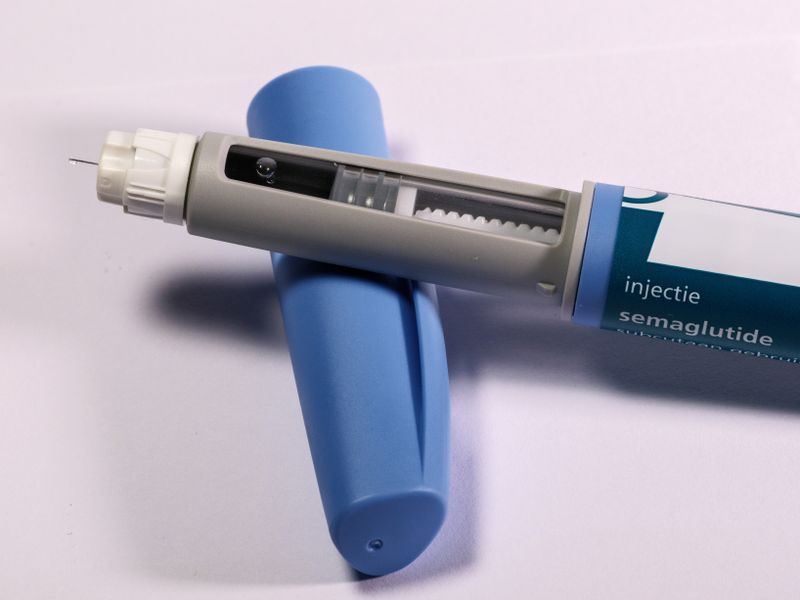
It covers three products: Foundayo tablets, Wegovy as either an injection or a tablet, and Zepbound in the KwikPen form only. Single-dose Zepbound vials and pens are not covered, which matters more than it sounds and is addressed below.
Whether you qualify: three gates
Gate one, your coverage type. You must be enrolled in a Medicare drug plan: a standalone Part D plan, or a Medicare Advantage plan that includes drug coverage (HMO, HMO-POS, or local or regional PPO). Special Needs Plans count, including dual-eligible plans. Employer and union group plans count. If you have Original Medicare with no drug plan, you do not qualify, and joining the Bridge is not an option because it is not drug coverage. Private fee-for-service plans, cost plans, and PACE do not qualify on their own.
Gate two, your diagnosis, and this is the rule people get wrong. You are disqualified if you are eligible for a GLP-1 through regular Part D coverage, which means type 2 diabetes, moderate to severe sleep apnea, or MASH liver disease with moderate to advanced scarring. Here is the part that surprises people: this applies even if your own plan refuses to cover a GLP-1 for that condition. Medicare's rule turns on whether the condition is coverable, not on whether your plan actually covers it. You are also disqualified if you already received any GLP-1 through Part D during 2026, and Medicare checks its own claims records to find out.
Gate three, your weight and health history at the time you started. You need to have been 18 or older and to have met one of these when GLP-1 therapy began:
- BMI of 35 or higher, or
- BMI of 30 or higher plus heart failure with preserved ejection fraction, uncontrolled high blood pressure, or chronic kidney disease at stage 3a or above, or
- BMI of 27 or higher plus prediabetes, a previous heart attack, a previous stroke, or symptomatic peripheral artery disease.
Uncontrolled high blood pressure has a specific definition here: above 140 systolic or above 90 diastolic while already taking two blood pressure medications.
How to actually get it, including the denial that is supposed to happen
There is no application, no enrollment, and no website to sign up on. The pharmacy claim is what starts everything.
- Talk to your prescriber and ask for a prescription for a covered drug. Medicare asks prescribers to write "SEND TO BRIDGE FOR WEIGHT MANAGEMENT" in the prescription notes. Without that note, the pharmacy may send the claim to your Part D plan by mistake, where it will simply be rejected.
- The pharmacy bills the Bridge. Any pharmacy can do this. Pharmacies do not join a network and your plan has no role. Your pharmacist may need the routing details: BIN 028918, PCN MEDDGLP1BR.
- The first claim is denied on purpose. This is the step that confuses everyone. If you are eligible, Medicare still denies the claim, with a message telling the pharmacy that prior authorization is needed. A denial here is the system working, not a rejection.
- Your prescriber fills out the form, usually within 24 to 72 hours of the pharmacy sending the request. Only the prescribing clinician can submit it, electronically or by fax. If your prescriber has not received it after 72 hours, they can download the form and send it directly.
- A decision comes within 72 hours, mailed to you.
- The pharmacy rebills, you pay $50 and pick it up.
Two things worth knowing about that form. It is an attestation, which your prescriber signs under penalty of perjury, and Medicare may check it against its own claims data. And there is no appeals process. If it is denied, the only remedy is for the prescriber to correct and resubmit.
Once approved, you are set through December 31, 2027. Refills and dose changes need nothing further. Switching to a different covered drug requires a new authorization.
Ask your primary care doctor or a community health center first: they can bill your insurance for an FDA-approved GLP-1 like Wegovy or Zepbound if your plan covers it, which costs far less than paying a telehealth service out of pocket. Our directory of free and charitable clinics lists verified centers by state. Many online weight-loss services sell compounded semaglutide or tirzepatide instead: compounded GLP-1 medications are not FDA-approved products, and the FDA does not review compounded drugs for safety, effectiveness, or quality. A same-day telehealth visit is self-pay and is not billed to Medicaid. If you still want to explore a telehealth option:
SHED
Online GLP-1 weight-loss care with a licensed prescriber, including FDA-approved brands and compounded semaglutide or tirzepatide, which are not FDA-approved products.
Check weight-loss eligibilityAffiliate link, we may earn a commission at no extra cost to you.
What the $50 does not buy
This is the part that lands hardest on the people with the least room in their budget. If you have Extra Help and pay a few dollars for your other prescriptions, you still pay the full $50 here, every month. None of it counts toward your out-of-pocket cap, and you cannot spread it across the year using the Medicare Prescription Payment Plan. That is $600 a year of true additional cost, and it does not move you closer to catastrophic coverage on anything else.
A few other cost details that are easy to miss. Manufacturer coupons and discount cards cannot be applied to a Bridge claim. You cannot pay cash and get reimbursed later. Fills are 28 or 30 days only, so there are no 90-day fills, and there are no overrides for lost or stolen medication.
And if you are prescribed the Zepbound KwikPen, budget for needles. The KwikPen does not include them, Medicare does not cover them under the Bridge, and it tells pharmacies not to bill your Part D plan for them either. You buy them yourself.
What happens on January 1, 2028
The demonstration ends December 31, 2027, and every prior authorization expires with it.
We looked for guidance on what comes next in every place Medicare publishes: the program pages, both press releases, all three fact sheets, the memo to plans, the pharmacy webinar, and the page for BALANCE, the model meant to follow it. Medicare has published nothing telling beneficiaries what happens on January 1, 2028. No successor coverage is promised and no transition is described.
What we can say about BALANCE is that Medicare lists it as announced rather than operating, with no participant count and no start date for the Part D side, and describes its own implementation as potential. Participation would be voluntary for manufacturers, states and plans, and Medicare states plainly that the model would not guarantee coverage for any individual. The Bridge itself was already extended once, from 2026 into 2027, because BALANCE slipped.
The statutory exclusion on weight-loss drugs has not moved. So plan for the $50 to be temporary, and talk with your prescriber about what happens if it ends while you are still on treatment.
How many people this reaches
We could not find one, and we looked carefully. Medicare has published no estimate of how many beneficiaries are eligible or expected to enroll, in any of its program pages, press releases, fact sheets, plan memos or model documentation, and there is no Federal Register notice for the Bridge at all. Outside analysts have published estimates; those are their numbers, not Medicare's, and we are not going to launder one into a government figure.
The honest statement is that this is a large temporary program whose size the government has not quantified publicly.
If you are 75 or older, ask about one specific finding
Wegovy's FDA label carries an age-specific safety signal worth naming. In its cardiovascular outcomes trial, patients aged 75 and older who took Wegovy reported more hip and pelvis fractures than those on placebo, and patients in that age group reported more serious adverse reactions overall regardless of which group they were in. For Zepbound and Foundayo, the number of trial participants over 75 was very small, which means the absence of a signal there is thin evidence rather than reassurance.
Across all three drugs, the warnings that matter most in an older body are pancreatitis, gallbladder disease, and acute kidney injury from dehydration, which is a real risk if you take a diuretic, an ACE inhibitor or an ARB and then get a stomach bug. Tell any surgeon or anesthesiologist that you take one of these before a procedure, because of a risk of stomach contents entering the lungs under sedation.
If you are prescribed Wegovy tablets, the instructions are strict and easy to get wrong: one tablet on an empty stomach in the morning, with no more than four ounces of water and no other liquid, swallowed whole, and then nothing to eat, drink or take by mouth for at least 30 minutes. On a morning with several other pills, that is a real change to your routine.
Frequently asked questions
How do I sign up for the Medicare GLP-1 Bridge? ▼
You do not. There is no application or enrollment step. You talk to your prescriber, they send a prescription to any pharmacy, the pharmacy bills Medicare, and that claim triggers a prior authorization request your prescriber completes. Call 1-800-MEDICARE if you want to confirm your eligibility first.
Why was my first pharmacy claim denied? ▼
That denial is built into the program. If you are eligible and the drug is covered, Medicare still denies the first claim and tells the pharmacy prior authorization is required. The pharmacy then sends a request to your prescriber. It is not a decision about you.
I have type 2 diabetes. Can I use the Bridge? ▼
No. Type 2 diabetes is a condition Part D can cover a GLP-1 for, so it disqualifies you from the Bridge, and this holds even if your own plan will not cover the drug for you. The same applies to moderate or severe sleep apnea and to MASH liver disease with moderate to advanced scarring. Those prescriptions go through your Part D plan.
I am paying cash for Wegovy now. Can I switch to the $50 program? ▼
Yes, if you meet the other rules. Medicare says explicitly that people who started a GLP-1 through a self-pay program before July 1, 2026 may be eligible, and that eligibility is judged on your health when you started the drug. Note that you cannot combine the two: manufacturer discount programs and coupons cannot be applied to a Bridge claim.
Does Extra Help lower the $50? ▼
No. Medicare states that low-income cost-sharing subsidies do not apply to any portion of the copay, and it is the same $50 regardless of income or state. It also does not count toward your deductible or your out-of-pocket cap, and you cannot spread it out with the Medicare Prescription Payment Plan.
What if I lose weight and no longer meet the BMI rule? ▼
Nothing changes. Eligibility is assessed once, at the time GLP-1 therapy started, and an approval runs through December 31, 2027. Dose changes do not require a new authorization. Only switching to a different covered drug does.