The Atlantic hurricane season peaks on September 10 (National Hurricane Center), and Katrina made landfall 21 years ago this week. Its medication data still sets the plan: among 18,000 evacuees relocated to San Antonio, 68% of all medication dispensed in the first month was for chronic disease, and federal relief teams supplied only 9% of that chronic-care medicine. Retail pharmacies supplied the rest. Your storm plan is a medication plan. Every rule below was read from its statute, agency page or FDA guidance on August 26, 2026.
Get the early refill this week, while the pharmacy is still open
Two coastal states put the early-refill duty on your insurer in statute. Florida s. 252.358 requires every health insurer and prescription plan to suspend "refill too soon" edits and "authorize payment to pharmacies for at least a 30-day supply of any prescription medication" when your county is under a National Weather Service hurricane warning, a governor's state of emergency, or an activated emergency operations center; you need refills remaining and must ask within 30 days. North Carolina G.S. 58-3-228 requires one early refill or one replacement fill once the Insurance Commissioner issues an emergency bulletin and your county is under a state of emergency, requested within 29 days. Elsewhere, call the member line on your card and ask whether an emergency early-refill order covers your county.
Medicare. CMS's standing instruction to Part D plans, restated in its August 29, 2017 Hurricane Harvey memo: plans "are expected to lift their 'refill-too-soon' edits," are "expected to allow an affected enrollee to obtain the maximum extended day supply," and must cover out-of-network pharmacies when a network pharmacy is not reasonably reachable. Ask for a 60- to 90-day supply if you may be away a long time (Medicare.gov). The gap matters: when Superstorm Sandy shut the Manhattan VA for six months, the 19,207 veterans who lost their usual clinic (in a study cohort of 81,544, 31.8% of them Black) were 25.9% more likely to have uncontrolled blood pressure a full year after it reopened.
What to say at the counter
"My county is under a hurricane warning. I need an emergency early refill of everything I take, for the maximum days my plan allows." If the claim rejects as "refill too soon," ask the pharmacist to call the plan's help desk for the disaster override; the edit sits on the plan's side.
If your doctor cannot be reached, the pharmacist can refill it
Most states let a pharmacist refill without the prescriber in an emergency, and the Gulf and Atlantic states spell out a storm version. From the rule text:
- Florida, s. 465.0275. Normally a one-time 72-hour supply; "if the Governor issues an emergency order or proclamation of a state of emergency, the pharmacist may dispense up to a 30-day supply in the areas or counties affected," for a non-Schedule II drug essential to life or to ongoing chronic therapy.
- Texas, Occupations Code s. 562.054. Normally 72 hours; up to 30 days once the governor declares a disaster and the State Board of Pharmacy notifies pharmacies, as it did for Hurricane Beryl in 2024.
- Louisiana, LAC 46:LIII.2521. Up to a 30-day supply "when an emergency for medication has been adequately demonstrated and the prescribing practitioner is not available."
- North Carolina, 21 NCAC 46 .1809 and .1815. Up to 30 days when authorization cannot be obtained; up to 90 days when the prescriber cannot provide medical services at all.
Schedule II drugs (most opioids, ADHD stimulants) are excluded from all four, so get those before the watch is issued. Bring the bottle. For other states, the National Association of Boards of Pharmacy directory lists every board, where the rule is posted.
Find a pharmacy that is open
Rx Open, run by the nonprofit Healthcare Ready, is the free map responders use to see which pharmacies (circles) and dialysis centers (diamonds) are operating in a disaster area, by state, county and ZIP. When no event is active every facility displays as open, so confirm a storm activation is on first. Medicare.gov confirms you can move most prescriptions between in-network pharmacies and back after the disaster.
Whatever brought you to this page, community health centers see patients regardless of insurance and charge on a sliding scale that is often $0. Our directory of free and charitable clinics lists centers by state. A same-day telehealth visit is self-pay and is not billed to Medicaid, so if you have Medicaid the clinic route will usually cost less. If you would rather see a clinician online today:

See a doctor online today.
- Same-day video visits from $34
- Price shown before you book
- No insurance needed
 with Sesame Care
Affiliate link, we may earn a commission at no extra cost to you.
No insurance: EPAP pays for a 30-day supply, but only where it is switched on
The federal Emergency Prescription Assistance Program (EPAP), run by HHS's Administration for Strategic Preparedness and Response, pays a retail pharmacy for most prescriptions, vaccines, diabetic and other medical supplies, and canes, walkers and wheelchairs for people with no health insurance at all (no Medicare, Medicaid or private plan) in a ZIP code where it has been activated. It is activated by ZIP code, not county, and ASPR says it "is not activated for every federally declared disaster" (for Helene it ran in North Carolina and Georgia from October 2024 into 2025). When on, it gives a free 30-day supply, renewable while active, at any enrolled pharmacy even outside the disaster area, with a new prescription, a current bottle, or proof of one. Check the status page or call 1-855-793-7470 (TTY 1-800-876-1089). Before a storm, the uninsured route to a prescription is a community health center.
Insulin without a refrigerator
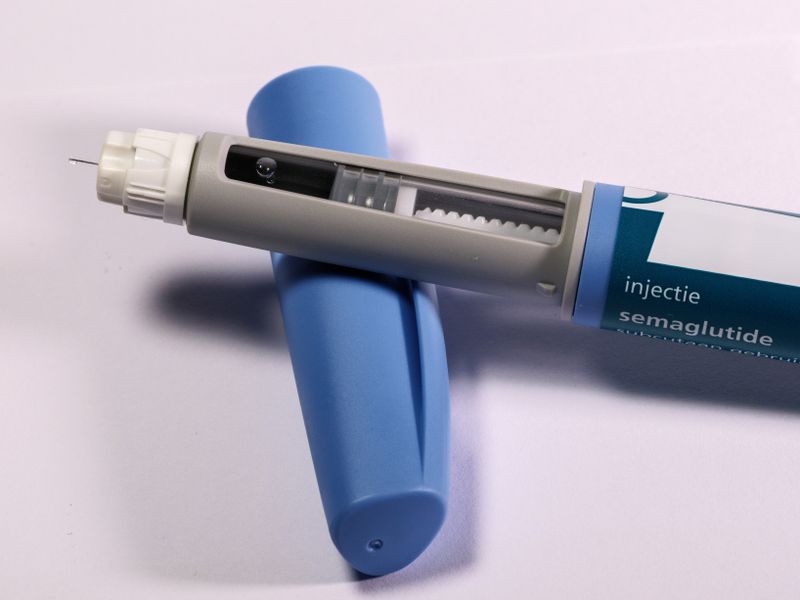
The FDA's emergency insulin guidance, taken from the manufacturers' labels: insulin belongs at 36 to 46 degrees F, but vials and cartridges "(opened or unopened) may be left unrefrigerated at a temperature between 59°F and 86°F for up to 28 days and continue to work." Above 86 degrees it weakens with time, but "under emergency conditions, you might still need to use insulin that has been stored above 86°F" rather than skip doses: keep it as cool as possible, never let it freeze on ice, and replace exposed vials once refrigerated insulin is back. This is a lot of us: 12.1% of Black adults had diagnosed diabetes in 2019 to 2021 (CDC data reported by NIDDK), and a storm is the week the routine in our type 2 diabetes guide gets tested.
Dialysis: treat early, know your backup unit, start the 3-day diet
Black Americans are 30% of everyone living with kidney failure in the United States (CDC and USRDS data reported by NIDDK, 2024). After Katrina, of 386 patients from nine New Orleans hemodialysis units, 44% missed at least one session and 17% missed three or more, which doubled the odds of hospitalization. After Sandy, 60% of 13,836 New York City and New Jersey patients were dialyzed early, before landfall, and had lower odds of an ER visit, a hospitalization and death within 30 days. The steps, from CMS's Preparing for Emergencies: A Guide for People on Dialysis (revision 2.3, June 2026) plus that evidence:
- When a watch is issued, ask your unit for early dialysis before landfall.
- Fill in the guide's Personal Information Form now: unit emergency number, backup facility, nephrologist.
- If the unit closes, call its emergency number, then the backup facility. At a shelter, say you need dialysis.
- Start the 3-Day Emergency Diet and limit fluids. It does not replace dialysis but slows the buildup of water, waste and potassium. "You should always try to get dialysis within three days of your last treatment."
- Use Rx Open and your ESRD Network's patient line (table below) to find an open center. On May 1, 2026 the KHARES program under CMS replaced KCER as national coordinator; its emergency contact is 866-446-3507.
- In any emergency, call 911. ERs can dialyze you: 23% of dialysis patients who went to an ER after Sandy were dialyzed there.
Our guide to dialysis and kidney failure for Black patients covers choosing a unit and the transplant list.
| ESRD Network | States | Toll-free patient line |
|---|---|---|
| Network 2 | NY | 844-238-1190 |
| Network 3 | NJ, PR, VI | 844-238-1190 |
| Network 5 | DC, MD, VA, WV | 844-238-1190 |
| Network 6 | GA, NC, SC | 800-238-3773 |
| Network 7 | FL | 877-936-9260 |
| Network 8 | AL, MS, TN | 877-936-9260 |
| Network 13 | AR, LA, OK | 877-886-4435 |
| Network 14 | TX | 877-886-4435 |
Oxygen, CPAP, nebulizers and the power to run them
HHS's emPOWER program counts more than 4.6 million Medicare beneficiaries living independently on electricity-dependent equipment. Join your utility's medical-needs registry, with the fine print read: FPL's Medically Essential Service (Florida) needs a Florida-licensed physician's certification, must be renewed every year, and gives special notices before and after a hurricane, but "does not provide priority restoration after a storm, nor does it guarantee uninterrupted service." Entergy (Louisiana, Texas, Mississippi, Arkansas) enrolls you at 800-368-3749 with a faxed physician statement and says the same. The registry buys warning, not power, so plan a backup: spare tanks or a charged battery, a car adapter for the nebulizer or CPAP, and a place with power to go, family inland or the county special-needs shelter you register for before the season.
Your medication go bag
Ready.gov's kit list (updated July 1, 2026) and the FDA's pre-disaster list, combined:
- Every prescription in its labeled bottle, in a water-tight container, plus a phone photo of each label.
- A written list of drug, dose, purpose, prescriber and pharmacy numbers, and your insurance card (Healthcare Ready's free Rx on the Run wallet card is built for this).
- Insulin in a cooler with ice packs that never touch the vials; meter, strips, glucose tablets.
- Dialysis: the Personal Information Form, backup unit directions, the 3-Day Emergency Diet foods.
- Oxygen, CPAP or nebulizer: spare tanks or batteries, car adapter, utility account number.
- The 30-day early refill itself, requested the day the watch is posted.
How to get care
Refills come easiest from a clinician who knows you. Before the season peaks, ask your prescriber to renew everything you take with refills through November 30. If you do not have that clinician, find a Black doctor in our directory, filtered by state and specialty; a community health center will see you with or without insurance.
Frequently asked questions
Can I get my prescription refilled early before a hurricane? ▼
In Florida, yes by statute once your county is under a hurricane warning or state of emergency (s. 252.358); North Carolina requires one early or replacement fill (G.S. 58-3-228); Medicare Part D plans are expected to lift the edits in any declared disaster. Elsewhere, ask your plan.
Can a pharmacist refill my prescription without my doctor during a hurricane? ▼
For most non-controlled drugs, yes in Florida, Texas and Louisiana (30 days) and North Carolina (30 or 90 days) once each state's emergency conditions are met. Schedule II drugs are excluded.
How long can insulin stay out of the refrigerator? ▼
Up to 28 days between 59 and 86 degrees F, opened or unopened (FDA). Hotter than that it loses strength over time, but in an emergency the FDA says you may still need to use warm insulin rather than skip doses. Never use insulin that has frozen.
What do I do if my dialysis center closes during a hurricane? ▼
Call your unit's emergency number, then your backup facility. Start the 3-Day Emergency Diet and limit fluids. Use Rx Open and your ESRD Network's patient line to find an open center. If you cannot get dialysis within three days of your last treatment, go to an emergency room.
How do I get free medication after a hurricane if I have no insurance? ▼
Through EPAP, once ASPR activates it for your ZIP code after a presidential disaster declaration. You must have no insurance at all; bring a prescription or current bottle to any enrolled pharmacy for a free 30-day supply. Check the EPAP status page or call 1-855-793-7470.