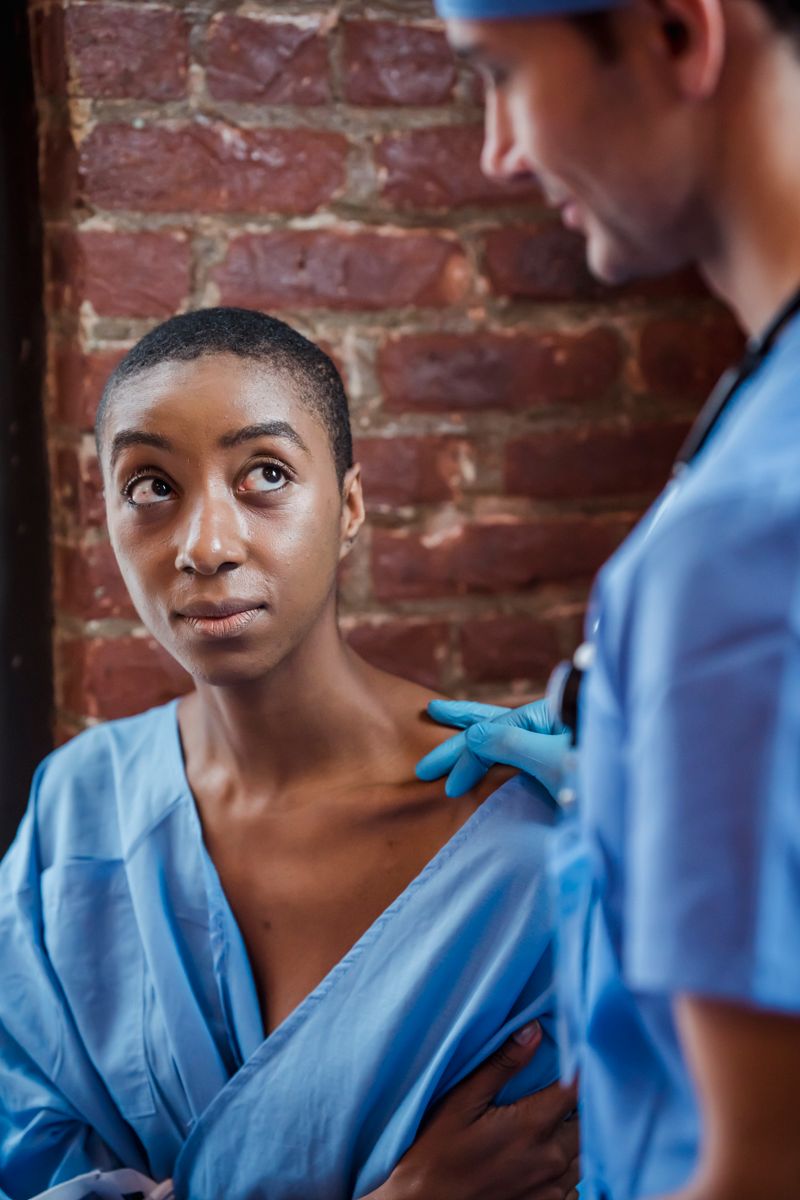
National HIV Testing Day is June 27, 2026. The date was created to push back against the single biggest driver of HIV transmission: not knowing your status. In Black communities, that gap is wide. In 2022, 14,553 Black Americans received a new HIV diagnosis, accounting for 38 percent of all new diagnoses nationwide. Among Black women assigned female sex at birth, that share reaches 50 percent. Getting tested is the first step on the continuum from diagnosis to treatment to an undetectable viral load, and it is a step the health system has historically made harder for Black patients to take.
Why Is the HIV Burden So High in Black Communities?
The HIV burden in Black communities is the direct result of structural failures, not individual behavior. Decades of under-investment in community health infrastructure, insurance coverage gaps, and documented provider bias have created a system in which Black patients are less likely to be routinely tested, less likely to be offered PrEP when appropriate, and less likely to be retained in care once diagnosed. In 2022, for every 100 Black Americans living with diagnosed HIV, 61 achieved viral suppression, compared with 63 among white Americans. That gap in viral suppression, driven by disruptions in care access, means more preventable transmission.
Stigma compounds access. HIV-related stigma remains a documented barrier to testing and treatment in many Black communities, rooted in decades of inadequate public health communication, criminalization of HIV exposure in many states, and a media landscape that long connected HIV to shame rather than to a manageable medical condition. Getting tested, and talking openly about it, is one of the most direct ways to push back against that stigma.
Who Should Get Tested for HIV, and How Often?
The CDC recommends that everyone aged 13 to 64 get tested for HIV at least once as part of routine health care. That is a baseline, not a ceiling. You should test annually if you:
- Have had unprotected sex with a partner whose status you do not know
- Have had more than one sexual partner since your last test
- Have shared needles, syringes, or other drug-use equipment
- Have been diagnosed with another sexually transmitted infection (STI)
- Are pregnant or planning to become pregnant
Gay and bisexual men with multiple partners should test every three to six months. If you are starting PrEP, your prescribing provider will test you every three months as part of the protocol.
Health departments and community health centers test for HIV at low or no cost, and can often connect you to a PrEP assistance program that covers the medication regardless of insurance. Our directory of free and charitable clinics lists verified centers by state. A same-day telehealth visit for testing or PrEP is self-pay and is not billed to Medicaid, so check the free routes first. If you want to start today:
Affiliate
Where Can You Get a Free HIV Test?
Free and low-cost testing is more accessible than many people realize. Here are your options:
- Free at-home test kits by mail: Order at together.takemehome.org. No credit card, no insurance required. Kits arrive in a discreet package in three to five days and include an oral swab test with results in 20 minutes.
- Find a testing site near you: Use the CDC locator at gettested.cdc.gov or the HIV Services Locator at locator.hiv.gov. Both search by ZIP code and filter for free or low-cost sites.
- Federally Qualified Health Centers (FQHCs): These community health centers serve patients on a sliding-scale fee based on income. HIV testing is a standard service. Find one at findahealthcenter.hrsa.gov.
- On June 27 specifically: Over 500 Walgreens locations nationwide offer free rapid HIV and STI tests on National HIV Testing Day. No appointment needed at participating locations.
- At your provider's office: Ask your primary care provider to add an HIV test to your next routine visit. HIV testing is covered without cost-sharing under the Affordable Care Act for patients aged 15 to 65.
- Community health events: Local health departments, Black-led community organizations, and sexual health clinics often run mobile testing vans and pop-up events around June 27.
What Kinds of HIV Tests Are Available?
Three types of tests detect HIV. The right one depends on how recently you may have been exposed:
- Antibody tests (most at-home tests, most rapid tests): Detect antibodies your body makes in response to HIV. Window period is 23 to 90 days after exposure. A negative result within the window period does not rule out infection from a recent exposure.
- Antigen/antibody tests (most clinic and lab tests): Detect both antibodies and the p24 antigen, a protein from the virus itself. Window period is 18 to 45 days for blood draws. This is the standard test at most health centers.
- Nucleic acid tests (NATs): Detect the virus directly. Window period is 10 to 33 days. Used when very early infection is suspected or after a high-risk exposure. Usually ordered by a provider.
The OraQuick at-home oral swab test is the only FDA-approved self-test. Results appear in 20 to 40 minutes. A positive at-home result requires a confirmatory lab test, which your provider or local health department can arrange at no cost.
What Happens After Your Result?
If your result is negative: You do not have HIV based on this test and exposure window. Talk to your provider about PrEP if you have ongoing risk factors. PrEP (pre-exposure prophylaxis) is a daily pill or long-acting injectable that prevents HIV. It is over 99 percent effective when taken as prescribed. Only 11 percent of eligible Black Americans were prescribed PrEP in 2022, compared with 82 percent of eligible white Americans, a gap driven by provider prescribing patterns, insurance barriers, and pharmacy access, not patient demand. Our guide to PrEP and HIV prevention for Black Americans covers how to ask for a prescription, coverage options, and patient assistance programs.
If your result is positive: A reactive or positive result starts a process, not an ending. You will be referred for confirmatory testing and, once confirmed, connected to care. The most important next step is starting antiretroviral therapy (ART) as soon as possible. People who start ART early and take it consistently can reach an undetectable viral load, meaning HIV cannot be detected in standard tests and cannot be transmitted sexually. You can work, have relationships, have children, and live a full life. In 2022, 88 percent of Black Americans with HIV knew their status. Of those, 64 percent were linked to care and 61 percent were virally suppressed. Closing those gaps is the work, and it starts with the test.
How to Find a Black or Black-Serving Provider for HIV Care
Racial concordance in HIV care, having a provider who shares your background or specializes in serving Black patients, is associated with stronger trust, better communication, and better retention in care. You can search the Black Health provider directory to find Black clinicians and culturally competent HIV specialists near you. Many infectious disease providers who specialize in HIV also offer PrEP prescriptions; filter by specialty when searching. If you are uninsured, federally qualified health centers provide HIV care on a sliding-scale fee and most have infectious disease staff on site or by referral.
Frequently asked questions
When is National HIV Testing Day 2026? ▼
National HIV Testing Day is June 27, 2026. Free testing events run at clinics, pharmacies, and community sites across the country on that date. More than 500 Walgreens locations offer free rapid HIV tests on June 27 with no appointment required.
How often should I get tested for HIV? ▼
The CDC recommends at least one HIV test in a lifetime for everyone aged 13 to 64. If you have multiple sexual partners, have unprotected sex, share needles, or have been diagnosed with another STI, test annually. Gay and bisexual men with multiple partners should test every three to six months. If you are on PrEP, your provider tests you every three months as part of the protocol.
Where can I get a free HIV test? ▼
Free testing options include: at-home kits by mail at together.takemehome.org (no credit card needed); the CDC locator at gettested.cdc.gov for nearby free or low-cost sites; federally qualified health centers (sliding-scale fees); and your primary care provider (HIV testing is covered at no cost under the ACA for people aged 15 to 65).
Is there an at-home HIV test? ▼
Yes. OraQuick is the only FDA-approved at-home HIV test. You swab your upper and lower gums and read results in 20 to 40 minutes. Free kits are available by mail through together.takemehome.org. A positive at-home result requires a confirmatory lab test, which your provider or health department can arrange, often at no cost.
What do I do if my HIV test is positive? ▼
A positive HIV test is the beginning of a medical process, not a death sentence. Your next steps are confirmatory testing and then starting antiretroviral therapy (ART) as soon as possible. People who start ART early and take it consistently can reach an undetectable viral load, meaning they cannot transmit HIV sexually. Contact your provider, a local health department, or call 1-800-232-4636 for referrals to HIV care specialists.
Can I get PrEP if my HIV test is negative? ▼
Yes, and you should ask about it. PrEP is a daily pill or long-acting injectable that prevents HIV infection and is more than 99 percent effective when taken as prescribed. It is covered by most insurance plans and available through patient assistance programs for the uninsured. Black Americans who are eligible for PrEP are significantly under-prescribed it compared with white Americans. Read our PrEP guide for Black Americans to learn how to request a prescription.