Ringworm has nothing to do with worms. It is a fungal infection caused by dermatophytes, molds that feed on the keratin in skin, hair, and nails. Doctors call it tinea, and the name changes with the body part: tinea capitis on the scalp, tinea corporis on the body (the classic ring), tinea pedis on the feet (athlete's foot), and tinea cruris in the groin (jock itch). The fungus is the same family; the rules for treating it are not. A cream that clears ringworm on an arm will not clear it on the scalp, and that single fact is why scalp ringworm in Black children is so often treated wrong for months.
Scalp ringworm is a Black-child problem, and it is misread as dandruff
Tinea capitis is concentrated in Black children in the United States. In the CAPITIS study, a screening of 10,514 schoolchildren across the Kansas City metro, 6.6 percent carried the fungus on their scalp. Black children had the highest rate at 12.9 percent, and among the youngest of them the rate approached 18 percent. The organism behind almost all of it is Trichophyton tonsurans, which spreads person to person and lives quietly on scalps that show no rash at all.
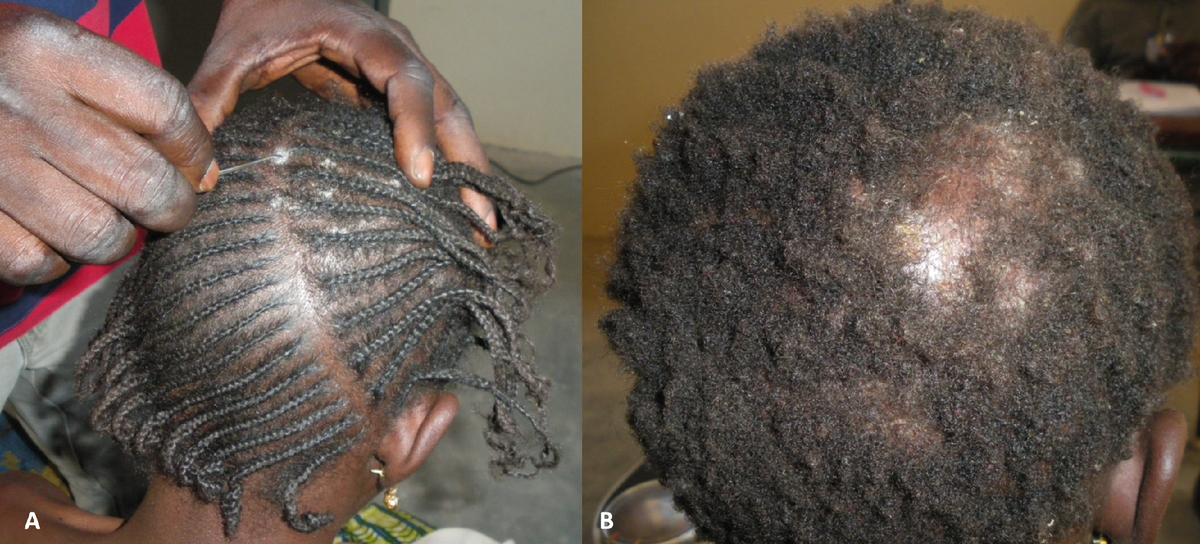
The reason it gets missed is presentation. The most common form is a scaly, flaky scalp that looks exactly like stubborn dandruff or a dry, ashy scalp. There may be a round patch of scaling, broken hairs that leave black dots where the strand snapped at the skin, or a bald patch with stubble. Parents reach for grease, leave-in conditioner, or anti-dandruff shampoo. A clinician who has mostly seen scalp scaling on lighter skin may call it seborrheic dermatitis and prescribe a steroid. Neither touches the fungus. The clue that separates ringworm from real dandruff is hair loss: ordinary dandruff and seborrheic dermatitis do not make hair fall out. Scaling plus a patch of missing or broken hair in a child is tinea capitis until a culture proves otherwise.
Why creams and shampoos cannot cure the scalp
The fungus on the scalp does not sit on top of the skin. It lives inside the hair shaft, down in the follicle, where a topical cream cannot reach. As one review of childhood tinea capitis states plainly, scalp ringworm always requires systemic treatment because topical antifungal agents do not penetrate down to the hair follicle root. The fix is an antifungal taken by mouth, most often griseofulvin or terbinafine, for several weeks. The American Academy of Family Physicians lists oral terbinafine as first-line for tinea capitis. Medicated shampoos like 2 percent ketoconazole or selenium sulfide are still useful, but only as an add-on: they cut down on the spores a child sheds and lower the chance of passing it to siblings, while the pill does the actual curing. Months of creams and oils with no pill is months of a treatable infection left to spread and, in the worst cases, scar.
A kerion is still ringworm, not an abscess
Sometimes the body reacts hard to the fungus and the scalp swells into a kerion: a raised, boggy, tender lump that oozes pus and crusts over. It looks like a bacterial abscess, and it is often treated like one, with antibiotics or an attempt to drain it. That is the wrong target. A kerion is an inflammatory form of tinea capitis, and it needs the same oral antifungal, sometimes with a short course of oral steroids to calm the swelling. This is the presentation that does lasting damage. An untreated or mistreated kerion can destroy the follicles and leave a patch of permanent, scarring hair loss that never grows back. A swollen, pus-filled lump on a child's scalp needs a clinician who will consider fungus, not just bacteria, and will send a fungal culture.
Common skin conditions are treated in primary care, and community health centers charge on a sliding scale that is often $0. Our directory of free and charitable clinics lists centers by state. A same-day telehealth visit is self-pay and cannot be billed to Medicaid or commercial insurance, so the clinic route usually costs less. If you need a prescription sooner than the next appointment:

Prescription skincare from a licensed clinician.
- Online visit and a treatment plan for your skin
- From $59 a month, shown before you book
 with Sesame Care
Affiliate link, we may earn a commission at no extra cost to you.
Ringworm on the body, feet, and groin
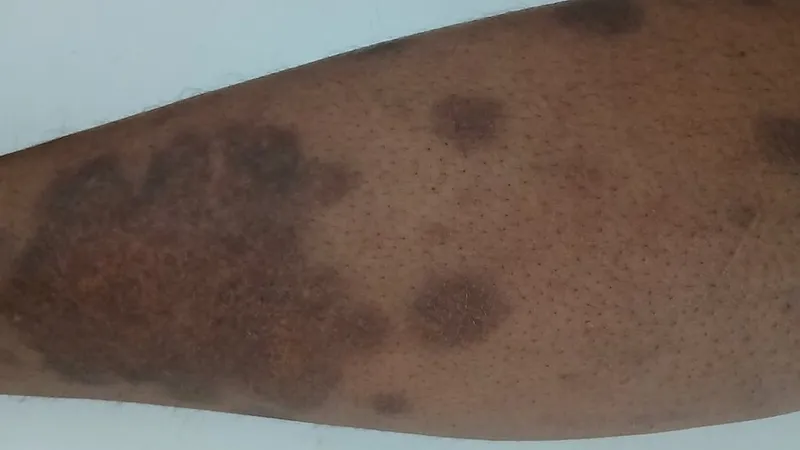
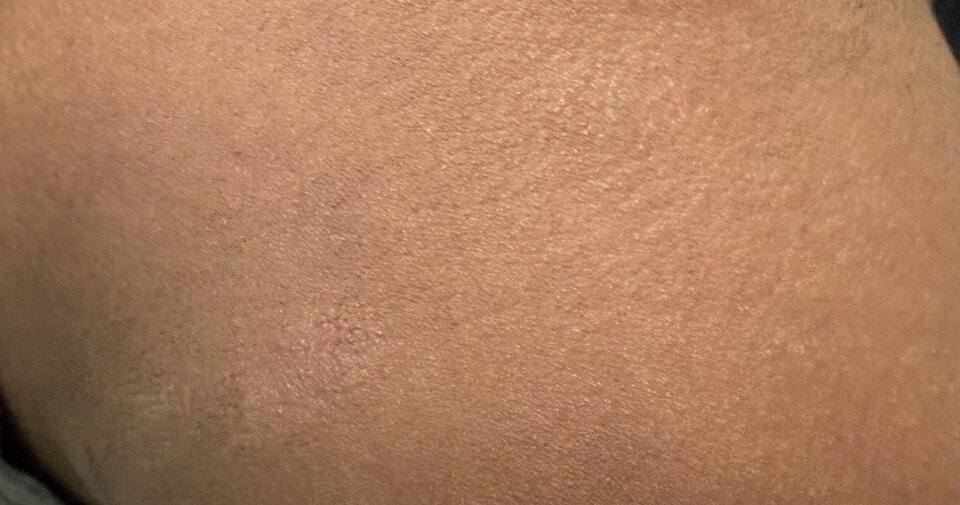
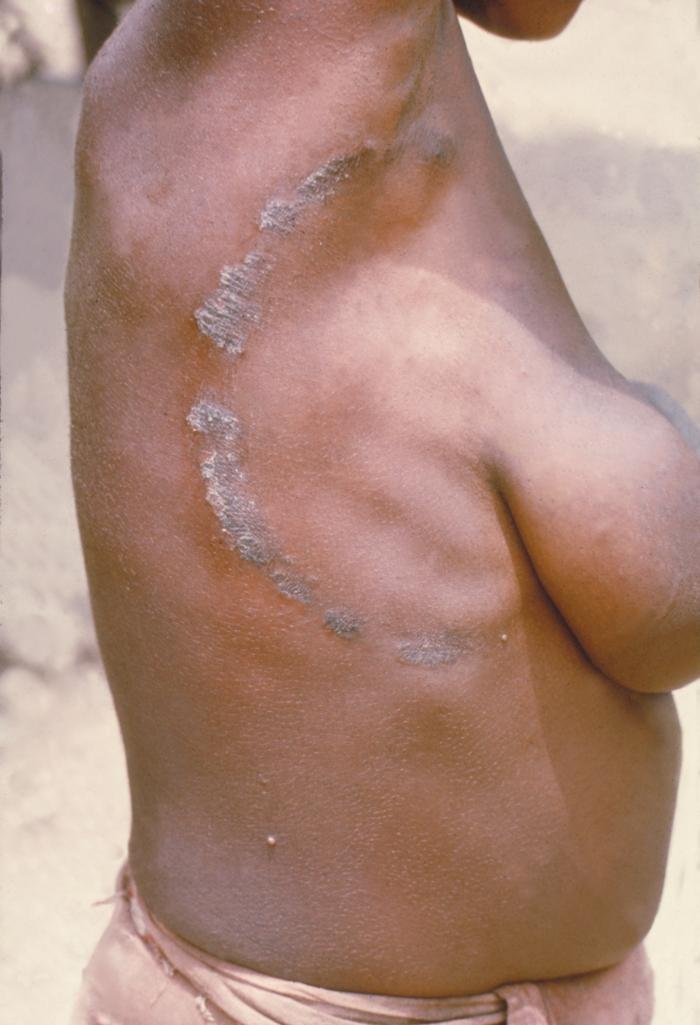
Off the scalp, the same fungus behaves differently and is easier to treat. Tinea corporis is the textbook ring: a patch with a raised, scaly, advancing border and a clearer center. On dark skin the border is the catch. Classic teaching calls it red, but on Black and brown skin it more often reads as gray, brown, dusky, or violet, so the ring is fainter and the diagnosis comes later. The itch and the slowly expanding edge are more reliable clues than the color. Tinea pedis (athlete's foot) cracks and peels the skin between the toes and along the soles. Tinea cruris (jock itch) makes an itchy, scaly patch in the groin folds. All three usually clear with an over-the-counter or prescription antifungal cream used for two to four weeks, well past the point the rash looks gone, because stopping early invites it back.
Athlete's foot is worth taking seriously beyond the itch. The cracks it opens between the toes are a doorway for bacteria, and tinea pedis is one of the most common entry points for cellulitis on Black skin, a deeper bacterial infection of the leg. Treating the fungus on the feet is part of preventing the bacterial infection above it. This matters more if you have diabetes, where a foot you cannot fully feel can hide a crack that lets infection in.
How it spreads in a household
Tinea spreads by direct skin contact and through shared objects. Combs, brushes, hats, headrests, pillowcases, towels, clothing, and locker-room and shower floors all carry it. Pets, especially kittens and puppies, can pass it to people. With scalp ringworm, the trickiest part is the silent carrier. A child or adult can host T. tonsurans with no rash at all and still pass it on. In an all-Black community study, 3 percent of children had visible scalp infection while 14 percent were carrying the fungus with no symptoms. That is why treating only the child with the obvious patch often fails: the infection bounces back from a sibling or a parent who looks fine.
When one child is diagnosed with scalp ringworm, screen the rest of the household. Symptom-free carriers should be treated, usually with an antifungal shampoo, or the cycle of reinfection keeps going. Wash pillowcases, hats, combs, and bedding in hot water, and do not share brushes, combs, or hair tools until the infection is cleared. These steps are not optional add-ons; they are how you keep the pill from being undone.
The dark mark left behind
After ringworm clears, the skin where it was can stay darker than the skin around it. This is post-inflammatory hyperpigmentation, the skin's response to inflammation, and it shows up more often and more intensely on darker skin. It is not the infection coming back and it is not a scar. It fades on its own, though it can take weeks to months. Daily sunscreen on exposed areas speeds it along and keeps it from darkening further. The exception is scarring from a kerion: hair loss inside a scar is permanent, which is the strongest reason to treat scalp ringworm early and correctly.
How to get care
Scalp ringworm needs a real diagnosis, not a guess. Ask your clinician to take a scraping for a KOH microscope check and a fungal culture before starting treatment, and to prescribe an oral antifungal if scalp ringworm is suspected rather than another shampoo. If your child has been treated for dandruff or seborrheic dermatitis for weeks and the scaling and hair loss are not improving, that is the moment to ask directly whether it could be tinea capitis and to request a culture. A clinician who is comfortable assessing dark skin and tightly coiled hair will read the patch, the broken hairs, and the faint border that lighter-skin training tends to miss. You can find a Black dermatologist or other Black clinician in our directory, and if none is listed near you, our guide to finding a Black dermatologist covers the other places to look. Our guide to seborrheic dermatitis on Black skin covers the scalp condition tinea capitis is most often confused with, and how to tell them apart.
Frequently asked questions
How can I tell scalp ringworm from dandruff or a dry scalp? ▼
The dividing line is hair loss. Dandruff and seborrheic dermatitis flake and itch but do not make hair fall out. Scalp ringworm causes scaling plus a patch of missing or broken hair, sometimes with black dots where strands snapped at the skin. Any child with scaling and patchy hair loss should be checked for tinea capitis with a fungal culture, not treated as dandruff.
Why won't anti-dandruff shampoo or hair grease cure scalp ringworm? ▼
The fungus lives inside the hair shaft and follicle, where creams, oils, and shampoos cannot reach. Scalp ringworm always needs an oral antifungal pill, usually griseofulvin or terbinafine, taken for several weeks. Medicated shampoo helps reduce spread to others but does not cure the infection on its own.
Is a kerion (a swollen, pus-filled lump on the scalp) an abscess? ▼
No. A kerion looks like a bacterial abscess but it is an inflammatory form of ringworm. It is treated with an oral antifungal, sometimes plus a short course of oral steroids, not by draining it or with antibiotics alone. Treating it early matters because an untreated kerion can cause permanent scarring hair loss.
Why does ringworm keep coming back in my family? ▼
Reinfection usually traces to a silent carrier or contaminated objects. People can carry scalp fungus with no rash and pass it on, so treating only the child with the visible patch often fails. Screen and treat the whole household, wash pillowcases, hats, combs, and bedding in hot water, and stop sharing hair tools until everyone is clear.
Why does the skin stay dark after the ringworm heals? ▼
That dark patch is post-inflammatory hyperpigmentation, the skin's reaction to the inflammation. It is common on darker skin, it is not the infection returning, and it is not a scar. It fades on its own over weeks to months, and daily sunscreen helps it clear faster and keeps it from darkening more.
Can ringworm spread between people and pets? ▼
Yes. It spreads by skin contact and through shared combs, brushes, hats, towels, bedding, and shower or locker-room floors. Pets, especially kittens and puppies, can pass it to people too. Do not share hair tools or towels with someone who has an active infection, and treat the pet if it has bald, scaly patches.