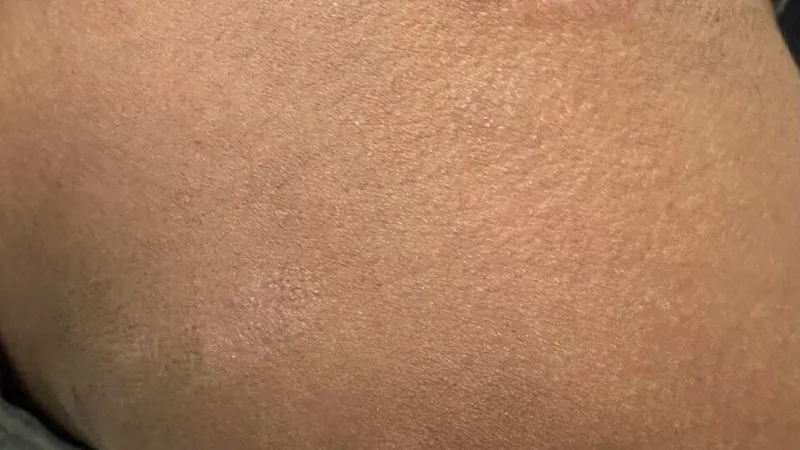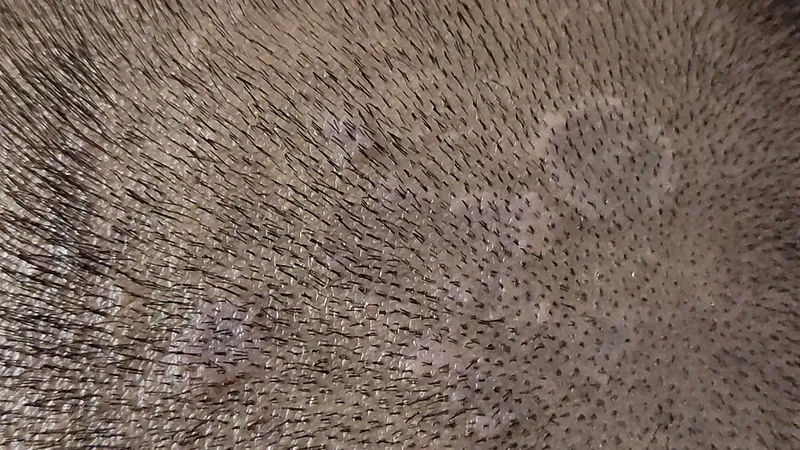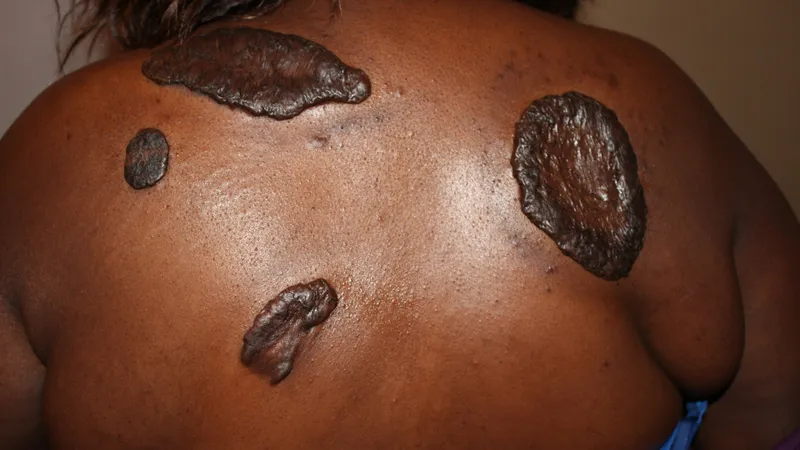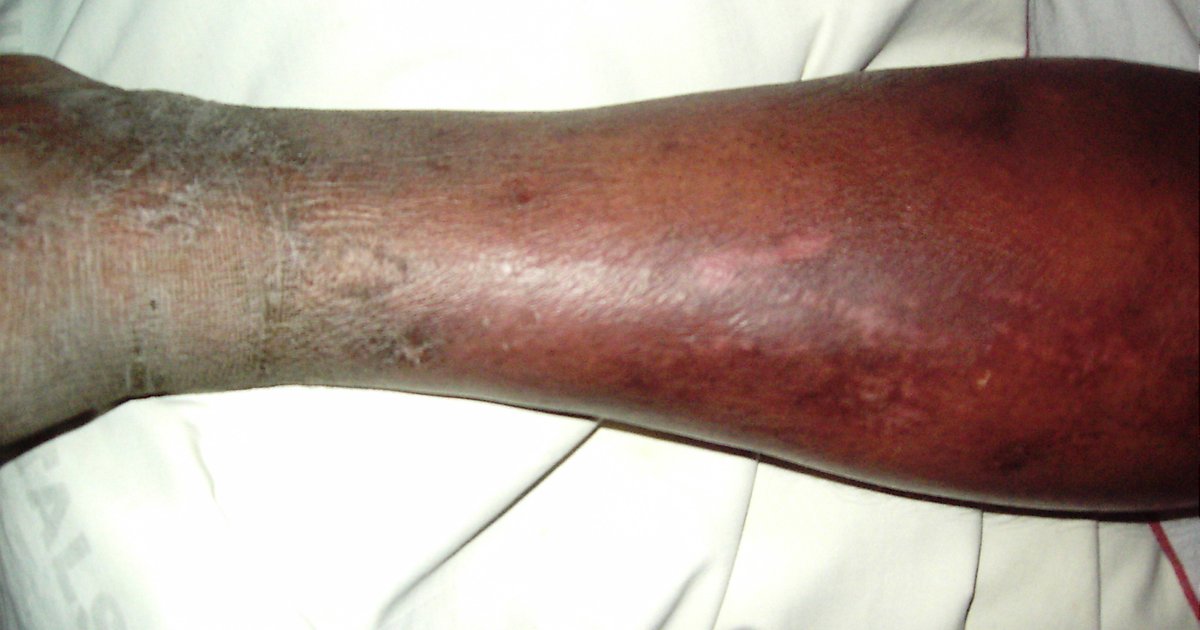
Cellulitis is a bacterial infection of the deeper layers of the skin, usually caused by Streptococcus or Staphylococcus bacteria that get in through a break in the skin. It makes an area of skin warm, swollen, tight, tender, and discolored, most often on a lower leg. Textbooks teach it as a bright red, hot, painful patch. The problem is that bright redness is a sign defined on light skin. On Black and brown skin the same infection often looks dusky, purple, gray, or darker brown instead of red, and the color change can be easy to miss entirely. That gap contributes to cellulitis being caught later and treated later in patients with darker skin.
Why "redness" fails on dark skin
Erythema, the medical word for redness, is the cardinal sign clinicians are trained to look for in cellulitis. That training is built on images of light skin. Images of darker skin are underrepresented across the materials used to teach this. An analysis of major dermatology textbooks found that dark skin tones made up a small minority of the photographs, far below the share of the population with darker skin. When a clinician has rarely seen what an infection looks like on Black skin, they are more likely to wait for a redness that may never appear the way the textbook drew it.
The error runs in both directions. Because color is unreliable on darker skin, real cellulitis gets missed when clinicians wait for a textbook redness. At the same time, cellulitis is frequently over-diagnosed: a meta-analysis pooling nine studies found that an average of 41 percent of suspected uncomplicated cellulitis cases were actually something else. More than half of those errors were three look-alikes: stasis dermatitis, eczema-type dermatitis, and swelling from edema or lymphedema. The takeaway is not to ignore the skin. It is to stop relying on color alone and to read the other signs.
What cellulitis actually looks and feels like on Black skin
Color is the least reliable clue on darker skin, so weight the signs you can feel and measure:
- Warmth. The affected area feels hotter than the skin around it and hotter than the same spot on the other limb. Compare with the back of your hand.
- Swelling and tightness. The skin looks puffy and feels stretched. It can take on a shiny, taut appearance as it swells.
- Tenderness. The area is sore to the touch and aches on its own.
- A color change, read against your own baseline. Instead of bright red, look for a dusky, violaceous, gray, or deeper brown patch that is darker than your usual skin tone. Photograph it in good light and compare day to day.
- A defined, spreading edge. The affected zone is usually one area that grows outward, not a symmetric rash on both legs at once.
One leg that is warm, swollen, tender, and discolored, while the other leg is normal, is the classic pattern. Cellulitis is almost always on one side. A rash that is on both legs evenly is more likely stasis dermatitis or another mimic, not infection.
Whatever brought you to this page, community health centers see patients regardless of insurance and charge on a sliding scale that is often $0. Our directory of free and charitable clinics lists centers by state. A same-day telehealth visit is self-pay and is not billed to Medicaid, so if you have Medicaid the clinic route will usually cost less. If you would rather see a clinician online today:

See a doctor online today.
- Same-day video visits from $34
- Price shown before you book
- No insurance needed
 with Sesame Care
Affiliate link, we may earn a commission at no extra cost to you.
Where cellulitis starts
Bacteria need a way in. Cellulitis almost always begins at a break in the skin barrier, and the entry point is often small and easy to overlook. Common starting points include athlete's foot (tinea pedis) with cracking between the toes, cuts, scrapes, insect bites, surgical wounds, and dry cracked heels. Several conditions raise the risk and make infection harder to clear: diabetes, which can cause foot wounds that go unnoticed when nerve damage dulls sensation, lymphedema and chronic leg swelling, venous insufficiency, and peripheral artery disease. Diabetes is more common and often more poorly controlled in Black adults, which raises both the chance of a foot wound and the stakes if one gets infected. If you have diabetes and numbness in your feet, check them daily; a sore you cannot feel is a doorway for cellulitis. Our guide to numbness and tingling in the hands and feet with diabetes covers what that nerve damage means and how to protect your feet.
How a clinician should examine you
A skin-tone-inclusive exam does not stop at looking for red. A good clinician will palpate the area, comparing its warmth and texture against the unaffected limb with the back of the hand, press for tenderness, and feel for the firm, swollen quality of infected tissue. They will mark the border of the affected skin, often with a pen, so they can tell whether it is spreading over the next day. They will look for the entry wound, the athlete's foot or the cut, and they will ask whether it is one leg or both. If color is genuinely hard to judge on your skin, say so and ask the clinician to rely on warmth, swelling, and tenderness. You can also photograph the area in daylight before the visit so there is a baseline to compare against. If a rash is symmetric on both legs and not warm, push for a second look before accepting antibiotics, because that pattern points toward a mimic like stasis dermatitis, not cellulitis. Our guide to managing eczema on Black skin covers one of those inflammatory look-alikes in more detail. Pain and reddened, tender skin confined to one band on one side of the body, before any blisters appear, can also be early shingles pain rather than a bacterial infection.
How cellulitis is treated
Most uncomplicated cellulitis is treated with oral antibiotics taken at home, typically for about five days, with the course extended if the infection has not cleared. The drug is chosen to cover strep and staph; if there is pus, an abscess, or concern for MRSA, the choice changes. Marking the border helps you and your clinician judge whether the antibiotic is working: improvement usually shows within 24 to 48 hours as the warmth, swelling, and tenderness recede and the affected edge stops advancing. Resting and elevating the limb speeds the swelling down. Treating the entry point matters too; if athlete's foot let the bacteria in, the athlete's foot needs treatment or the cellulitis comes back. Intravenous antibiotics and hospital admission are reserved for more serious cases: a high fever or signs the infection has spread to the bloodstream, infection that keeps advancing despite oral antibiotics, a rapidly worsening or severely painful area, or someone whose immune system is weakened. The U.S. infectious-diseases treatment guideline lays out which patients can be managed at home and which need IV care.
How to get care
If you suspect cellulitis, do not wait it out at home. Same-day primary care, an urgent care clinic, or a telehealth visit with photos can start antibiotics, and a clinician can tell you whether you need to be seen in person or in an emergency room. A clinician who is comfortable assessing darker skin without relying on redness is worth seeking out. You can find a Black dermatologist or other Black clinician in our directory. Bring a daylight photo of the affected area and note when it started and how fast it is changing; that timeline is one of the most useful things you can hand a clinician.
Frequently asked questions
What does cellulitis look like on Black skin? ▼
On Black and brown skin, cellulitis usually does not look bright red. It tends to look dusky, purple, gray, or a deeper brown than your normal skin tone, and the color change can be subtle. The more reliable signs are warmth, swelling, a tight or shiny surface, and tenderness, usually in one area on one limb. Compare the affected spot to the same spot on the other side of your body.
How can I tell cellulitis apart from stasis dermatitis or just swelling? ▼
Cellulitis is almost always on one leg and is warm, tender, and spreading from a defined edge. Stasis dermatitis and ordinary swelling tend to affect both legs fairly evenly, are not usually hot to the touch, and often itch more than they hurt. Up to 41 percent of suspected cellulitis turns out to be a mimic, so if a rash is symmetric on both legs and not warm, ask your clinician to reconsider before starting antibiotics.
Is cellulitis an emergency? ▼
It can be. Mild cellulitis is treated with oral antibiotics at home, but get emergency care if the area is spreading quickly, you have a fever or chills, the skin blisters or turns dark or gray, or the pain feels far worse than the skin looks. Pain out of proportion can signal a deeper, dangerous infection that needs surgery.
How long does cellulitis take to heal? ▼
With the right oral antibiotic, you should see improvement within 24 to 48 hours: less warmth, less swelling, and a border that stops advancing. The full course usually runs about five days and may be extended if the infection is slow to clear. If you are not improving after two days, contact your clinician, because the diagnosis or the antibiotic may need to change.
Why does cellulitis keep coming back? ▼
Recurrence is common and often traces back to an untreated entry point or ongoing swelling. Athlete's foot that cracks the skin between the toes, chronic leg swelling or lymphedema, and poorly controlled diabetes all keep the door open for bacteria. Treating the athlete's foot, managing the swelling, and controlling blood sugar lower the chance of another episode.