
What shingles is and who gets it
If you had chickenpox, the virus never fully left. It goes dormant in a nerve root near the spine and can sit there for decades. When it reactivates, it travels down that nerve to the skin and erupts as shingles, which is why the rash forms a band in one area instead of spreading. The CDC's clinical overview notes risk rises with age and with a weakened immune system, from diabetes, HIV, cancer, or immune-suppressing medication. About 1 in 3 people in the United States will get shingles in a lifetime. You cannot catch it from someone else; it comes from a virus you already carry.
The first sign is pain, not a rash
Shingles usually announces itself before anything shows on the skin. For a day or two, people feel burning, tingling, or a deep ache in one strip of skin, on one side of the body only, sometimes with headache or low fever. The rash follows in that same band: small bumps that turn into fluid-filled blisters, crusting over in 7 to 10 days and clearing over 2 to 4 weeks. The one-sided, banded pattern is the single most useful clue, on any skin tone, reason enough to get seen even before any rash appears.
What shingles looks like on Black and deeply pigmented skin
Almost every medical photo of shingles shows an angry red rash on light skin. Melanin absorbs and scatters light differently, so that redness is muted or absent on Black and deeply pigmented skin. The American Academy of Dermatology describes the rash on darker skin tones as “grayish, pink, dark brown, or purplish bumps,” compared with the red bumps typical on lighter skin. The fluid-filled blisters themselves can look gray, white, or a pale pink-purple rather than clear with a red base, and the skin around them may be no more than a shade darker than normal, sometimes with no visible discoloration at all.
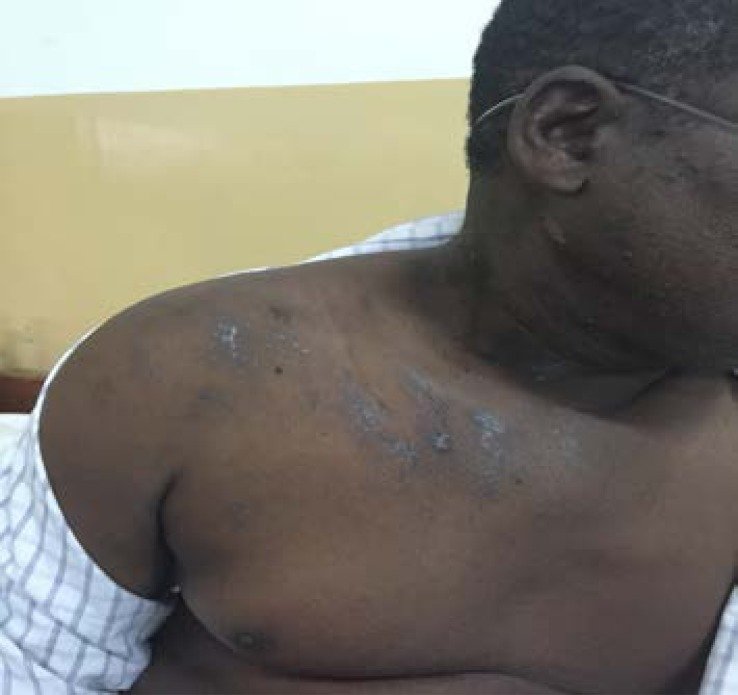
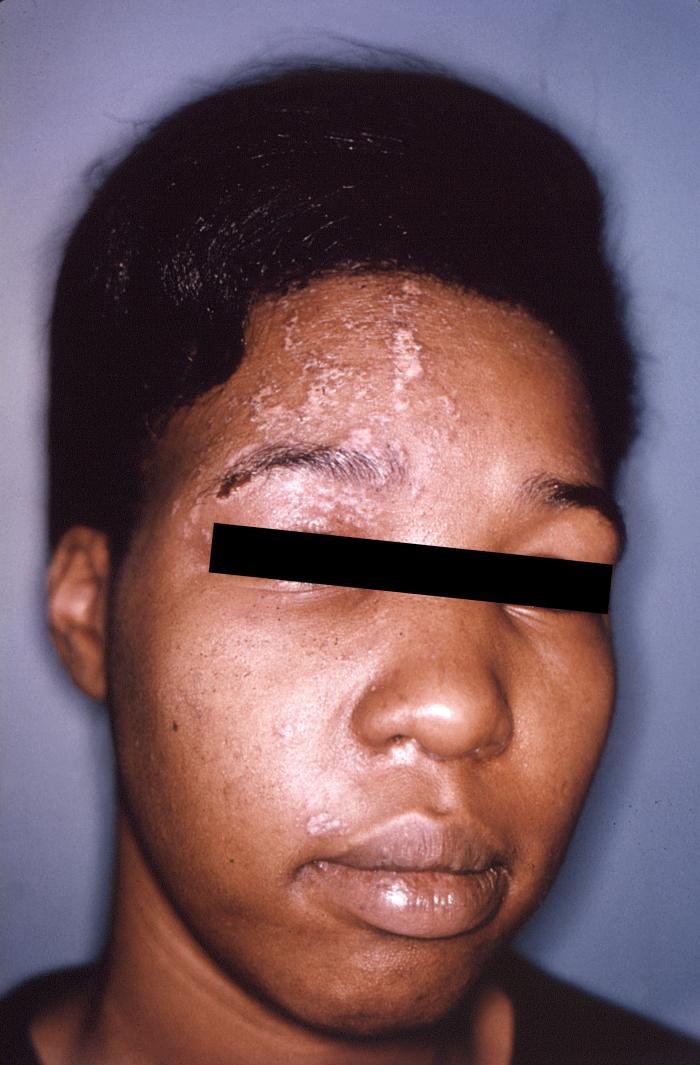
The clinical literature backs this up. A 2023 review of dermoscopy in herpes zoster reported that in 28.5% of the cases studied, the rash arose on skin of color and the erythema was less clear, making the diagnosis harder to confirm on sight alone. Under magnification the authors described a “halo sign” on pigmented skin, brownish crusts ringed by pale, pearl-like structures, a pattern absent from the standard red-rash teaching photos most clinicians train on. That gap is how a case gets read as an allergic reaction or a bug bite instead of shingles, and every day spent guessing is a day the antiviral window is closing.
The pattern that holds regardless of color is the band: painful blisters on one side of the body that stop at the midline. If you have that pattern with any rash, gray, violet, brown, or barely visible, treat it as shingles until proven otherwise. After the rash clears, deeply pigmented skin is also more likely to be left with dark or light marks where the blisters were, discoloration that can last weeks to months beyond the rash itself.
Whatever brought you to this page, community health centers see patients regardless of insurance and charge on a sliding scale that is often $0. Our directory of free and charitable clinics lists centers by state. A same-day telehealth visit is self-pay and is not billed to Medicaid, so if you have Medicaid the clinic route will usually cost less. If you would rather see a clinician online today:

See a doctor online today.
- Same-day video visits from $34
- Price shown before you book
- No insurance needed
 with Sesame Care
Affiliate link, we may earn a commission at no extra cost to you.
The same recognition gap trips up other skin conditions on dark skin, where clinicians trained on red rashes miss the gray and violaceous versions. Our guides to eczema on Black skin and diabetic skin changes on dark skin cover the same pattern in other conditions.
Why the first 72 hours matter
Shingles is treated with antiviral pills, acyclovir, valacyclovir, or famciclovir, and they work best when started within 72 hours of the rash appearing. Started early, they shorten the attack, ease the pain, and lower the odds of lasting nerve pain. Started late, they do far less. If the rash does not match the red picture everyone expects, those first three days can disappear while you wait to see whether it is a bug bite or an allergic reaction. Treat new one-sided, banded pain with any rash, even a subtle gray or dusky one, as a same-week visit, same-day if it is near your eye.
Postherpetic neuralgia and shingles of the eye
The most common complication is postherpetic neuralgia, nerve pain that lingers where the rash was, sometimes for months or years, severe enough to disrupt sleep and daily life. Older adults carry the highest risk, and starting antivirals early lowers the odds. The more urgent complication is herpes zoster ophthalmicus, shingles that reaches the eye. When the rash appears on the forehead, around an eye, or on the tip or side of the nose, the virus can spread to the eye itself. Ocular involvement develops in roughly half of these cases and, untreated, can cause corneal damage and permanent vision loss. Same-day emergency, not a wait-and-see.
The Shingrix vaccine and the uptake gap
Shingles is largely preventable. Only 18.8% of Black adults 60 and older have gotten the shingles vaccine, according to a CDC analysis of 2018 survey data, compared with 38.6% of White adults, roughly half the coverage. Shingrix is the two-dose vaccine behind those numbers, recommended for all adults 50 and older and for adults 19 and older with weakened immune systems, given 2 to 6 months apart (per the Advisory Committee on Immunization Practices' 2022 expansion of the recommendation). It is highly effective: 97% in adults 50 to 69 with healthy immune systems, 91% in adults 70 and older, and it prevents postherpetic neuralgia in about 9 of 10 people who get it anyway. Researchers tie the coverage gap to fewer provider recommendations, lower awareness, and cost, access, and trust barriers, none of it the patient's fault. Ask directly whether you are due for Shingrix at your next visit.
Get seen, and find care that knows your skin
Two actions matter most. Ask your clinician or pharmacist about Shingrix if you are 50 or older, or 19 and up with a weakened immune system. And treat any new one-sided, banded pain or a rash that could be shingles as a 72-hour clock, same-day if it touches your eye. A clinician who knows how shingles presents on dark skin will not wait for a rash to turn red before acting. You can find a Black dermatologist or primary care clinician in our directory. Bring photos of the rash at its worst and note where the pain started and which side it is on.
Frequently asked questions
What does shingles look like on Black skin? ▼
Usually not red. The American Academy of Dermatology describes the rash on darker skin tones as grayish, pink, dark brown, or purplish bumps, with blisters that can look gray, white, or pale pink-purple instead of the angry red shown in most medical photos. The reliable clue is the pattern, not the color: a painful band of blisters on one side of the body that stops at the midline.
What does a shingles rash look like on dark skin? ▼
The same shift holds across deeply pigmented skin generally: gray, violet, dusky brown, or just a shade darker than normal, sometimes with almost no visible discoloration. A 2023 dermoscopy review found the redness was less clear in 28.5% of cases that arose on skin of color. The band-shaped, one-sided pattern still holds regardless of color.
Are there pictures of shingles on Black skin? ▼
Look for the pattern over an exact shade match: small blisters banded on one side of the body, gray, violet, dark brown, or purplish rather than bright red. Since it rarely matches textbook photos, a single reference image can mislead either way. If the pattern and one-sided pain fit, get examined rather than trying to match a picture.
Do Black people get shingles more often, or does it just get missed more? ▼
The virus does not discriminate by race; risk climbs with age and a weakened immune system for everyone. What differs is recognition and prevention. The rash reads differently on pigmented skin and is more often missed, and Black adults 60+ are vaccinated at about half the rate of White adults (18.8% versus 38.6%). Both gaps are fixable.
How soon do I need to start treatment for shingles? ▼
Within 72 hours of the rash appearing, ideally. Antiviral pills (acyclovir, valacyclovir, or famciclovir) are most effective in that window: they shorten the attack, reduce pain, and lower the chance of long-term nerve pain. Get seen the same week, same day if it is near your eye.
Who should get the Shingrix vaccine? ▼
The CDC recommends Shingrix for all adults 50 and older, and for adults 19 and older with weakened immune systems. It is two doses, over 90% effective at preventing shingles and the nerve pain that can follow. Black adults are vaccinated at about half the rate of White adults, so ask your clinician or pharmacist directly.
Why is shingles near the eye an emergency? ▼
When shingles affects the forehead, the area around an eye, or the tip or side of the nose, the virus can reach the eye itself, called herpes zoster ophthalmicus. Ocular involvement occurs in roughly half of these cases and, untreated, can cause corneal damage and permanent vision loss. Any shingles rash near the eye needs same-day medical care.
What this gets mistaken for
Early zoster on Black skin, before vesicles form, is often misdiagnosed as musculoskeletal pain, cholecystitis, MI, or renal colic, depending on the dermatome. Clinicians should inspect the skin area along the painful dermatome; subtle grouping of vesicles may be present but read as normal-appearing skin to a casual glance.