Scabies is an infestation of microscopic mites that burrow into the top layer of the skin, and the itch they trigger, always worst at night, can keep you awake for weeks. The treatment is not in the pharmacy aisle: it is prescription permethrin 5% cream, with every member of the household treated on the same day. The catch for Black patients is recognition. The bright red rash in most patient guides often never appears on deeply pigmented skin, so scabies gets mislabeled as eczema or dry skin while the mites spread through the home.
A mite, an allergy, and an itch that peaks at night
Scabies is caused by the human itch mite, Sarcoptes scabiei. The female mite tunnels just under the surface of the skin and lays eggs there. The itch is not the mite biting you: it is your immune system reacting to the mites and their waste, which is why a first infestation can take 4 to 8 weeks to cause symptoms, and why people pass mites along during that silent window. Spread takes direct, prolonged skin-to-skin contact: sharing a bed, holding a child, caring for an elder, sex. Scabies is about contact, never cleanliness, and the CDC is plain that anyone can get it.
What scabies looks like on Black skin
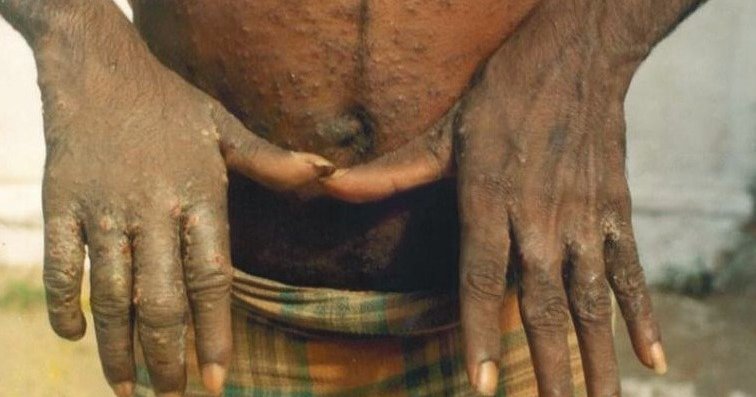
The classic textbook description, a red pimple-like rash, was written on light skin. On deeply pigmented skin, inflammation reads gray, violet, or simply darker than the surrounding skin, so the redness patient guides lead with may never be visible. Expect small firm bumps that look skin-colored, gray-brown, red-brown, or violaceous, often capped with scratch marks and scabs.
The finding worth hunting for is the burrow: a thin, thread-like, slightly raised line about 5 to 10 mm long, the track of a female mite. Burrows are subtle on any skin and harder to see on dark skin, so dermatologists use two tricks. The burrow ink test rubs washable ink over a suspicious bump and wipes it off with alcohol; ink trapped in the tunnel draws the line, a technique demonstrated specifically in skin of color. And under the dermatoscope, dermatologists examining Black patients report that the classic dark triangle marking the mite often vanishes against the pigmented background, leaving only its faint trail, so even specialists have had to relearn the sign for dark skin.
Location is the other half of the diagnosis. Scabies favors the webs between the fingers, the folds of the wrists, elbows, and armpits, the waistline, the nipples, the buttocks, and the penis. In babies and toddlers it also hits the scalp, face, palms, and soles. One more pattern to know: nodular scabies, firm intensely itchy bumps 3 to 15 mm across, usually in the groin, genitals, or armpits. Dermatology references note scabies can present as these nodules in people with darker skin, and they can linger for months after the mites are dead. To compare your skin against real photos, DermNet's scabies page has image galleries.
Why scabies gets mistaken for eczema
The American Academy of Dermatology notes that some people with scabies develop scaly patches that look like eczema. On Black skin, where both conditions can read gray-brown, the mix-up is even easier, and reviews of skin-of-color care keep finding that clinicians get little training in how common conditions, scabies included, present on darker skin. The cost of the error is steep: a steroid cream calms the reaction for a few days but kills nothing, so the itch returns, the weeks stack up, and the mites keep spreading through the household. If you have been treating eczema that refuses to behave, your itch is worse at night, or someone else at home has started scratching, ask your clinician directly: could this be scabies?
Whatever brought you to this page, community health centers see patients regardless of insurance and charge on a sliding scale that is often $0. Our directory of free and charitable clinics lists centers by state. A same-day telehealth visit is self-pay and is not billed to Medicaid, so if you have Medicaid the clinic route will usually cost less. If you would rather see a clinician online today:

See a doctor online today.
- Same-day video visits from $34
- Price shown before you book
- No insurance needed
 with Sesame Care
Affiliate link, we may earn a commission at no extra cost to you.
Treatment: the cream, the pill, and the household rule
Permethrin 5% cream is the first-line treatment, prescription-only and FDA-approved from 2 months of age. Apply it to clean skin over the whole body from the neck down, working it into every fold, between the fingers and toes, under the nails, and on the genitals; infants and children get the scalp, face, and neck treated too. Leave it on 8 to 14 hours (overnight works), then wash it off. A second application about a week later is often needed to catch newly hatched mites, so most prescriptions cover two doses 1 to 2 weeks apart.
Oral ivermectin is the clinician-managed alternative: two doses taken with food, 7 to 14 days apart. The CDC notes it cures scabies at rates similar to permethrin, though it is not FDA-approved for this use and its safety is not established for children under 15 kg or in pregnancy.
The household rule is not optional. Everyone who lives with you, and anyone you have had prolonged skin-to-skin contact with in the past two months, gets treated at the same time as you, symptoms or not. Because of the silent window, the family member who feels fine can be the reservoir that reinfests you a month after your cure.
Three honest facts save people a second round of misery. The itch outlives the mites: as an allergic reaction it commonly continues 2 to 4 weeks after every mite is dead, and retreatment is only for new burrows, new bumps, or itch persisting past the 4-week mark. The permethrin on the drugstore shelf is the 1% lice formula and does not treat scabies; per the CDC, no over-the-counter product is approved for scabies. And home remedies do not clear an infestation: tea tree oil, bleach baths, and vinegar have no proven scabicidal effect, and every week spent on them is a week of spread.
Stopping the cycle at home
Mites off a human body are on a clock: laboratory work found they survive roughly 24 to 36 hours at room conditions, and the CDC's practical rule is 2 to 3 days at most away from human skin. Decontamination is therefore a one-time, same-day job, done when you start treatment:
- Machine-wash bedding, towels, and clothes worn in the 3 days before treatment in hot water and dry on the hot cycle: heat above 122°F (50°C) for 10 minutes kills mites and eggs.
- Anything unwashable goes to the dry cleaner or into a sealed plastic bag for 72 hours to a week.
- Do not fumigate. The CDC specifically says not to use insecticide sprays or foggers for scabies, and your mattress and couch do not need to be thrown out.
- Tell anyone you have had skin-to-skin contact with over the previous two months so they can get treated.
Children can usually go back to school or daycare the day after their first treatment, and adults back to work on the same timeline.
How to get seen
Scabies is a clinical diagnosis: a clinician who knows what to look for can often call it from the exam and your story, using international consensus criteria built on the itch, the distribution, and the contacts. A skin scraping or dermatoscope can confirm it by finding the mite, but a negative scraping does not rule it out: a healthy adult with scabies may host fewer than 15 mites in total. Telehealth dermatology works for a first pass if you send sharp, well-lit photos of the finger webs, wrists, and waistline. What matters most is a clinician who has seen scabies on skin like yours, so it is not waved off as eczema for another month: you can find a Black dermatologist in our directory. Walk in with the pattern (when the itch peaks, who else is scratching, where the bumps sit) and that story, plus an exam, is usually the diagnosis.
Frequently asked questions
How can I tell scabies from eczema on Black skin? ▼
Patterns, not color. Scabies itch peaks sharply at night, sits in the finger webs, wrists, waistline, and genitals, may show thread-like burrow lines, and usually gets other household members itching within weeks. Eczema favors the elbow and knee creases, flares and settles, and does not spread person to person. Only an exam settles it.
Can I get rid of scabies without seeing a doctor? ▼
No. Every treatment that works is prescription-only. The CDC states no over-the-counter product has been tested and approved for scabies, the 1% permethrin sold for lice is not a scabies treatment, and home remedies do not kill the mites. A telehealth visit can get you the prescription.
Why am I still itching two weeks after treatment? ▼
Because the itch is an allergic reaction to the mites and their waste, it routinely continues 2 to 4 weeks after all the mites are dead. That is expected. See your clinician again only if new burrows or new bumps appear, or the itch is still going strong past 4 weeks.
Does everyone in my house need treatment if they are not itching? ▼
Yes, on the same day you treat. First-time scabies takes 4 to 8 weeks to cause symptoms, and people spread mites during that window. Treating one person at a time lets the infestation bounce between household members for months.
Do I need to fumigate my house or throw out my mattress? ▼
No. Scabies mites generally die within 2 to 3 days away from human skin. Hot-wash and hot-dry recent laundry, bag unwashable items for 72 hours to a week, and skip the foggers; the CDC advises against insecticide sprays for scabies.