Same medicine as the Wegovy shot, approved for adults only
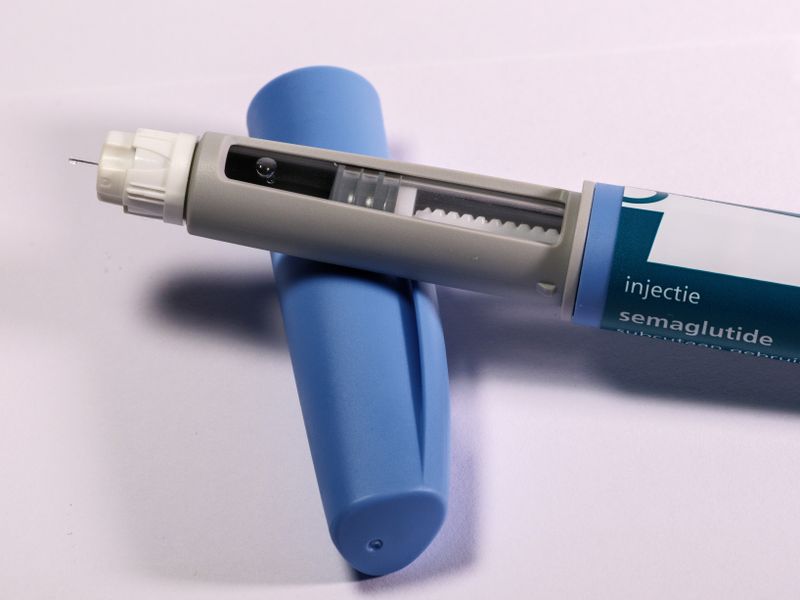
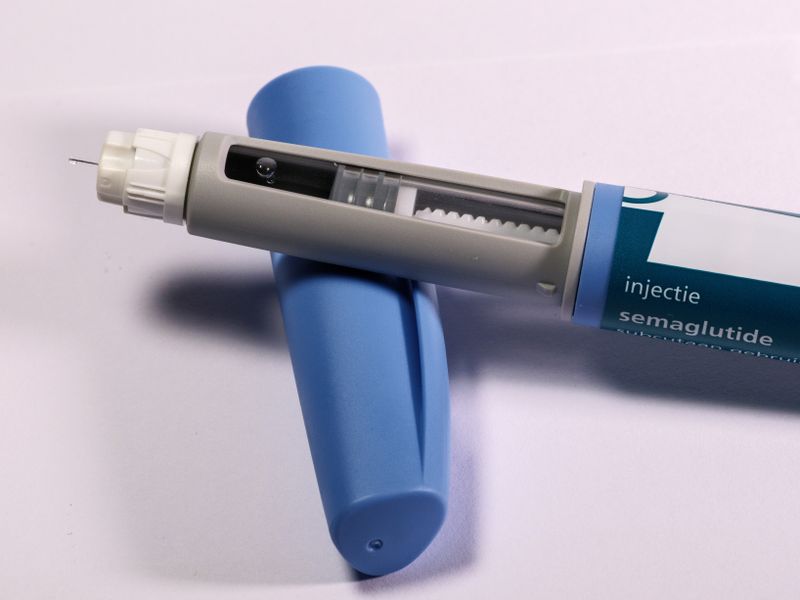
The Wegovy pill is a tablet form of semaglutide, the GLP-1 medicine in the weekly Wegovy injection and in Ozempic. Its FDA label approves it, alongside a reduced-calorie diet and more physical activity, for two uses:
- To reduce excess body weight and keep it off long term in adults with obesity, or with overweight plus at least one weight-related condition.
- To reduce the risk of heart attack, stroke and cardiovascular death in adults with established heart disease and obesity or overweight.
The injection is also approved for teenagers 12 and older. The pill is approved for adults only. The label also says not to combine it with any other semaglutide product or any other GLP-1 medicine.
Do not take it if you or anyone in your family has had medullary thyroid carcinoma, or if you have multiple endocrine neoplasia syndrome type 2 (MEN 2). The label's boxed warning explains why: semaglutide caused thyroid C-cell tumors in rodents, and whether it does in people has not been determined.
BlackHealth Weight Care
A program for adults that pairs you with a licensed clinician, opening state by state.
Join the waitlist for your state.
Get startedThe morning routine decides whether the pill works
Only about 1% to 2% of the semaglutide in a tablet reaches your bloodstream, according to the label, and absorption happens mostly in the stomach. That is why the instructions are strict. In studies described on the label, people absorbed more of the drug when they took it with less water (about 1.7 ounces rather than 8) and when they waited longer before eating.
- Take one tablet in the morning on an empty stomach.
- Swallow it whole with water only, no more than 4 ounces. That is half a cup. No coffee, tea or juice.
- Do not split, crush or chew it, and never take more than one a day.
- Wait at least 30 minutes before you eat, drink anything else, or take any other medicine by mouth.
If you miss a dose, skip it and take the next one the following day. Do not double up.
Four doses over 90 days, then 25 mg every day
You do not start at the full dose. The label sets a step-up schedule to reduce stomach side effects:
- Days 1 to 30: 1.5 mg once daily
- Days 31 to 60: 4 mg once daily
- Days 61 to 90: 9 mg once daily
- Day 91 onward: 25 mg once daily, the maintenance dose
If a step makes you too sick, the label allows your prescriber to delay the next increase. If 25 mg is not tolerable, the label suggests switching to the 1.7 mg weekly injection. If you are already on the 2.4 mg Wegovy shot, you can switch: start the 25 mg tablet one week after your last injection.
What the pill costs without insurance
Novo Nordisk sells the pill for cash through NovoCare Pharmacy. As of October 24, 2026, its page lists $149 for each month of the 1.5 mg dose, $199 a month for 4 mg, and $299 a month for 9 mg and 25 mg. A month is one bottle of 30 tablets.
Our arithmetic from those prices: the first three months of the step-up cost $647, and a year at the 25 mg dose costs $3,588. Novo Nordisk says it can change the program at any time, so check the page before you budget.
If you have commercial insurance that covers the pill, NovoCare lists a savings offer of as little as $25 a month for up to three months, capped at $100 in savings a month. The offer excludes government beneficiaries.
Compounded semaglutide is a different product with a different legal status; we cover it in our guide to the compounding crackdown.
Ask your primary care doctor or a community health center first: they can bill your insurance for an FDA-approved GLP-1 like Wegovy or Zepbound if your plan covers it, which costs far less than paying a telehealth service out of pocket. Our directory of free and charitable clinics lists centers by state. Many online weight-loss services sell compounded semaglutide or tirzepatide instead: compounded GLP-1 medications are not FDA-approved products, and the FDA does not review compounded drugs for safety, effectiveness, or quality. A same-day telehealth visit is self-pay and is not billed to Medicaid. If you still want to explore a telehealth option:
 Sesame Care
Online weight-loss care with a licensed clinician.
Weight-loss care, priced up front
Check weight-loss optionsMedicare covers the pill for $50; private plans decide case by case
Medicare. The Medicare GLP-1 Bridge, a temporary CMS program running from July 1, 2026 through December 31, 2027, covers Wegovy in both injection and tablet form for eligible Part D members at a $50 monthly copay. CMS states that the deductible does not apply, the $50 does not count toward your out-of-pocket total, and there is no low-income subsidy on it. Eligibility turns on your diagnosis and your BMI when you started treatment; our Bridge guide walks through every rule.
Employer and marketplace plans. Each plan decides whether it covers weight-management drugs at all. Call the number on your card, ask about Wegovy tablets by name, and ask whether prior authorization is required. Our coverage guide covers what to submit and how to appeal a denial.
Medicaid. Rules differ by state. Your state's page under our online GLP-1 guide says whether its Medicaid program covers GLP-1s for obesity.
OASIS 4: 13.6% average weight loss at 64 weeks
The approval rests on OASIS 4, published in the New England Journal of Medicine in September 2025. It randomly assigned 307 adults without diabetes, with a BMI of 30 or higher, or 27 or higher plus a weight-related condition, to the 25 mg tablet or a placebo for 64 weeks, at 22 sites in the United States, Canada, Germany and Poland. Novo Nordisk funded it.
Body weight fell by an average of 13.6% on the pill and 2.2% on placebo. In the label's version of the results, 76.3% of people on the pill lost at least 5% of their weight, against 31.3% on placebo, and 47% lost at least 15%, against 5.5%.
Side effects were mostly in the gut: stomach and intestinal adverse events hit 74.0% of the pill group and 42.2% of the placebo group.
The label says the pill's common side effects resemble the injection's, where nausea affected 44% of patients, diarrhea 30%, vomiting 24%, constipation 24% and abdominal pain 20%. About 7% of people on the pill stopped because of side effects, against about 6% on placebo.
The label's warnings also cover pancreatitis, gallbladder disease, kidney injury from dehydration after vomiting or diarrhea, low blood sugar if you also take insulin or a sulfonylurea, and the risk of inhaling stomach contents under anesthesia, so tell any surgeon you take it. If you are planning a pregnancy, the label says to stop at least 2 months beforehand, and it does not recommend breastfeeding while on the tablets.
The evidence for Black patients is 22 people, with no separate result
The trial's posted results list 281 White participants, 22 Black participants and 2 Asian participants. The FDA label describes the same trial as 92% White and 7% Black.
We looked for a result reported for Black participants in the FDA label, the full results posted on ClinicalTrials.gov, and the journal abstract. None reports one. The registry's 27 outcome measures cover the whole group only.
The full journal article and its supplement sit behind a paywall we could not open, so a subgroup table may exist there. If it does, it describes 13 Black people on the drug, too few to show whether the pill works the same way for Black patients.
The heart-protection approval has the same gap. Novo Nordisk says it rests on the SELECT trial, which tested the injection, not the pill. Of SELECT's 17,604 participants, 4% were Black.
The label does report that semaglutide blood levels showed no clinically significant difference by race, including in Black or African American patients. That describes how the body absorbs and clears the drug, not how much weight people lose.
The injection has more Black data behind it: one Wegovy injection trial in the label was 19% Black. Our review of the semaglutide evidence in Black patients covers what those studies show.
Absence of data is not evidence that the pill works less well for you. It means the decision leans on the injection data, on your own response, and on a prescriber who tracks it.
Bring these four things to the appointment
- Your full medication list, marked with what you take in the morning, so your prescriber can plan around the 30-minute window and any thyroid medicine.
- Your family history, especially any thyroid cancer or MEN 2.
- Your coverage answer: whether your plan covers Wegovy tablets by name, or whether you qualify for the Medicare Bridge.
- A checkpoint question: what result, by what date, will tell you both whether the pill is working, and what the plan is if it is not.
Our GLP-1 doctor conversation toolkit has scripts for that visit. For the medicine itself, see our semaglutide medication page.
Frequently asked questions
Is the Wegovy pill as effective as the Wegovy shot? ▼
The FDA label contains no head-to-head trial of the two. Novo Nordisk says the pill's weight loss is similar to the 2.4 mg injection, and the label lets patients switch in either direction.
Can I take the Wegovy pill with coffee? ▼
No. Take it with water only, up to 4 ounces, on an empty stomach. Wait at least 30 minutes before coffee, food, other drinks or other pills.
What happens if I miss a dose? ▼
Skip the missed tablet and take your next one the following day, according to the label. Never take two tablets in one day.
Does Medicare cover the Wegovy pill? ▼
Yes, for eligible Part D members through the Medicare GLP-1 Bridge, which covers Wegovy tablets and injections for a $50 monthly copay from July 1, 2026 through December 31, 2027. Our Bridge guide lists the rules.
Were Black patients included in the Wegovy pill trial? ▼
Yes, but few: 22 of 307, with 13 assigned to the pill. No result for them appears in the FDA label, the trial's posted results or the journal abstract.